The rest is noise
Jacopo Mazzeo places the rise of Vin de France in the context of a century of change in the wine world
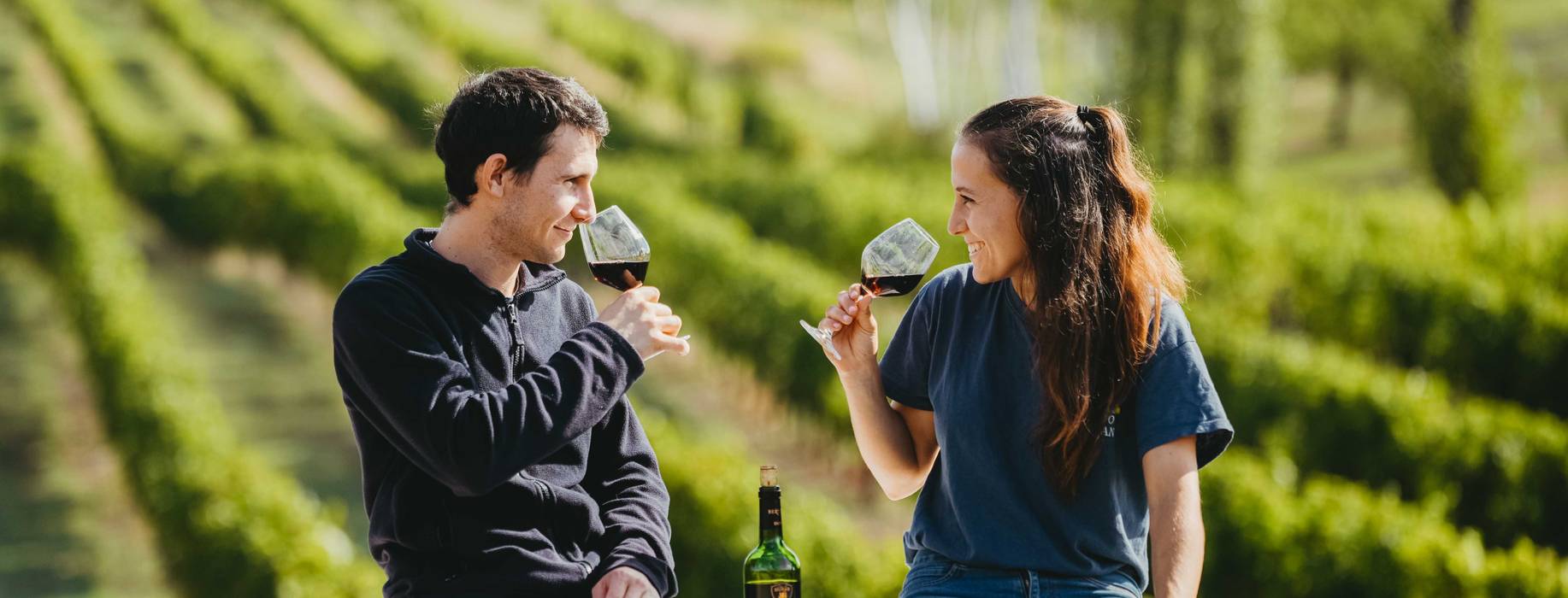
Jacopo Mazzeo
Photo: Vignerons mais Autrement
© EMMA TOURNIER
Wednesday 17 June 2026
This article is from
Vin de France
issue 63
Share this article
In April 2021, Asda announced a major overhaul of its wine aisles. Reflecting a broader shift in how people choose a bottle, the supermarket moved away from organising its aisles by country or region in favour of grouping products by grape variety. Such a change in how people understand wine is not just a British phenomenon. It’s a global one. Even in France—the historic homeland of fine wine, a country defined by countless, often unpronounceable villages and single-vineyards—one in four drinkers now chooses a bottle primarily based on whether it is a Cab, a Merlot, or a Sauvignon Blanc.
At first glance, this trend can feel paradoxical. It runs counter to much of what wine lovers tend to hold up as wine’s highest ideals. Buzzwords like terroir, authenticity, and sense of place lose some of their centrality when grape varieties take centre stage. In reality, though, it reflects broader shifts in the global wine trade that have been unfolding for decades: changes that have fundamentally reshaped our relationship with wine, influencing what we expect from a bottle, what we are drawn to and, in turn, how wine is made and how it’s being presented to us.
In the beginning the French created Terroir
France’s appellation system was established by the Institut National des Appellations d’Origine (INAO) in 1935. For all the romance that wine lovers like to attach to it, the system was designed more for commercial protection than for any deep-rooted attachment to the land, its primary aim being to safeguard the geographical origin of wine as an added economic value. Still, the fact remains that the sense of terroir, rather than individual grape varieties, sat firmly at the heart of the model. To keep that focus intact, naming the grape on an Appellation d’Origine Contrôlée (AOC) label was often restricted or outright forbidden (Alsace being the notable exception, with its monovarietal Riesling and Pinot Gris).
With its terroir-driven AOC system in place, France reigned as the epicentre of fine wine for decades, offering the de facto template for any wine region seeking to compete at the highest level. Indeed, while other European countries did boast some historical forms of protected regions, most modern geographical indication systems were introduced after the French model. In Italy, for instance, the system took shape in the 1960s; in Portugal in the 1980s; and in Spain as late as the early 1990s.
In comes the New World
In 1976, British wine merchant Steven Spurrier organised a blind tasting that would seriously disrupt the established order. He pitted the finest white Burgundies and red Bordeaux against first class California bottles, at the time still widely dismissed by the wine establishment. To the surprise of the French judges and much of the wider wine world, the American bottles took top honours in both categories.
The outcome of what became known as the Judgement of Paris (1976) did more than simply demonstrate that world-class wine could be produced outside traditional French regions: it also helped normalise wines labelled prominently by grape variety rather than by place of origin. The winning Californian white (Chateau Montelena), for instance, was clearly identified as a Chardonnay, while the winning red (Stag’s Leap Wine Cellars) as a Cabernet Sauvignon. The competing French wines, by contrast, were (mostly) made from the same grapes, but their labels only displayed the appellation or château name, such as Puligny-Montrachet or Château Montrose.
The Judgement of Paris was the first sign of a vinous world moving in a different direction, one where grape variety started to sit alongside (in fact increasingly above) specific place of origin. The region may still carry weight, but for most drinkers it now often needs to be paired with a grape variety to properly anchor what’s in the glass, like Australian Shiraz, or Kiwi Sauvignon Blanc.
As people became more familiar with grape varieties than with complex appellation names, commercial pressure gradually forced French regions to adapt. What had once been a distinctive feature of Alsace wines began to spread nationwide, with more and more French appellations integrating grape variety mentions on labels.
Vive Vin de France
The clearest sign of this transformation came in 2009, when the old Vin de Table (Table Wine) category—reserved for wines that did not meet the strict criteria of France’s appellation system—was replaced by Vin de France (Wine of France, or VdF). What might appear like a simple change of wording conceals a significant cultural and commercial shift. The old “table” designation reflected a very traditional French understanding of everyday wine: unpretentious, rustic, affordable, and fundamentally tied to the “table”, i.e. the meal. These bottles could not state either grape variety, vintage, or geographical origin on the label. They were stripped back to the most essential promise of all: they were, simply, wine.
What might appear like a simple change of wording conceals a significant cultural and commercial shift
The new VdF category broke with that logic. It allows both grape variety and vintage to appear on the label, giving these bottles the freedom to speak the same visual language as their New World counterparts, with the “Made in France” element adding a layer of cultural weight and gravitas. Indeed, if “table wine” evokes rural simplicity and a more humble, everyday relationship with the liquid, “Wine of France” carries very different connotations: an aspirational lifestyle associated with fine food, fashion, beauty, refinement, and joie de vivre.
With its newfound mojo, the lowest tier of French wine has gradually morphed into a playground for winemakers and brand builders looking to reach people who feel disconnected from traditional wine culture. The category blends the simplicity and accessibility of the New World approach with the enduring appeal of French savoir-faire (the official motto of the Vin de France trade association—“liberté, qualité, créativité”—being as much a quintessential expression of Frenchness as it is of vinous freedom).
VdF is now embraced across the board, from large brands—like Badet Clément, with its successful Les Jamelles range—to smaller boutique producers who deliberately choose the designation as a way of venturing beyond the constraints of AOC bureaucracy. In fact, some of these wines now command relatively high price points, levels that would have been unthinkable in the old Vin de Table era. Often even higher than entry-level expressions from increasingly devalued appellations.
Jeff Carrel, for instance, is a nomadic winemaker whose Morillon Blanc Chardonnay has become something of a cult bottle. All different, but united by a clear focus on hitting a specific flavour profile rather than expressing a defined place, Aubert & Mathieu’s multi-regional blends have achieved a certain notoriety, too. Fugue, for instance, is an eclectic Syrah and Nielluccio with a stripped-back, minimalist aesthetic, while Nuba is a “natural” Cinsault-Grenache crafted specifically to accompany tapas and other pre-dinner nibbles.
Where once drinkers navigated a relatively limited set of regions, today wine’s landscape is vast, fragmented, and can feel hopelessly overwhelming. VdF wines came as a response to such an increasingly complex universe. With their minimalist focus on grape variety, these bottles are wine’s most aspirational take on simplicity. No need to master thousands of appellations and subregions. No need for the posturing of vineyard rankings. Just a brand name, a grape as a guide, and the assurance of French origin. The rest is noise.
Share this article
You’ve reached your limit of 5 free articles this month.
Unlock unlimited access and more
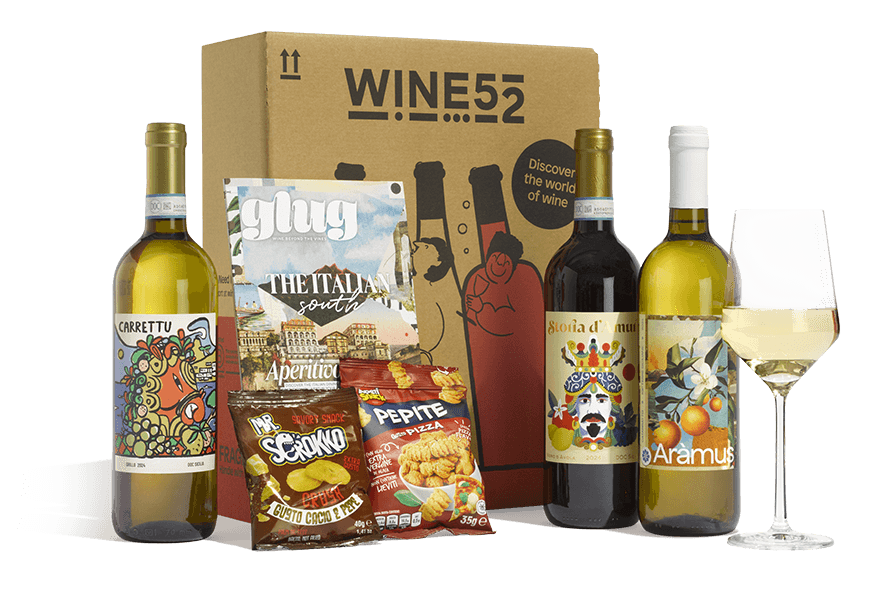
Join Wine52 and get your first month half price
-
Get your first box for £18 (RRP £36).
-
3 wines & 2 snacks delivered monthly.
-
Printed Glug magazine included.
-
Unlimited access to all online content.


