Are appellations losing their allure?
France’s appellation system has been a cornerstone of its wine industry’s global success for nearly a century. Ian Bancroft asks if it’s still fit for purpose.
Ian Bancroft
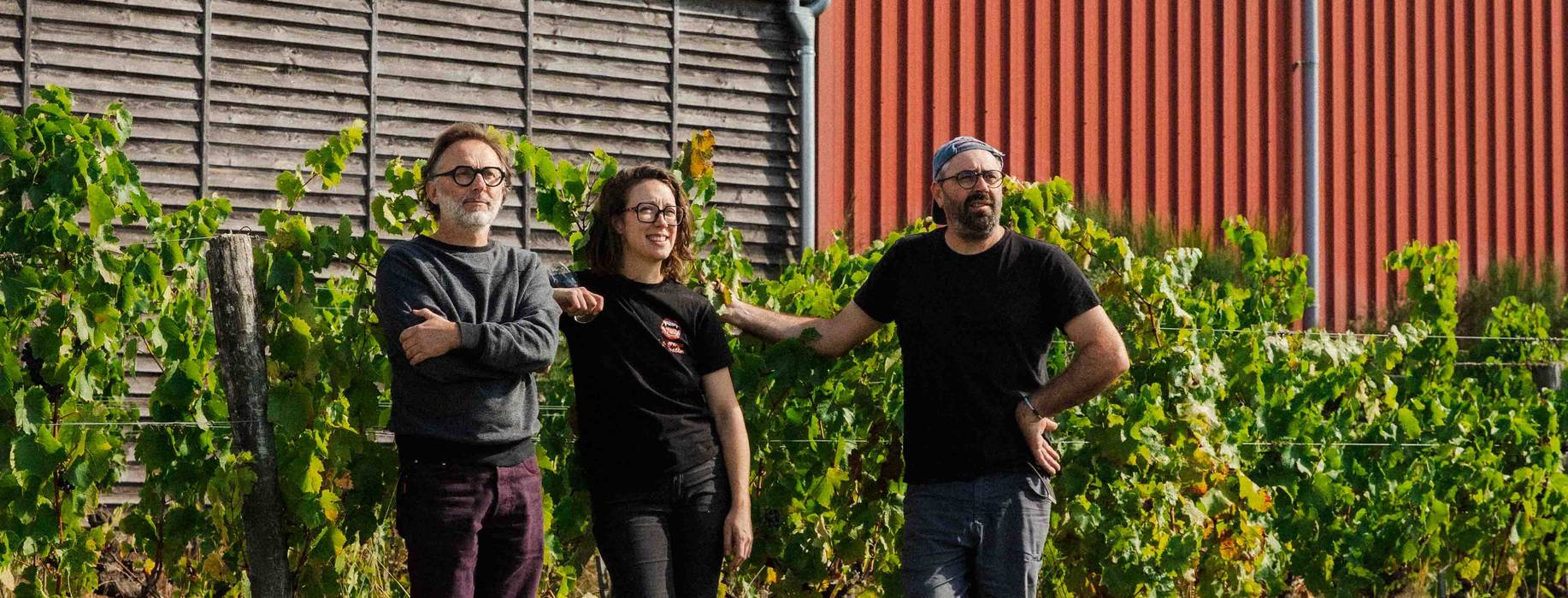
Photo © LA GRANGE AUX BELLES
Wednesday 17 June 2026
This article is from
Vin de France
issue 63
Share this article
This year marks the 90th anniversary of the French wine appellations system, a model since imitated across the wine world. By regulating where and how a wine is produced, it set out to prevent fraud while guaranteeing quality, and in doing so became one of the most significant value creators in modern history. Vineyards a few kilometres outside a given appellation look on with envy at their more illustrious neighbours.
Pomerol—the smallest of Bordeaux’s major fine wine regions, renowned for its Merlot-based wines—is among the most sought-after of all. To put its name on a label is a guarantee of premium price and the adulation of others.
Like most exclusive clubs, though, membership comes with non-negotiable obligations. Inspectors with clipboards assess every potential breach. Despite its noble intentions, the system is largely impervious to change, and with the wine world in flux, it can prove a straitjacket that does more harm than good.
For Château Lafleur, which announced in August 2025 that its wines would be marketed as ‘Vin de France’ rather than ‘Pomerol’, the decision was grounded in challenges that have become impossible to ignore. The estate had played well within the rules, but climate change has changed the calculation. “It’s becoming crazier every year,” says Omri Ram, cellar master at Lafleur. “The climate is pushing us here in Bordeaux towards something that reminds us more of Napa.”
The constraints on vineyard management are many. Shading isn’t permitted. Nor is mulching—the practice of depositing compost, leaves, or straw to improve soil health. Most fundamentally, irrigation is forbidden in any form—“one of the hot subjects of last year”, Omri says, without a hint of irony.
The rules around the vines themselves are equally rigid. Planting density has a minimum that, in hot and dry years, the team finds too high. Yield ceilings made historical sense, but today’s sun and heat demand higher yields to keep the wines balanced. “We actually need to have higher yields to make sure the wines are still balanced and are not marmalade or equivalent,” Omri says.
What were once nuisances now read as threats. “All of these are becoming not just limiting, but dangerous if you want to continue making the wines that we’ve made for centuries, while everything around us is changing at an exponential speed,” he says. “You can’t expect to do the same things your grandfather did while the climate is totally not the same and get the same results.” Even so, the move is a personal one. “It’s not a crusade,” he adds. “We took our own decision, which is 100% based on viticulture pragmatics—there was no fight or war.”
The response was swift and overwhelmingly positive. “We had to drop our phones for three days because we were still harvesting!” Omri says. The first reactions came from producers in Australia, South Africa, and California. “They were like—‘what took you so long?’” he adds. He cites Dagueneau in the Loire and Soldera in Italy – the latter famously left the Brunello appellation—as the highest-profile precedents in their respective countries. “We’re definitely not the first and won’t be the last,” he says.
This is not liberty for liberty’s sake. The Guinaudeau family own the estate and farm it themselves, a rarity in Bordeaux, where ownership, management, and farming are usually separated. “For us, it’s one package,” Omri says. “We are very strict.”
For Omri, the episode reveals a paradox in how the system works. “Many appellations have a lot of regulation on lots of things, and then, funnily enough, there’s zero regulation on a bunch of other things that would be way worse,” he says. Soil amendments, vineyard sprays, and cellar additions during winemaking and ageing are often left untouched by appellation rules. Where irrigation is permitted by special decree, there is little guidance on how to do it or which water sources to use.
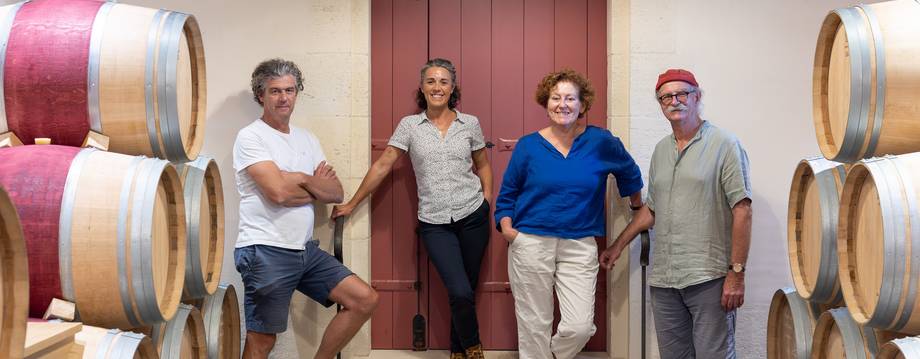
© Château Lafleur
It isn’t only renowned estates taking the step. La Grange Aux Belles, founded in 2004 south of Angers in the Loire Valley, has built its reputation on organic and natural wines. Caroline Corre, one of its winemakers, works alongside founder Marc and partner Gérald across 14 hectares of organic vineyard. For its first decade or so, the domaine produced under the Coteaux de l’Aubance appellation, faithfully following its diktats.
“Our departure from the appellation system was somewhat forced,” Caroline says. The grass-covered vines didn’t meet the inspector’s aesthetic standards, and the wines’ profiles didn’t always suit the tasting panels. The conflict with the certifying bodies eventually pushed the domaine out, in 2013.
It was a decision with consequences. The natural wine market was much smaller and less established then, and stepping outside the appellation meant stepping into uncertain commercial territory. “Our customers understood our approach immediately, largely thanks to the support of specialised wine shops where expert advice helps bridge the gap for the consumer,” Caroline says. Without those advocates, Vin de France wouldn’t be as highly regarded as it is today.
“Leaving the appellations did not change our approach to winemaking; if anything, it solidified it,” she adds. The team remains guided by natural-wine principles, avoiding additives and prioritising fruit integrity. Far from improvising, they use a mobile laboratory to analyse yeasts and track each wine’s progress—precision that, paradoxically, allows for less intervention. “We only step in when the data suggests it is absolutely necessary,” she says.
Many of the domaine’s neighbours have made similar moves, particularly those who share its market philosophy. Caroline isn’t, however, fundamentally opposed to the appellation system, and would reconsider re-entry if, for example, restaurant wine-list legislation–which already tends to relegate Vin de France to the back–ever became a serious commercial obstacle. One form of bureaucracy begets another, and each estate is forced to weigh its position vis-à-vis one constraint and the next.
Omri questions how much appellations really mean today. “What is the difference between a Pomerol sitting on the top of the plateau and a Pomerol that is 500 metres away on sandy soils?” he asks. “They both have exactly the same word on the label—‘Pomerol’.” The divergence of terroirs within a small distance dilutes the consistency the label is supposed to guarantee.
“We change to remain the same,” he says. “The idea was not that we wanted to give up things—it’s that we want to continue making the wines of Lafleur.” The appellation system was once the guarantor of a certain character of wine from a specific place. That claim can no longer be taken for granted. Whether the system can adapt will determine how its centenary is marked.
Share this article
You’ve reached your limit of 5 free articles this month.
Unlock unlimited access and more
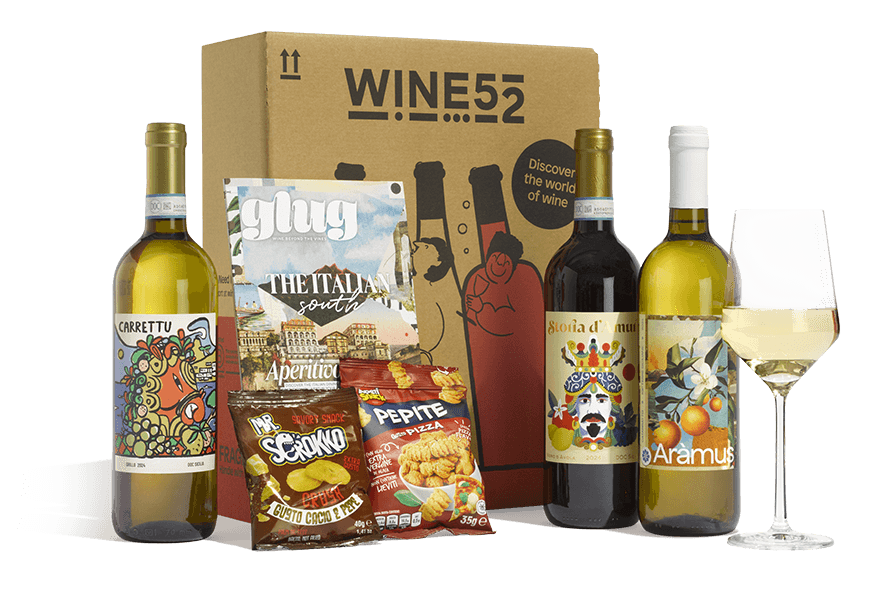
Join Wine52 and get your first month half price
-
Get your first box for £18 (RRP £36).
-
3 wines & 2 snacks delivered monthly.
-
Printed Glug magazine included.
-
Unlimited access to all online content.


