Co-operatives of the world unite
The time-testing co-operative model has found new relevance with the rise of Vin de France, writes Ian Bancroft
Ian Bancroft
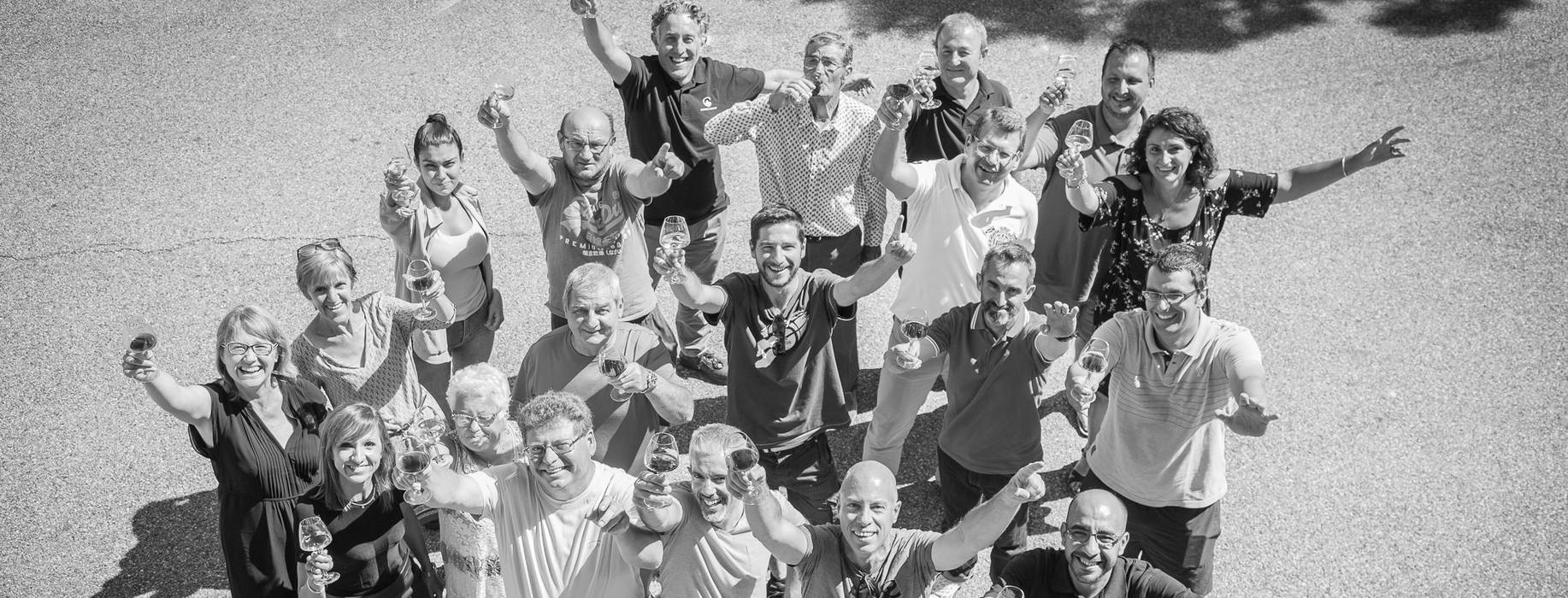
Photo © Cave de Cairanne
Wednesday 17 June 2026
This article is from
Vin de France
issue 63
Share this article
The word ‘co-operative’ tends to conjure images of traditional agriculture: hardworking farmers sharing equipment, showing solidarity to neighbours in hard times, pooling scarce resources out of necessity. Quantity over quality. Subsistence rather than the market. Today’s wine co-operatives are quietly redefining what the word means.
Les Vignobles Foncalieu represents 619 winegrowers across nearly 5,000 combined hectares in the Languedoc, in southern France. Each retains ownership of their land but commits to a shared project. The group currently spans four wineries: Celliers du Nouveau Monde in Puichéric, Vignerons de la Cité de Carcassonne, Vignerons du Pays d’Ensérune near Béziers, and, more recently, La Redorte.
The principle is straightforward, says Audrey Arino: winegrowers pool their resources to produce, vinify, and market wines collectively. The structure is democratic, with the winegrowers themselves represented in governance—a model she calls fair and sustainable. Their guiding principles, she adds, are solidarity, transparency, and a constant pursuit of quality.
For Denis Crespo, director of Cave de Cairanne—a co-operative supporting 124 families in the Southern Rhône Valley—the model is simple: pool the grapes, vinify them, handle the marketing, and maximise their value. “It’s a true example of communism in a capitalist world,” he says. The aim is to make the best wines each vintage allows.
Effective management matters enormously when so many growers operate under one umbrella. At Foncalieu, decisions emerge from a balance of collective governance and technical expertise, with overall strategy co-created with the winegrowers. At Cairanne, a board of directors representing all members votes on every significant decision concerning the life of the co-operative.
The choice of which wines to produce derives from a close reading of contemporary tastes. Foncalieu’s sales and marketing team, Audrey says, communicates the expectations of international markets back to the producers: trends, styles, positioning, price points. Co-operatives can gather market intelligence that smaller, independent wineries rarely have the resources to access, and target consumer profiles accordingly.
At Cairanne, production responds to demand, with Denis and the board setting annual priorities. A large share of the output is organic, reflecting the consumer base, alongside natural wines and the cru wines of Cairanne and Rasteau. “These are wines with high added value,” Denis says. “The winery does not produce entry-level wines—that is not our philosophy.”
At Foncalieu, a collective winemaking plan is developed each year. Wines are conceived upstream and then classified by profile and quality level, with meticulous plot-by-plot selection directing grapes towards their intended styles. The result is responsiveness to shifting tastes and a showcase for the diversity of the vineyards.
The arrangement spreads risk and enables specialisation that no individual grower could match alone. “We are stronger together in the face of the crisis rather than alone in a field where there is no cushioning effect in relation to cash flow,” Denis says. Pooled investment in winemaking equipment, R&D, consistent quality control, and a serious international sales force—these, Audrey says, are simply beyond the reach of a lone winemaker.
The model also helps growers adapt to climate change. Foncalieu has selected more resilient plots, introduced controlled irrigation, developed resistant grape varieties, and pursued oenological innovations to preserve freshness and balance. The co-operative was the first to produce and market a wine made from French disease-resistant varieties, after more than a decade of experimentation. The resulting range includes NU.VO.TE (Artaban, Vidoc, Floréal), Atelier n°10, and Esprit Artisan (Souvignier Gris). Few individual winegrowers have the resources, expertise, or time to pursue work of that scale.
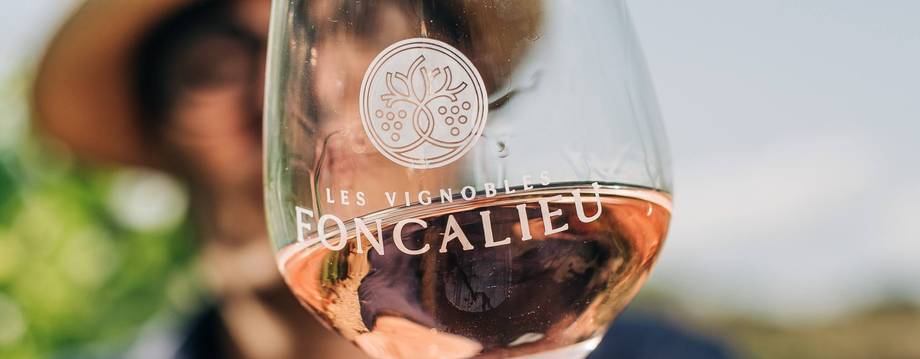
© Les Vignobles Foncalieu
At Cairanne, the focus has shifted to soil health and deep root development. All grapes—including the reds—are now harvested at night to preserve freshness. Vinification has adapted too: lower temperatures protect balance, while longer macerations allow gentler extraction over time. Co-operative guidance has helped growers accelerate changes that would otherwise have taken years to embed.
Beyond the winery gates, co-operatives play a vital role in rural cohesion, keeping often-family-run farms viable that would struggle on their own and fostering the kind of mutual aid and intergenerational knowledge transfer that sustains rural life. “Today, the Cairanne co-operative winery is the economic heart of our village,” Denis says. “If this winery were to disappear, it would be the end of the Cairanne appellation and the economic life of the village.”
Cairanne has weathered considerable turbulence. A severe financial crisis pushed the winery into receivership in 2015, with €8m of debt to be repaid over fourteen years. Covid and the energy-cost spike following Russia’s invasion of Ukraine made the situation worse. Survival came down to wine quality and a carefully chosen distribution strategy, selling exclusively through wine merchants, restaurants, wholesalers, export markets, and direct bulk sales to négociants such as Guigal, Chapoutier, Jaboulet, and Grandes Serres.
Foncalieu, meanwhile, continues to evolve. Over the last twenty years it has shifted from a production-driven model to one centred on the market, brands, and value creation. A self-described “premiumisation” strategy is built around labels such as Le Versant and Château Haut Gléon, and the co-operative has been an early mover in low-alcohol wines (9.5%) with its Cosette range.
Audrey is optimistic about where the model is heading. “I believe the co-operative model remains entirely relevant, but it will evolve,” she says. Rather than a proliferation of new co-operatives, she expects existing ones to merge, transform, or modernise to stay agile. Denis sees the trend already taking shape: estates that have ceased independent operations are joining Cairanne, persuaded that strength lies in numbers as wine consumption continues to decline.
There are new threats on the horizon, however. The next big challenge, Denis says, will be resisting the European and French regulations that he believes are choking French agriculture. “France no longer wants agriculture,” he says. Each fresh layer of bureaucracy weighs heavily on individual wineries, and tempts more growers to tear up their vines.
By helping winemakers navigate the fundamental transitions of recent years—environmental, technological, generational, and the shifting palates of the drinking public—co-operatives offer a distinctive proposition in an increasingly tumultuous wine world. Far from the rustic image they often carry, they are highly sophisticated structures, with depth of knowledge, expertise, and resources. For smaller wineries lacking the means to handle production and sales at the level the international market now expects, co-operatives offer a route to scale without surrendering identity. The examples of Foncalieu and Cairanne suggest the model has plenty more to give.
Share this article
You’ve reached your limit of 5 free articles this month.
Unlock unlimited access and more
Join Wine52 and get your first month half price
-
Get your first box for £18 (RRP £36).
-
3 wines & 2 snacks delivered monthly.
-
Printed Glug magazine included.
-
Unlimited access to all online content.


