Indigenous Grapes: The Italian South
Get to know the grapes in your glass
Katie Mather
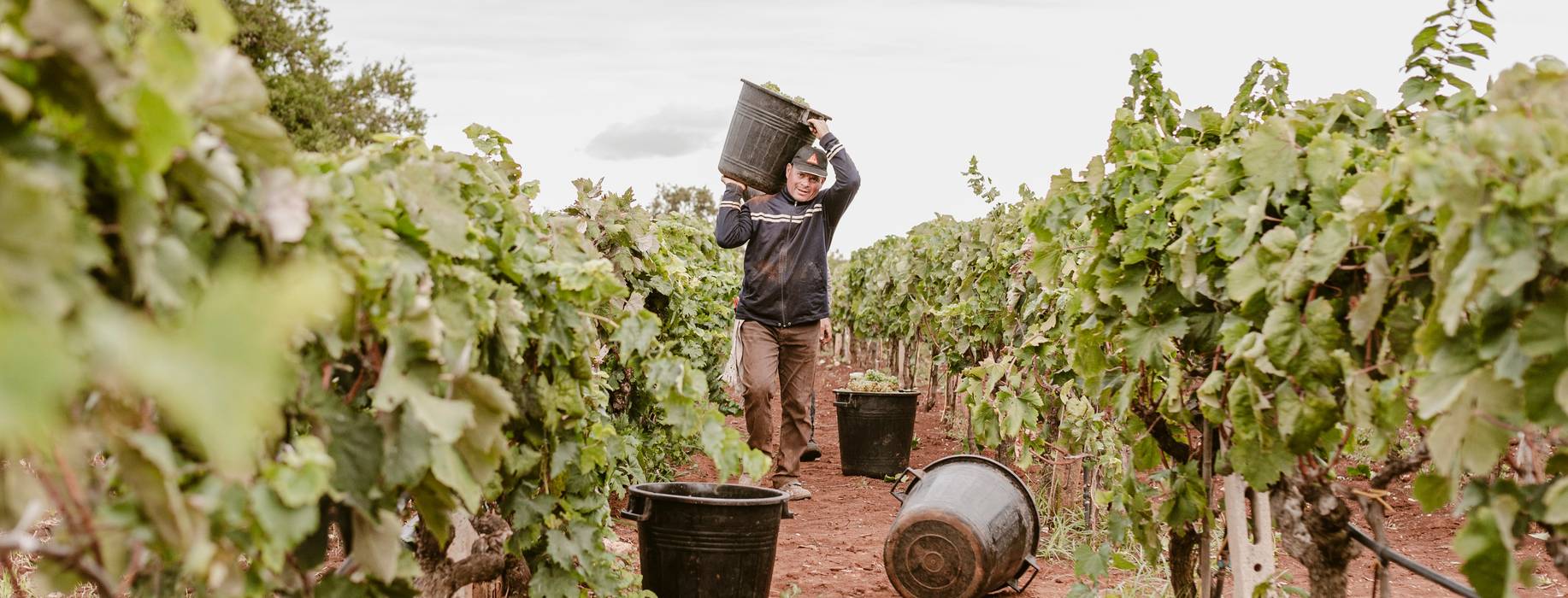
Photography © Cantina Albea
Wednesday 21 May 2025
This article is from
The Italian South
issue 49
Share this article
The Mezzogiorno of Italy, its southern portion, is where the unification of the country failed its people, causing widespread poverty throughout the early 20th century. This is called the “Southern Question”, and to this day, the GDP of the south is far less than the north. As you would expect, more than 150 years of hardship has developed within the local cuisines a type of “rusticity”—a simplicity which was once a starving necessity, that has become a globally feted cuisine. Chic, somehow. While people moved from their villages to the cities, or continued to live in caves well into the 1950s, the Riviera flourished, and the Italian Lakes became a Hollywood hotspot holiday destination. Pizza from Napoli, a southern invention, became an American staple as immigrants fled the hunger and organised crime they grew up with. Today, the caves of Matera are a travel guide item, and you can stay the night. The Amalfi coast is a colourful cluster of fishing villages that became as famous as Madonna overnight. The south is a sought-after tourist destination full of gorgeous views and ancient monuments, which has brought much-needed tourism industry money to the region. The troubles of the mid-20th century are harder to spot. But it’s important to know these things, because if you’re not learning while you travel, gaining a deeper understanding of a place as you drink its wine, what are you doing?
Yes, things have changed in Mezzogiorno, but the wine is still stunning. Indigenous grapes here range from the truly indigenous to those brought over by the Greeks in times of Hercules and Pegasus, and were drank by Pliny the Elder as he sipped and snacked his way around Campania. This is a magnificent place for wine, and with so much to explore, it sadly gets left out of tasting events and shopping lists because it seems a bit hard to get into—like a great band you discover has 18 studio albums, you want to be a fan right now, but the sheer scale of the task at hand is intimidating. That’s Italian wine for you, baby. Lean into the bewilderment. Enjoy the rush of trying something new, pretty much always.
The hot summer temperatures and high altitudes of southern Italy are perfect for Aglianico, a black-skinned grape with an unknown and mysterious parentage. Used to make Taurasi, a fine, aged red wine that until the 1990s was largely ignored by the world outside of Campania. A travesty.
Growing Aglianico anywhere else would be tough—it buds early, loves warm, dry weather, and is prone to downy mildew. It’s a proud southerner, and to reward its caretakers it produces a rich wine full of black cherries, dark chocolate and sometimes, a slight tartness.
Aromatic Aleatico comes from Tuscany, and more specifically, the island of Elba off the coast. It is used to make Aleatico di Portoferraio, a dessert wine made by first drying the grapes, that fans and collectors will pay huge sums of money for.
This is a powerful grape with an immensely luxurious aura. Tasting notes include “pair with black forest gateaux”—as if you ever need telling twice. It can also be used to make a floral rosé, that’s dry but packed with rose, apricot and lychee.
If you spot Asprinio growing in Campania, you won’t be able to stop yourself from taking a picture. These round, yellow-green grapes are trained to grow up the tall and stately poplar trees of the region as they have been for centuries—they can grow up to 9 meters among the branches. This grape is mostly used to make sparkling white wines with zest and aromas of ripe citrus and stone fruits.
The golden grapes of Fiano are indigenous to Campania and Sicily, and its thick skin endangered it for a while during the 20th century—vignerons were struggling to make enough wine from it to turn a profit. Luckily for us all, the variety held on and a renewed interest in Fiano has kept it present in southern Italy’s vineyards.
It’s thought the Romans drank Fiano, and wine writer Jancis Robinson believes it may well be the grape “Apianum” cultivated by the Romans in Avellino.
Another fine grape from Avellino is Greco Bianco, otherwise known as Greco, grown in the hills where sulfur mines once cut deep into the earth. It’s a fussy grape to grow, susceptible to all sorts of mildew and mould infections, but the resulting wine from the grapes that make it through are as aromatic as the rolling fields it grew among.
It’s sister, Greco Nero, is grown in Calabria—the heel of Italy’s boot. Also an aroma-bomb of a grape, when pressed into deep, ruby red wines they burst with violet aromas and flavours of plum and blackberry.
Greco Nero is usually blended with Gaglioppo, which has gorgeous violet-coloured berries. It’s not well-known outside of Calabria, but it’s worth a mention here because of its presence as a simple but fruity table wine throughout the region and beyond.
A short hop over the Med to Sicily we find Grillo, a complex grape that makes a complex white wine full of delicious twists and turns. Floral and peppery, it’s an ideal food wine and is especially good with chargrilled seafood.
Elsewhere in Sicily, the volcanic soils and hot sunshine make ideal growing conditions for Nero d’Avola. Black-skinned grapes that provide soft, velvety tannins help to create the famous structure of this beautiful wine. Nero d’Avola is known as Sicily’s most important grape, and without the specific terroir found on the island, it just wouldn’t be the same wine we know and love.
In the heel of Italy, the region Apulia is home to one of Italy’s most famous grapes—Negroamaro. Known originally for its dark rusticity, there is an earthiness about this grape that winemakers of the region either try to erode, or embrace and celebrate.
A touch of bitterness often rounds out the palate at the end of a sip of Negroamaro, the quintessential Italian experience—remember that with all enjoyment there is a little bitterness; a wish that others were with you who are not, or a memory of times gone by. Memento Mori.
Share this article
You’ve reached your limit of 5 free articles this month.
Unlock unlimited access and more
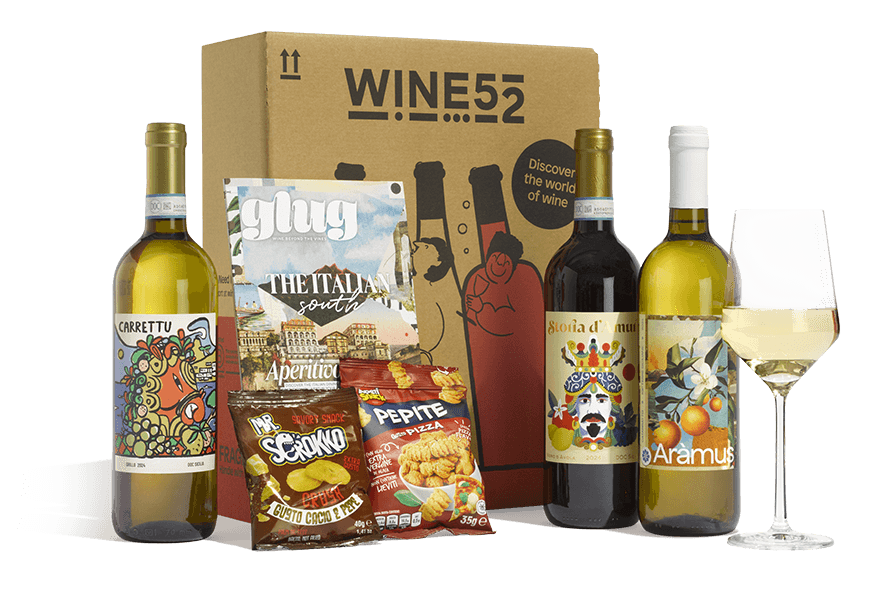
Join Wine52 and get your first month half price
-
Get your first box for £18 (RRP £36).
-
3 wines & 2 snacks delivered monthly.
-
Printed Glug magazine included.
-
Unlimited access to all online content.


