All up in your Grillo
The Sicilian classic that might be your new favourite white
Ian Bancroft
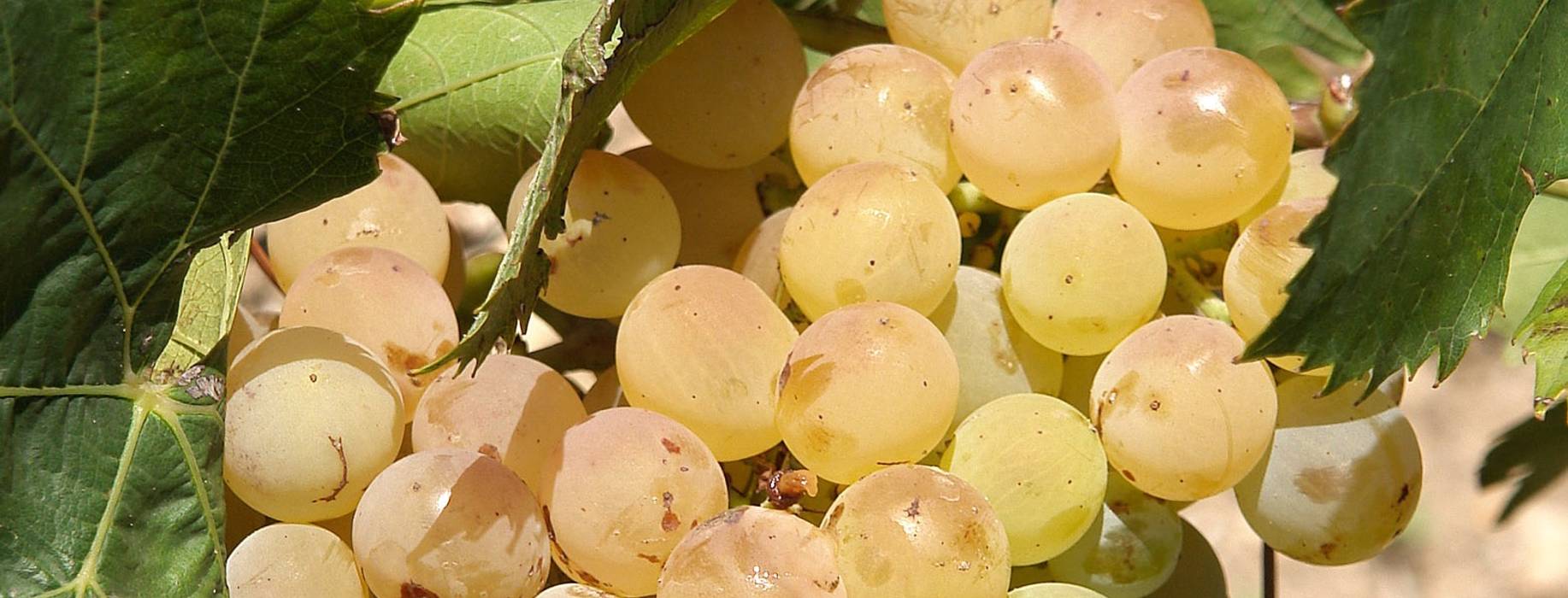
Photo Flickr/ikonovel (CC by S.A 2.0)
Wednesday 21 May 2025
This article is from
The Italian South
issue 49
Share this article
Grillo—no relation to the comedian ‘Beppe’, the eccentric co-founder of the Italian Five Star Movement—is another grape you will have unwittingly tried, typically when a recipe calls for Marsala, a fortified wine produced near a town of the same name on the island of Sicily (and if you haven’t tried Marsala, you’ve inevitably googled ‘alternatives to Marsala’).
Andrea Pizzo, from Feudo Arancio Winery—whose vineyards are spread over seven hundred hectares along Sicily’s southern coast—describes Grillo as “the most important grape for Sicily…one which is increasingly recognisable and demanded”. Fifteen years ago, however, Grillo was “completely unknown in the wine business”, he maintains. Several of their first attempts at exports failed, but changes in “the way of growing and vinifying it to get more lightness and aromaticity”, as Andrea describes, have driven recent success.
Antonio Rallo, CEO and owner of Donnafugata, argues that, “we are witnessing a clear rise in awareness of the potential of the Grillo grape”, adding that, “the cultivation and winemaking techniques have led to a noticeable improvement in quality”. “Thanks to different biotypes and clones, we can meet a wide range of wine typologies”, Antonio tells me, with Donnafugata concentrating on “fresh, mineral and varietal Grillos”.
It is a sense of progress echoed by Gaetana Jacono, CEO of Valle dell’Acate Winery, which has been in her family for six generations. She explains how “the Grillo of eastern Sicily has always distinguished itself since it comes from a different clone than western Sicily”; the latter’s structure being more suited to use in fortified Marsala wine. The hot plains of western Sicily make for more robust wines, while those in the east have “a lower residual sugar that shines for elegance and finesse and not for heaviness”, in Gaetana’s words.
Another key factor that distinguishes Valle dell’Acate’s Grillo is the distinctive ‘yellow soils’. As Gaetana says, “Zagra, our Grillo, benefits from the yellow earth and sea sand, resulting in a mineral-driven, savoury wine that pairs beautifully with food without overwhelming it.” The ‘yellow terroir’ she speaks of is the sandy-clay yellow soils of their Contrada Biddine vineyards on Sicily’s south coast. They are light and mineral-rich, imparting freshness and complex aromas.
The description evokes a sense of wilderness, hostility, and barrenness that one might typically associate with Sicily. While, as Andrea notes, Grillo’s indigenous nature means that it “is a very resistant grape”, it requires careful handling to get the best results. As Antonio elaborates, Grillo “is vigorous and requires soils with good water retention, as well as protection of the clusters from excessive light reductions to preserve the varietal aromas”. “Oenology is more about listening and protection than intervention”, he adds.
“To have a modern style”, Andrea contends, “it is crucial to have an early harvest—during the first week of August—which is done during the night”. Nighttime harvesting, especially in a climate like Sicily’s, helps the grapes retain acidity and flavour. The acidity is the absolute priority, Gaetana tells me, as if to reiterate the consensus among winemakers.
This attentiveness to acidity levels continues in the cellar, where Andrea emphasises the importance of “oxygen reduction” during vinification for enhancing flavours and aromas. At Valle dell’Acate, Gaetana describes how “fermentation is exclusively spontaneous, with the use of indigenous yeasts…already present in the grapes and the winemaking environment”.
The result is a pure expression of Grillo’s distinctive characteristics. Gaetana speaks of perfect acidity, which she describes as “an omen of long life”, along with “aromas of peach, passion fruit, which emanated from the collection boxes [in which the grapes are carried during the harvest]”. The natural sugar is, in her words, “in its perfect balance”.
For Antonio, it is “freshness, drinkability, natural high acidity, vibrant palate, and medium to full body” that makes Grillo appealing. He maintains that, “stylistically, there is a transition from varietal expressions—aromas, fruits etc.—to expressions of terroir”, adding that, “it is evolving towards winemaking that is able to express the terroir as well”. Antonio is “convinced that it is a contemporary variety that meets the desires of many consumers”.
Gaetana firmly believes that Grillo has the potential to be “Sicily’s quality wine”. “Whilst there will always be a diversity that depends on the different territories”, Gaetana begins, “we are united in diversity under the name Sicily”. It is, she adds, “the perfect white”; words not of optimism or hope, but of experience and comparison. Grillo demonstrates not only Sicily’s potential, but evokes the island and its sense of place. “It encapsulates the ‘solarity’ [pertaining to the sun and its energy] of Sicily”, Gaetana describes, “its scents and notes”. “It is a sip of Sicily—modern but rich in notes”, she adds.
For Andrea and Feudo Arancio, such winemaking “becomes a discovery of the island’s colours and atmospheres”; one that should continue now and in the future to “enhance its own Mediterranean roots”. If wine is a journey through a single glass, a single sip, then Grillo embodies a place that many of us have only imagined.
Andrea remembers that Grillo—along with grapes like Inzolia, Catarratto, and Damaschino—“was unknowingly beloved by the British as part of the blend of Marsala fortified wine created by John Woodhouse”. Like Grillo, Woodhouse is far from a household name. In the late eighteenth century, a fierce storm forced this Liverpool merchant into the port of Marsala. Upon discovering the local wine, he arranged for barrels to be exported, though not before topping them up with a dose of brandy. He truly found shelter in the arms of Grillo and others.
While the path of contemporary Grillo diverges, both manifestations were driven by the prevailing currents of taste; then sherry and Madeira-style wines, now whites that boast freshness and aromas. What the future holds is anyone’s guess. For Andrea, it could be a focus on ageing and longevity to secure international recognition as fine wines. What is certain, however, is that these are wines that are not to be sniffed at. Or in Beppe’s parlance, Grillo is no laughing matter.
Share this article
You’ve reached your limit of 5 free articles this month.
Unlock unlimited access and more
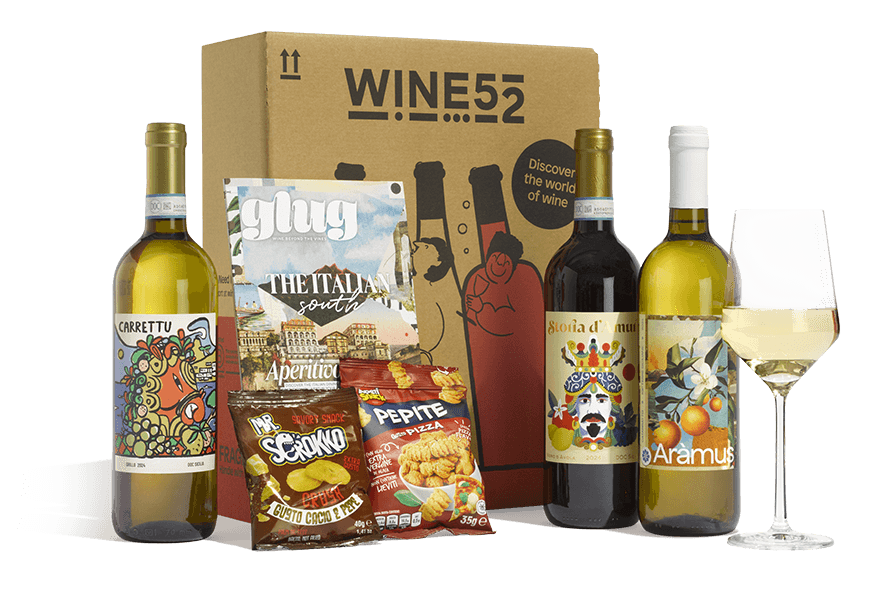
Join Wine52 and get your first month half price
-
Get your first box for £18 (RRP £36).
-
3 wines & 2 snacks delivered monthly.
-
Printed Glug magazine included.
-
Unlimited access to all online content.


