Softly does it
Laura Hadland digs into the rich historical and cultural background of the most abused of cheeses: mozzarella
Laura Hadland
Wednesday 21 May 2025
This article is from
The Italian South
issue 49
Share this article
Buffalo mozzarella is produced in many countries. You can find a happy herd of grass-fed water buffalo farmed for the purpose in Somerset, for example. However, its true heartland is within the culinary landscape of Campania. The cheese made there bears the “Mozzarella di Bufala Campana” trademark and was granted DOC status in 1993. This special product was also granted Protected Geographical Status by the EU in 2008.
It is difficult to pinpoint when buffalo came to Italy. The similar ancient animals who strode those lands during the Pleistocene became extinct thanks to changing climates. What is apparent is that by the late 800s, water buffalo had been brought to Sicily from Syria by the Arabs. Their population gradually shifted northwards in the intervening centuries, being suited to the rough browsing of the swampy areas around Campania.
The Romans were making a mozzarella-like cheese from sheep’s milk in Italy during the first century AD. Records show the monks of the San Lorenzo monastery in Capua, Caserta—still one of the epicentres of quality mozzarella production—offered bread and mozza cheese to worshippers on pilgrimage in the middle ages, most likely also made from sheep’s milk.
As buffalo farming grew in the sixteenth century, the switch to using their milk for this style of ‘spun’ cheese began. The first recorded written mention of mozzarella is in a cookbook dating to 1570. The author, a chef to the Papal Court named Bartolomeo Scappi, specifies that it must be made from water buffalo milk.
Mozzarella di Bufala is a soft cheese, known for its creamy, mild flavour and springy texture. The milk of the water buffalo is higher in fat than cow’s milk. The result is a cheese with a softer texture and a slightly stronger flavour than cow mozzarella. Mozzarella di Bufala also has a slightly sour, rather than sweet taste.
In Italy, the best examples are used as fresh as possible, because of the undesirable changes in texture that come when the cheese ages beyond 24 hours. Mozzarella’s most famous use is as a topping for that other Campanian invention, the pizza. But that is not the end of its talents—mozzarella is a versatile cheese. The protein and omega-3 rich cheese is compatible with a wide range of antipasti, salads and pasta dishes, both hot and cold.
For Chef Andrea Scarpati of Sapori in Leicestershire, you cannot beat the genuine article. He has lived in the UK since he founded his restaurant in 2011, but there is always one thing he yearns for when he visits his childhood home in Torre del Greco.
“Mozzarella di Bufala is the first thing I ask of my mum when I go home. It is the first thing she buys for me,” Andrea says. His favour is certainly worthy of note. In 2023, Andrea was made an Ambassador of Taste for DOC Italy—a special elevation that recognises his contribution to promoting and preserving the cuisine of his region.
“I like to pair authentic Mozzarella di Bufala Campana with Fiano di Avellino, a fantastic wine of our region,” he tells me. “The clean minerality of the wine will cut through the fat and the salt.”
Andrea gets lost in nostalgia as he talks about the food of his home. I am surprised to discover that the story does not end with the mozzarella. It’s worth seeking out the buffalo ricotta of Campania too, I am told. It is also a protected product. Made using the sweet whey left over from mozzarella production, Andrea describes it as “an experience of a lifetime”.
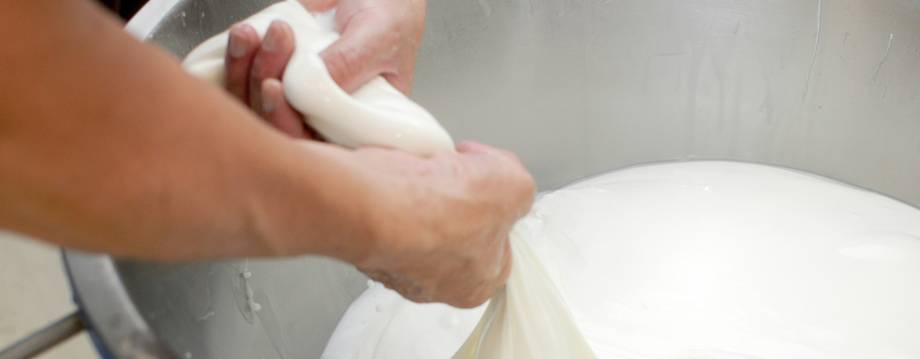
The production process is called pasta filata, spun paste, where acid is added to the milk to make the proteins coagulate. It is then heated and stretched to achieve the springy texture. The name for mozzarella comes from this process too. When the curd is stretched by hand into strips before being formed into balls it is described by the Italian verb mozzare, ‘to cut’, since the curds are cut twice during the process.
Andrea tells me there is an easy way to identify traditional handmade mozzarella from machine-produced.
“When it’s made by hand, the closure of the ball forms an uneven triangle shape on the surface. When it’s made by machine, you will only see a straight line.”
The best examples come from two areas: Aversa in Caserta and Battipaglia in Salerna. The Zizzona di Battipaglia is world renowned not just for its quality, but also because of the extreme sizes it can be made into. Standard Zizzona can range up to an already impressive 5kg in weight, but the biggest have been known to top a frankly unfeasible 15kg.
The Zizzona is slightly chewier in texture than other mozzarellas and is easy to identify thanks to its unique shape. The ample round, with a characteristic nipple on the top, has an undeniable resemblance to the zizza which gives it its name. Zizza is the word in the Campanian dialect for breast, perhaps more authentically translated as the tit, and it has been a symbol of abundance and fertility since ancient times.
The second key zone of quality, Caserta, is home to one of the most well respected mozzarella producers in Italy—Mini Caseificio Costanzo. Their story began in 1990 when a harsh frost destroyed the Costanzo family’s entire kiwi crop. Husband and wife team Gennaro and Lia decided it was time to start a new line of business to support their five children.
Mini Caseificio Costanzo began working with milk that Gennaro selected personally from local farms before establishing his own buffalo farm in 1995. The Costanzo’s pursuit of quality meant that their cheese was quick to succeed and now their children continue to run the business with respect for the short, tightly controlled supply chains and artisanal production that their father set so much stock in.
***
Pairing wine with Mozzarella di Bufala
Falanghina: But of course, what grows together, goes together. Campanian Falanghina is another white wine with a rich bouquet of flavours that will complement your buffalo milk cheese exquisitely. Expect flavours of peach, honey and lemon, with just enough body to work well with cooked mozzarella. Try it with the totally untraditional dish of roast cod with mozzarella and tomatoes, which would make any good Nonna angry, but still taste delicious.
Soave Classico: Head out of Campania and pick up a Soave Classico made with 100% Garganega grapes for another excellent match with mozzarella. Like the Fiano, these wines tend to have a slight nuttiness—almonds in this case—which pick up on the creaminess of the cheese well. The rich stone fruit flavours, hint of chamomile and well balanced acidity will serve to cut through the richness of mozzarella when served fresh in a Caprese salad.
Fiano di Avellino: This ancient grape was first brought to Campania by the Greeks. It creates an intense, complex wine with a characteristic minerality as well as flavours of tropical fruit, hazelnuts and even thyme. A DOCG certified wine since 2003, the highest Italian mark of quality, it pairs well with Zizzona di Pattipaglia, bringing out the simple decadence of both.
Share this article
You’ve reached your limit of 5 free articles this month.
Unlock unlimited access and more
Join Wine52 and get your first month half price
-
Get your first box for £18 (RRP £36).
-
3 wines & 2 snacks delivered monthly.
-
Printed Glug magazine included.
-
Unlimited access to all online content.


