Barossa Valley’s Big Boys
Getting to grips with the heavy hitters
Katie Mather
Wednesday 15 July 2026
This article is from
South Australia
issue 64
Share this article
The Barossa Valley is iconic. Nestled below the Mount Lofty Ranges in South Australia, the region’s First Nations were the Peramangk, Ngadjuri and Kaurna people, who have lived here for more than 10,000 years. In the 1830s, colonisers from Europe marked a huge change in the population make-up of what is now known as the Barossa region, and laws against violating the land rights of indigenous aboriginal people were disregarded. The name “Barossa” itself is a misspelling of “Barrosa”, a name chosen by General Colonel William Light after the Barrosa Ridge in Spain, where he had fought in a battle against the French. Incredibly relevant, you’ll agree. The Mediterranean climate of Barossa led to a quick uptake in agriculture and winemaking between German and English immigrants, thus creating one of Australia’s oldest wine regions. By the time the Second World War ended, there were fourth-generation winemakers of both heritages in the region. It’s from this time onwards we can see the advent of the wine industry in the region as we know it today—it’s important to acknowledge that the large amounts of land required to plant vineyards were not empty and readily available to immigrants. Not every vineyard has a beautiful origin story.
It’s important to acknowledge that the large amounts of land required to plant vineyards were not empty and readily available to immigrants.
The Barossa Valley is famous for its big reds, made by big names like Penfolds and Wolf Blass from Shiraz and Cabernet Sauvignon. Shiraz is by far the most popular grape here, making up 50% of the vines. Some of these vineyards are home to the oldest continuously-producing Shiraz vines in the world, dating back to the very start of European occupation of the South Australia lands. In the rolling highlands of the Barossa, the climate is cooler and more susceptible to morning mists, giving the grapes time to cool off. In the valleys, and on the valley floor especially, the weather is warmer and less forgiving, which pushes the vines to ripen to their juiciest and sweetest. Concentration happens in large quantities throughout the Barossa region, offering richness, depth of flavour and mouth-filling tannins. The low-nutrient levels in the soil curb root growth creating a stressor among the perfect weather conditions, producing more acid in the grapes to balance out the decadence. This is why the Barossa Big Boys are known as some of Australia’s finest wines.
In the Barossa Valley, wines made with cool climate Cabernet Sauvignon started to gain favour in the ‘60s when Penfolds released Bin 60A. Known globally as a legendary wine made with Coonawarra grapes, you can pick up a bottle of the 1962 original, if you’re lucky and you know where to find some at auction, for a steal at around $10,000. As the style for bigger and bigger wines reached a feverish level throughout the 1970s and 80s, young winemakers in the 1990s took it upon themselves to use less technology and more traditional winemaking techniques to create wines with its own identity—celebrating the provenance of old vines, the influence of soil and microclimate, following in the footsteps of winemakers like Colin Gramp, Max Schubert, Cyril Henschke, and Peter Lehmann. Full-bodied Shiraz and Shiraz blends were becoming Barossa’s main export.
Fast-forward to the 2000s and Australia’s wine boom was resonating throughout the world. Everybody wanted big, juicy Barossa Shiraz—it was easy drinking but it felt luxurious. And the price tag wasn’t bad either. Like all economic bubbles, however, it had to burst, and soon Aussie reds just weren’t pushing the same numbers. Drinkers, having been seduced by Australia’s bright, easy to understand labels and bold flavours, were swinging back round to a more sophisticated style. A change in trend and a chronic oversupply of Shiraz grapes cheapened these wines and led to a collapse in the market. If you were around during these difficult times, you may remember the negative connotations Australian wine had. People were bored, and what’s more, they felt like Barossa wasn’t special anymore since it was everywhere, all the time. That’s the problem with supply and demand; You supply too much, the demand goes away.
Everybody wanted big, juicy Barossa Shiraz—it was easy drinking but it felt luxurious.
The only thing these winemakers could do was start again. By the 2010s many of them were a new generation again, following in the footsteps of their parents and grandparents of the 80s and 90s, and taking inspiration from their more natural and low-fi approaches back then. This step backwards was actually a return to a time when Barossa Shiraz was a wine made with integrity and intention, with the hope of rebuilding the region’s reputation for fine wine, quality, and craftsmanship.
Today, winemakers in the region are still experimenting, finding new ways to create Barossa, Barossa Valley and Clare Valley wines that honour the land and offer as much authenticity as their classic namesakes. The most exciting wines to come from the region are still made with Shiraz, but are blended with surprising grapes, such as Viognier. For Club Oenologique, sommelier Mark Davidson says, “If we wish to continue to praise Shiraz and hail it as our heritage grape, we need to ensure that we keep it interesting.” To do so, winemakers are finding new ways to call on their long heritage and historic vines while planting in different sites that better suit a changing climate and the world’s changing tastes. Shiraz is Australia’s grape, and the Barossa region is where Shiraz is at home. While a big bottle of Penfolds might not be the coolest label to bring to a tasting session, it’s something of a shame to let a style die simply because it’s fallen out of favour. Australian wine can get overlooked because of its relaxed marketing and dated ideas of quality, but the days of the Shiraz lakes were 25 years ago now. There are fresh faces in the wineries, doing amazing things with generations of experience behind them. That’s not to say the juicebombs are gone, either—there are plenty of Australian winemakers committed to unctuous, oaky wine. The big boys may be at rest, but there will be a time when they’ll be dusted off again.
Share this article
You’ve reached your limit of 5 free articles this month.
Unlock unlimited access and more
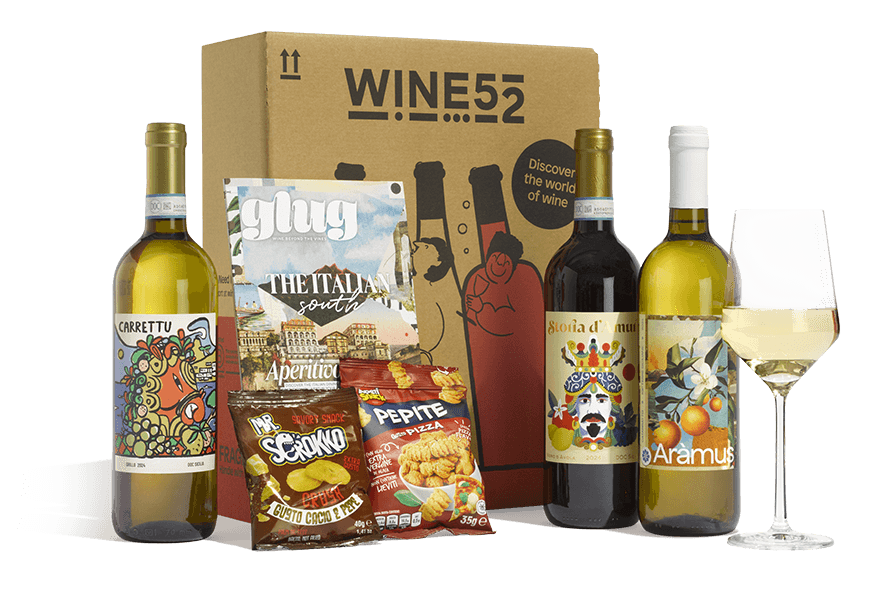
Join Wine52 and get your first month half price
-
Get your first box for £18 (RRP £36).
-
3 wines & 2 snacks delivered monthly.
-
Printed Glug magazine included.
-
Unlimited access to all online content.


