Right on ’cue
Cutting to the meat of Australia’s love of the barbie
Ian Bancroft
Wednesday 15 July 2026
This article is from
South Australia
issue 64
Share this article
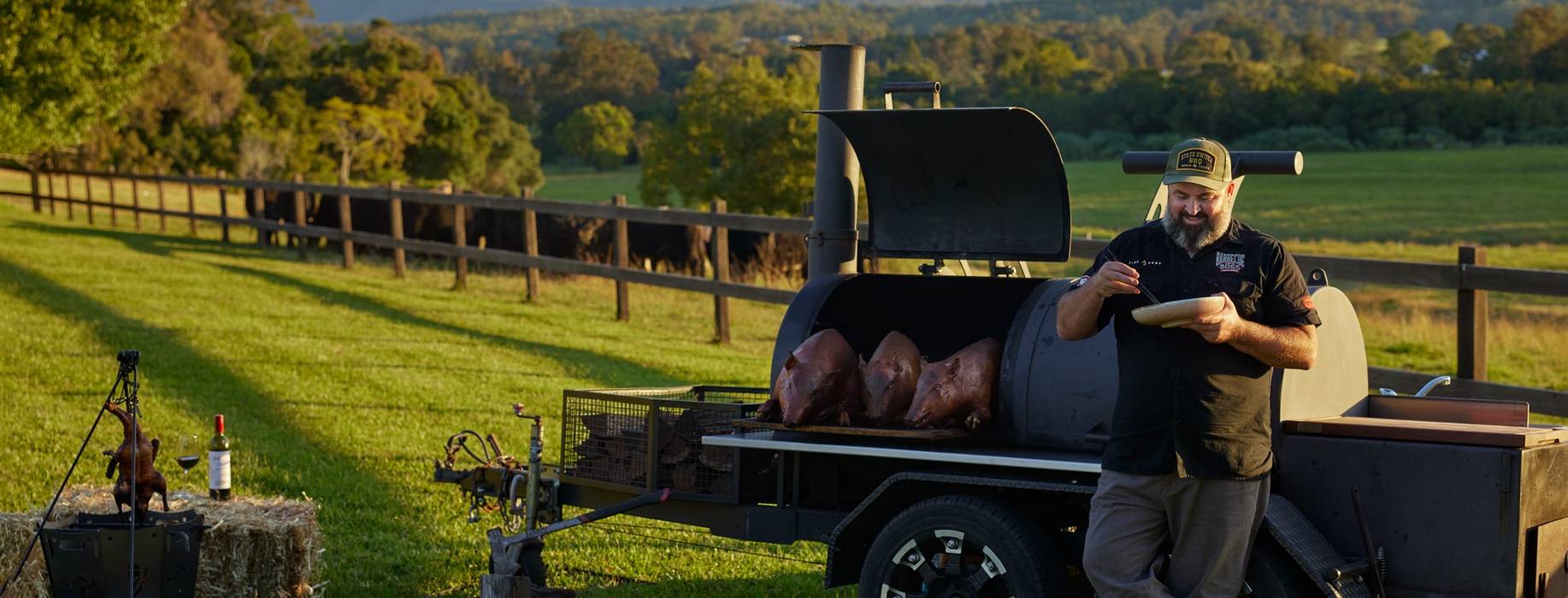
Aside from cricket, soap operas, surfing and Crocodile Dundee, Australia is most synonymous with the barbecue—or ‘barbie’, as it is colloquially known. It has become a fixture of the country’s efforts to lure sun-starved Brits, promising big, flame-enhanced flavours without the attendant British threat of rain. Yet behind the cliché, the practice has undergone a profound transformation into a serious gastronomic artform, with increasingly considered wine pairings.
“It has always been a part of Australian life and identity in one of its purest forms; it’s a cheap sausage served in white bread, which you can get outside just about any hardware store on the weekends,” says Jess Pryles, host of the television show ‘Aussie Barbecue Heroes’ and author of ‘Hardcore Carnivore’ and ‘Prime Cuts’ (out in the UK in the first week of October). Many childhood memories are tied to the crackle and haze of a barbie.
“If you look back to Australian Indigenous culture, the cooking of food over fire has been around for thousands of years,” says Adam Roberts, a respected pitmaster and author of the cookbook ‘Barbecue Fusion’. “With our amazing weather and relaxed lifestyle, grilling outdoors is something most households outside the cities do most weeks of the year.”
Barbecuing has long been a community affair, with public facilities found across the country—accessible spaces where neighbours and strangers share a common passion. “The Aussie sausage sizzle is a great source of fundraising and community activity. This classic pastime involves placing a flat-plate grilled sausage onto a slice of white bread, with a pinch of onions and barbecue or tomato sauce,” says Adam. “It’s the ultimate barbecue snack, and you’d be hard pressed to find any Australian who hasn’t enjoyed a sausage sizzle before,” he adds.
Modern Australian barbecue culture, though, differs from the global stereotype. “Actually, smoked barbecue has evolved greatly in Australia over the last ten years,” says Jess, recalling the “crappy burnt steaks” of her youth. “Because of an abundance of incredible produce, and a rich multicultural history, particularly as it relates to food, we’re seeing some incredible Australian takes on American-style barbecue. They have certainly taken the technique of smoking and made it uniquely Australian through their use of local produce.”
Australia is, of course, a country of immigration, and different nationalities have brought their own flavours and techniques. “Given that Australia is so close to Asia,” says Adam, “there is an incredible offering of fire-cooked food in general, with a natural propensity to infuse cooking techniques and flavours just about anywhere you go. With Greater Sydney and Melbourne in particular having growing and significant multicultural populations, cooking over charcoal is a prominent way to cook meat in those areas.” And yet, for all the progress elsewhere, barbecuing remains a largely masculine affair. “The grill is still largely the domain of men—it gives women a break to get them out of the house,” says Jess.
“It’s now common to see a purpose-built smoker or charcoal grill replacing the classic gas barbecue on the back deck of suburban homes, with the movement growing exponentially every year down under,” says Adam. That culture is captured in the award-winning online mini-documentary series ‘Beyond the Flame’, produced by Adam and Jay Beaumont, publisher of ‘100 Dishes of the Pacific Coast’. The same movement led Jess, Adam and Jay to co-found the Australasian Barbecue Alliance—also known as the Australian Barbecue Alliance—in 2014, with a New Zealand Barbecue Alliance following in 2017.
The Alliance’s aim is to standardise, cultivate and promote a distinct Australasian live-fire competition culture through a rigorous framework. Central to it is the ‘brotherhood’ or ‘sisterhood’ of barbecue, with a comprehensive code of conduct ensuring knowledge-sharing and sportsmanlike behaviour. Sledging, or trash-talking, of the kind associated with other sports is severely punished.
The Alliance has, says Adam, “developed one of the most consistent and highly regarded contest barbecue formats in the world, where cooks compete against each other in the staple low n’ slow cuts including beef brisket, pork ribs, pork shoulder, chicken and lamb.” These are the Olympics of barbecuing, drawing competitors from around the world to perform before accredited judges assessing appearance, taste and texture. The victors can expect an invitation to the United States for a clash of the titans.
The contests are often embedded in larger festivals. “Vivid Sydney is Australia’s largest festival, spanning twenty-three consecutive days at the start of winter each year, lighting up the Sydney CBD and waterfront and featuring the world’s most impressive Fire Kitchen,” says Adam. Chefs and pitmasters present their fire-cooked dishes to crowds that, he adds, “can run into tens of thousands passing the stage each night.”
In parallel, the culture of wine and barbecue has progressed too, challenging the long reign of the cold beer. As more care goes into marinating, rubbing and smoking, more thought is given to wine pairings—no simple matter, often turning on the meat on the grill. “Barbecue can be so smoky and so wearing on the palate that I actually have started to prefer reaching for a more sessionable wine that complements rather than competes with the food,” says Jess.
A good pairing depends on the dish. The high fat and protein of a beef brisket pair well with the tannins of a Barossa Valley Shiraz, whose black pepper and spice complement the savoury rubs. Slow-cooked pork ribs benefit from the higher acidity of a McLaren Vale Grenache, whose relative subtlety does not overpower the sweetness of a pork glaze. Other recommended pairings include a Tomahawk steak with a Coonawarra Cabernet Sauvignon, pork belly with a Clare Valley Riesling, and smoked lamb shoulder with a Langhorne Creek Malbec.
“I see the barbecue scene continuing to evolve and grow in Australia over the next few years in particular. I believe there’s so much more growth left in the market,” says Adam. Newcomers, he adds, “start to add new barbecues to their collection that allow for expansion of techniques over time.” It has given rise to a domestic industry of pitbuilders making bespoke smokers and open-flame grills; of pitmasters such as Jess and Adam producing rubs, sauces and cookbooks; and of barbecue vendors at markets, beer halls and festivals across the country.
The stereotypes may remain broadly the same, but the culture and practice of barbecuing in Australia have changed markedly in recent decades. The pioneering work of the likes of Jess, Adam, Jay and the Australasian Barbecue Alliance has set the standard for a new movement built on cooking over wood and charcoal. Australians’ love of sport and competition now extends to the grill—and with it, wine pairings have become more considered and more inventive, showcasing the subtleties of the country’s wines. Tourism Australia will be licking its lips at the promotional possibilities.
Share this article
You’ve reached your limit of 5 free articles this month.
Unlock unlimited access and more
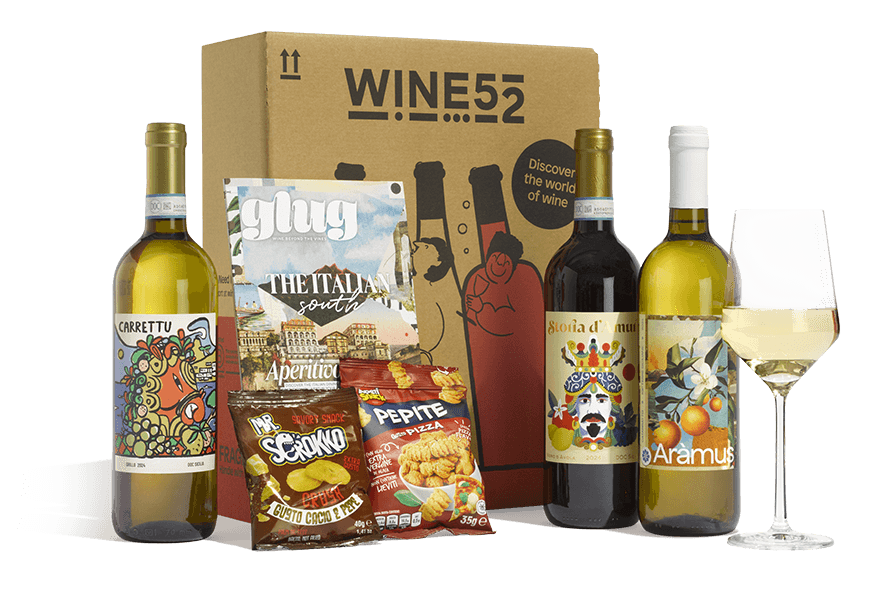
Join Wine52 and get your first month half price
-
Get your first box for £18 (RRP £36).
-
3 wines & 2 snacks delivered monthly.
-
Printed Glug magazine included.
-
Unlimited access to all online content.


