Indigenous grapes of Alpine Italy
Meet the star's of this month's show
Katie Mather
Wednesday 12 August 2026
This article is from
Alpine Italy
issue 65
Share this article
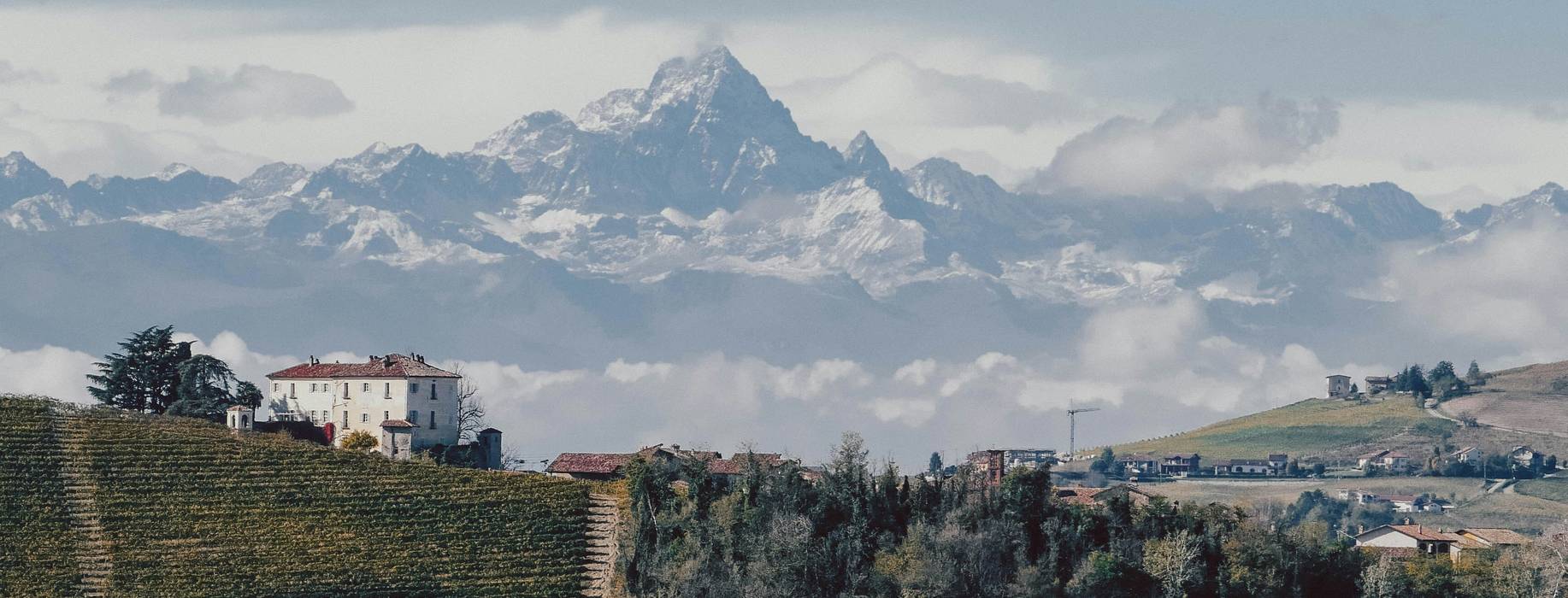
The heights of the Alps separate Italy from its land borders with France, Switzerland, Austria and Slovenia, a stunning mountain range that is both the highest and most extensive mountain range in Europe. These mountains influence weather and climatic conditions for many thousands of miles around, and so it’s not surprising that the wine traditions of Alpine Italy are unique to the area. Unlike the south of the country, where hot summers and volcanic soils produce intense, tannic wines, wines from the hills and valleys of the far north of Italy have to contend with wild temperature fluctuations between day and night, heavy snows in the winter, meltwater flooding in the spring and baking sun in the height of summer.
The beauty of this region is that it spans hundreds of miles, giving you plenty of variety even within the distinct parameters of the Alpine borderlands. In the north west of Italy you have the truffle forests and luxurious wines of Piedmont and Valle d’Aosta, the middle-north is Lombardy, a home of culture and art, and to the north east lies Trentino-Alto Adige, or Südtirol, a unique region where Alpine culture reigns.
You might think that in Alpine Italy there is snow year-round, but there are microclimates and pockets of valleys where temperatures can be extremely hot and the air becomes still and breathless. It’s during these months of high summer that the locals travel up into the mountains to enjoy the cooler air, the countryside, and the refreshing wines from steeper, more northerly vineyards.
Beginning in the Südtirol region, Lagrein is a purple grape that, while dark, can be a stunning example of the type of chic and elegant crisp white wines that can be made here. Grown in long, trellised rows down the steep hillsides of Bolzano’s crater-shaped valley, these grapes take full advantage of the strong, year-round sunshine thanks to their vineyards’ aspect taking in as much of that light as possible. A freezing winter offers slow growth and then summer gives the grapes a warm boost to fully ripen—harvest must be timed perfectly to avoid over-ripening.
In the Piedmont region of Italy, Nebbiolo is beloved for its resilience against the cold and its tannin and acidity, which both join forces to create wines with depth and structure that can be aged for many long years. Nebbiolo takes on the terroir of its immediate surroundings, and its soil is especially important to the resulting wine. In Alpine Italy the soil changes depending on the valley you are in, and there are many versions of Nebbiolo to be explored, each as specific as the last.
Originally from just over the mountains in the Valais region of Switzerland, Petite Arvine has a thick skin to help it survive through the cold springs and sunburn of the summer months. Thanks to the grapes’ juicy skin, wines made with Petite Arvine can have great texture and a complexity that adds to their acidic, apple-like flavour, particularly if the winemaker chooses to use a longer period of skin contact in the winery.
In the tiny wine region of Valle d’Aosta where the winemaking is often described as “heroic” due to the extreme heights and steepness of the vineyards here—not to mention the harsh weather during the winter—there is a rare Alpine grape variety called Prié Blanc. It is an early ripening grape, ready for harvest by August, and it’s bursting with acidity and light floral aromatics. Local winemakers sometimes like to make it into sparkling wines which have become a sleeper hit with trendy wine shops looking for unusual pét-nats.
Some know this Alto Adige variety as Trollinger, others as Schiava, and others as Vernatsch. Grown and enjoyed in Germany and Italy, but most likely indigenous to Alto Adige from as far back as the Roman era, this is a black-skinned grape that produces light red and rosé wines with a touch of residual sugar. Off-dry reds are not rare in the Alto Adige region, and are also enjoyed chilled. Sadly the name has nothing to do with mythical beasts, and is thought to be a corruption of the word “Tyrol”—another pointer that this grape is a Sudtyrol local.
The German grape Kerner was first grown in the 1920s, and produced as a crossing between Trollinger and Riesling. The result is a beautifully fragrant grape with tons of acidity and a true resistance to the cold. This is what makes it ideal for the growing conditions in Alpine Italy; as long as it’s sunny, it can thrive at elevations of up to 800–900 metres. This is a highly overlooked grape by many, but it can make delicious wines.
Its isolation compared to the rest of Italy’s wine regions is possibly why Valle d’Aosta has so many of its own indigenous varieties. Petit Rouge is an important grape to the region, as around 90% of the wines made here are red or rosé despite its altitude and climate—highly unusual compared to the rest of the winemaking world. As it happens, there is enough heat and sunshine during the short summer months to fully ripen this variety, giving winemakers the floral, fresh reds that they’re famous for.
In Piedmont, Grignolino is a diva. Difficult to grow, difficult to make into wine and difficult to know how it’ll turn out, it can have a bitterness that some enjoy and some don’t. One man’s pain is another man’s pleasure, after all. That characteristic bitterness comes from the seeds, which need to be fully phenolically ripened unless the winemaker wants to make an astringent, undrinkable vintage. When made well, however, Grignolino wines are powerful and bright, full of cherry and berry flavours and peppery spice. Its high acidity and light colour add to the unusual nature of this wine. Is it a rosé or a red?
Two red grapes from the Alto-Adige region indicative of the winemaking there, but rarely found outside of the tasting rooms and stube of the area, are Marzemino and Teroldego. Marzemino, as it happens, was mentioned in a Mozart opera, so we know that Marzemino wines were being enjoyed as far afield as Austria during his lifetime. Both grapes are deep in colour with velvety tannins, a touch of spice, and in Teroldego’s case, some violet and white flower aromatics. Marzemino is lighter, with cherry flavours and sometimes, a slight spritziness thanks to a secondary bottle fermentation.
Share this article
You’ve reached your limit of 5 free articles this month.
Unlock unlimited access and more
Join Wine52 and get your first month half price
-
Get your first box for £18 (RRP £36).
-
3 wines & 2 snacks delivered monthly.
-
Printed Glug magazine included.
-
Unlimited access to all online content.


