Of mist and mystique
The vineyards where fog is a welcome friend
Marianna Hunt
Wednesday 12 August 2026
This article is from
Alpine Italy
issue 65
Share this article
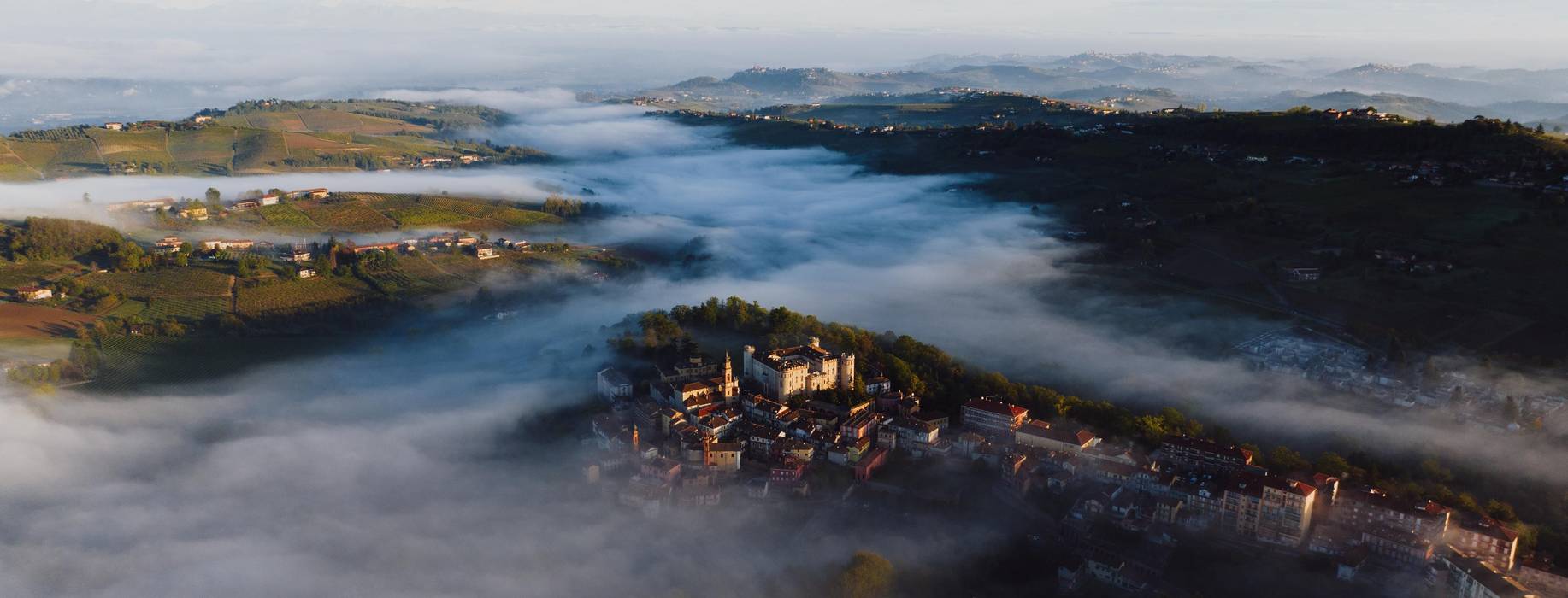
Surely fog is nobody’s favourite kind of weather? It’s cold, wet and makes even midday feel gloomy—without any of the swashbuckling drama of really bad weather. But when thick clouds of vapour descend on the Langhe hills—heartland of Italy’s famous barolo wines—each autumn, it’s an entirely different story.
“Here, it’s not just a weather event: it’s a living texture, a brilliant, white blanket,” says Roberta Ceretto of Ceretto, which has been producing wines in the area since the 1930s. “It fills the valleys, turning our hilltop villages into isolated islands floating on a white sea. When you stand at our Bricco Rocche winery in Castiglione Falletto on a foggy morning, you might see only the medieval towers piercing through the top of the mist.”
“The landscape becomes soft and ethereal,” adds Valentina Abbona whose family has owned the Marchesi di Barolo estate for six generations. “The silence of the morning feels deeper, as if the fog has wrapped everything in a quiet, protective veil.”
Many autumnal visitors find the Langhe fog unlike anything they’ve encountered elsewhere.
It’s not just pretty postcard fodder either. It’s a natural air conditioning system that has a significant impact on why the local wines taste as rich and elegant as they do.
“Nebbiolo [the only grape allowed in barolo wines] is a late-ripening grape, often harvested in mid-to-late October. The autumn fog slows down the ripening process in the final weeks, allowing the sugars to develop slowly while building the incredibly complex, elegant tannins that make barolo and barbaresco age for decades,” explains Ceretto. “Nebbiolo is truly made of the same substance as the fog: its very essence is right there in your glass.”
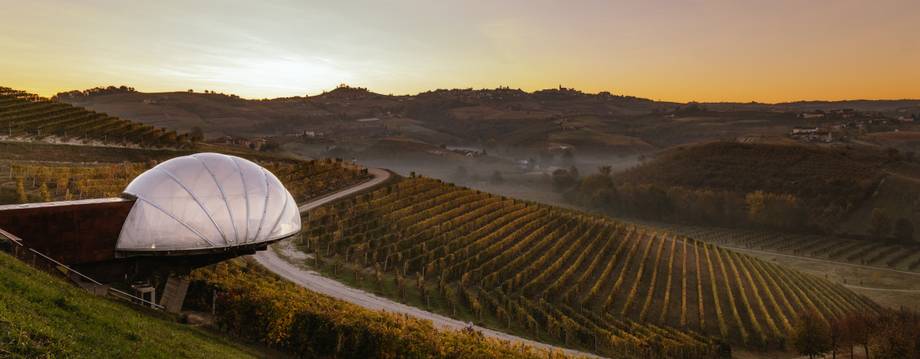
Ceretto Winery © Francesca Tilio
While the fog pools during cold nights, it is later burned off by the warm afternoon sun—creating big differences between day and night temperatures. “This difference is essential for nebbiolo to reach optimal ripeness,” adds Piero Rossi Cairo of Tenuta Cucco winery.
Too much fog, however, can be dangerous, leading to mildew problems and fungal diseases. “Usually nebbiolo is planted towards the middle or top of the hills. The fog usually settles in lower altitudes and in the valley floors, allowing nebbiolo to benefit from the cooler temperatures but without the humidity,” says Anna Savino of Barolo Wine Club, which sources unique, hard-to-find Piedmont wines for its members.
These thick duvets of mist are so intertwined in winemakers’ minds with the nebbiolo harvest that they’re even supposed to have given the grape its name (nebbia means “fog” in Italian)—although this origin story isn’t universally accepted. The other main theory, according to Langhe winemaker Gian Luca Colombo, is that the name comes from the bloom—a whitish coating—you get on the berries, which gives them a foggy, misty appearance.
Nebbiolo is not the only famous grape of the Langhe. It also makes superb reds from barbera and dolcetto, and there’s the flagship white grape of the region: arneis. “Because most other local varieties ripen earlier, they are typically harvested before the densest autumn fogs arrive,” says Savino. “As a result, they’re less strongly associated with fog than nebbiolo, even though they are influenced by the same climate.”
Similar weather patterns can be found across the whole of Piedmont. The region is stuck in the middle of a tug-of-war between icy Alpine influences and the southerly warmth of the Mediterranean. This temperature clash brings thick clouds of morning fog that are slowly eaten up by the hot daytime sun.
But it’s in the Langhe that these dense seas of mist are most famous and dramatic. Cairo says it comes down to the area’s unique topography of rolling hills and valleys, which creates the ideal conditions for these atmospheric fog banks to form.
Over the centuries, this distinctive weather has naturally woven itself into the local pattern of life, particularly around autumn.
“It helps shape the seasonal mood: long lunches, slow-cooked dishes, truffle season, and bottles of wine shared among family and friends. It evokes a sense of warmth, intimacy, and conviviality that is an essential part of life in the Langhe during the cooler months,” says Abbona.
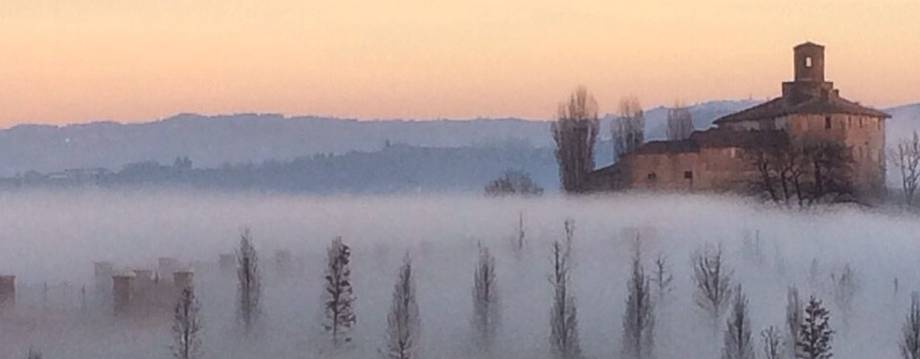
© Marchesi di Barolo
Ceretto agrees: “The fog is woven into our DNA. It is directly tied to our other great culinary crown jewel: the Alba white truffle (tartufo bianco d’Alba). Truffles need damp, cold autumn soil. The fog supports the humidity they need to grow, and the trifolao (truffle hunters) can do their hunts safer in the fog because it hides them and their dogs.”
However, climate change risks disrupting those natural patterns. “The fog is less frequent, less intense, and shorter in duration compared to earlier in my career,” says Colombo. So far this has not significantly affected his grape growing or harvest decisions, but for Ceretto it has.
“This is a very serious topic. Harvest dates have moved forward. We often harvest nebbiolo in late September or early October now, rather than late October like in the past. Higher temperatures mean we have to be very precise about when we pick to ensure we don’t lose acidity or end up with excessively high alcohol levels.”
One potential upside of the changing climate is that it has lessened the isolating effect the thick fogs used to have. “It doesn’t cut off villages like it did in the past,” says Colombo.
But driving in the Langhe during late autumn can still be challenging. “Our roads are winding, steep, and hug the edges of hills. A heavy fog can drop visibility to less than two metres. You cannot see the headlights of an oncoming car until it is right in front of you,” warns Ceretto.
This darker aspect of fog often comes through in the work of the Langhe’s most famous writer, Beppe Fenoglio, who frequently references it in his novels and stories. “In his work, fog is not merely weather,” Savino says. “It creates atmosphere, obscures the landscape, and reflects the hardships and solitude of rural life. Barolo is living its Golden Era but not long ago, there was starvation and suffering. It is almost as if the fog reminds us of that.”
Despite the dangers and difficulties it brings (both in the vineyard and in daily life), many local winemakers speak about the fog with an almost surprising affection. “It reminds us of the deep connection between nature, seasons, and everyday life. It’s part of what makes the Langhe feel like home,” says Abbona.
Share this article
You’ve reached your limit of 5 free articles this month.
Unlock unlimited access and more
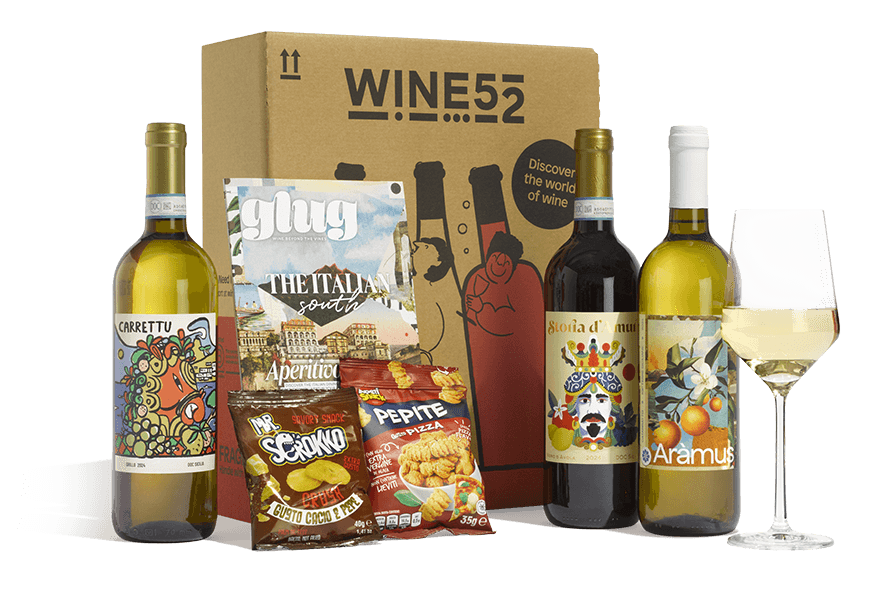
Join Wine52 and get your first month half price
-
Get your first box for £18 (RRP £36).
-
3 wines & 2 snacks delivered monthly.
-
Printed Glug magazine included.
-
Unlimited access to all online content.


