Classic Italian grape varieties
Ian Bancroft gives the low-down on the classics
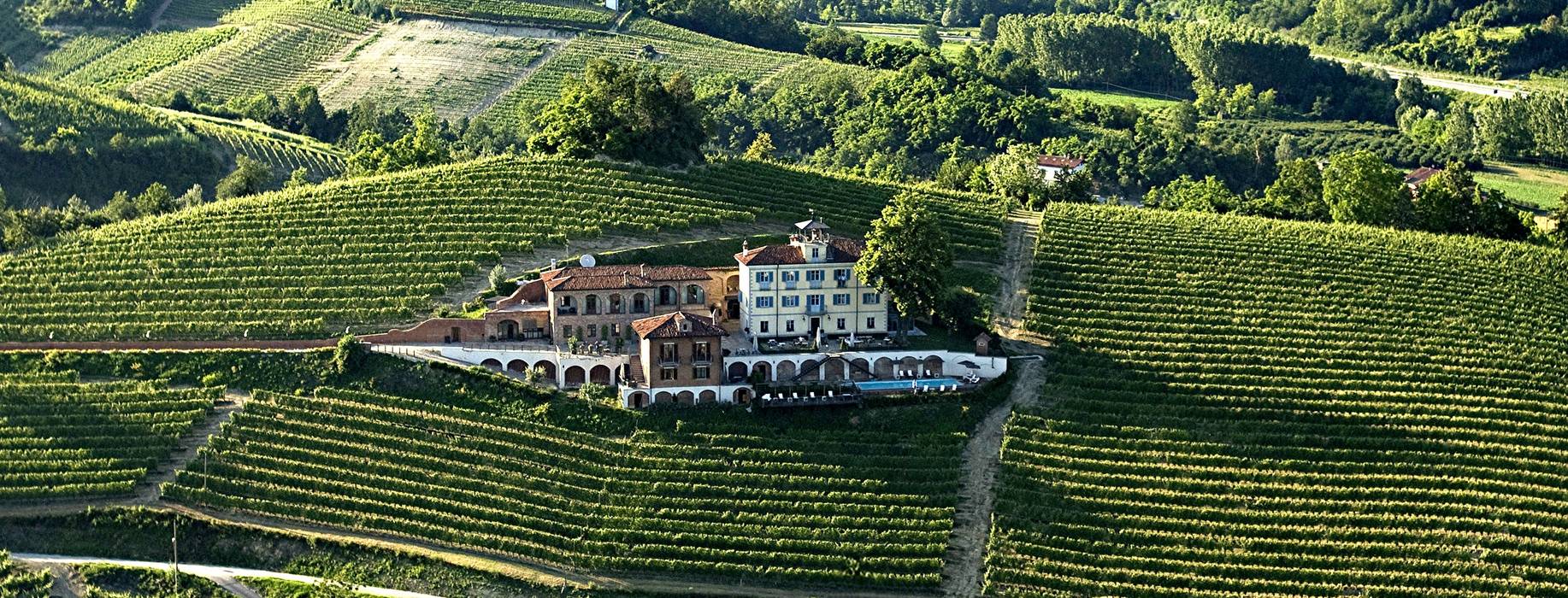
Ian Bancroft
Photo © Malvira Winery
Wednesday 28 January 2026
This article is from
Classic Italy
issue 58
Share this article
Arneis: The sacrificial rascal
As with the animal kingdom, grapes endure a hierarchy of survival prospects. For Arneis, its sweetness and fragrance made it appealing to hungry birds and bees, and therefore an ideal temptation away from the more prized Nebbiolo. Its raison d’être appeared to be merely self-sacrifice, or so the story goes.
Even the contentious meaning of its name captures the existential crisis this grape has endured. In Piedmontese dialect, an arneis is a ‘rascal’ or ‘troublemaker,’ a perfect description of a grape that is said to be notoriously difficult to grow. In standard Italian, however, arnese means a ‘tool’. The former is certainly more flattering, the latter more functional.
As Giacomo Damonte, the winemaker at his family’s Malvira Winery, one of the most historic wineries in the Roero wine-growing area, tells me, “the earliest references to the cultivation of Arneis date back to 1478 in the Renesio estate in the municipality of Canale. The name ‘Arneis’ historically derives from the term Reneysium, which referred to a vineyard owned by a local noble family and, over the years, evolved as follows: Reneysium – Renexij – Reneys – Arneis."
While multiple sources attest to its production and appreciation over the subsequent centuries, primarily as a sweet wine, by the seventies and eighties its popularity had declined in favour of Favorita (a grape with a resoundingly more positive name), which was “more productive and easier to vinify”.
That Arneis survived derives in part from a technical explanation for the grape’s cohabitation with Nebbiolo. “In 1985 the intention was to officially establish the Roero DOC, but our area already had a DOC made with 100% Nebbiolo (Nebbiolo d’Alba),” Giacomo explains. “The solution was to include in the regulations a requirement for 2% Arneis vines within Nebbiolo da Roero vineyards, which wineries were then free to vinify together with the red grapes or separately.”
By the time this rule was eliminated in 2005, the DOC Roero had been established in 1985, but transitioned to a DOCG (Denominazione di Origine Controllata e Garantita) the highest classification tier for Italian wines. Arneis’s future was all but assured. For dry Arneis was, in Giacomo’s words, “a style embraced by both small growers in Roero [a geographical area in Piedmont] and more structured wineries in the Langhe such as Vietti and Bruno Giacosa, who wanted to add a white grape variety to their already established production of red wines.”
The grape’s appeal lies in its scent and body. “The best Arneis wines offer a sweet and soft profile on the palate despite the absence of sugar,” Giacomo tells me. “The result of perfect balance, providing length and a clean, elegant finish.” They are renowned for apple and pear, and even pronounced white flowers and tropical fruits. “It can reach, in some cases, saffron, depending on the soil and climatic conditions,” he explains.
To nurture these characteristics, they interfere “as little as possible… giving the greatest possible space to the differences expressed by the soils of the various vineyards”. While their wines require “a longer period of refinement in our cellars, they offer greater longevity and evolutionary potential, easily reaching 12–15 years while respecting the characteristics of each vintage”. An aged Arneis is “one of the best pairings for truffle,” Giacomo insists, offering structure without being overpowering.
“Arneis is the only white grape variety with a direct genetic relationship to Nebbiolo,” Giacomo tells me, brandishing a complicated diagram plotting the connection between different grapes. Today, Arneis’s future is no longer dependent on Nebbiolo. It has charted its own course that even the hungriest of birds can’t endanger.
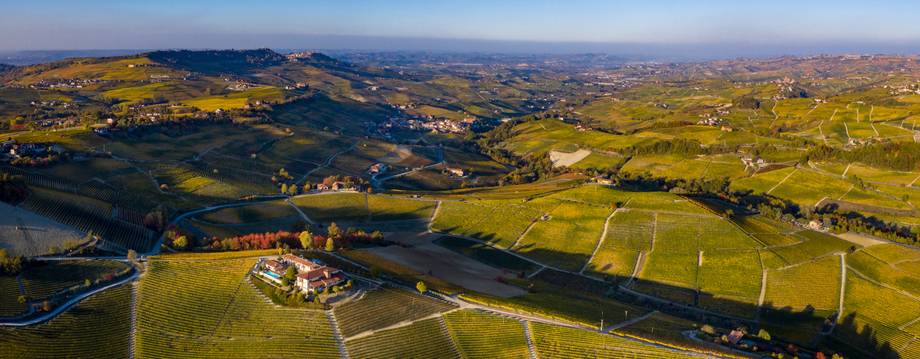
Cogno Winery
Barbera: The people's wine of Piedmont
As with the animal kingdom, grapes endure a hierarchy of survival prospects. For Arneis, its sweetness and fragrance made it appealing to hungry birds and bees, and therefore an ideal temptation away from the more prized Nebbiolo. Its raison d’être appeared to be merely self-sacrifice, or so the story goes.
Even the contentious meaning of its name captures the existential crisis this grape has endured. In Piedmontese dialect, an arneis is a ‘rascal’ or ‘troublemaker,’ a perfect description of a grape that is said to be notoriously difficult to grow. In standard Italian, however, arnese means a ‘tool’. The former is certainly more flattering, the latter more functional.
As Giacomo Damonte, the winemaker at his family’s Malvira Winery, one of the most historic wineries in the Roero wine-growing area, tells me, “the earliest references to the cultivation of Arneis date back to 1478 in the Renesio estate in the municipality of Canale. The name ‘Arneis’ historically derives from the term Reneysium, which referred to a vineyard owned by a local noble family and, over the years, evolved as follows: Reneysium – Renexij – Reneys – Arneis."
While multiple sources attest to its production and appreciation over the subsequent centuries, primarily as a sweet wine, by the seventies and eighties its popularity had declined in favour of Favorita (a grape with a resoundingly more positive name), which was “more productive and easier to vinify”.
That Arneis survived derives in part from a technical explanation for the grape’s cohabitation with Nebbiolo. “In 1985 the intention was to officially establish the Roero DOC, but our area already had a DOC made with 100% Nebbiolo (Nebbiolo d’Alba),” Giacomo explains. “The solution was to include in the regulations a requirement for 2% Arneis vines within Nebbiolo da Roero vineyards, which wineries were then free to vinify together with the red grapes or separately.”
By the time this rule was eliminated in 2005, the DOC Roero had been established in 1985, but transitioned to a DOCG (Denominazione di Origine Controllata e Garantita) the highest classification tier for Italian wines. Arneis’s future was all but assured. For dry Arneis was, in Giacomo’s words, “a style embraced by both small growers in Roero [a geographical area in Piedmont] and more structured wineries in the Langhe such as Vietti and Bruno Giacosa, who wanted to add a white grape variety to their already established production of red wines.”
The grape’s appeal lies in its scent and body. “The best Arneis wines offer a sweet and soft profile on the palate despite the absence of sugar,” Giacomo tells me. “The result of perfect balance, providing length and a clean, elegant finish.” They are renowned for apple and pear, and even pronounced white flowers and tropical fruits. “It can reach, in some cases, saffron, depending on the soil and climatic conditions,” he explains.
To nurture these characteristics, they interfere “as little as possible… giving the greatest possible space to the differences expressed by the soils of the various vineyards”. While their wines require “a longer period of refinement in our cellars, they offer greater longevity and evolutionary potential, easily reaching 12–15 years while respecting the characteristics of each vintage”. An aged Arneis is “one of the best pairings for truffle,” Giacomo insists, offering structure without being overpowering.
“Arneis is the only white grape variety with a direct genetic relationship to Nebbiolo,” Giacomo tells me, brandishing a complicated diagram plotting the connection between different grapes. Today, Arneis’s future is no longer dependent on Nebbiolo. It has charted its own course that even the hungriest of birds can’t endanger.
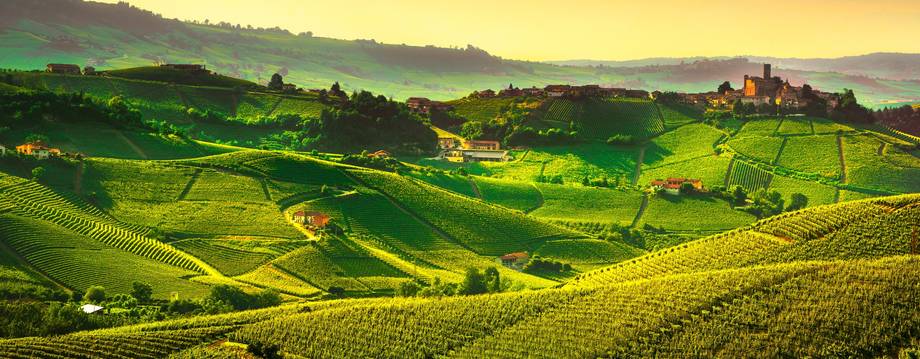
Castiglione Falletto © Stefano Orazzini
Dolcetto: Sweet only in name
Names can be misleading. Dolcetto—‘the little sweet one’—is anything but, at least once it has been fermented into wine. On the vine, it is sweeter and more enviable than a Nebbiolo or Barbera, both of which are very high in acidity. But we are not here to linger on a grape’s squandered future, especially one with the potential of Dolcetto.
For Eugenio Palumbo, the winemaker at Vietti Winery—situated on the highest point of the medieval village of Castiglione Falletto, in the Langhe region—“Dolcetto is a special grape variety because it has a very fresh nose with notes of violet, anise, small red fruits, but a surprisingly complex mouth. It is a very tannic variety with a strong body.”
This acknowledgement of a grape’s virtues guides Vietti’s winemaking philosophy. “We always use vinification and ageing methods to highlight these identities, instead of hiding them,” Eugenio continues. “We use very delicate woods and fermentation techniques that preserve fruits and their features.”
For Franco Massolino, from Massolino Vigna Rionda, a family winery in Serralunga d’Alba, established in the 19th Century, “Dolcetto is one of Piedmont’s most authentic daily wines: approachable, savoury, and immediate, yet far from simple.” In comparison to other Italian reds, its distinguishing features are naturally low acidity and firm, yet dry tannins. Franco notes the “characteristic bitter twist on the finish that gives the wine grip and personality”. It is, as he emphasises, “a wine designed to be enjoyed young, where its purity and drinkability shine.”
It is an approach that has sped up the grape’s evolution. “Dolcetto has found its identity, a strong one,” Eugenio says. “Dolcettos are more approachable compared to 20 years ago... It can be considered a contemporary wine because it has finesse.” While acknowledging that, in the past, it was “strongly linked to our farming tradition” and “considered an everyday wine,” he stresses that it is “the perfect wine for young consumers and for less formal occasions.”
This view is shared by Franco, for whom “Dolcetto has undergone a quiet but meaningful transformation. Twenty years ago, many producers experimented with more concentrated styles or ageing in wood, but today the trend has moved decisively back toward authenticity: freshness, fruit purity, moderate alcohol, and an emphasis on drinkability.”
Franco sees a future of “smaller volumes but higher quality,” with greater emphasis on vineyard selection and winemaking. “Vineyard sites once dedicated to Dolcetto have sometimes been replanted with Nebbiolo or Barbera,” he explains, “resulting in smaller but higher-quality Dolcetto production.” Consequently, there has emerged a vanguard of producers who “truly believe in the variety and treat it with the same care as more prestigious grapes”. It is a conscious choice, forgoing the alternatives to persevere with Dolcetto.
The challenge, for Franco, is how to ensure Dolcetto remains “faithful to its identity—a genuine, drinkable wine that reflects its hillsides”. Through canopy management, balanced yields, and harvesting at perfect ripeness, they strive to preserve freshness and aromatic precision. In the cellar, a gentle approach is pursued—“fermentation in stainless steel, moderate maceration, and no oak”.
Dolcetto’s traits of authenticity and regionality are key planks of its broad appeal. They draw upon the traditions of Piedmont, but with a more relaxed and convivial soul. As Franco says, “Dolcetto does not need embellishment; it needs respect.” And if respect has to be earned, then Dolcetto’s freshness, purity, and unpretentious character will serve it well.
© Collefrisio
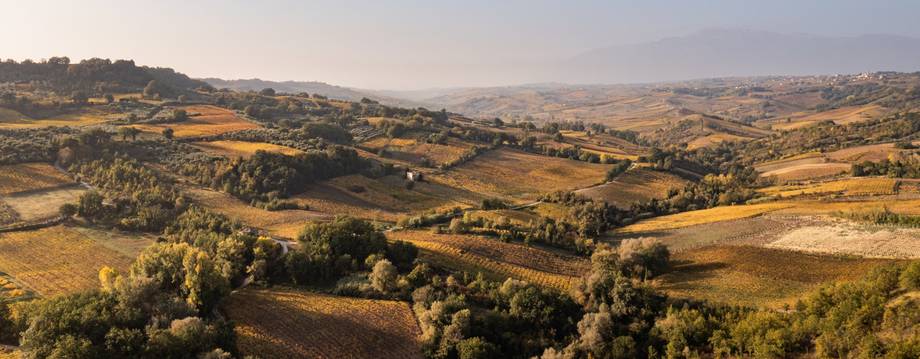
Pecorino: On which sheep feast
Like the cheese of the same name, Pecorino wine shares a connection with sheep. As local legend has it, they grazed in the vineyards and feasted on this unique variety, their milk presumably enriched by grapes. It is a fondness that more should blindly follow.
As Carlo Dragani, export manager at Collefrisio, in the province of Chieti, tells me: “Pecorino combines aromatic finesse, natural acidity and remarkable structure, making it one of the most distinctive Italian whites.” There is citrus, white fruit, and Mediterranean herbs, plus noticeable salinity, minerality, and concentration. Over time, it has become a popular alternative to Pinot Grigio.
Despite all these enviable characteristics, Pecorino once lingered on the verge of extinction in the eighties and nineties. “Due to its naturally low yields, Pecorino was largely abandoned for decades in favour of more productive varieties,” Carlo explains. Its revival was, in part, driven by “visionary producers who believed in its potential and a rising interest in authentic Italian native grapes”.
Scientific research, catalysed by the threat of its disappearance, also played a key role. Giuseppe Mazzarosa Devincenzi, director at Cantina Mazzarosa, a winery with a proud legacy in both Abruzzo and Tuscany, tells me how in 2000-2001 they were one of “the very first in Abruzzo to replant Pecorino seriously,” through a university-backed project focused on rescuing native varieties. “Back then, almost nobody was talking about it,” he recalls, but “we’re proud to say we believed in it before the boom”.
Its versatility is prized by winemakers and sommeliers alike. “What really sets Pecorino apart is its natural power combined with freshness,” he tells me. “It’s a white grape with an incredible ability to accumulate sugar while retaining high acidity.” Such is the wine’s body and vibrancy, Mazzarosa has a saying that Pecorino is “a red wine drinker’s white”.
For Carlo and Collefrisio, “Pecorino is not a single expression but a full spectrum,” embodied in four stylistic interpretations that “each highlight a unique facet of the grape.” Viquadra Pecorino, vinified entirely in stainless steel, boasts “purity and tension,” whilst Viquadra Pecorino Prestige, made in stainless steel and 20% barrique for one year, offers “complexity, elegance, and Mediterranean character”. They produce a blend with Pinot Grigio, and with Trebbiano and Falanghina, demonstrating how Italian white varieties complement one another. “Our role is to guide the grape, not to impose a style on it,” Carlo insists.
Pecorino’s international image is continuing to recover from an early 2010s boom where, as Giuseppe explains, “too much low-quality wine reached export markets”. “I see a very bright future for Pecorino,” he contends, as it “fits perfectly with today’s demand for intense, fresh, character-driven whites. Albariño is cited as a role-model; namely, “a regional speciality and becoming a true international reference.”
“Its future is very promising,” Carlo believes, “for us, it is one of the key pillars.” “Wine critics, importers, and sommeliers appreciate its authenticity, its clear varietal identity, and its ability to stand out from more conventional white wines,” he tells me. They endeavour to produce wines “with a ‘modern personality’”, combining the freshness and elegance of Abruzzo varieties in a style that appeals to a wide range of palates. It is complemented by a focus on design to help the wines stand out in global markets. Looking ahead, Carlo expects to see “more focus on its ageing potential” and “increasingly terroir-driven interpretations”. This journey of discovery is only in its initial phases.
Had the course of history run differently, however, Pecorino may well have been confined to memory; a case of what might have been were its potential fully appreciated. Fortunately, Carlo, Giuseppe, and others demonstrate a contagious enthusiasm that will safeguard this unique variety. “It is full of surprises,” says the former; “it’s not a shy white!” adds the latter. It is a chorus of approval that will keep you bleating for more.
Share this article
You’ve reached your limit of 5 free articles this month.
Unlock unlimited access and more
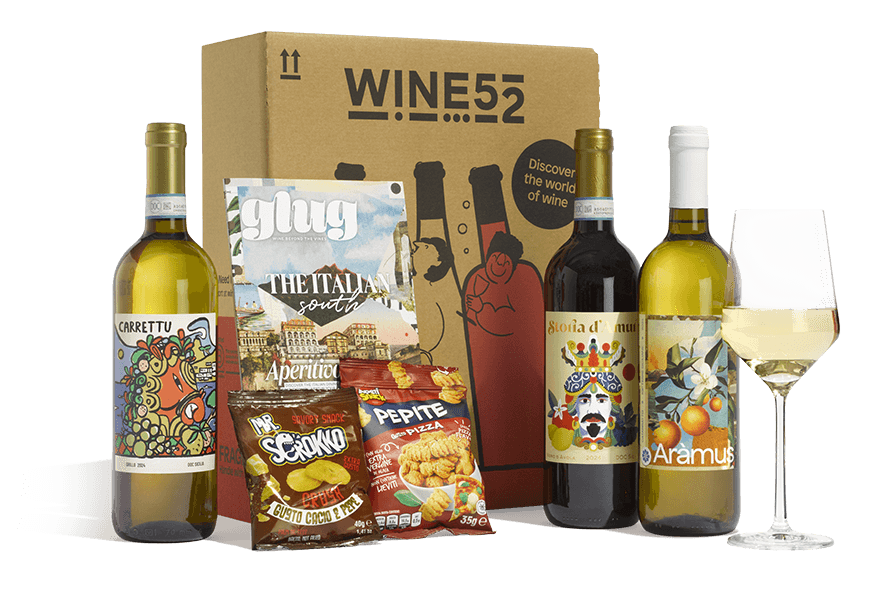
Join Wine52 and get your first month half price
-
Get your first box for £18 (RRP £36).
-
3 wines & 2 snacks delivered monthly.
-
Printed Glug magazine included.
-
Unlimited access to all online content.


