The Cheese Board: Hungary
Let's dig in to Hungary's cheese offerings.
Ned Palmer
Wednesday 09 September 2026
This article is from
Hungary
issue 66
Share this article
There is a dark symmetry between Hungary and Britain, at least in the realm of cheese, in that over the course of the twentieth century, both countries came close to losing their traditional cheesemaking cultures. In Britain this was largely the result of the agricultural and industrial revolutions and the post war rise of the supermarket, so we could blame capitalism. The decimation of proper good Hungarian cheese could arguably be laid at communism’s door. In the 1950s, the first attempt at the collectivisation of cheesemaking by the new People’s Republic of Hungary all but wiped out the national cheeseboard. This is commemorated in the difference between two menus from Budapest’s Gundel restaurant. In 1948 the cheese selection included Trappista, Pálpusztai, Eidami, a Hungarian Roquefort style, and Körözött. A menu in 1952 only listed Trappista and Körözött; sometimes there was no cheese at all.
The eventual success, if you can call it that, of the centralised Soviet command economy wasn’t better news for cheese lovers. Small farmers and producers were subsumed into large-scale industrial dairies, and the diversity of traditional regional styles became homogenised across the nation. For several generations the only available cheese was a bland industrial version of the hard cow’s milk Trappista. Happily both Britain and Hungary have seen a renaissance of traditional cheesemaking. In Britain it partly grew out of the counter culture of the Sixties, and flowered in the 1980s. The unfortunate Hungarians had to wait until after the fall of the Soviet regime in 1989, and the movement only really gained momentum in the early twenty-first century.
The traditional cheesemaking culture of Hungary has deep roots – sixteenth century records show that peasant cheesemakers paid taxes in the form of fresh cheese to their Ottoman landlords. These cheeses, produced on small family farms, were largely what you would expect to find in Central and Eastern Europe – mostly soft white salty styles made from sheep’s milk, but these Magyar cheeses did have their own characters, distinct from their Slavic neighbours.
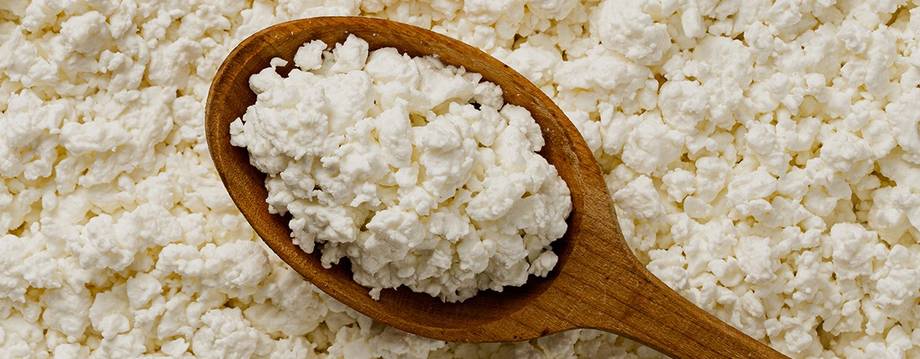
The most singular of these was Rögös túró, a high-moisture fresh cheese, whose grainy cauliflower texture is a little like cottage cheese. Rögös however is soured with a bacterial starter culture rather than citric acid which gives it a more complex fermented and tangy flavour with a drier texture. It’s usually made from cow’s milk, though there is also a richer sheep version. For a unique experience you could try this cheese in the form of Túró Rudi, a chocolate bar filled with the sour lactic curds.
Gomolya is more familiar to the seasoned Central European cheese tourist. These small loaf or ball-shaped cheeses come in cow, sheep or mixed-milk versions. The curd is drained in cloth and is eaten at a couple of weeks, when fresh and zesty, or aged until it develops a springy textured paste with a scattering of small holes and a rounder more developed flavour.
Körözött is a creamy fresh curd cheese, gussied up by whipping in paprika, cumin seeds and for the more adventurous, a splash of the indigenous fruit brandy Palinka, which would make a mighty snack. If you want to live like an old style Hungarian aristo, you can add a topping of caviar – which along with the cheesy chocolate bar is quite the oddest way to consume cheese that I’ve ever come across.
The nineteenth century saw a second wave of cheesemaking in Hungary. The country had gained a degree of autonomy with the creation of the Austro-Hungarian empire in 1867, and so began its own industrial and agricultural revolutions, of which dairying was a significant part. This cheese naissance, if you will, took a while to get going, but by the 1890s Hungary was developing its own modern cheesemaking industry.
Unsurprisingly for a Central European country which was part of a transnational empire, the new cheeses were heavily influenced by foreign styles. Trappista can trace its lineage back to a cheese made by Trappist monks in France, now known in its somewhat rubbery modern form as Port Salut. Their monastic brothers in Imperial-controlled Bosnia-Herzegovina began making a version in 1882, which rapidly became popular all across the Empire. New-wave Hungarian cheesemakers wanted a slice of the action, but, Trappists not being famed for their communication skills, had to come up with their own version. Hungarian Trappista was born - a firmer, milder and less funky cheese than its monastic inspiration. This cheese, now firmly industrial, is Hungary’s most ubiquitous, the equivalent of block Cheddar in the UK.
In the 1890s cheese entrepreneur Pál Heller, founder of the Derby Cheese and Butter Company in Budapest, invented the washed-rind cow’s milk Pálpusztai. This farmy little cheese comes in dinky fifty-gram brick shapes, like the famously smelly Limburger from the Low Countries, and its moist off-white rind gives off a similarly intense aroma. Apparently Hungarians have this on toast for breakfast. I love these people.
In the early 1900s agronomist and cheesemaking teacher Imre Újhelyi invented Óvári, inspired by the Prussian-Swiss Tilsit. Another washed-rind cow’s milk, it is milder than Pálpusztai, with a gentle funkiness lightened by a sour acidic note, its firm but creamy texture melting in the mouth. If I gave the idea that the Hungarians were slouches at the whole agricultural revolution project, it’s worth noting that Újhelyi taught at the Agricultural Academy of Magyar-Óvár. The Academy, established in 1818, is one of the oldest specialised agricultural colleges in Europe. Also, the collective dairies of the time were nothing like modern factories, and their cheeses, made from the milk of happy, healthy animals grazing on natural pasture were almost certainly more characterful than today’s pallid factory cheese.
The twentieth century was catastrophic for Hungarians as it was for all of Central and Eastern Europe. Hungary lost seventy percent of its territory in the post-First World War settlement, suffered terribly in the Second and then had to endure the oppression, economic inefficiencies and bland industrial cheese of the Soviet period. The twenty-first got off to a better start, particularly for cheese lovers, when in 2006 the Hungarian Specialist Cheesemakers Association (Magyar Sajtkészítők Egyesülete) was founded to advance the cause of proper good farmhouse and artisan cheese, and to encourage and support new artisan and farmhouse producers. Since 2010 a third wave of dairying has gained momentum.
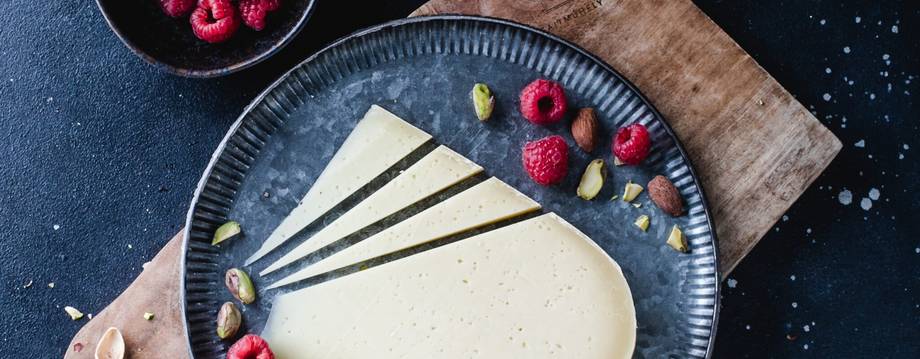
As with the British Renaissance, many of the third-wave cheeses are inspired by foreign styles, though they develop their own character from Hungary’s long dairying past, Hungarian terroir and the use of domestic breeds. Anita Kun, in true renaissance style, doesn’t come from a dairying background, but began cheesemaking in her kitchen in 2010 and set up her business, the Csíz Cheese Workshop in 2013. She makes a Dutch Gouda style called Baracskai Félkemény Öreg with the milk of the Magyartarka, or Magyar Pied cow, a cross between the native Hungarian Grey and the Swiss Simmental, known for its bountiful milk production. In 2021 Anita won best artisan cheese at the 2021 World Cheese Awards and finished fourth overall. At the 2024 World Cheese Awards Hungarians took home a vat-full of medals including nine silvers and two golds. These Hungarians have got game.
For some Hungarian cheese and wine matches, I am going to let Anita have the last word. She suggests opening with “a pastoral, summery pairing,” soft, fresh Juhgomolya cheese with the floral yellow Muscat, Sárgamuskotály. For an international pairing, “yet still very Hungarian in character” try Tokaji Aszú dessert wine with Márvány, a rich creamy blue. To finish, and this really would finish off your palate for the evening, Pálpusztai with a hefty barrel aged Tokaji Furmint would be “very Hungarian,” and indeed it would.
Share this article
You’ve reached your limit of 5 free articles this month.
Unlock unlimited access and more
Join Wine52 and get your first month half price
-
Get your first box for £18 (RRP £36).
-
3 wines & 2 snacks delivered monthly.
-
Printed Glug magazine included.
-
Unlimited access to all online content.


