Harry's long tail: Sicily
The resilience of storm-battered communities

Richard Croasdale
Wednesday 07 October 2026
This article is from
Best of Italy
issue 67
Share this article
In the first of a series looking at Italian producers’ recovery from Cyclone Harry, we turn to the Mediterranean island on the front line of the storm’s fury.
Cyclone Harry crossed Sicily between 19 and 23 January 2026. A ‘medicane’ – a Mediterranean storm with hurricane characteristics – it pummelled coastal areas with gusts above 120 km/h and drove waves of more than ten metres onto the Ionian coast. The region’s first census put infrastructure damage at €741 million, with agricultural losses counted separately. Although Sicily’s vines were dormant at this time of year, with no crop to lose, the island’s wine producers were far from immune from its effects.
The direct agricultural damage fell firmly on the island’s famous citrus growers. In the district between Catania and Syracuse, around 25 per cent of the citrus-growing land is certified for Arancia Rossa di Sicilia IGP – some of the finest blood oranges in the world. Here, somewhere between 35 and 45 per cent of production was damaged, and the consorzio subsequently counted more than 500 growers in difficulty across three provinces. The fruit that survived needed up to four passes through the sorting machines before it could be graded, doubling the cost of a harvest many growers had to bring forward from March.
But the chaos wasn’t limited to the coast. Inland, it was borne along rivers including the Dittaino, which broke its banks, submerging newly sown durum wheat and artichoke fields across the Piana di Catania, destroying the harvest. Around Ragusa, greenhouse coverings were torn away by the ravaging winds, again taking production to zero.
Despite having nothing in the fields except bare vines, Sicily’s winemakers were not immune. The Ionian coast, from Messina down to Syracuse, is the island’s restaurant and hotel corridor and the road most visitors take to reach Etna. Harry hit this region hardest, flooding restaurants, destroying wine shops’ equipment and stock, and seriously damaging many agriturismi. Two months on, many had not reopened. At Letojanni, the iconic restaurant Da Nino – on the beach since the 1950s – took more than €200,000 of damage to its external structure alone, and was still excavating a cellar reckoned among the most important in the south.
The wider economic impact of this damage is not peripheral; research by Nomisma Wine Monitor found wine tourism is now worth roughly as much to Sicilian wineries as export, accounting for more than a tenth of turnover. A wrecked coastal hospitality industry is very much a wine problem.
The clean-up operation began almost immediately, and shows the strength and resilience of Sicily’s communities
The clean-up operation began almost immediately, and shows the strength and resilience of Sicily’s communities. Two friends from the Catania association Cambia, Simone Grasso and Simone Dei Pieri, began a WhatsApp group that passed 600 members within days, coordinating volunteers across Riposto, Aci Trezza and Letojanni. At Stazzo, more than a hundred answered Acireale mayor Roberto Barbagallo’s online appeal to clear the seafront. Along the coast at Letojanni, the council had a name for the volunteers turning up in their town and elsewhere: angeli della sabbia, the sand angels, after the angeli del fango who dug Florence out of the mud in 1966. Around a thousand in all, many of them students, the volunteer army moved between comuni clearing streets, shops, garages and cellars, resetting benches and replanting uprooted trees.
And the citrus growers? They traded their way out from under Harry’s shadow, through a combination of their own tenacity and support from the industry. The 2025/26 Arancia Rossa campaign closed in July with more than 24 million kilograms of fruit on the market, buoyed by growth in direct and online sales, and by a season-long partnership with retailers to keep the fruit on the shelf.
Share this article
You’ve reached your limit of 5 free articles this month.
Unlock unlimited access and more
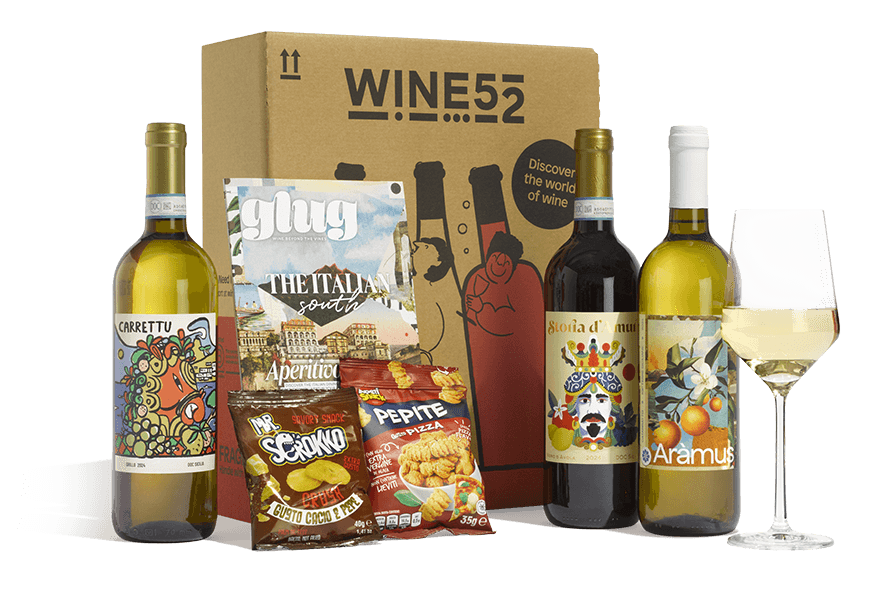
Join Wine52 and get your first month half price
-
Get your first box for £18 (RRP £36).
-
3 wines & 2 snacks delivered monthly.
-
Printed Glug magazine included.
-
Unlimited access to all online content.


