Nonna’s Kitchen
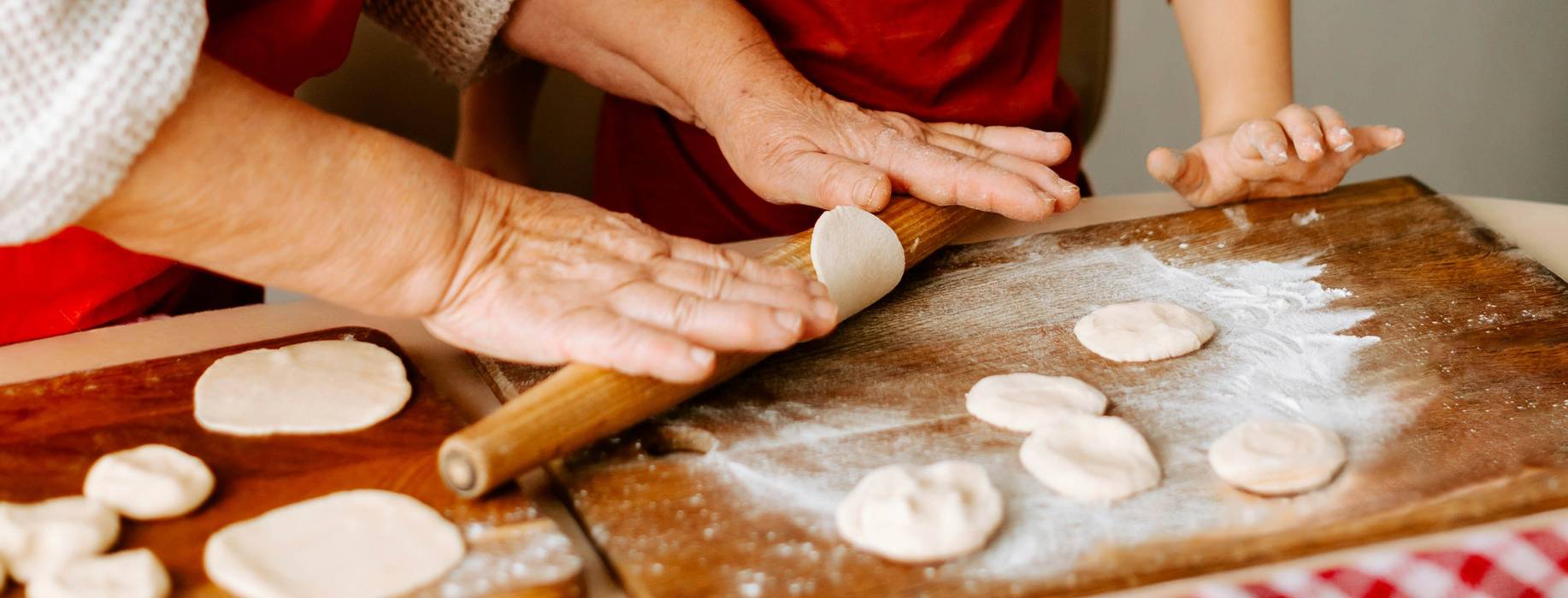
Italian cuisine is one of the most popular and widespread in the world. Many of the recipes have been handed down from grandmother to grandchild for generations.
Anna Richards
Wednesday 07 October 2026
This article is from
Best of Italy
issue 67
Share this article
Regardless of where we come from, many of us have fond memories of our grandmother’s cooking. My grandmother was Welsh, so naturally we’d make Welsh cakes together, and vats of marmalade with the most outlandish quantity of sugar I’ve ever seen. Our grandmothers are often our first introduction to cooking, particularly for those whose parents work full time.
Grandmothers rarely get recognition for their cooking, but their recipes live on through us, or, in the case of my grandma, scribbled semi-legibly in a Dairy Diary. Perhaps it’s universal nostalgia around our grandmothers’ cooking that led to the Netflix film Nonnas being such a success. Within three days of its release in April 2025, it had already been viewed more than 15 million times. It was based on the real-life story of the restaurant Enoteca Maria on Staten Island, where all of the cooks were grandmothers.
As the film shows, preserving our native cuisine becomes even more important when we move abroad. The Italian diaspora numbers some 80 million people worldwide, and the recipes from nonnas have moved along with them. Italian is among the most widespread cuisines in the world, and I’ve come across Italian restaurants on the fringes of the Amazon rainforest and in the depths of Patagonia. One friend even told me that the best pizza of his life was in a delta town in Laos.
These three chefs moved across the globe, taking their grandmothers’ recipes with them to share with the world.
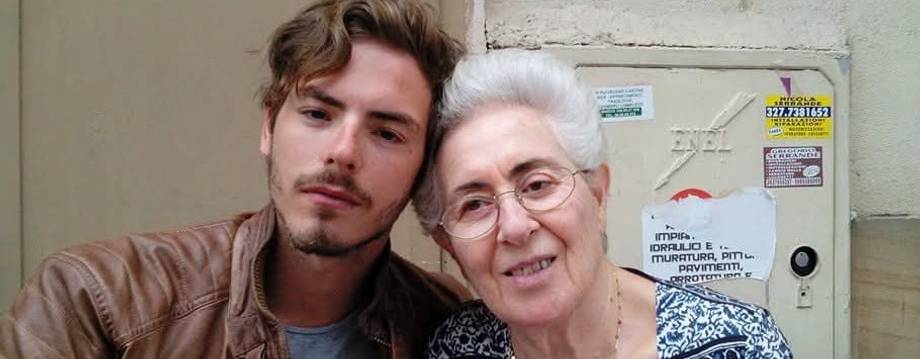
© Matteo Bulfari
Matteo Bulfari - Private chef and restaurant manager, living between Mexico and Panama
“My nonna’s friends would travel up from the south with cheese and wine for her,” reminisces Bulfari. Bulfari grew up in Rome, but his paternal grandmother came from Puglia, and his maternal grandmother from Abruzzo. Although both loved to cook, it was his Puglian nonna that sparked Bulfari’s passion for cooking at a young age. When he was just 22 years old, he opened his own sandwich shop, a piadina.
In 2014, Bulfari moved to Panama, working for an international brand of hostels. Before long, he was managing a hotel and working stints cheffing at festivals such as Burning Man. Covid-19 left the hospitality industry in tatters, and afterwards he set up a catering company with a friend based in Tulum, Mexico. It was a roaring success, and by 2022, he’d also opened two restaurants at the Manifest Collective in Santa Catalina, Panama.
Bulfari’s favourite dish that his nonna cooked was lampascioni, something he describes as “like a bitter little onion, cooked in the oven”. These parboiled and roasted hyacinth bulbs are a typical Puglian dish. He reels off his grandmother’s recipes like the chalkboard for a trattoria: roasted fennel, caciocavallo (a round cheese that they’d hang on the barbecue), and homemade pasta boiled in the same water she’d used for chicory to give it extra flavour and avoid waste, before topping it with salted ricotta.
As a child, Bulfari would spend entire days helping his nonna to cook, cleaning green beans and covering them with chilli and olive oil to make fettuccine, picking the freshest tomatoes from her delivery from the south to cook them in white wine with stale bread to make tarantina, a soup with mussels.
“My nonna taught me that the quality of the ingredients was the most important thing,” says Bulfari. “Nothing went to waste. If she had an ingredient, she’d use it. Our consumer habits have changed now.”
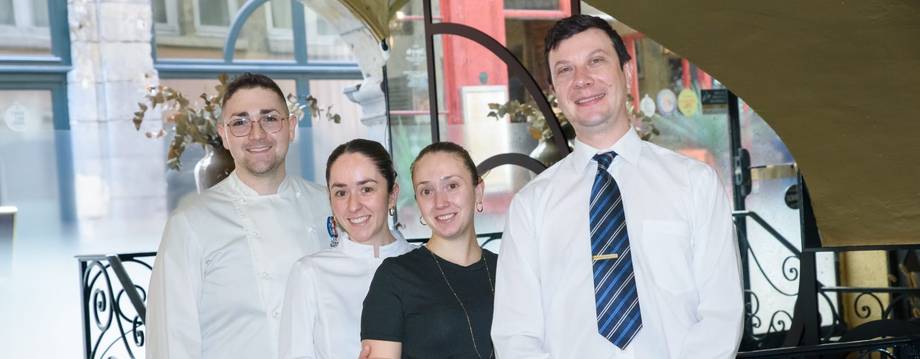
© Le Bœuf d’Argent
Viviana Pisacane - Chef and 2026 winner of France’s Top Chef in Lyon, France
Pisacane’s Franco-Italian restaurant, Le Bœuf d’Argent, was catapulted to fame in June after she won the 2026 edition of Top Chef, a French culinary reality TV show with more than a million viewers per season. One of her winning recipes came straight from her nonna.
Pisacane grew up in Naples, and counted several generations of Neapolitan ancestors on each side, including both of her nonnas. In her late teens, she left Italy and spent a decade living and working across Europe: Ireland, France, Norway and Switzerland. In 2022, she moved to Lyon and took over the running of a restaurant in the city’s old town the following year. Known for meat-heavy bouchons, Le Bœuf d’Argent mixes traditional French cuisine with Italian fare, inspired by the Pisacane’s own family. Viviana and her brother Antonio do all the cooking, whilst her sister and brother-in-law are front-of-house.
“I never planned to go on Top Chef,” says Pisacane. “A friend suggested it to me, and I couldn’t think of a reason why not. I recreated my grandma’s polpette (meatballs) for one of the challenges.”
When Pisacane was younger, her parents both worked full time, so she’d cook at home and call her mother or grandmother for recipe tips. She also made her mother’s apple cake during Top Chef.
The signature dish at Le Bœuf d’Argent is one that mixes Pisacane’s family heritage and her adoptive country. It’s a beef wellington in a tomato and almond crust, and although bœuf en croûte is typically French, Pisacane says that her’s tastes just like carne a la pizzaiola, a Neapolitan dish of steak cooked in tomatoes, olive oil, garlic and white wine. “The only difference is the texture,” she says.
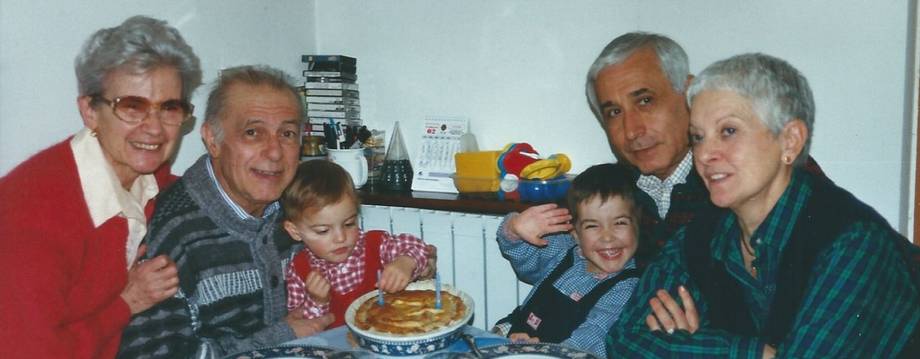
Festa coi nonni © Federico Paderi
Federico Paderi - Chef and restaurant manager in Falmouth, UK
In 2021, Federico Paderi moved from Milan to Cornwall to join his brother Stefano, who’d already been living in the UK for five years. The two had always been keen cooks, and after working several jobs in hospitality, they opened their first restaurant together in Falmouth in February 2026. Paderi’s nonnas came from Sicily and Sardinia respectively, and although both loved to cook, it was his Sicilian grandmother who was the real chef of the family.
“We’d go to Sicily a couple of times a year to help make tomato sauce. We’d make 100 litres at a time!” says Paderi.
The vast quantity was purely for family consumption, and Paderi and his nonna would boil the bottles after filling them, which sealed them tightly and allowed them to be conserved for months.
In Sicily, his grandmother grew much of her own produce. She had her own olive trees, and she made and bottled her own olive oil. Aubergines came from the garden; marmalade was made using home-grown oranges. She made her own fresh pasta, and Paderi and his brother handmake their pasta at their restaurant Milano’s in exactly the same way.
Homemade pasta is a mainstay on Milano’s menu, particularly the tagliatelle with a meaty, slow-cooked ragout, but other recipes from their Sicilian grandmother regularly appear on the special’s board, such as roasted guinea fowl and panzanella salad. One of the house favourites, though, was inspired by their Sardinian grandmother.
“Nonna’s balls,” says Paderi. “My dad was trying to explain my grandma’s meatball recipe to my wife, and he kept calling it ‘nonna’s balls.’ We found it so funny that we put it on the menu.”
Share this article
You’ve reached your limit of 5 free articles this month.
Unlock unlimited access and more
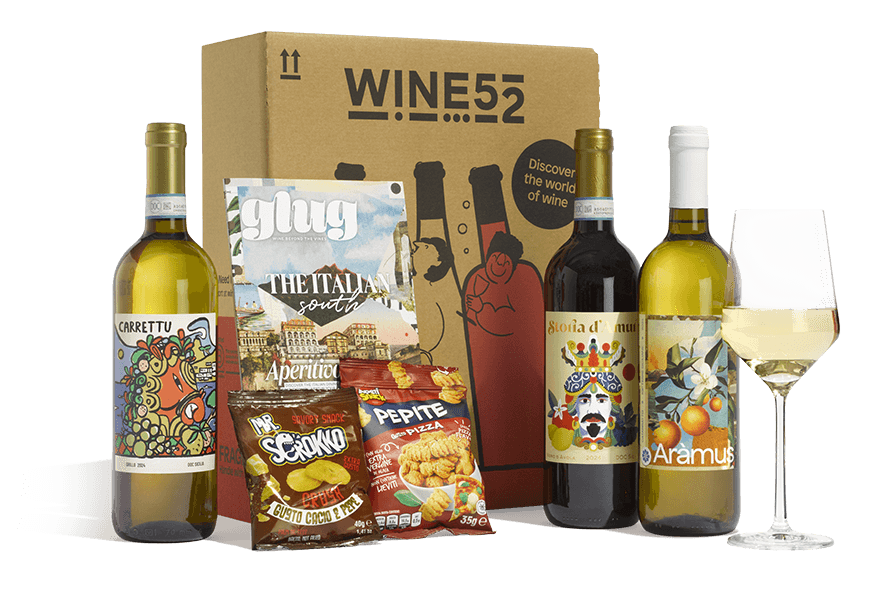
Join Wine52 and get your first month half price
-
Get your first box for £18 (RRP £36).
-
3 wines & 2 snacks delivered monthly.
-
Printed Glug magazine included.
-
Unlimited access to all online content.


