Parmigiano, the king of cheese
Dense discs of deliciousness
Ned Palmer
Potography © G.Cravero.it
Wednesday 07 October 2026
This article is from
Best of Italy
issue 67
Share this article
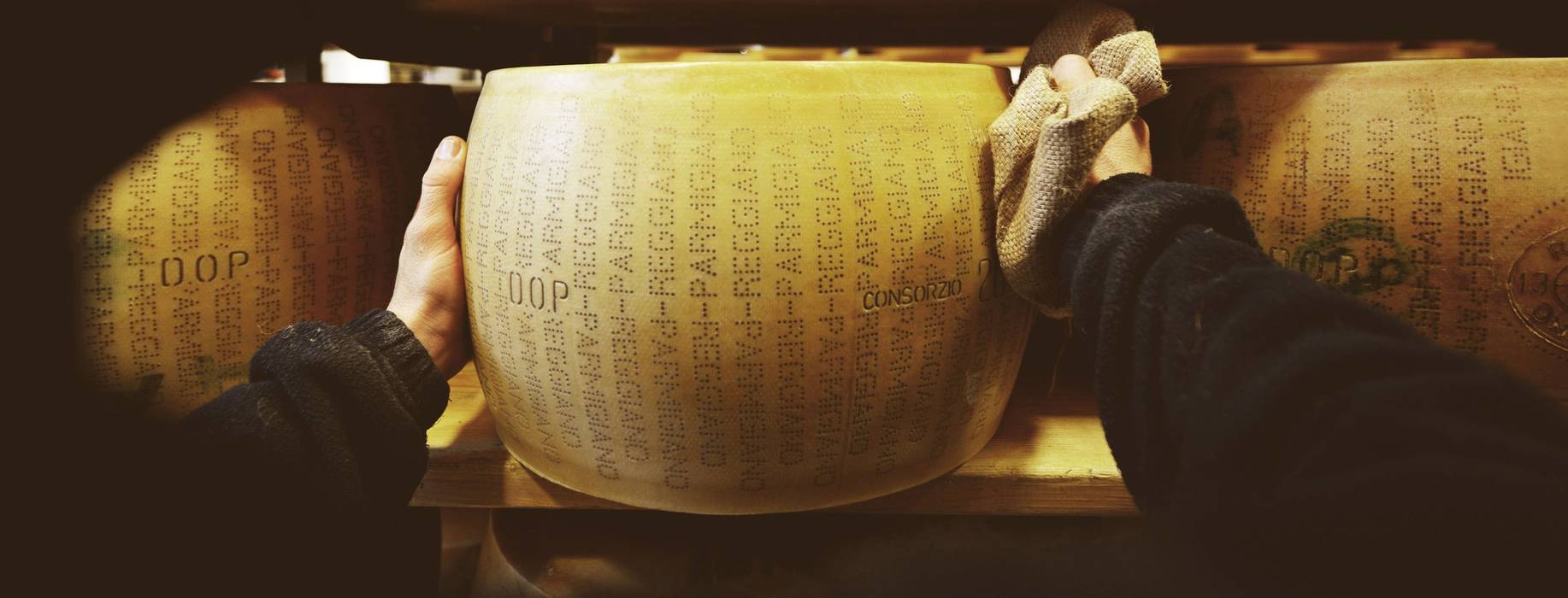
If your only experience with Parmesan is the pale, dusty pre-grated stuff, spooned onto your pasta in the restaurant with suspicious generosity, then you’ll find the proper stuff a treat and a revelation. Proper Parmesan, or Parmigiano Reggiano to give it its PDO title which honours its original home regions of Parma and Reggiano Emilia, is a whole other thing. It comes in great big cylinders with bulging sides, weighing in at a mighty thirty-five kilos apiece. Craggy textured and crystalline, its rich golden colour tinged with the pink of a tropical sunset; firm, yet moist and fudgey in the mouth; sweet, fruity, tangy and savoury; this complex and profound cheese demands your respectful attention.
The story of Parmesan begins in the twelfth century with the arrival of some particularly industrious Cistercian monks in the Po valley. They set about energetically draining the swamps around the river which made more grazing and fodder available. That meant that they could shift from the indigenous sheep to more productive cows, and set up a large-scale dairying business.
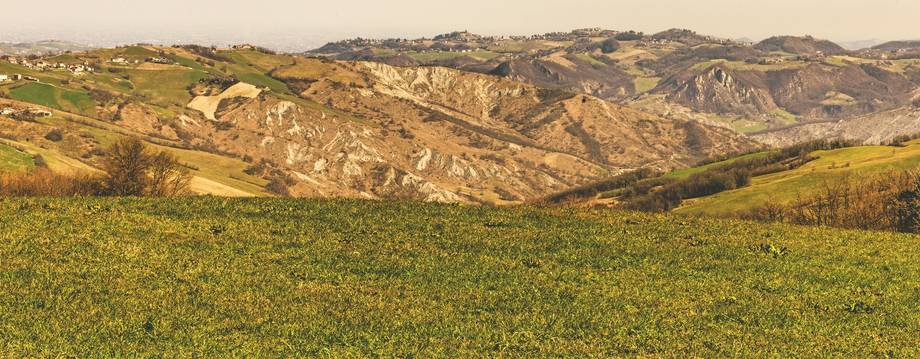
Terroir is as crucial in cheesemaking as it is for wine. The fertile alluvial soils of the Po valley are perfect for growing the plentiful excellent feed required for top quality cheese, as well as for many other crops, and eight hundred years after the monks arrived, the region is still one of the most productive in Italy. And then there was the river itself, or rather, what was at the end of it – the salt pans of the delta. Salt is a vital ingredient for cheesemaking, helping to reduce moisture and control microbial activity, and the monks had a bountiful source of it which could be reliably and cheaply transported up the river to their dairies.
Po Valley
Another great thing about the location is that the great medieval trading port of Venice was also at the mouth of the Po. The salt barges returned full of top quality cheese and found an enthusiastic market. Genoese records show that Caseus Parmensis, ‘the cheese from Parma’ was on sale in the city by the middle of the thirteenth century, and it quickly spread further afield. By the sixteenth century English agricultural writer Barnaby Googe would write in his top trumps of cheese that “in our days the best are counted the Parmasines”. This was a cheese that was literally fit for a king – in 1532 a courtier gave Henry VIII a whole one for new year’s eve, putting paid to the king’s youthful svelteness. A century later, a confirmed English cheese fancier still knew the value. In September 1665 with the flames of the Great Fire of London nearing his house, the diarist Samuel Pepys dug a hole in the garden and buried his valuables: some papers, his wines, and a whole Parmesan. Tragically for fans of exotically matured cheese, Pepys doesn’t mention digging it up again, and we will never know what happens to the flavour when you bury a Parmesan, light a colossal fire over it, and then leave it under the embers for a week or two. Unless someone fancies reenacting the Fire of London...
Business was so good for the Po valley producers that it attracted, well, big business, and Parmesan became a sort of financial product. Cheeses were used to pay wages, dowries and rents, which was not uncommon in medieval Europe, but also it seems that Parmesan was used as collateral for loans and may have even underpinned local currencies. Centuries later, Emilia Reggiano went back on the cheese standard in 1953 when regional bank Credito Emiliano (Credem) re-started the practice. This was good news for cheesemakers who could get some ready cash for their young cheeses instead of having to wait at least a year for them to mature – PDO cheeses must be at least twelve months old. Realising that they could keep a better eye on their investment if they looked after the cheeses themselves, Credem built their own cellars and is now the largest Parmesan maturing house in the world. They hold about half a million wheels at any one time, and rake in about half of Italy’s impressive four billion Euro annual Parmesan trade. Literally Big Cheese.
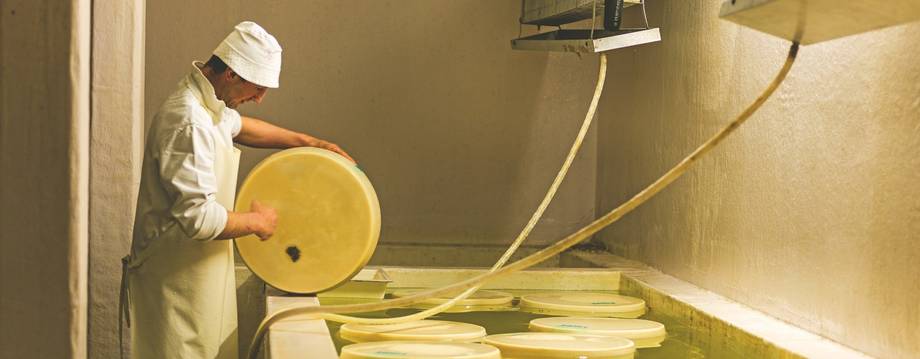
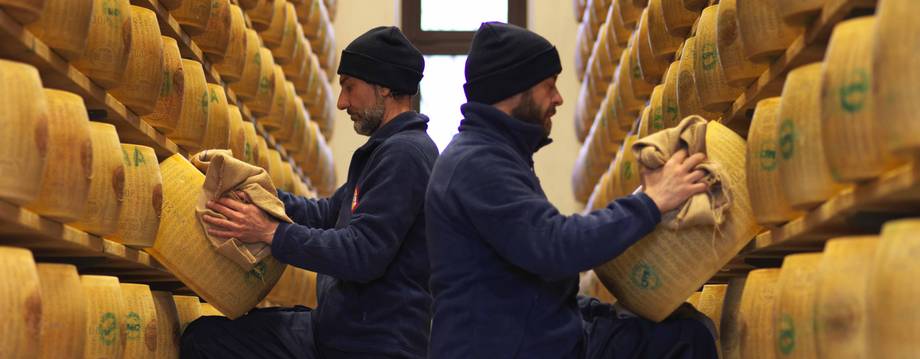
There are still a few independent maturing houses, and the most venerable of these is Cravero. established in 1855 by Giorgio Cravero, who really was the first of his name. His son who took over the business in the late nineteenth century was called Giacomo, and his son was called Giorgio – the family alternates between the two names for the first-born son of each generation. The current incumbent, Giorgio, is the fifth generation of his family to run the business. Giorgio the Third, as I like to call him, has firm opinions about what Parmesan should be. He calls it ‘table cheese’ ie not just for cooking, and wants the final product to be moist and fudgey, with sweet fruity flavours to the fore. Giorgio only buys from two producers in the mountains just south of Modena, where the diverse floral pastures confer more complexity, and uses the generations of family craft behind him to mature his cheeses to their optimum state. The cheeses are turned more often than at other maturing houses, contributing to their softer more open texture and are sold at around twenty-four months when they are still sweet and creamy rather the drier and more spicy thirty-six month cheeses.
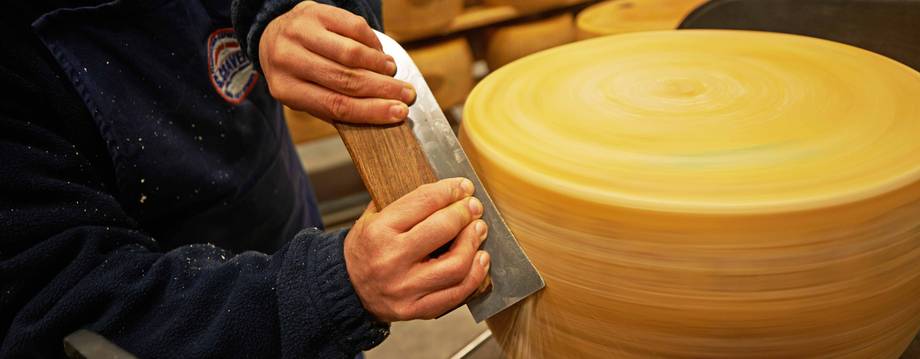
Now on to the important stuff, which is how to maximise your enjoyment of this magnificent cheese. I agree with Giorgio and prefer the twenty-four month, which retains that luscious fudgey texture and exuberantly fruity sweetness, but if spiciness is your thing, go for the thirty-six. To declare an interest, Giorgio is a friend of mine, but I have yet to find any Parmesan I like more than Cravero. Rather than cutting slices, try chiselling off shards, using a leaf-shaped Parmesan chisel if you have one – a great reason to buy at least one piece of primo cheese-cutting kit. The rougher-textured shards have more surface area, releasing extra flavour, and have an exciting mouthfeel. Also they look cool.
For an impressive yet low-effort starter, lean into locality by drizzling some Balsamico di Modena over those shards. Not only do those two fantastic foods share the same terroir, but they compliment each other perfectly with their sweetness and mouth-filling texture, while the tartness of the vinegar also cuts through the creaminess of the cheese. It looks amazing too – the deep treacly brown of the balsamic sets off the golden cheese beautifully.
Alternatively, you could compliment your Parmesan with some fresh crispy pears and a glass of Prosecco. Tart green fruit flavours appear in all three and the bubbles cleanse the palate for another go around. Ideally one would honour the cheese with the ‘grand cru’ of Proseccos, the DOCG (Denominazione di Origine Controllata e Garantita) from the hills around Conegliano and Valdobbiadene, just north of Venice.
Don’t throw the rind away! Not only does it make an excellent human chew toy for stressful times, you can drop it in soup or risotto where it will deliver up lovely umami richness. I do recommend that you experience this cheese au naturel, but it is most proper to cook with Parmesan; you should cook with good cheese! Alongside the usual suspects like pasta or risotto, the Consortio di Parmigiano Reggiano website has some intriguing suggestions, like their three-tiered dessert of panna cotta (with Parmesan), creamy ricotta (with Parmesan), and ice-cream (with sage and Parmesan). With that inspiration I’m off to invest in my dinner.
Share this article
You’ve reached your limit of 5 free articles this month.
Unlock unlimited access and more
Join Wine52 and get your first month half price
-
Get your first box for £18 (RRP £36).
-
3 wines & 2 snacks delivered monthly.
-
Printed Glug magazine included.
-
Unlimited access to all online content.


