A dash of heritage
Modena’s balsamic vinegar is one of Italy’s best-known but least understood gastronomic and cultural exports, writes Ian Bancroft
Ian Bancroft
Photo © Giacomo Maestri
Wednesday 07 October 2026
This article is from
Best of Italy
issue 67
Share this article
Though it may be hard to believe, some grapes are valued for reasons other than winemaking. Yet while most households have a bottle of balsamic vinegar somewhere in the condiments cupboard, how it is made and the heritage it embodies are little understood.
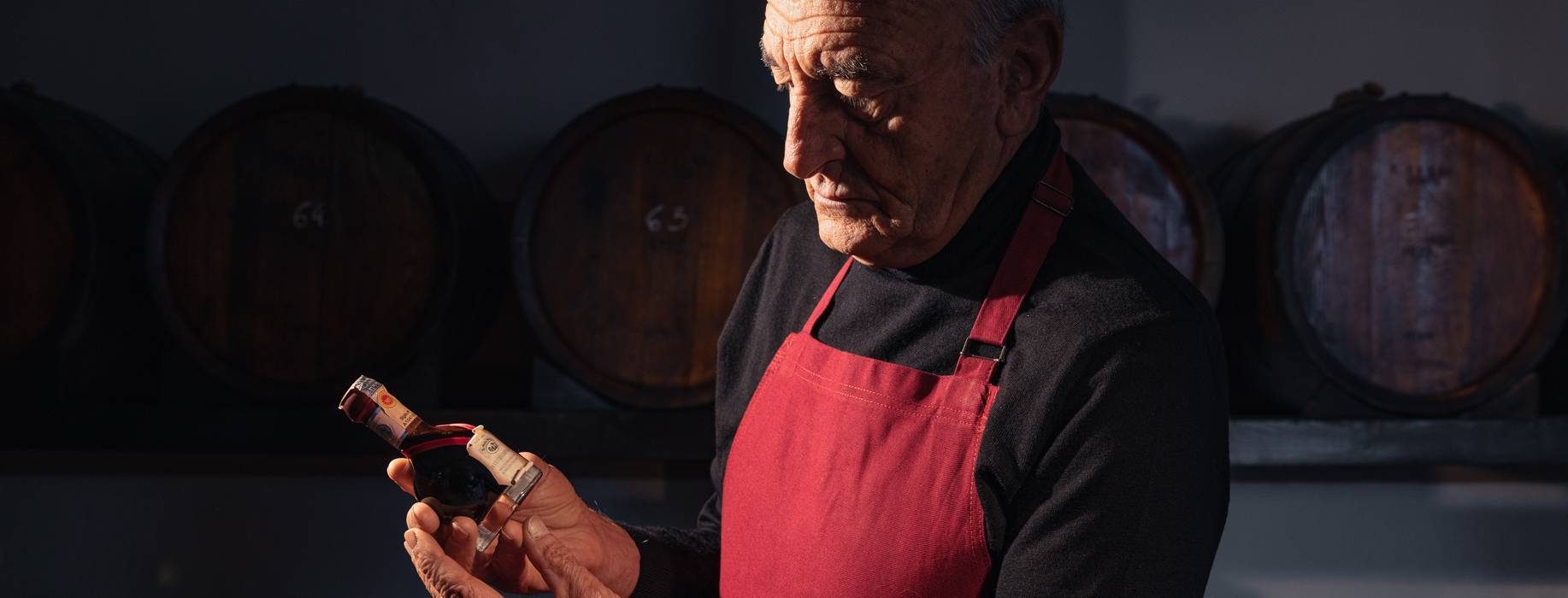
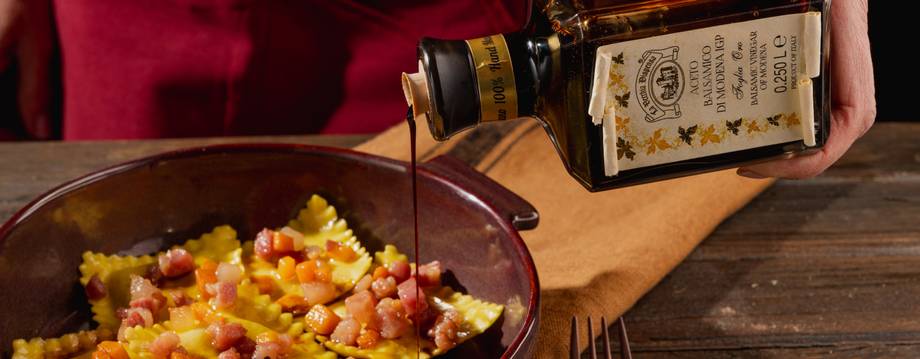
Simone Tintori, CEO and Master of La Vecchia Dispensa, explains that the Traditional Balsamic Vinegar of Modena PDO is “the pure expression of a centuries-old local tradition, passed down through generations”. This traditional version has just one ingredient: grape must from local varieties such as Trebbiano, Grasparossa, and Lambrusco, cooked at 90°C for twelve hours. This cooked must is left to ferment naturally, before beginning its long journey inside a batteria, a sequence of five or more progressively smaller barrels made from different types of wood (cherry, chestnut, oak and juniper).
These are stored in attics, or acetaia, where the summer heat promotes concentration and biological activity, while the winter cold slows down and stabilises the process.
Acetaia La Vecchia Dispensa © Giacomo Maestri
“Every winter, a small amount of vinegar is transferred from one barrel to the next in a process known as travasi e rincalzi [decanting and topping-up],” Simone explains, “at the same time, freshly-fermented must is added to the largest barrel, so the battery is never emptied and continues to live and evolve for decades.” Some 15% of the liquid evaporates annually, so this replenishment is essential.
As in winemaking, each type of wood leaves its own signature. “Some bring structure, others fruity notes, spicy aromas or delicate sweetness,” Simone continues, creating “extraordinary complexity.” After being aged for a minimum of twelve years (25 for Extravecchio or ‘Extra Old’), the vinegar is transferred to one of the iconic and obligatory 100ml bulb-shaped bottles, which is handled by the Consortium (or Consorzio) that upholds the standards and traditions of balsamic vinegar.
It is for vinegar masters like Simone to, in his words, “decide how every vinegar should evolve, when it is ready, and what its future will be”. For Simone a great balsamic is “built on the harmony of three elements: sweetness, acidity and aroma. We never try to hide acidity, because it is precisely acidity that gives freshness, enhances flavours and brings balance to every dish. A great balsamic must be complex and persistent, but it must remain alive.”
It is a profound responsibility. “With such long and natural ageing, every batteria will make a unique product,” says Valeria Piccinini from Acetaia Pedroni, one of the oldest producers in Modena. One lesson passed down by Italo, from the fifth generation of the Pedroni family, to Giuseppe III, the current owner, is that “when you blend two vinegars together, one good and one bad, it isn’t the bad one that turns good, but the good one that turns bad.”
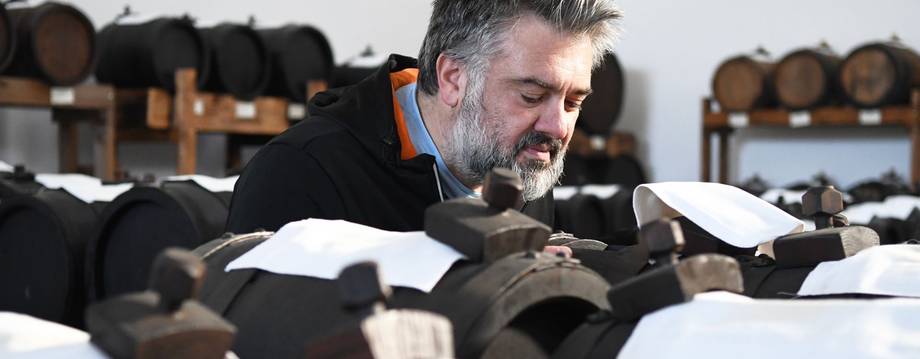
It remains a truly artisanal task. “There are only two of us working daily in the acetaia,” Luca Ghiaroni from Acetaia Bonini says. “We personally tend to the barrels, perform the transfers, follow each battery by hand, and still label everything manually… You aren’t controlling a production line – you are tending to individual sets of barrels, each with its own history and evolution.”
© Acetaia Bonini
One aspect that Luca savours is that you are simultaneously working “with the past and the future. You must learn to observe a lot and intervene very little, accepting that not everything can be accelerated, corrected, or standardised,” he reflects, acknowledging the daily temptations. “Time is not a process cost – it is one of the ingredients.”
Traditional balsamic’s most renowned pairings include Parmigiano Reggiano, stuffed pastas, and, to the surprise of many, strawberries and other red fruits; though always in very small quantities and often at the very end of preparation. Valeria insists a small spoonful makes a “great digestivo or luxurious dessert,” while Luca suggests starting in the simplest way possible “with a few drops on its own on a spoon”. There is, however, a cardinal sin many have committed. “Always use traditional Balsamic as a final touch,” Valeria insists. “Please do not cook it or reduce it on the flame – you will destroy decades of ageing.”
Fascinatingly, balsamic was never intended simply as a cooking ingredient. “Traditionally, it was also used as a natural remedy for a sore throat, as a digestive after a meal, or even enjoyed on its own, slowly, almost as a moment of meditation,” Simone says. As Valeria explains, the word ‘balsamic’ comes from the Italian word balsamo, or ‘balm’. “We do use traditional balsamic vinegar to help with sore throats, stomach ache, or just to lift you up after a very long day of work,” she says.
Modena produces a second kind of balsamic though – a very different product for a very different purpose. The more commercial, everyday Balsamic Vinegar of Modena PGI is available in almost any grocery store, and follows a more flexible set of rules enabling larger production. White wine vinegar and caramel (for colour) is added to concentrated grape must (often sweetened), which is then blended and aged in wood for a minimum of sixty days.
Since 2000, balsamic vinegar has enjoyed European safeguards. Valeria explains that its growing popularity from the 1960s led to “attempts to use the words ‘balsamic’ and ‘Modena’ related to products that have nothing to do with real balsamic vinegar.” Producers are now empowered to fight numerous imitations, while consumers can have confidence in what they are buying.
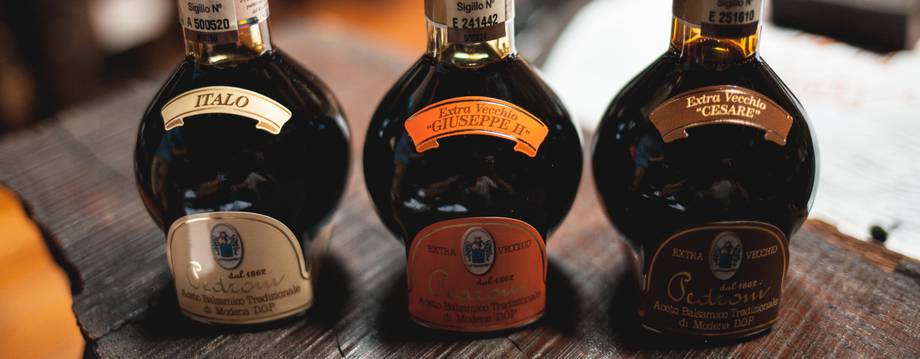
© Acetaia Pedroni
These differences are reflected in quantity and price. After 25 years, 100kg of grapes might yield just a single litre of Traditional Balsamic Vinegar of Modena PDO. “It is difficult to truly understand the value of the product if you only look at the word ‘balsamic’ on the label,” Luca adds, imploring consumers to carefully study the name and ingredients. Roughly 100,000 certified PDO bottles are made every year, compared to some 90 million litres of PGI, with the former typically retailing for upwards of €40.
For Modena’s families, balsamic is a fundamental part of their identity. “Whenever a baby girl was born, her father would start a new batteria of traditional balsamic vinegar for her,” Simone explains, “one day, those barrels would become part of her dowry, carrying with them years of patience and family history.” Valeria adds: “The batteria is considered almost as a family member, taken care of by the family and growing with the child.”
Its importance is such that many continue to produce their own balsamic at home. The barrels passed down through generations constitute for Luca a “sort of family archive,” to be savoured on special occasions or given as a sign of affection of gratitude, including once upon a time to doctors, lawyers, and priests. It is more than simply a gift but a “deeply personal gesture,” says Simone, one that money or other commodities can never truly replace.
For Modena natives, traditional balsamic vinegar is a living embodiment of their unique heritage, faithful to the past and the future. “The most important lesson my father taught me is that you don’t simply make balsamic vinegar,” Simone reflects. “The vinegar represents your character and keeps memories of those who worked on it before you.” In its purest form, it is a treat to be savoured and cherished, with a nod to those who’ve nurtured its creation.
Share this article
You’ve reached your limit of 5 free articles this month.
Unlock unlimited access and more
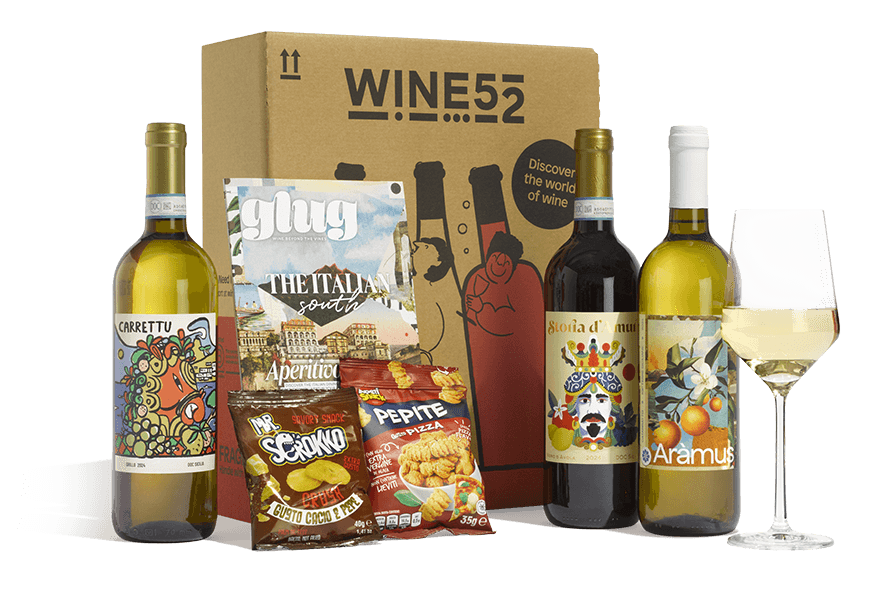
Join Wine52 and get your first month half price
-
Get your first box for £18 (RRP £36).
-
3 wines & 2 snacks delivered monthly.
-
Printed Glug magazine included.
-
Unlimited access to all online content.


