Agrumi d’Italia
Katie Mather is really excited about lemons. And rightly so.
Katie Mather
Wednesday 07 October 2026

This article is from
Best of Italy
issue 67
Share this article
There’s a reason why lemons are a visual shorthand for Italy. These fragrant, versatile fruits are part of Italy’s heritage, a by-product of sunshine, horticultural design and culinary care.
If you were to ask me why I love Italian citrus fruit, my first answer would come out rushed and blurted with enthusiasm – the colours. The word vibrant does not do justice to the electric energy I feel when I see that exact shade of yellow. A gnarly, nobbled Sicilian lemon is one of the most beautiful things I’ve ever seen, every time I see one. A vision of dappled sunlight and languorous evenings. The only fruit with an aura.
I’m not the only person who thinks so. In Helena Atlee’s book The Land Where Lemons Grow, she quotes Galileo: “What greater stupidity can be imagined than calling jewels, silver and gold ‘precious’ and soil and earth ‘base’?...if there were as great a scarcity of soil…there wouldn’t be a prince who would not spend a bushel of diamonds and rubies and a cartload of gold just to have enough earth…to sow an orange seed and watch it sprout, grow and produce its handsome leaves, its fragrant flowers and fine fruit.” Helena also introduced me, through this book, to the Montale poem I Limone, which talks of lemons as the true fruits of labour – a gift from nature that transforms even the most bleak of landscapes and the most banal of meals. To Italians, citrus fruit, agrumi are vital to the enjoyment of life, and therefore vital, full stop.
The romance of citrus fruit is that it is a luxury within our grasp. In deepest winter, we vitamin D-deprived northern Europeans give clementines as gifts, use them as Christingles in Protestant advent traditions, and simmer them in wine to warm our cockles. Terry’s Chocolate Orange with its freshly-peeled scent is the chocolate of the season. Ripened throughout the year and ready when the first frosts appear, these easy peelers were originally propagated in Algeria, a natural crossing between oranges and mandarins discovered by a monk and grown by French colonisers. They represented gold in the Victorian Christmas tradition, a holy and generous present left by a saint.
The many shades of citrus
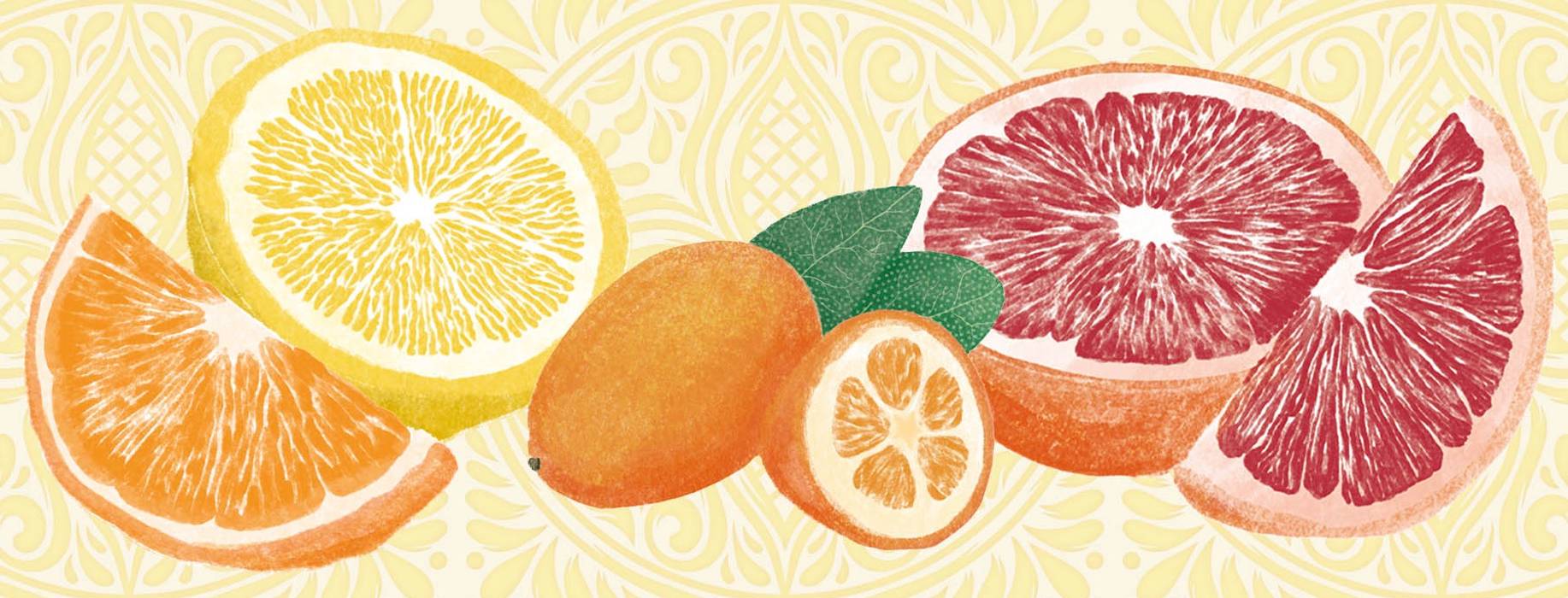
There are twelve types of citrus fruit as acknowledged by the Bartolí Botanical Garden: Citrons, Pommelos, Mandarins, Papaya, Sweet Orange, Bitter Oranges, Lemons, Limes, Grapefruit, Australian Citrus, Kumquats and Trifoliate. This collection is part of the Todolí Citrus Foundation, the largest indoor-grown collection of citrus fruits in the world. While the facility was built on the coast near Valencia, the Todolí family are Italian, with a long history of citrus obsession. And after all, Valencia has its own deep connection to citrus fruit, given the gorgeously juicy oranges that grow here.
As an Englishwoman, I was surprised to learn there were so many types of citrus. I assumed, incorrectly, that a citron was merely a type of lemon – how wrong I was. The citron is a god among demigods, the archetypal citrus from which most of the common European varietals were developed. Originally from China, it is the mother and father of the lemons and limes we see in our supermarkets – quite literally, as it is self-pollinating. Another surprise was the kumquat, a fruit I assumed was a hybridised modern confection, which is actually an ancient fruit descended from one 'true' kumquat still in existence today—the Hong Kong Kumquat. From the kumquat, we get the calamansi, an essential ingredient in Filipino, Indonesian, Sri Lankan and Taiwanese cuisine. From the Pomello, a fruit I had not experienced until I was in my 20s, the grapefruit was made, and not the other way around as I once assumed. As the Wikipedia entry for citrus taxonomy states: “Citrus taxonomy is complicated and controversial.” There is no easier way to get into a botanical argument than to begin debating the origins and timelines of your favourite citrus tree.
The beautiful and the bizarre
The Bizarria is a chimera, a fruit that should not be, but is. In 1674. Pietro Nati, the director of Pisa’s botanic garden, published ‘De malo limonia citrata aurantia vulgo la Bizzarria’ the first description of a bizarre hybrid between a sour orange and a citron. This plant was what we would now call a graft-hybrid, which we see often and with great success in vineyards all over the world. What was curious to Pietro was that the fruit, his Bizarria took on elements of both of its parent plants simultaneously, rather than collectively as a hybridisation.
Citrus that grows with deformities or digitisation, like the Buddha’s Hand citron, were also known as bizarries in Italy. They were collected by educated gentlemen of the 18th and 19th centuries, and these collections were allowed to grow ever more diverse thanks to cross-pollination. Unlike genetics and reproduction, however, the mutations seen in citrus in these beautiful, abundant garden collections were a mystery.
These bizarries were highly prized, rare and extraordinary examples of a fruit that even in its most common form were considered glorious; cherishable. What we know now thanks to the work of botanists over the ages is that the capricious whims of lemons are affected by temperature, rainfall, fluctuations, microscopic insects and even the wind. The fruit on a single tree matures at different rates, germination and growth can be stunted by shadow or malformed by heavy rain. The desirable “fingers” of a Buddha’s Hand citron are naturally formed on the native tree, but are created elsewhere by the intrusion of the citrus bud mite.
“The mite is a pest,” says Helena Atlee,” but its impact is still considered so delightful that it is known as…mite of the marvels. Here the lemons show more parallels with vines – this happy infestation feels a lot like the relationship between grapes and Botrytis, the Noble Rot. As with grapes, citrus fans see their oddities and endless variety as a celebration of the unusual, a cornucopia of flavours and aromatics in infinite combinations. An Italian fruit with global heritage. The valuable interaction between fruit and environment.
Share this article
You’ve reached your limit of 5 free articles this month.
Unlock unlimited access and more
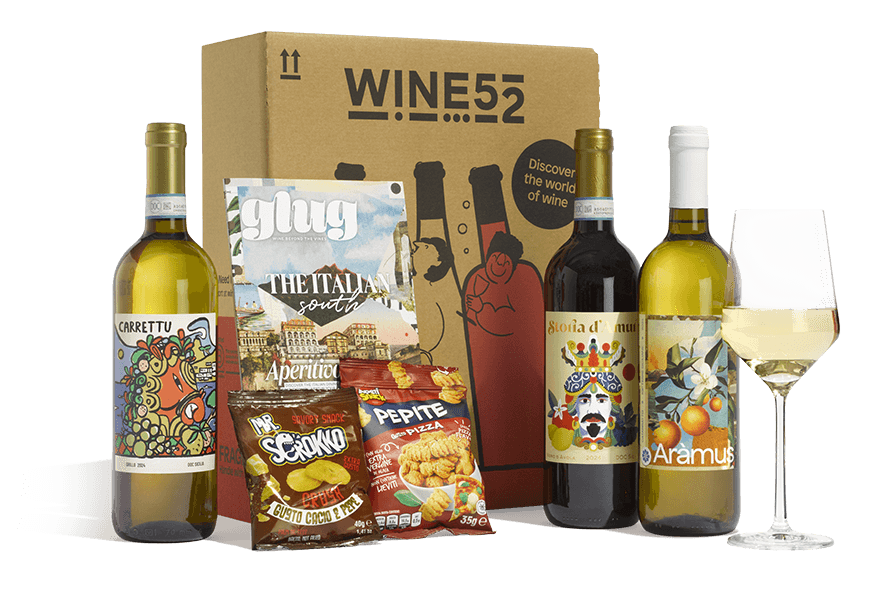
Join Wine52 and get your first month half price
-
Get your first box for £18 (RRP £36).
-
3 wines & 2 snacks delivered monthly.
-
Printed Glug magazine included.
-
Unlimited access to all online content.


