Local heroes
Uruguay’s climate makes it a good home for many classic, old-world varietals, which have found a found a distinctive expression here, writes Amanda Barnes
Amanda Barnes
Photography © Uruguay Wine
Wednesday 04 November 2026

This article is from
Uruguay
issue 68
Share this article
Uruguay’s climate is markedly different to those of its better-known neighbouring wine countries, Argentina and Chile. With annual rainfall averaging over 1100mm, and a mild Atlantic-influenced climate, Uruguay has far more in common climatically with somewhere like Bordeaux or Galicia than many of its New World counterparts.
This also means it has always taken a very different direction when it comes to grape varieties. In its earlier history as a wine country, hardy hybrid vines, as well as productive Ugni Blanc and Moscatel de Hamburgo, were among the most widely planted and easiest to cultivate across the wine regions.
There was, however, a nobler grape variety that also thrived in those early days of viticulture: Tannat. With its thick skin, it proved well adapted to Uruguay’s humidity and variable rainfall and thrived throughout the late 19th and 20th centuries to become Uruguay’s champion variety today.
The quality revolution of the late 20th century brought a major reconversion of Uruguay’s vineyards. The creation of INAVI in 1987 helped usher in a new era of fine-wine production, with many old hybrids pulled out and replaced by Vitis vinifera varieties.
But rather than narrowing the palette, Uruguay has increasingly become a wine country with a wide range of styles and varieties to explore.
Tannat
When Basque immigrant Pascual Harriague introduced Tannat into Uruguay around 1870, the vines arrived via Concordia in neighbouring Argentina, alongside a handful of other varieties. Harriague quickly saw the potential in Tannat: a grape that could withstand the rains and humid conditions of the climate and still produce generous yields of deeply coloured fruit, giving wines of colour, concentration, tannin and acidity.
Even in those early winemaking days of the 19th century, Harriague and Uruguay’s Tannat began to win serious international acclaim, including recognition at exhibitions in Barcelona and Paris at the end of the 1880s.
That growing recognition was part of the reason other vignerons began planting Tannat more widely across the different wine regions, and it was soon cultivated in pockets from north to south. Not only was Tannat celebrated for its consistency through Uruguay’s variable vintages, but it also proved a particularly good match for the country’s meat-loving diet.
Today Tannat remains Uruguay’s most-planted grape, with more than 1,500 hectares and over a quarter of the national vineyard. With more than a century of experience cultivating it, Uruguay has undoubtedly learned how to tame this tannic and robust variety. That might mean blending it with softer grapes such as Merlot or even aromatic Viognier, but increasingly it comes down to more precise viticulture, picking decisions and gentler winemaking techniques.
In Uruguay today you can expect Tannat of all different characters, from lighter, unoaked and juicy expressions, as exemplified by producers such as Pablo Fallabrino and Viña Edén, to the more structured styles aged for years in oak, such as the top wines of the Pisano family.
There are also rosé wines made from Tannat, sparkling examples, fortified wines and even white Tannat, produced as a blanc de noir. One grape, it turns out, can have rather a lot of personalities.
Uruguay continues to defy convention with its champion variety and show that, after all these years together, country and grape understand each other rather well.
Albariño
It wasn’t until 2001 that the first vines of Albariño were planted in Uruguay, by the Bouza family as an homage to their Galician roots. They planted an experimental hectare at Las Violetas in Canelones and produced their first vintage in 2004.
But since those early vintages, Albariño has grown remarkably quickly and been planted around the country to become one of Uruguay’s leading fine-wine white varieties and certainly one of its most exciting.
Well suited to the Atlantic climate, Albariño has thrived in the coastal wine regions of Canelones and Maldonado in particular. On the heavier sedimentary and clay-rich soils of Canelones it can offer wines of greater breadth and fleshier fruit, while on the poorer, rocky and granitic-influenced soils of Maldonado it often shows more verve, tension and salinity.
There is consequently a wide range of expressions in Uruguay today, from easy-drinking everyday Albariños to some of the country’s most serious and collectable white wines.
And the story is far from finished. Albariño continues to be planted widely as part of the country’s current wave of vineyard renewal, meaning there are likely to be many more styles and regions to discover in the years ahead.
The Bordeaux varieties
Given Uruguay’s maritime climate, it is perhaps unsurprising that Bordeaux varieties have long found a home here. Merlot is particularly important historically and remains one of the country’s most planted grapes, as does Cabernet Sauvignon.
The challenge with Uruguay’s changeable vintages is that the conditions that particularly suit Merlot do not always favour Cabernet Sauvignon to the same degree, and vice versa. This makes vintage variation an important part of the character of Uruguayan wine rather than something to be ironed out completely.
The red Bordeaux variety that is really beginning to thrive in terms of quality, however, and show admirable consistency through different vintages, is Cabernet Franc.
Ranging from the more structured expressions of Canelones and Colonia to the fresh, herbal and fragrant styles emerging from Maldonado, Cabernet Franc seems particularly comfortable in Uruguay’s moderate climate.
Petit Verdot is also appearing increasingly in blends, adding colour, spice and backbone, most notably in some of the wines of Maldonado.
The Italian varieties
With so much Italian immigration in Uruguay, that Latin heritage runs deeply through the wine scene too.
Sangiovese, Nebbiolo and Barbera survive in small pockets, particularly in Canelones, while producers have also revived varieties such as Arneis and Nero d’Avola. Some of the most interesting examples can be found among the wines of Pablo Fallabrino and De Lucca.
In fact, wine families often recount how Italian varieties were planted long before Tannat took its place as the national champion. Although these grapes represent only a small proportion of the land under vine today, they reflect a much bigger part of the Uruguayan psyche and the living memory of its immigrant wine heritage. They also make for some of the country’s most characterful bottles.
Marselan
One of the newer stars of Uruguay is Marselan. This French crossing of Cabernet Sauvignon and Grenache was created in the 1960s and has adapted particularly well to Uruguay’s conditions.
Its small berries, thick skins and useful disease resistance make it an attractive proposition in a humid climate, while the wines offer deep colour with supple fruit and lifted perfume. At their best, they provide a juicy and immediately appealing alternative to the more structured wines of Tannat and the Bordeaux varieties.
Marselan is no longer merely an experimental curiosity either. It has become one of the more significant newer red plantings in the country and there are increasingly ambitious examples being bottled on their own.
Other coastal whites
While Albariño might be stealing the limelight, Uruguay’s other white varieties are becoming increasingly important to the modern wine scene.
Sauvignon Blanc, another Bordeaux variety, has long been established in Uruguay and offers some particularly zesty coastal expressions in Canelones and Maldonado. A handful of more ambitious barrel-fermented Sauvignon Blanc wines are appearing too, showing another side of the variety.
Chardonnay is another key grape, ranging from light, crisp wines to more complex barrel-aged styles. It is also an important base for Uruguay’s sparkling wines, another increasingly interesting category, with many of the finer examples made using the traditional method.
Riesling is emerging as one of the more intriguing niche varieties, with some excellent examples stretching from the far west in Colonia to the far east in Rocha. Then there is growing interest in Petit Manseng, Sauvignon Gris, Semillon, Marsanne and Godello, among others, and a rising category of premium white blends in Uruguay.
Part of the fun of exploring Uruguay is that you never quite know what wine you might find next. Italian varieties sit alongside French crossings, Atlantic whites alongside muscular Tannat, and evermore adventurous winemakers continue to shape what is planted today.
It is this sense of discovery that makes Uruguay particularly interesting. Tannat may remain the undeniable champion, but the real story of modern Uruguayan wine is no longer about one grape variety. It is about a small country increasingly confident in the growing range of varieties and wine styles its climate, geology and immigrant heritage allow it to make.
Share this article
You’ve reached your limit of 5 free articles this month.
Unlock unlimited access and more
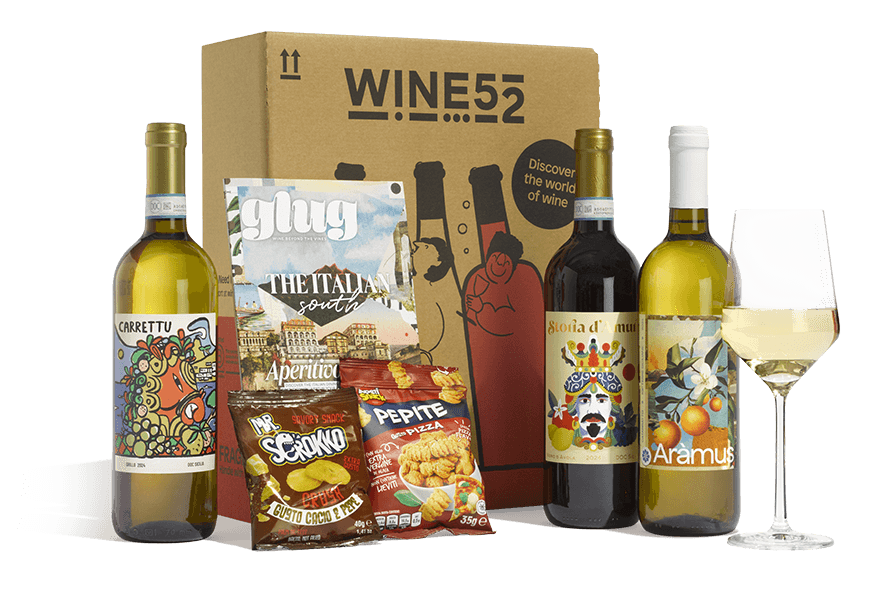
Join Wine52 and get your first month half price
-
Get your first box for £18 (RRP £36).
-
3 wines & 2 snacks delivered monthly.
-
Printed Glug magazine included.
-
Unlimited access to all online content.


