Uruguay’s sustainable future
A wine industry with sustainability baked in
Ian Bancroft
Wednesday 04 November 2026

This article is from
Uruguay
issue 68
Share this article
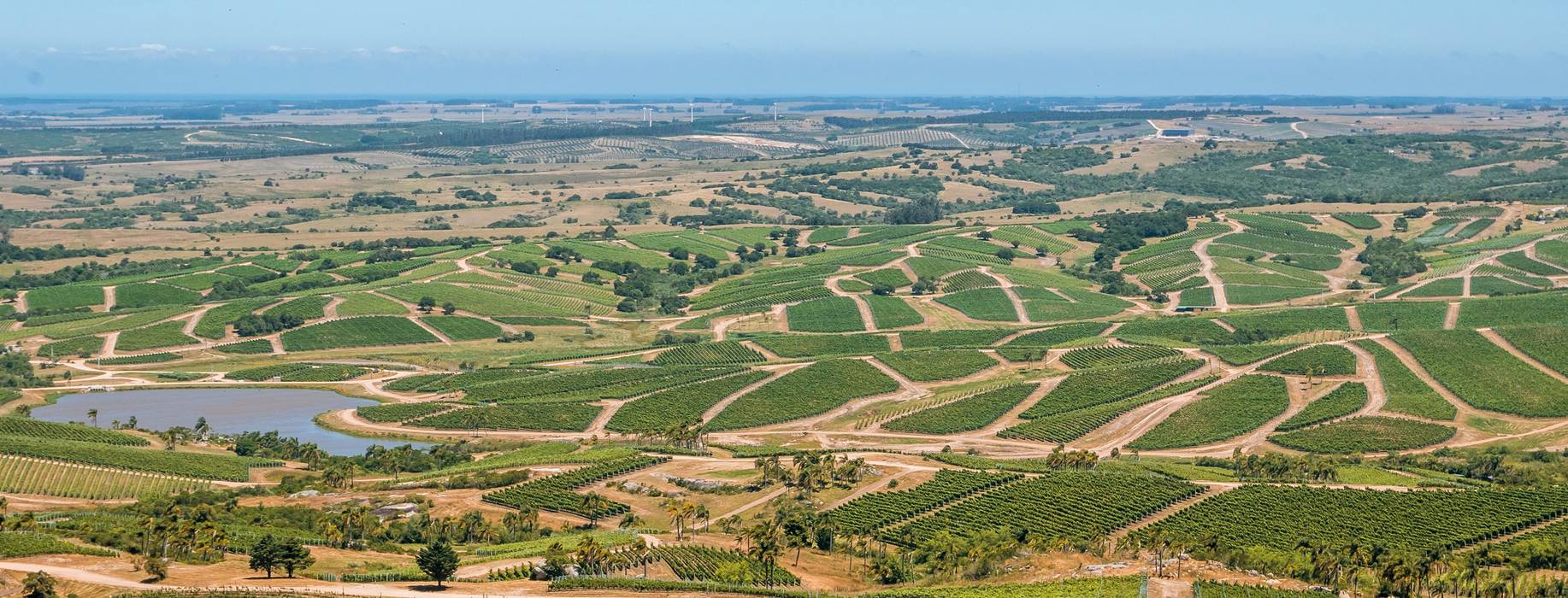
Celebrating the winemaking generations of the past means very little if a blind eye is turned to the future. For Uruguay and its approximately 6000 hectares of land under vine, sustainability is front and centre; not just in the environmental sense, but with broader social and economic considerations in mind.
Néstor Merino is a viticultural advisor to CREA Viticultores ‘Ing. Julio O. Borsani’, one of the country’s oldest and most influential winegrower peer-collaboration groups. He explains there has in recent years been a “growing awareness among Uruguayan winemakers of the importance of introducing certified production systems in which sustainability is a central consideration”.
Winemakers themselves have taken the initiative. Uruguay’s National Institute of Viticulture (INAVI) – in collaboration with academics, growers, technical specialists, and others, each with their different perspectives – created the national-level Sustainable Viticulture Production Programme. They embraced environmental and production standards and criteria which, for Néstor, were “being adopted in other wine-growing regions around the world and increasingly demanded by international markets”.
It is a comprehensive and coherent programme. Specific measures pertain to soil, water, and biodiversity, plus guidance on pest and disease management practices. Safe use, storage, and disposal of pesticides is widely covered. Training is provided to winegrowers and other vineyard professionals on various dimensions of sustainability, while systems of record-keeping and traceability help vineyards demonstrate implementation.
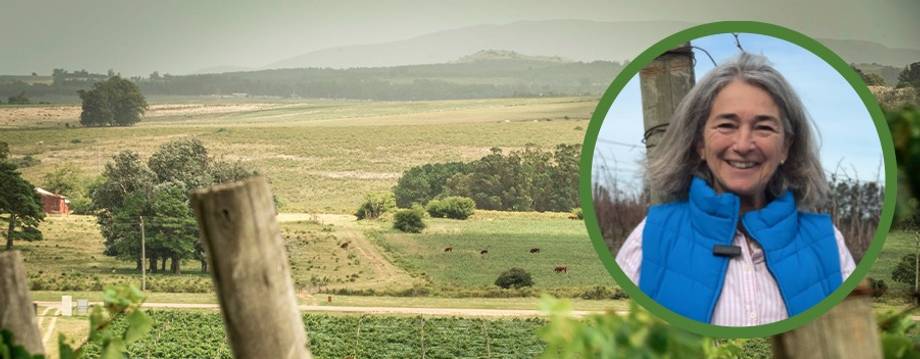
Paula Pivel owns Alto de la Ballena, a winery fifteen kilometres from the Atlantic Coast. “Sustainability here goes beyond a statement of principles,” she says. “It involves concrete practices, records, controls and independent verification.” Nor does it remain static, with constant review and amendment as knowledge, technology, and production conditions evolve. It is arguably one of the programme’s most valuable features, given the pace at which winemaking itself moves on.
“It also takes into account the people involved in production and the long-term viability and sustainability of the vineyard itself,” continues Paula, with an emphasis on occupational health and safety; after all, there is no wine without hands to nurture it, and no continuity if the present is squandered.
Interest in the programme has mushroomed. When it began, just over 30 ‘winegrowers,’ as Néstor terms them, were involved. Today 238 vineyards are certified, covering 2355 hectares and accounting for 38% of Uruguay’s production. Twenty-nine wineries participate in the certification process, their wines being produced from grapes grown in certified vineyards. “It continues to expand across major producing regions like Canelones, Maldonado, and Colonia,” Néstor says.
Paula Pivel
For many though, the programme is simply a way of formalising and recognising their existing practices. “Certification didn’t mean a radical change in philosophy,” Paula maintains, “because from the very beginning we have worked with a very similar approach to caring for the vineyard, the people who work in it and the surrounding environment.” Instead of creating new requirements, it merely acknowledged and applauded approaches that had long endured.
There were, inevitably, broader considerations. For Néstor, this focus on sustainability has been “driven partly by the requirements of international markets, but also by the strong development of wine tourism”. The ‘Sustainable Winegrowing Uruguay’ sticker placed on each bottle has, “become an important point of commercial differentiation,” he says. He notes that certain markets, particularly those in Scandinavian countries and Canada, specifically demand wines that have undergone this certification process.
Others are more skeptical about the overall weight of this consideration. “In our experience, sustainability certification is not currently a requirement for our international customers,” Paula contends. “We have received some specific enquiries about it, but, to be honest, they have so far been relatively few.” Nonetheless, she is convinced that sustainability adds value to Uruguayan wine.
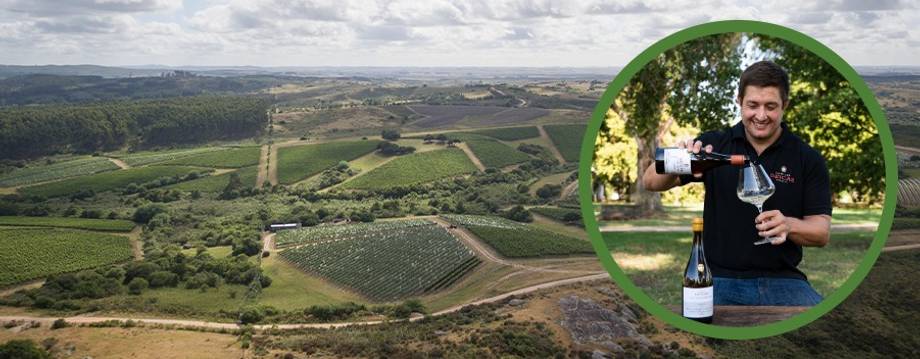
And as Santiago Deicas Cáfaro – the third-generation winemaker at Familia Deicas winery, whose vineyards are also influenced by the Atlantic Ocean and its unique maritime climate – notes: “While consumers may not choose a wine solely for this reason [sustainability], many refuse to buy non-sustainable products.” Sustainability opens doors for Uruguay in international markets.
The relative proximity of Uruguay’s vineyards to its people, however, means that sustainability considerations cannot be ignored. “Almost all our vineyards are small and located within populated areas,” Santiago explains. “It is crucial to be mindful of the impact our practices have on the local communities where we live.
“We consider planting a vineyard to be an invasion of the local nature. Therefore, we strive to coexist with the ecosystem by encouraging biodiversity so that vineyard pests are controlled as naturally as possible.”
Climate change has made the need for sustainability even more pronounced, with more frequent extreme weather events posing new challenges. For Paula, periods of intense rainfall (which increase disease pressures) or drought threaten the viability of vineyards. “In these circumstances, the sustainable production standard provides us with a framework to ensure that the measures we take are effective, but also precise and responsible,” she says.
While the programme provides clear guidance in circumstances that are ever more frequent, their applicability will be repeatedly tested. “I cannot rule out the possibility of climatic conditions becoming so extreme that, in a particular situation, staying within the parameters of the standard could mean accepting some loss of production – potentially even a significant one,” says Paula. “We would have to accept that.” Sustainability can only be assessed from a long-term perspective, against a backdrop of ever more demanding climatic conditions.
Santiago Deicas Cáfaro
Meeting the required certification standards is not without its challenges, especially in the vineyard. “We essentially have two choices: intervene aggressively against nature, or find a friendly way to coexist with the ecosystem,” Santiago says, “but in the long run, sustainable production is far more beneficial in every aspect.. it used to be called ‘viticulture raisonnée’ in French because it requires more reasoning and avoids applying products mindlessly.” Short-term pain will bring long-term gain.
They are not naive to the inherent trade-offs though. “The production standards always seek to strike a balance between the environmental sustainability benefits of a particular practice and the economic viability of implementing it,” Néstor says.
Paula adds: “Certification certainly challenges us, but at the same time it helps us to work better. It requires us to be more rigorous and organised in our record-keeping, staff training and the planning of vineyard practices.” The programme’s requirements mean vineyards are better prepared to adjust and adapt to a changing reality.
For Paula, these developments in viticulture represent part “of a broader attitude towards sustainability in Uruguay”. Electricity is one concrete example, with 98% generated from renewable sources. “This is the result of a long-term energy transformation that the country has been pursuing for many years,” she adds. “In that context, winegrowers’ commitment to more sustainable production is not an isolated development.” And, as Néstor notes, “a growing section of the domestic consumer market is beginning to place greater importance on environmental and sustainability issues when choosing wine.”
Santiago would like to see the entire vineyard area in Uruguay eventually certified as sustainable, which would be “a wonderful milestone to communicate as a country.” It is a joint endeavour that establishes a community of knowledge and collective identity that makes this example feel unique. While other regions globally now follow similar practices, there is a collegiality and pride that sets the country apart.
Uruguay’s approach to sustainability is guided not by marketing considerations, but a profound awareness of its winemaking reality. Its proximity to communities and vulnerability to ever more extreme weather conditions – along with the Atlantic’s looming presence – make sustainable practices an imperative, not a choice. At the same time, the country’s reputation for sustainability has enhanced the overall standing of its wine industry, especially in markets where such traits are demanded. Good things come to those who respect nature and the people nurturing the land.
Share this article
You’ve reached your limit of 5 free articles this month.
Unlock unlimited access and more
Join Wine52 and get your first month half price
-
Get your first box for £18 (RRP £36).
-
3 wines & 2 snacks delivered monthly.
-
Printed Glug magazine included.
-
Unlimited access to all online content.


