The Dramteam
Far from the dusty shelves of your grandad’s liqour cabinet, whisky is quietly undergoing its own craft revolution.
Richard Croasdale
Tuesday 03 June 2025

This article is from
Beers of The North
issue 5
Share this article
Like beer, whisky is on paper a very simple product; just water, yeast and malted barley, fermented into a weak ale, distilled down to a clear spirit, and left to mature in wood for a minimum of three years.
Also like beer though, the art (and the fun) is in the detail. Over the past three or four years, whisky has also been going through its own craft revival, with a trickle of new distilleries turning into a torrent, and a new breed of ‘outsider’ distiller coming to the fore. In an industry where even evolution has often been treated with suspicion, this kind of revolution would until recently have seemed impossible.
As we’ve seen in other countries, perhaps most notably the US, craft whisky (or whiskey, with an ‘e’, in America’s case), has grown out of a wider appreciation for craft beer and other products of good provenance. However, where the craft whisky movement perhaps differs from beer is that the big mainstream distillers already produced a phenomenally high quality spirit, readily available on supermarket shelves throughout the UK and beyond.
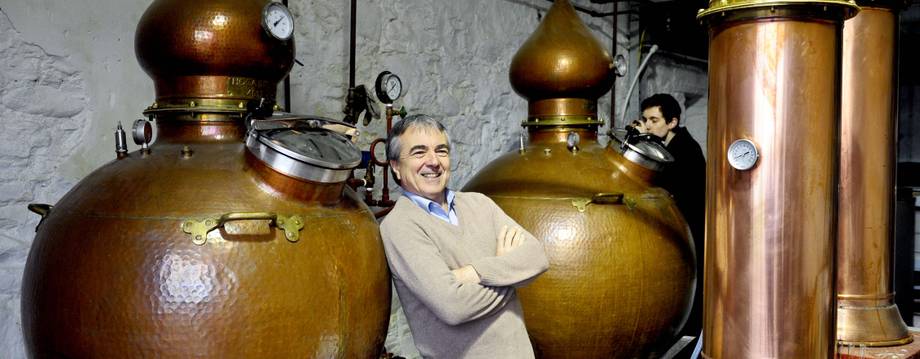
So what does ‘craft’ mean in the context of whisky, and how have these upstart distilleries found a niche within a industry whose global reputation is already so good? In part, it is undoubtedly a backlash against what many see as the homogenisation of whisky. For the big brands, putting out a consistent product is paramount; a bottle of Glenmorangie 12 year-old bought today should be exactly the same excellent bottle that could be purchased 20 years ago. While there is tremendous skill (and even craft) in achieving this, distillers naturally want to control as many of the variables as they can.
How have these upstart distilleries found a niche within a industry whose global reputation is already so good? In part, it is undoubtedly a backlash against what many see as the homogenisation of whisky
This has led to a great deal of automation at the brewing and distilling end of the process; tucked away behind the quietly frothing wooden washbacks, elegant stills and quaint spirit safes are computers, sensors and electronic actuators, monitoring every aspect of the distillation to produce spirit that is exactly the same every single time.
So ‘craft’ in one sense is shorthand for ‘hand-crafted’. The distiller makes decisions on the spot, using their experience to guide the character of the spirit. What comes off the still may not always be the same, but it is entirely the result of human effort and artistry.
That’s not to say that all ‘mainstream’ distilleries are soulless whisky factory factories; indeed, today’s craft movement owes a great deal to those who have worked so hard over the past 20 or so years to reopen defunct, or ‘silent’ distilleries. Brands like Bruichladdich, Glendronach and Glenglassaugh beat a path by showing it was possible to establish a successful new whisky business, even if not entirely from scratch.
Nonetheless, craft has also come to mean small in most cases. Scale is arguably more significant for whisky producers than it is for beer because of the legal restrictions they have historically faced. Going back hundreds of years, a large proportion of the whisky consumed in Scotland came from ‘illicit’ stills, set up in farm outbuildings, on hillsides, or even hidden in plain sight among the bristling chimneys of Edinburgh.
A combination of lost tax revenue and moral pearl-clutching prompted the government of the day to impose draconian new laws on the UK’s distillers, many of which were designed specifically to make small-scale distilling impossible. These included setting a minimum still size of 1800 litres (which, if you’re struggling to visualise it, is big) as well as requiring separate secure areas for fermentation, distillation and storage of spirit, all enforced by an army of dreaded ‘excise men’.
These measures worked. Aside from a handful of old boys in the Western Isles distilling their own rough clear spirit (known as uisge beatha, ‘the water of life’ in Scottish Gaelic), whisky making was reserved to the licensed - which, in effect, meant ‘large’ - established distilleries. That is, until around 2012, when something rather remarkable happened.
Quite separately, from London to Cardiff to Perthshire to the Outer Hebrides, ordinary men and women – many of whom had no previous experience in distilling – began to wonder whether they could make their own spirit. Some were inspired by the burgeoning craft movement in the United States, while others still simply had a love of whisky and a bucket-load of self belief.
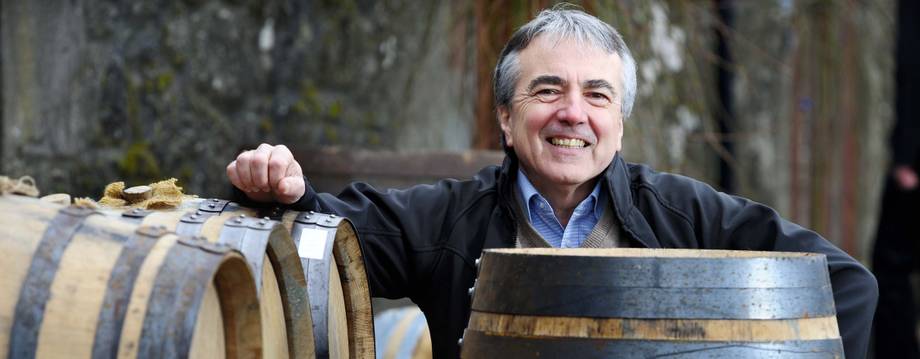
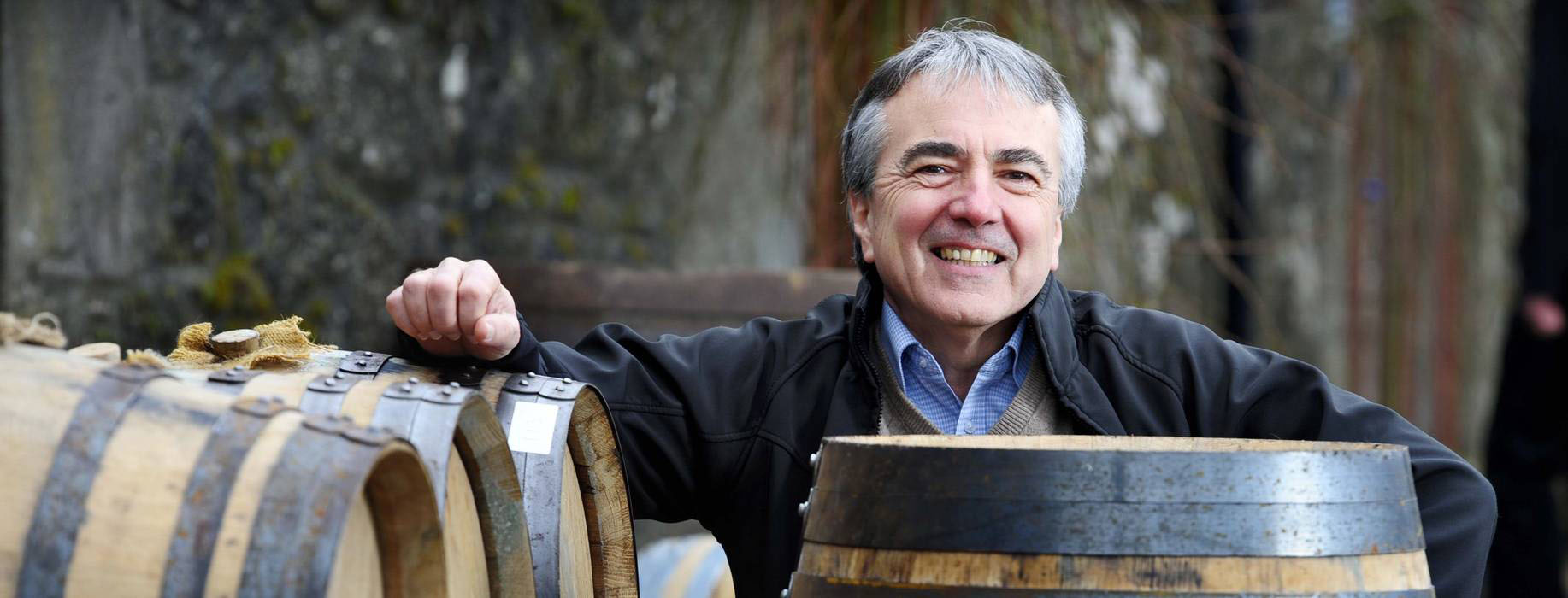
Gently, pioneers including The London Distillery Company (TLDC) and Strathearn in Perthshire began pushing against the historical barriers they had been told would make their ambitions impossible. Many of these barriers came back to HMRC, the government body responsible for collecting tax and duty, and issuing licenses for distilling.
“Back in 2012 HMRC hadn’t issued an actual distilling license in London for more than 100 years,” recalls TLDC’s founder Darren Rook. “Gin only requires a simple rectifying & compounding approval and HMRC had this down with Sacred, Thames and Sipsmith. So we got our licenses in seven days for duty-paid spirit, allowing us to get gin running straight away.
“However, the impact of 18 months delay in the whisky licenses and bonded warehousing approvals meant duty-paid production was an expensive way of doing things and also killed cash-flow further. Plus it put us 12-18 months behind on our business plan.”
Rook was lucky to have a good adviser close to HMRC, who was able to steer him through the labyrinthine bureaucracy. Although there was initially some reluctance to uproot old regulations for the sake of a couple of small businesses, nobody could make a compelling case for keeping the restrictions and the distillers’ persistence eventually paid off; small stills and quirky distillery setups are now a hallmark of the craft scene.
The final characteristic that sets the craft crowd apart is a desire to innovate and experiment. The mainstream whisky industry is deeply conservative, and the prevailing culture is firmly focused on meeting demand while keeping quality high. There are good reasons for this; whisky is a hugely valuable global brand, and the industry’s regulatory body, the Scotch Whisky Association, quite rightly seeks to protect it by coming down hard on any infractions of its many rules.
For some, this has meant looking back for inspiration. Though somewhat larger than Reeman-Clark’s definition of a ‘craft’ distillery, Kilchoman on the isle of Islay has taken a hyper-local approach, sourcing its barley from the neighbouring farm and malting it on-site, on the floor of an old barn (floor malting is time-consuming and labour-intensive, and is therefore very rare).
It’s great to see other distilleries pop up around the UK. I’m all for others in the market as it will help raise the bar and educate consumers
This sudden sense that anything is now possible has coincided with a golden age for brewing and distilling knowledge. Just as the early 1970s saw an explosion in high-concept film making, thanks to a new generation of highly cine-literate directors in Hollywood, today’s craft whisky movement is being fuelled by graduates of Heriot Watt University’s world-leading Brewing and Distilling course. Go into any craft distillery or brewery - not just in Scotland but throughout the UK - and you are more than likely to find some link to Heriot Watt.
The significance of having such expertise on hand cannot be overstated. Tony Reemna-Clark of Strathearn sought advice from Heriot Watt as far back as 2010, and collaborated with the faculty on several MSc projects. The Heriot Watt team also met and worked with other new distilling businesses, including Ogilvy, Dunnet Bay and Dark Matter, who were all facing similar problems in those early days. As the craft industry has grown, so has the course, which has in turn spawned a steady stream of new, expert distillers keen to put their scientific knowledge into practice.
Anne Hill, an Associate Professor at Heriot Watt’s International Centre for Brewing & Distilling says: “One of the attractions of micro distilling is the ability to experiment - to produce unique products that are flavour-led, and with raw materials that are locally sourced. The majority of new distillers are in it for the long term, with the aim of supporting the local economy through jobs and increased tourism and this is great to see.
“The rise in interest in distilling is great for both small businesses and the wider distilling industry - it also helps raise the bar in terms of quality because in order to gain a foothold in an increasingly crowded market, and then to maintain sales, products must be high quality.”
If the craft Scotch movement began life as a loose collection of dreamers and academics, things have moved on quickly. The rabble is organising. Starting this month, whiskies from many of Scotland’s small distilleries will bear a ‘hand crafted in Scotland’ logo, thanks to an independent certification scheme conceived by Tony Reeman-Clark and supported since its infancy by Herriot Watt. Tony explains why he felt a separate industry body was necessary.
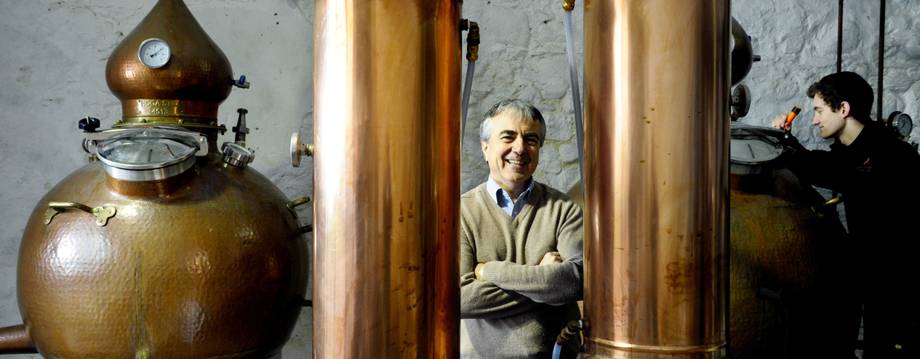
“The Scotch Whisky Association does a great job of protecting the whisky industry as a whole, internationally; we have a great relationship with them,” he says. “But nobody was looking out for Scotland’s small craft distilleries – and that covers things like gin too – which are growing something really special here. We’ve already had instances of big companies passing themselves off as Scottish, which dilutes the brand that we have.”
There is no doubt that these new distillers are proudly Scottish, and that location plays a huge part in their brands. Whiskies from the Scottish Borders, Harris, Lewis, Rathsay and even the remotest tip of the Shetland Isles each have an inherent claim to uniqueness that they hope will help them stand out in an increasingly crowded market.
But as exciting as these developments are, for whisky lovers the buck always stops at character. So, the question on the lips of the entire whisky world is: are craft whiskies any good? Thanks to the iron-clad rule that spirit must mature in oak for at least three years to be called whisky, the early pioneers are only just starting to release their first bottlings. So, while the sneak peeks have been very promising, the answer is that we just don’t know.
The rise in interest in distilling is great for both small businesses and the wider distilling industry
What we do know is that the past few years have rocked the staid world of Scotch malt whisky to its core. As well as a raft of new distilleries (I count more than 20 either just opened or in serious development) the mainstream industry’s reputation for quality is now being challenged by the likes of Japan and Australia, where whiskies of exceptional character are now scooping up previously predictable global awards. With single cask whiskies, whiskies without an age statement, and even high quality grain whiskies becoming increasingly common, this is undoubtedly the most exciting time to be a whisky lover since the single malt boom of the early 1980s.
Part of this excitement, just like craft beer, is seeing who will fall and who will thrive.
As TLDC’s Darren Rook says: “It’s great to see other distilleries pop up around the UK. I’m all for others in the market as it will help raise the bar and educate consumers. It will get more and more cluttered so I just hope we can stand out as being exceptional over time.”
Share this article
You’ve reached your limit of 5 free articles this month.
Unlock unlimited access and more

Join Beer52 and get your first month half price
-
Get your first box for £13.50 (RRP £27).
-
8 beers & 2 snacks delivered monthly.
-
Printed Ferment magazine included.
-
Unlimited access to all online content.