Devour the world: Andalusia
Melissa Cole takes us somewhere probably quite familiar to us, but with an eye to the past and its influence on the present, Andalusia.
Melissa Cole
Photos: Emma Lee

This article is from
Spain
issue 88
Share this article
Visceral sensory connections are so intrinsically part of our human condition, that sometimes we don’t even register them in how we react to certain situations and memories. But there is something about experiences on foreign shores - from sinking our teeth into perfectly ripe fruit to the shock of cold water on our skins - that loom large in our minds and stay with us in unexpected, and often euphoric, ways.
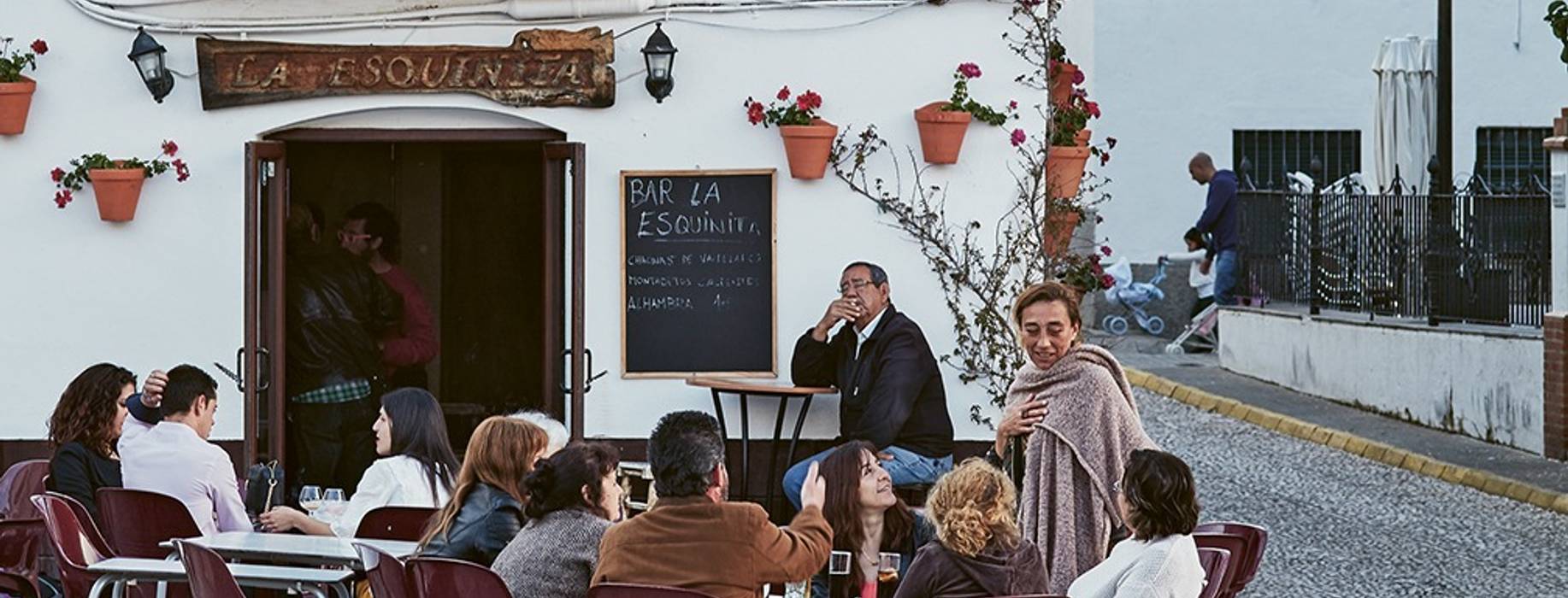
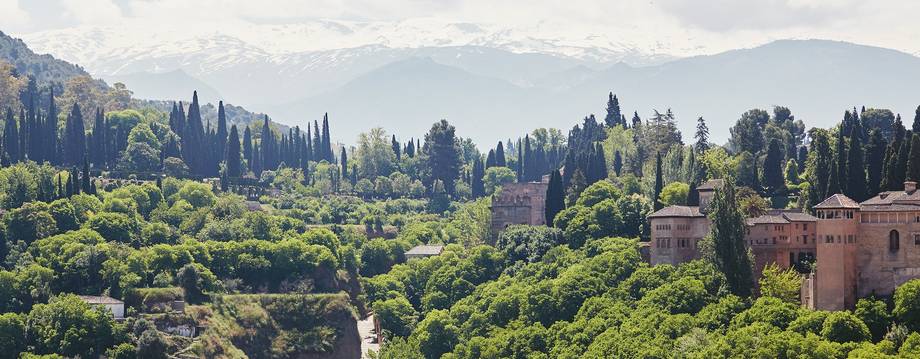
So, on a grey January day when I was thinking about which subject to tackle first in this series, my thoughts strayed longingly to the feel of the first cold caña of the evening at my fingertips, watching the sun set over the hills, soundtracked by a returning herd of goats and the symphonic chorus of cicadas. There is the soft murmur of an area slowly coming back to life following an afternoon of heat-soaked torpor, sniffing out the first wafts of wood fires being lit for dinners sinuously intertwining with the aroma of sun-kissed skin and the cooling herbal landscape. To me, these are the sights, sounds and smells of Andalusia.
When you say Andalusia, many will think instantly of the cities of Cadíz, Malaga, Sevilla and Granada, perhaps Jerez de la Frontera (probably the best known ‘point’ of the sherry triangle) or Córdoba as well. Mostly though, I reckon your mind will jump to tapas and – inevitably in the case of this audience – the drinks you have with them. But, before we move on to those, I’d like to indulge in a little history of the area, and the profound effect an eight-century occupation had on it. This is a story that can’t be left untold if you want to really understand what makes Andalusian food so unique, and why its influence on the whole of Spain and farther afield - like their Basque cousins - is so profound.
The history of the region is inexorably linked to its enormous coastline and proximity to North Africa which, at its nearest point, is just under nine miles across the Straits of Gibraltar. It is littered with sensational archaeological finds, with Andalusia and Gibraltar between them containing seven UNESCO world heritage sites, including some of the oldest-known rock paintings in the world.
Probably the first major food influence that you and I would connect to the area today can be put down to the Phoenicians in the 11th century BCE, who almost certainly brought the production of olive oil and wine to the area. The Phoenicians were in turn ‘folded’ into the relatively short-lived Carthaginian empire around 575BCE, who set the cattus amongst the columba by monopolising western Mediterranean trading routes. The Carthaginians were in turn conquered by the Romans, who seized the Iberian peninsula under the auspices of Scipio Africanus, widely considered one of the finest military minds of all time, probably most famous for defeating Hannibal at the Battle of Zama in 202BCE (and why yes, I am a classics nerd, thanks for noticing).
Fast forward a little and the Iberian peninsula, which includes modern-day Andalusia, was the breeding ground for Rome’s most famous son, Gaius Julius Caesar, who used his Governorship of this prosperous area to ruthlessly pursue the last of his opposition, before returning in triumph to become the dictator of Rome. But I digress…
To get to the point of the largest food influence of all on the area, we sadly have to skip over the conversion of Constantine, the rise of Christianity and the eventual fall of the Western Roman Empire to the Vandals and Visigoths, to get to the all-important invasion of the Moors. The Moorish influence is, inarguably, the strongest on the region’s agriculture, architecture and food culture, spanning 800 years until its last vestiges fell in 1492.
Left in their wake was the restoration and extension of Roman irrigation to provide universal sanitation, extensive agricultural development and public and private beautification. More importantly though, the Moors gifted the region with the ingredients and dishes we recognise and love, from simple things like almonds – leading to dishes like simple but sensational ajo blanco – to the abundance of olive oil, rice and saffron, facilitating that most quintessential of convivial dishes, paella.
The Moorish influence brought with it brining and pickling in particular, which for a pickle lover like me is an absolute delight to discover. Sadly a lot of information was erased from this period, alongside a lot of the Jewish history and resources, as both peoples were driven out by the Christians. Happily though, two cookbooks remain as the major references for the time: The Delights of the Table Dealing with the Pleasures of Food and Different Dishes by Ibn Razin al-Tugabi and Treatise on cooking in the Maghreb and al-Andalus during the period of the Almohads by an anonymous author (republished under the title An Anonymous Andalusian Cookbook of the 13th century).
Ibn Razin al-Tugabi’s book is not only a work on food, but also on hygiene, medicine and soap, which makes good sense when you think about it, but would possibly seem a little incongruous in a cookery book today. And he was also an advocate of the art of the party, suggesting that food be served in multiple courses and dishes, rather than in just a ‘mound’ on the table, with which I wholeheartedly concur.
In the Anonymous cookbook, there are also entreaties on hygiene, with helpful tips on how to clean pots with ‘hot water and bran’, presumably the latter providing a scouring effect, with the author exhorting the reader to treat cooking as an “art” and to “know that familiarity with the use of spices is the first basis in cooked dishes, for it is the foundation of cooking, and on it cookery is built”.
And, as the late, great Antony Bourdain was want to point out, there is of course a dish in the Anonymous cookbook that will not only cure you of a cold, but will, in the words of the maestro himself, “make you strong”! Should you feel so inclined, the recipe for it is:
“Walnuts, almonds, hazelnuts, pine nuts and pistachios ground finely. Then add bread crumbs, ground meat from the shoulder of a sheep, fifteen eggs and beat it all together. Add ginger, galingale (a member of the ginger family), pepper, cloves and Chinese cinnamon, one part of each, and mastic and saffron. Put it all in a new pot and throw in fresh milk. Place it in a clay oven. Seal it and leave it until it is done and is ready. Take it out, scatter ground sugar on it and serve it!”
In fairness, it sounds pretty good to me, so I might give it a go regardless.

As both cookbooks demonstrate, and is still obvious today in a lot of Andalusian cooking, the love of the Moorish of the sweet/savoury combination is strong, whether it’s through the use of cane sugar syrup or honey on aubergine fries (berenjenas con Miel), a dusting of icing sugar on meat or cheese-filled pastries, cinnamon in game dishes or olive oil-infused cakes, it is a legacy that is laced with spice and love.
I could go on, as the history of the region is genuinely immersive. Like many great empires, the Moors may have built on the back of things already in place – like pre-historic terracing, irrigation from Roman times and the established olive trees brought by the Phoenicians – but they took them and made them bigger, reached further and stamped them inexorably on the Andalusian landscape with their own distinct mark. The Moors left behind a legacy that not only continues to make Andalusia the greengrocer to most of Europe and beyond, but still one of the most alluring and gastronomically attractive areas in the world.
And when it comes to Andalusian food in the UK, there are few finer ambassadors than chef José Pizarro, whose three London restaurants bring the flavours of much of Spain, but his home region in particular.
“We have much to thank our neighbours for,” he says. “Those North African flavours and ingredients of nuts, peppers, lamb are visible across all of my menus and you will find them in every restaurant across Andalusia.”
José’s desert island dish is a classic that everyone knows and loves, but with a bit of an upgrade on one of the ingredients. “It’s got to be a béchamel-rich, crispy hot croqueta,” he says enthusiastically. “Any filling would suit me, but my favourite is one made with Cinco Jotas ibérico ham. They’re my favourite things in the world. Paired with a cold beer or dry fino sherry, that is one snack that is incredibly hard to beat.”
Shawn Hennessey, who runs Sevilla-Tapas.com, has a similarly piggy idea, but with a slightly different direction, although she did rightly berate me for asking such a horribly difficult question.
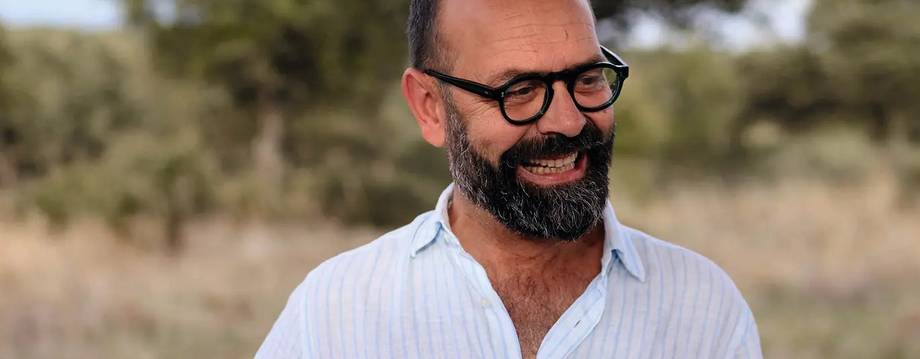
Chef José Pizarro
“If I had to choose one, it would be Jamón Ibérico de Bellota with either a bone-dry manzanilla or fino sherry,” she says.
But both José’s and Shawn’s suggestions seemed a little safe for me, so I pushed her for a more challenging suggestion. She came up with two food recommendations and one sage piece of advice for tourists.
“Try deep-fried breaded sea anemone, definitely, and fried blood with sautéed onions is actually delicious if people like liver.
“Also, stop ordering pints and get with the caña. This is a small lager, 25 to 40 cl, served ice-cold (sometimes below freezing -2º) and it's perfect for slaking your thirst when it's 40º or more outside.”
Another suggestion on how to enjoy denizens of the deep comes from Pablo Mora González, of Malandar Brewing (IG:@cervezamalandar) which is both a brewery and a tap room just outside Cadíz: “One of my favourite food and beer pairings that you can experiment with here, is to drink a fine sour beer with local fresh “erizos de mar” (sea urchins). I strongly recommend you to try them, and you can do this in the Central Market of Cádiz.
“At the market you can find La Cerveceria del Mercado, which offers a great national and international craft beer selection, that you can pair with all the small food bars located next to it. It is really great to be able to drink your nice beer with the huge food selection available, that is both locally and internationally influenced.”
Let's cook!
At the risk of contradicting the absolute experts, I have chosen a different recipe from José’s upcoming book as my perfect pairing for an ice cold caña.
For me, this plays so well into that Moorish element of sweet and savoury, with the majority of Spanish lagers slightly erring on the sweeter side, and the caramelisation effect coming from the deep frying of the meaty, stuffed olives, it has to be this (I’ve even been known to whisk a little beer into the egg for my version, it works rather well).
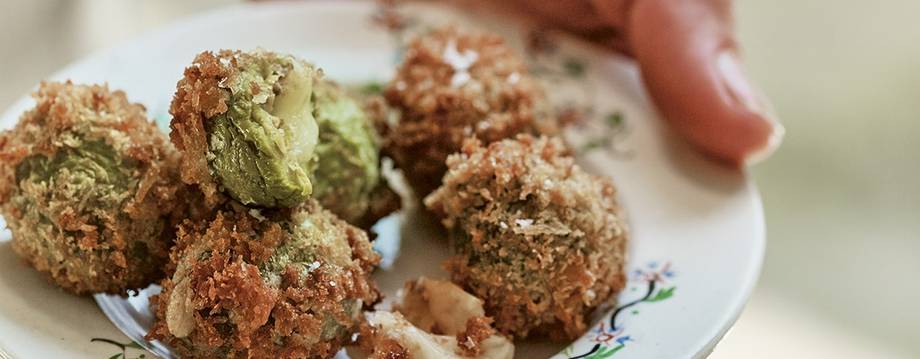
RECIPE: Cheese-stuffed fried olives
Olives trees are inextricably linked to Mediterranean culture, with olive oil being one of the main ingredients in our cuisine. In fact, although there are 300 million olive trees in Spain, only 5 per cent of those are eaten, the rest are used for making olive oil. When you think of all the olives eaten, it makes sense – yes, they are very common, but they should be given more credit as a high quality product. Gordales are one of my favourite varieties; gorda means fat and, indeed, these olives are plump and almost meaty.
Olives trees are inextricably linked to Mediterranean culture, with olive oil being one of the main ingredients in our cuisine. In fact, although there are 300 million olive trees in Spain, only 5 per cent of those are eaten, the rest are used for making olive oil. When you think of all the olives eaten, it makes sense – yes, they are very common, but they should be given more credit as a high quality product. Gordales are one of my favourite varieties; gorda means fat and, indeed, these olives are plump and almost meaty.
Ingredients (serves 4 as a tapas):
- 12–16 gordal olives, pitted
- 70 g (2½ oz) semi-cured manchego, grated
- 2 tablespoons plain (all-purpose) flour
- 2 free-range eggs, lightly beaten
- 100 g (3½ oz/¾ cup) panko or dried breadcrumbs
- olive oil, for frying
- sea salt
To serve:
- cold sherry, preferably fino or manzanilla
Method:
Stuff the olives with as much manchego as you can fit inside them. Place the flour, egg and breadcrumbs in three separate shallow bowls. Roll the olives in the flour, then in the beaten egg, and finally in the breadcrumbs. Heat 2 cm (1 in) oil in a deep saucepan to 180°C (350°F) – or until a cube of bread browns in about 20 seconds. Lower the olives into the oil and fry for a few minutes until golden brown. Drain on kitchen paper, season with sea salt and serve with a cold glass of sherry.
Recipes from Andalusia by José Pizarro coming out this June.
Share this article
You’ve reached your limit of 5 free articles this month.
Unlock unlimited access and more

Join Beer52 and get your first month half price
-
Get your first box for £13.50 (RRP £27).
-
8 beers & 2 snacks delivered monthly.
-
Printed Ferment magazine included.
-
Unlimited access to all online content.