Compound drinker #90
This month, Rachel Hendry scrutinises the idea of 'nobility' in hops and grapes, and asks whether it's all just marketing fluff.
Rachel Hendry
Illustrations:
Heedayah Lockman
Monday 09 June 2025
This article is from
Siren's 10th Birthday
issue 90
Share this article
There is a scene, early on in the first Shrek film, once Shrek and Donkey have rescued Princess Fiona where, on congratulating her rescuers, Fiona very sincerely refers to Donkey as “a noble steed”. He is, of course, thrilled at the reference, the words immediately elevating him from barnyard joke to something worthy of Kings and of Queens. Just one little word – noble – and his entire social status has changed.
It’s a funny concept, nobility. To be noble is to be superior, to belong to a higher class of people, to look down on those with the misfortune to be born common. It’s a small-minded, elitist way of looking at the world, a view that becomes even smaller when you start to dissect its application to agriculture.
As a beer drinker, you may or may not be familiar with the concept of noble hops, but timelines are important here, so it would be amiss of me not to say that before there were noble hops there were noble grapes: Merlot, Cabernet Sauvignon, Pinot Noir, Chardonnay, Riesling, Sauvignon Blanc. So it is with them that we will begin.
The term noble grapes derives from the French cépages nobles, which is apt, as five of the six grapes I have mentioned are French in origin—Riesling, the sixth, is technically German, but grows successfully in the French region of Alsace and so the theme continues.
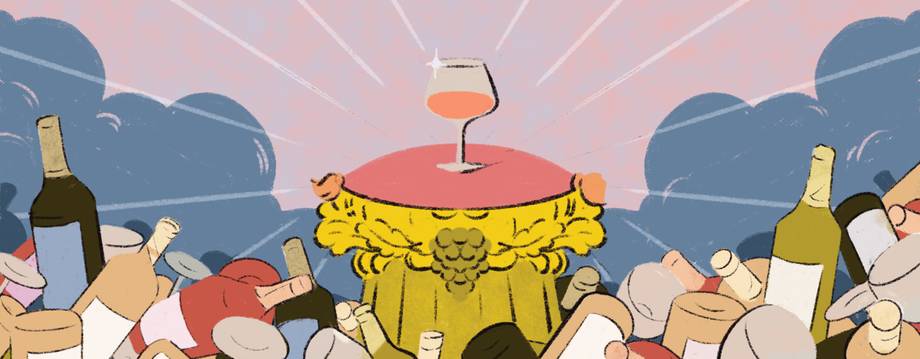
Noble grapes became popular as a marketing term as the nineteenth century changed into the twentieth. The French were exporting a lot of their wine into Britain by then and the implication that their grapes had a superiority only others could aspire to helped them greatly. This was only aided by the wine trade’s eagerness to travel the world and mark their newly colonised territory with the grapes they enjoyed at home, establishing the very dull concept of Old World and New World wines in the process.
But while other wine terms have fallen out of fashion, over a century later ‘noble grapes’ is still a phrase that does a lot of heavy lifting.
“Wine grapes… still seem to be in the grip of an inflexible caste system that establishes the limits of a grape’s potential,” writes Eric Asamov on the hierarchy of noble grapes for the New York Times. “...to me, it’s a narrow-minded, obstinate and sadly condescending way to look at a world of wine that has become far more egalitarian than it’s ever been before.”
The problem—as with all binaries in this world—is that for there to be noble varieties there must also be lesser, common varieties. The implication is that every other grape, not granted the same opportunity as these core six, pales in comparison. Except, of course, that’s not in the least bit true. Some of the worst wines I have had have contained Chardonnay or Cabernet Sauvignon and some of the best wines I have had—time and time again—have contained a lesser known Zweigelt as their main grape.
What does it take to be a superior agriculture variety? Why do these plants get the crown above the rest?
But if nobility doesn’t guarantee enjoyment, then why, in the 1980s, did the beer industry adopt the same stance and apply it to four of its hops? Specifically, the German Hallertauer Mittelfrueh, Spalt and Tettnanger, and the Czech Saaz, according to the Oxford Companion to Beer’s entry for the term:
“Noble Hops, a term that has an undeniable ring of antiquity and distinction to it, yet is merely a marketing tag and of recent vintage at that. The term was created in the United States… and has no technical meaning,” writes Adrian Tierney-Jones of the term’s origins. “It was meant to set apart from the world’s hundreds of hop varieties a select few, venerable Continental European ones with fairly low alpha acid and fairly high essential oil contents.”
I wonder where they got that idea from.
Clever marketing aside, what do noble hops and grapes have in common? What does it take to be a superior agriculture variety? Why do these plants get the crown above the rest?
Well, as with all things involving terroir, it has a lot to do with preserving the integrity of the places they originate from. Let’s take Saaz as a quick case study.
“The clean, neutral hoppiness of the Saaz only comes through if the hops are grown in the bright orange ‘cinnamonic’ soil of the Blšanka (Goldbach) Valley, the traditional Czech growing region,” explains Randy Mosher in the Second Edition of Tasting Beer. “...this is also true of other noble varieties elsewhere.”
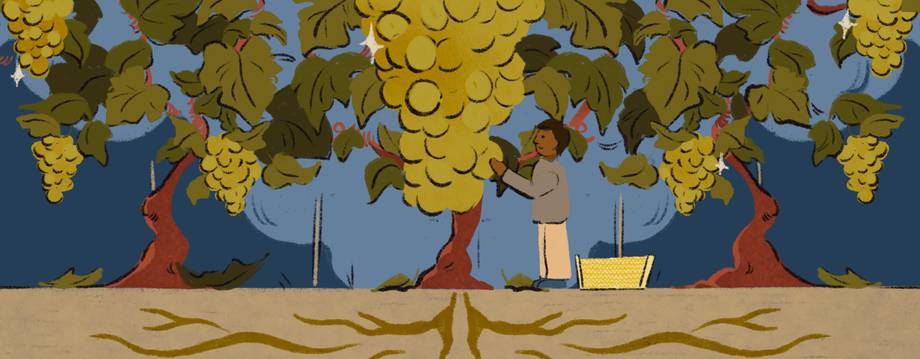
The specificity of place, the use of tradition in relation to location and the descriptor of “clean” all work to assign a purity to the Saaz ‘noble’ variety that other hops would simply not be capable of. In order to be deserving of this superior rank, you must have centuries of experience behind you, a history that contributes to an inescapable sense of terroir that more recent hop or vine growing areas would fail to come up with.
Nothing makes me root for the underdog more than being told they lack their status simply because of when and where they were introduced to civilisation. Furthermore, I don’t subscribe to humanity's tendency to categorise what we consume in order to further distinguish ourselves against each other. Our obsession with attaching values to our drinks—noble vs common, clean vs toxic, old vs new—does far more harm than good.
For starters, you can have the noblest hop in the world, but what good is it when it’s put in the hands of a brewer who doesn’t really know what they’re doing, or grown by workers who aren’t paid properly for their labour, or sold by a company that actively discriminates against marginalised drinkers? Is your beer still noble, then? Is your wine still of a status others should look up to? Does this still taste good to you?
I think the most noble thing a person can do is drink with curiosity and care. And perhaps rejecting the idea of nobility is a good place to start.
Share this article
You’ve reached your limit of 5 free articles this month.
Unlock unlimited access and more

Join Beer52 and get your first month half price
-
Get your first box for £13.50 (RRP £27).
-
8 beers & 2 snacks delivered monthly.
-
Printed Ferment magazine included.
-
Unlimited access to all online content.