To go far, go together
We speak to Musa’s head brewer, Nick Rosich, about the brewery’s journey from pipe dream to stalwart of Portuguese craft
Robyn Gilmour
Photos:
Musa
Saturday 26 July 2025

This article is from
Iberia
issue 120
Share this article
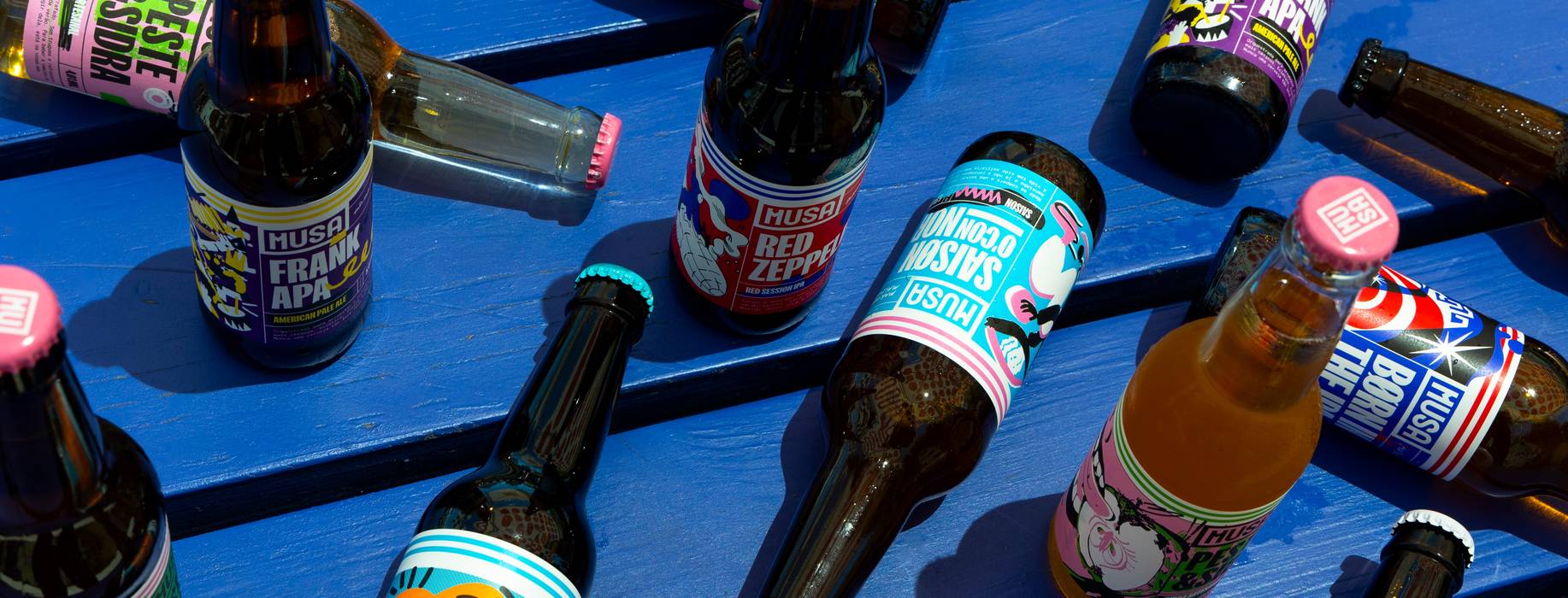
For head brewer Nick Rosich, joining Musa was a huge leap of faith. The Chicago native had been living in Pittsburgh, Pennsylvania for 27 years, two decades of which he’d spent working as a professional brewer, when he got wind of two ex-McKinsey consultants returning to Portugal with dreams of setting up a brewery. Nick had never even been to Iberia, but had always wanted to visit, and so figured he’d tie a meeting with Bruno Carrilho and Nuno Dantas Melo into a long dreamed-of vacation to Lisbon. That initial meeting began a four-year stint of Nick consulting for Musa, getting the brewery set up, designing recipes, and making sure everything was running smoothly from afar. He balanced Musa with his day job for four years, at which point he figured “it’s now or never”, and moved his life to Lisbon.
That initial meeting between Nick, Bruno and Nuno was nine years ago now, but Nick remembers the early days of Musa like they were yesterday. “The first time we met, I brought a bunch of beers from the US, and they brought a big group of friends,” Nick begins. “No one was a beer connoisseur, per se, so it was a really useful exercise in figuring out what people liked, and what the Portuguese palate would enjoy. We pretty much decided then that our main core beers should be all about approachability, and something that is manageable in the Portuguese sun. There weren't many craft breweries around at the time, and while most people had heard of cerveja artesanal, the 150 IBU beers coming out of the US were unlikely to resonate with people here. We still do one-offs and seasonals and stuff like that, which are geared towards more geeky kinds of drinkers, but overall, approachability is what we’re aiming for.”
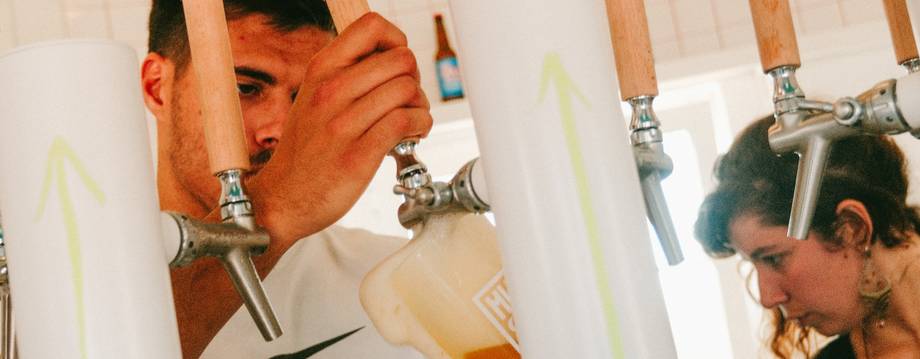
In the early days, Musa’s main route to market was through smaller, independent bars and restaurants. Portugal’s off-trade is almost non-existent, so growth for the brewery has looked like expansion into the hospitality sector. Musa now has four pubs based in and around Lisbon and Porto, though none are attached to the brewery site itself. Musa moved from its original facility, next door to Dois Corvos, to a new, more spacious site after just two years of operation. Nick seems grateful to have full use of the new space.
With the bars as a direct point of contact with consumers, Musa has had a front row seat both to how craft beer in Portugal has changed over the years, and where it might be heading next. “From an outsider's perspective, some might see craft beer in Portugal as caught in some backwater, but I don’t think that’s the case,” says Nick. There are markers of progress, and glimmers of potential everywhere if you’re willing to look for them.
For instance, a couple of years ago in the UK, we saw a surge of lager production as several of our most established craft players reached a size where they could start lagering. Requiring time, space, and knowledge of a unique brewing process, a brewery’s ability to lager can be seen as a marker of maturity. Whatsmore, without a heavy dose of hops to conceal any mistakes, lager is seen as an unforgiving style, so brewers have to be skilled in order to execute one properly. Nick notes that while pilsner is experiencing renewed popularity in Portugal at the moment, it never really went out of fashion, remaining a core style across the country due to how well suited it is to drinking in the heat. As such, the skillset required to make challenging styles is already well embedded in the Portuguese beer industry.
“That pilsner is having a resurgence is a good thing, because for us it's the ultimate litmus test. If you can make a good pilsner, you can probably make good beer all around,” he says. “I'm really happy to see these styles are coming back, as I've always been a bit of a purist. My last job was at Penn Brewery, one of few certified Reinheitsgebot-certified breweries in the US, so I’ve always liked classic styles that can really shine without lactose, or maltodextrin or glitter.”
Nick continues to point out that Portugal isn’t short of produce that can be used in brewing. “Passion fruit and mango can grow here, and we have oranges and lemons in abundance,” he says. “There is also a big salt industry here, so I’ve seen breweries do goses made with salt from the different Salt Flats located throughout the country. I know some people are really pushing for a Portuguese grape ale, much like how the Italians and Argentinians have their own grape ales. The neat thing about working in a country with such a huge wine industry is you have a lot of its throwbacks. You know, wine barrels, a lot of grapes, a lot of grape juice, a lot of things that when you make friends with the winery, they're happy to give you. It also makes for some interesting collabs.”
As “interesting” as collabs may get at Musa, its mission is to stay accessible. “We try to bring democracy to craft beer,” says Nick. “For a while there the craft beer industry started to feel like the wine industry, where people started to get snobbish about things, and it's been too much for me to be honest with you.” Listening to Nick, an old adage comes to mind; if you want to go fast go alone, to go far, go together. The motto that seems made for Musa’s egalitarian, no-nonsense approach to great beer and what can be achieved by building a broad church, and bringing the masses into the fold.
Share this article
You’ve reached your limit of 5 free articles this month.
Unlock unlimited access and more

Join Beer52 and get your first month half price
-
Get your first box for £13.50 (RRP £27).
-
8 beers & 2 snacks delivered monthly.
-
Printed Ferment magazine included.
-
Unlimited access to all online content.