Don't call it a comeback
Portugal’s oldest craft brewery Sovina has a storied history, but these days, it’s looking to the future
Robyn Gilmour
Photos:
Sovina
Saturday 26 July 2025

This article is from
Iberia
issue 120
Share this article
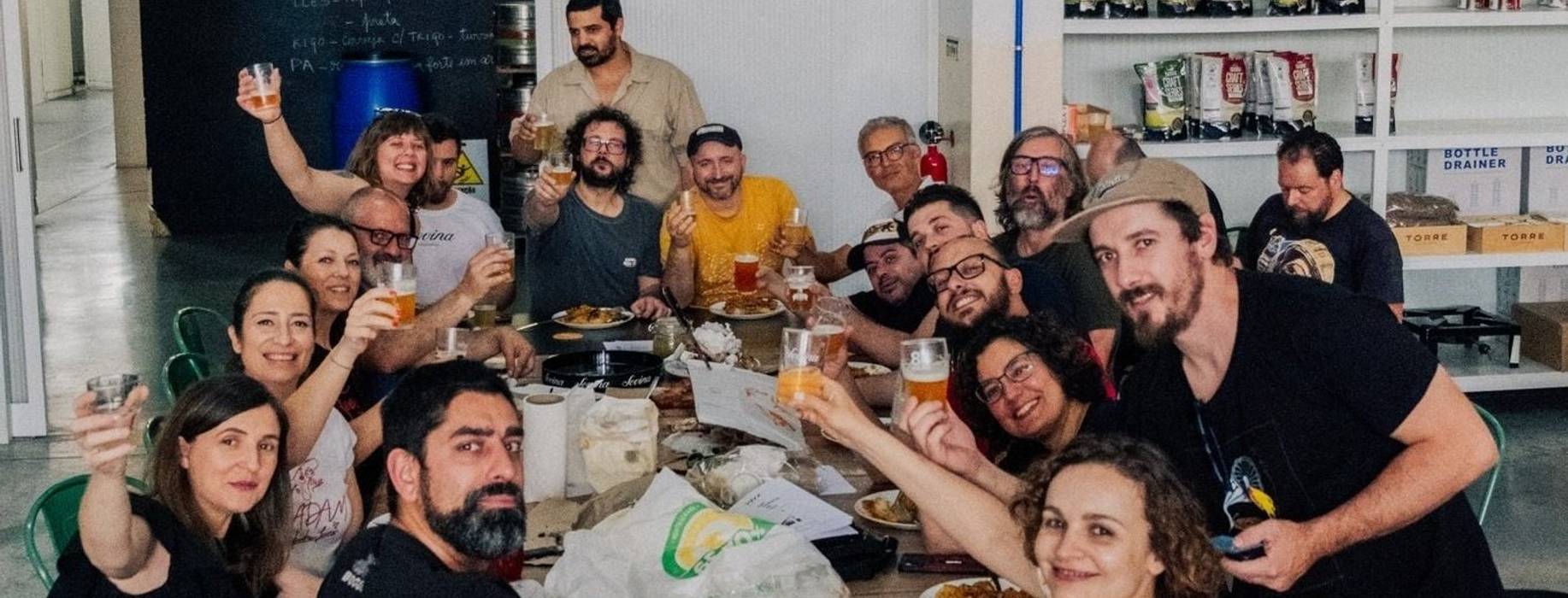
Though Dois Corvos and Musa are widely regarded as the breweries that kicked Portuguese craft into gear, Sovina has a strong claim to the country’s first craft brewery. Founded in 2009 by three friends, Alberto Abreu, Arménio Martins, and Pedro Sousa, Sovina specialised in European styles. Brand and marketing manager Pedro Castro would tell you that if you ask the average person what their first craft beer was, the vast majority would say it was made by Sovina. However, the brand has seen peaks and troughs over the years, faltering when the Portuguese craft beer boom of 2015 arrived, resulting in it being bought by a wine company in 2018. The intervening years have seen the brewery regroup, rebrand, and think about what it wants for the future.
“Rebuilding a brand is more difficult than starting from zero,” says Pedro, who is good humoured yet considered in his reflection on Sovina’s history. He says the brewery had no appetite for growth when it was time to grow, and was reluctant to change its brand and image in keeping with the times.
All the same, the brewery was bought by the Esporão Group in 2018, a wine company with properties in Alentejo, Duro, and the Minho Province, which wanted to add beer to its portfolio. Given the overwhelming dominance of wine over beer in the Portuguese alcohol market, it might seem surprising that a wine company would be interested in dipping its toe into beer, but Pedro sees the logic.
The original Sovina brewery moved into a winemaking facility in Alentejo, so brewers and winemakers work side by side, and Pedro says it’s easy to see how information flows in both directions. “Both are working with sugars and yeast, some of our winemakers are even starting to play around with the use of hops in wine, and the brewers are making grape ales,” he says.

“Esporão is a company that really likes innovation. They have that classic image, but they are always trying to make new kinds of wines, different kinds of wine. They thought that beer would be a nice addition to their business, because beer is all about innovation. Wine, you have to plan things and produce almost a year in advance, whereas with beer, you’re making decisions a month in advance. So for Esporão, they really like the exchange of ideas and the exchange of processes that you have between beer and wine.”
From a market perspective, he says beer can go places wine cannot, like the low-and-no category, but conversely, wine can take beer into areas it could never go alone. “The wine companies already have distribution structures in areas where big beer companies like Sagres and Superbok don't go, and so for them, it's easy to incorporate a craft beer into what they sell in those places,” says Pedro.
Wine is such an historic and egalitarian product in Portugal, that people in every corner of the country can access it easily. It makes its way into the tiniest, most remote villages, and with no sales pitch required to sell it, distributors function more as logistical partners than sales representatives. Pedro says you still need to explain craft beer to people, so piggy-backing on conventional beer distributors isn’t always productive for craft breweries. “Those guys don’t have time to sell your product,” he concludes.
In Pedro’s experience, industrial beer is a much bigger threat than wine to craft in Portugal. “For a while, it was very typical for a Portuguese that is going to open a restaurant, to account for the fact that Sagres would give them €10,000, a wine company would give them €5,000 and the coffee company would give them €5,000, and include that in their business plan,” says Pedro, referring to the practice of big companies investing in businesses in exchange for a commitment to buying their produce for a contractually agreed upon duration.
He’s in no way critical of bars and restaurants for doing this, and recognises those funds allow people to open businesses, but they also maintain the presence of Sagres and Superbok in Portugal, and allow little space for craft beer to find footing.
A major challenge for Sovina over the last few years has been the fact that it does not have its own taproom. Portugal is a profoundly social drinks market with a strong culture of going out to eat and drink with friends. Being unable to engage with consumers, and gather feedback at the point of consumption has therefore been a huge drawback.
Pedro hopes that by the end of the year, Sovina will have a restaurant it can call home. He says the food offering is essential to get right, not only because it’s common to eat while drinking in Portugal, but because restaurants lend themselves to bigger groups. The idea is that friends will introduce one another to the beer and brand, and over time, word will continue to spread that way.
Pedro hopes that, over time, Sovina’s use of locally-grown produce will make it stand out from the crowd, even if for now that’s just adjuncts like coriander and lemongrass grown near the brewery in Alentejo. He’d like to see breweries grow their own grains — or at least buy domestically grown — but he points out that there’s no malting infrastructure in Portugal, and attempts to grow hops have been unsuccessful. For now, Pedro says the Portuguese craft beer industry would do well simply to weather the next few years. COVID loans are now due for repayment, introducing a whole new set of costs and challenges for most breweries. It’s as good a time as any for Sovina to soldier on with its reinvention, but something tells me it's going to be alright.
Share this article
You’ve reached your limit of 5 free articles this month.
Unlock unlimited access and more

Join Beer52 and get your first month half price
-
Get your first box for £13.50 (RRP £27).
-
8 beers & 2 snacks delivered monthly.
-
Printed Ferment magazine included.
-
Unlimited access to all online content.