An oasis of craft
In a market still dominated by macro brands, Arriaca has built its reputation on quality, authenticity and local character
Richard Croasdale
Photos:
Arriaca
Saturday 26 July 2025
This article is from
Iberia
issue 120
Share this article
Arriaca’s journey begins with three brothers and friends, all working in architecture and restoration in the beautiful central Spanish region of Alcarria. As work and leisure took each across Europe, they became captivated by the innovation and camaraderie of the craft beer world. Inspired, they began regular homebrewing sessions with family and friends, which quickly evolved into a more serious project. Combining their backgrounds in architecture, restoration, and business, the small team decided in 2014 to launch Arriaca as a family-driven brewery, transitioning from a garage-based operation to dedicated brewing facilities.
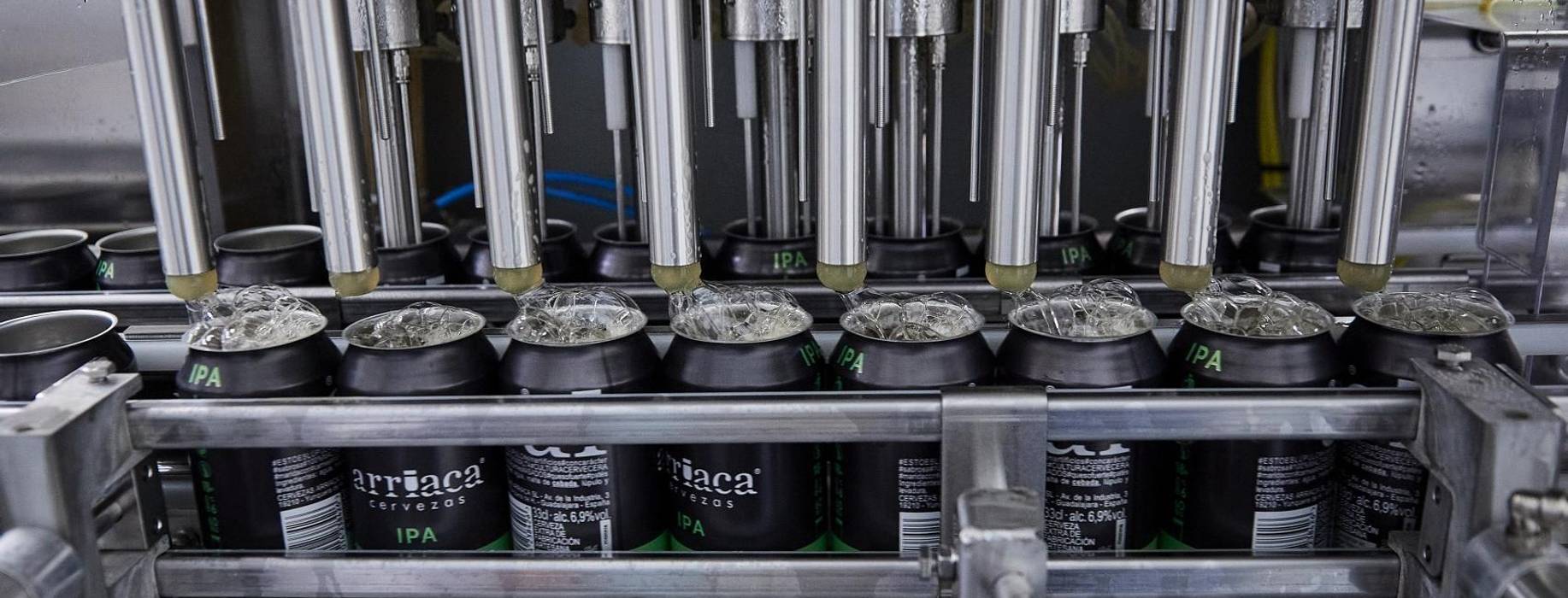
Much has changed in the 11 years since, including three major expansions of the brewing facility and multiple technology upgrades, including the first craft beer canning line in Spain, a state-of-the-art tangential filtration system, and 24/7 monitoring. All of this has been in pursuit of making Arriaca’s beers consistently excellent.
“At Arriaca, quality, respect for the product and the process, and innovation serve as our guiding beacons,” says Arriaca CEO Jesús León. “We were among the first in the Spanish craft scene to adopt cans back in 2016, recognising their benefits for freshness and protection against light. From early on, we integrated advanced processes like tangential filtration and rigorous process controls, to ensure consistent excellence. Our philosophy rests on authenticity (100% natural ingredients, no additives), patience (respecting each beer’s maturation timeline), and a relentless drive to explore new brewing techniques, including lupulin innovations and pioneering alcohol-free beers.”
Arriaca’s local environment has been fundamental to both its identity and its approach to brewing. The Sierra Norte de Guadalajara provides pristine mountain water via the Sorbe River, while the Mediterranean climate and Spain’s tapas culture have inspired the brewery to adapt classic beer styles for this specific land and lifestyle.
Jesús continues: “We carefully balance refreshing drinkability with depth of flavour, to complement Mediterranean cuisine and the social ritual of tapas. A prime example is our Trigo, where we reinterpreted the traditional wheat style to deliver a fresher, more sessionable beer ideally suited to pairing with local dishes and our hot summers.”
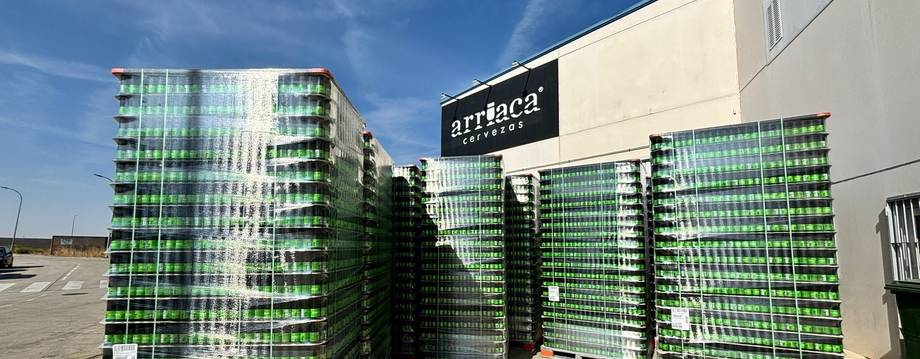
Perhaps unsurprisingly, Arriaca’s main focus is its domestic market, with its beers available in hundreds of specialised bottle shops, as well as supermarkets, bars, and restaurants throughout Spain. Jesús is proud of Spain’s position in the global craft movement though, and keen that Arriaca helps fly that flag. “The Spanish craft beer industry, despite being one of the last in Europe to emerge, has rapidly positioned itself internationally, avoiding early pitfalls and earning a reputation for quality and originality. We continue to explore strategic export opportunities, such as our inclusion in Beer52’s craft beer boxes in the UK,” he says.
Spain as a whole has been on a remarkable journey over the past decade. Around 2014, the craft movement here was characterised by enthusiasm and experimentation, often at the expense of consistency. While the nation has followed a predictable path toward greater sophistication in consumer tastes, a greater emphasis on consistent quality, and a vibrant network of craft-focused bars and specialist retailers, what is remarkable is the speed with which the scene here has matured. Jesús believes this is largely thanks to something inherent in Spain’s food and drink culture.
“The growing community of curious newcomers, eager to explore high-quality beers, has driven continuous innovation in styles and local ingredient sourcing. Notably, Spain — a global gastronomic powerhouse — had long treated beer as a generic refreshment. The arrival of craft beer sparked a shift toward valuing beer’s complexity, diversity, and pairing potential with good food. While the landscape remains competitive, the focus has shifted from merely establishing a presence to deepening authenticity and storytelling. In this way, we’re trying to ensure the industry’s long-term sustainability and foster a community that values craftsmanship and diversity.”

As Jesús notes though, the home-grown success enjoyed by Arriaca and its peers has been hard-won; as with many European markets, Spanish beer is still dominated by the global macro breweries with vast resources and distribution networks, who will fight for every point of market share.
“These large brands often appropriate the language of craft — quality, variety, authenticity — and even resurrect historical beer brands they once acquired and shuttered, repackaging them with a veneer of nostalgia and pseudo-craft,” he says. “This strategy makes it increasingly difficult for genuine microbreweries to stand out.
“Additionally, the bureaucratic burden on small producers is significant; regulations designed for high‑volume operations complicate labelling, ingredient approvals, and alcohol‑free certifications, demanding time and money that small teams struggle to spare. Despite the exponential growth in beer culture since the craft movement began—thanks to consumer education efforts and community support—there remains much work ahead to level the playing field and secure broader recognition and fair treatment for artisanal brewers.”
Looking ahead, Jesús sees Arriaca leaning further into this “artisanal” identity, capitalising on the points of quality and innovation that set it apart from its macro competitors, for example by exploring barrel-aged and mixed-fermentation styles. It also intends to broaden its collaborations with nomadic brewers and boutique brands, and to deepen its presence in key craft markets such as the UK, Germany, and the Nordics, harnessing Spain’s reputation as a foodie nation.
Share this article
You’ve reached your limit of 5 free articles this month.
Unlock unlimited access and more

Join Beer52 and get your first month half price
-
Get your first box for £13.50 (RRP £27).
-
8 beers & 2 snacks delivered monthly.
-
Printed Ferment magazine included.
-
Unlimited access to all online content.