Sandy Kerr
The sea gave Sandy Kerr a life he truly loves. Now he spends every day repaying the favour.
Robyn Gilmour
Saturday 23 August 2025

This article is from
Patrons Project
issue 121
Share this article
Most mornings, while I’m still negotiating with my toddlers for an extra 30 minutes in bed, Sandy Kerr has already been in the sea for hours. A lifelong surfer, lifeguard and environmental advocate, Sandy is one of the most influential voices in the UK’s close-knit cold-water surf scene.
His voice crackles cheerily down the line from Caithness, where he’s visiting his girlfriend, a fellow surfer based in Thurso, a town in the far north east of Scotland that’s renowned for its surf. “Most weeks I’m either working shifts as a firefighter in the North East, or jumping in the car and heading north,” he says. “It’s a mad schedule, but it works. She’s a really good surfer too, which helps a lot. We’ll just go up and down the east coast, wherever the waves are.”
It’s a rhythm Sandy has followed most of his life. Raised in Tynemouth, on the coast east of Newcastle, his parents ran a café on the seafront, so he grew up “literally on the beach”. “What else are you going to do?” he laughs. “You run in and out of the sea all day. Your mates start surfing, your older brothers are already doing it… you just kind of follow.”
For Sandy though, surfing was always much more than a way of passing the time. He qualified as a lifeguard aged 16, and has now spent 17 years working on beaches across the UK and overseas, including seasons in Cornwall and New Zealand. “It’s always been about being close to the water,” he says. “I built my whole life around that – surfing, lifeguarding, firefighting. Every choice has been about staying near the ocean.”
While British surf culture tends to centre around the South West – Cornwall and Devon, especially – Sandy’s home break is part of a tight-knit community in the colder, greyer waters of England’s North East. “People are always surprised when you say you surf up here,” he says. “They just assume you mean Cornwall. But there are loads of little pockets of surf culture all the way along the coast. It’s just a lot colder, and maybe a bit more underground.”
Sandy Kerr
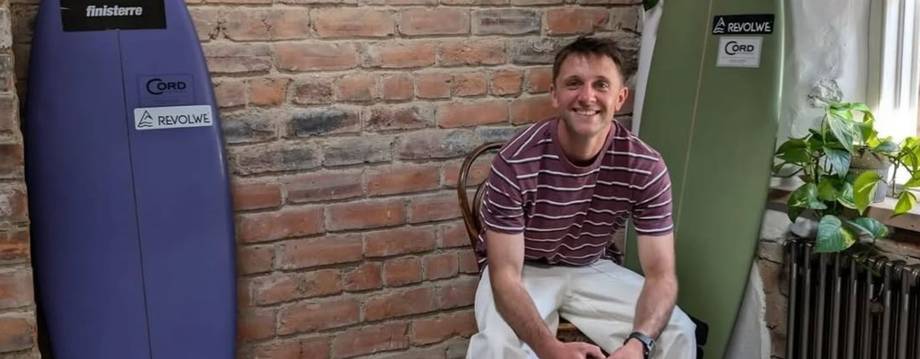
It's this sense of grassroots connection, of surf as a way of life, that underpins a lot of Sandy’s work beyond the waves. He’s a long-standing ambassador for Finisterre, the B Corp-certified outdoor brand known for its cold-water gear and environmental ethos. “I’ve worked with Finisterre for over a decade now,” says Sandy. “They’ve always backed small initiatives, beach cleans, ocean education, or just supporting local surfers. That’s actually how the link with Northern Monk came about; the founder of Finisterre knew someone at the brewery.”
The result was a special Patrons Projects release, featuring Sandy on the label, shot by close friend and photographer Lewis Arnold. “The first can they sent through, I was just blown away,” he says. “It looked like something you’d hang on your wall. The surf world is very visual – we’re all obsessed with aesthetics, and Northern Monk totally nailed it. A lot of surf friends saw it and were like, ‘Wait, this is a beer can?’
“But Northern Monk didn’t just slap my face on a can. They really backed what I was doing. They shared the City Kids Surfing stuff, helped shout about Finisterre’s campaigns – they just properly got behind it. You see people on the Patrons Projects who aren’t necessarily famous, but they’re doing amazing stuff. And this gives them a platform.”
City Kids Surfing (Sandy is a trustee) is a charity that takes school groups from urban South London to the coast each year, teaching them to swim, surf, and understand the marine environment. “Some of the kids we take have never even seen the sea,” Sandy says. “Last week we were down in Devon. You watch a kid step into the ocean for the first time, feel the sun on their face, learn how to ride a wave… it’s powerful. The idea is just to pass on a bit of what the ocean has given me.”
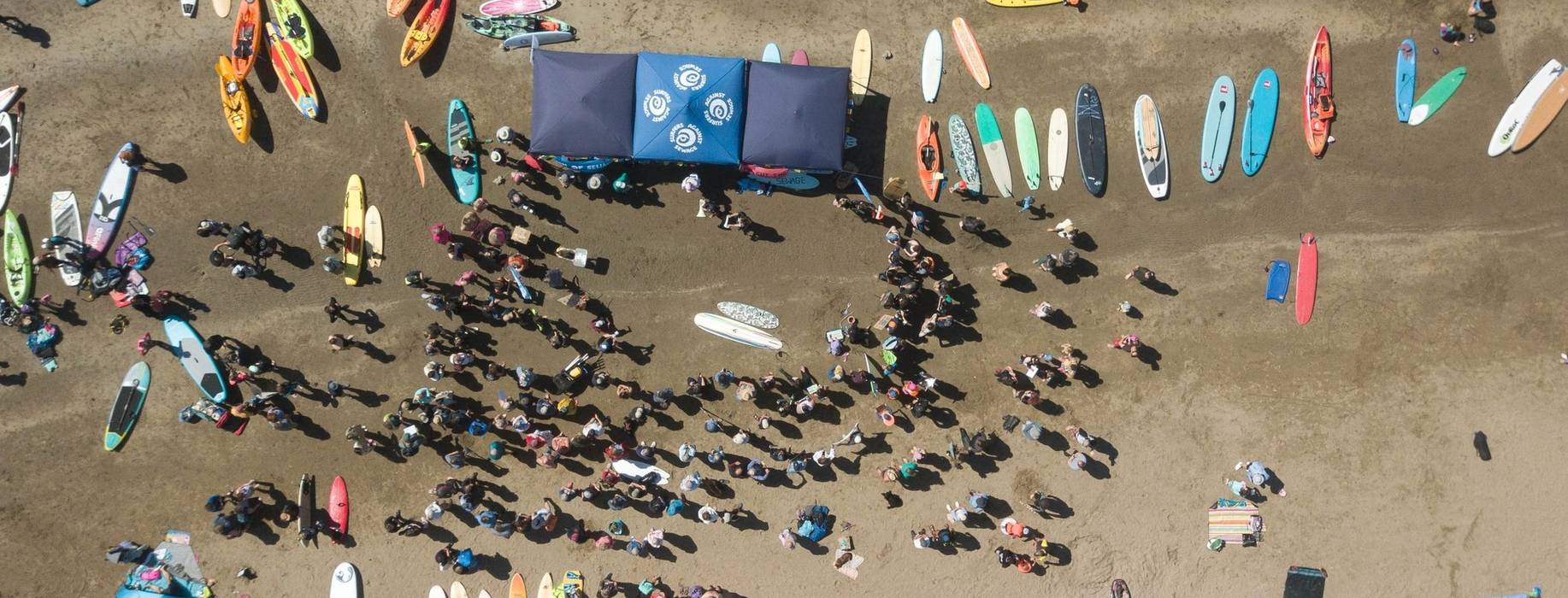
Sandy applies that same ethos to his environmental campaigning – a cause that’s close to the heart of every surfer. As a rep for Surfers Against Sewage, Sandy’s activism ranges from clean-up efforts to awareness campaigns around ocean pollution. “It used to be about beach litter,” he says. “Now it’s bigger – tackling sewage dumping, holding private water companies to account. Surfers see it first-hand. We’re literally swimming in this stuff.”
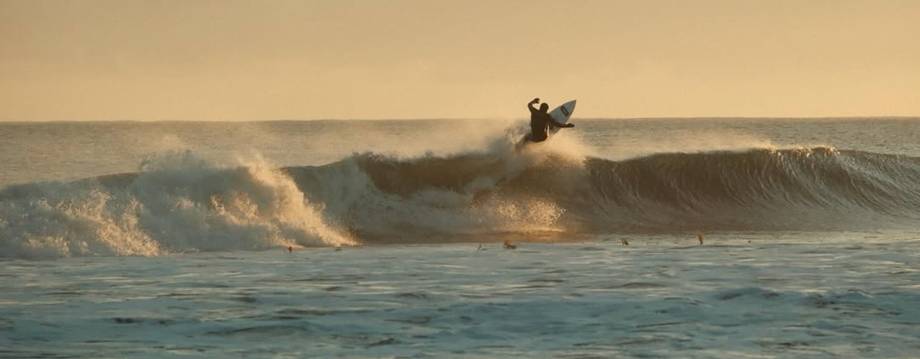
PHOTO: Chris McClean
He’s also a prominent voice in ‘The Big Sea’, an independent documentary film currently touring international festivals. Directed by Lewis Arnold, the film shines a light on the environmental and racial injustices behind neoprene production, especially in Louisiana’s notorious ‘Cancer Alley’, where most of the world’s wetsuit material is produced. “We learned that neoprene, or chloroprene, is hugely carcinogenic in its manufacturing,” explains Sandy. “And it’s being produced in communities already hit hard by environmental racism. The cancer rates there are through the roof.”
The Big Sea argues for a shift to natural rubber wetsuits, something Sandy has been quietly championing for years. “I’ve been wearing natural rubber suits for about five years now,” he says. “Finisterre and Patagonia were early adopters, and the suits work. People always ask if they perform the same, and they do. You just have to put in the research, follow the supply chain back, and ask questions.”
It’s that mix of curiosity, conscience, and sheer love for the sea that defines Sandy’s work. “It’s funny,” he says, “the surf industry can be a bit weird about new people – like, keeping spots secret, not wanting crowds. But I’ve never bought into that. Surfing gave me so much joy, so why would I stop anyone else from experiencing it?”
Whether he’s coaching kids on their first waves, chasing icy barrels off the Scottish coast, or starring on the side of a beer can, Sandy’s all in, with an energy and lack of cynicism that’s completely infectious. “It’s not about me,” he says. “It’s about the water. The ocean gave me everything. I just want to give a bit of it back.”
Header photo: Surfers Against Sewage
Share this article
You’ve reached your limit of 5 free articles this month.
Unlock unlimited access and more

Join Beer52 and get your first month half price
-
Get your first box for £13.50 (RRP £27).
-
8 beers & 2 snacks delivered monthly.
-
Printed Ferment magazine included.
-
Unlimited access to all online content.