Fuerst among equals
Now working out of a brewery of its own, Berlin's Fuerst Wiacek is laying the foundations of an ambitious future
Richard Croasdale
Photos:
Fuerst Wiacek
Saturday 20 September 2025
This article is from
Oktoberfest 2025
issue 122
Share this article
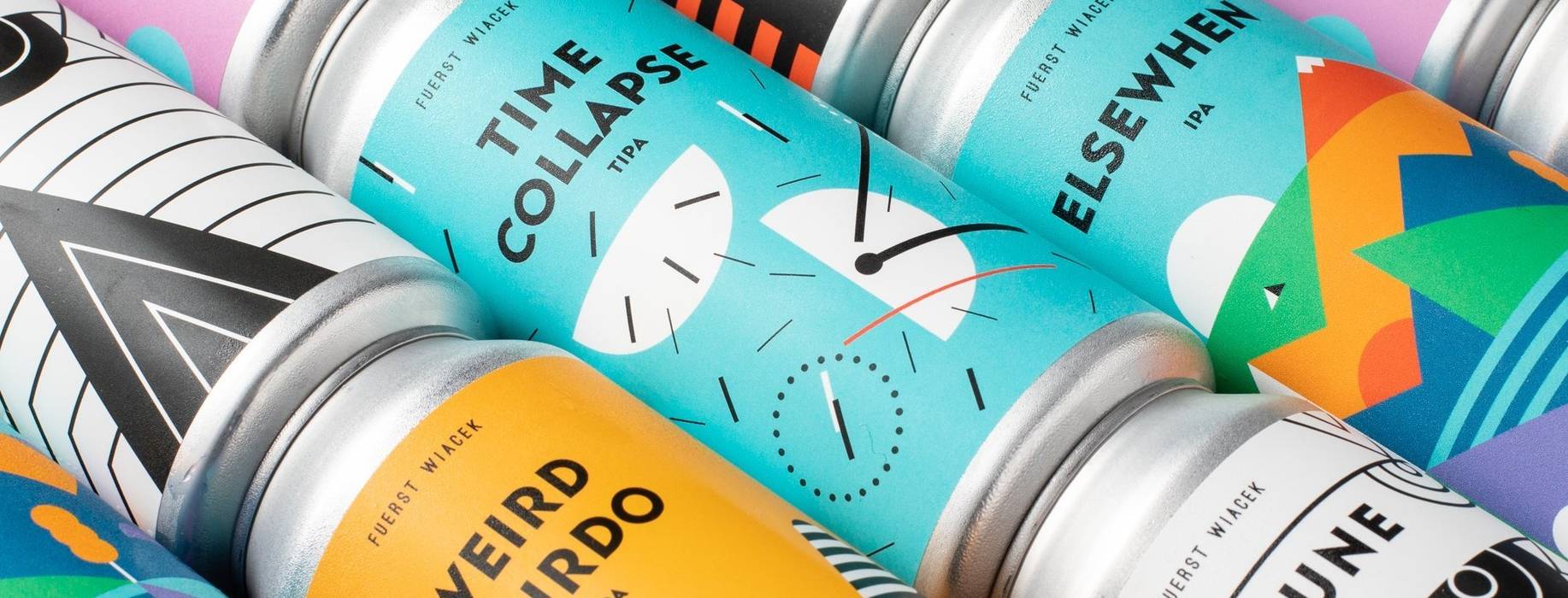
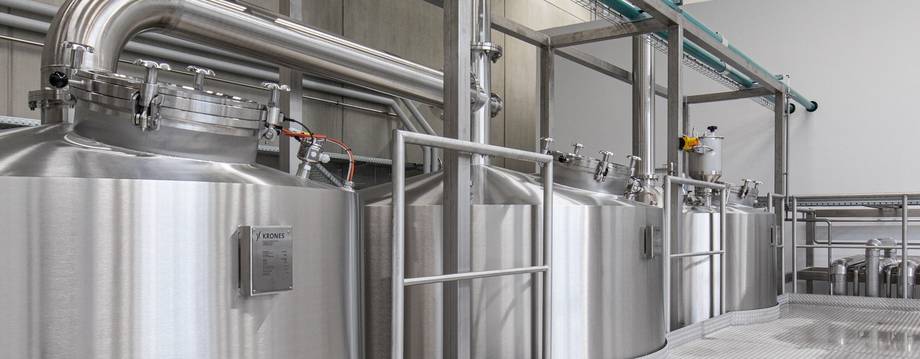
When we first profiled the brewery six years ago, Berlin's Fuerst Wiacek was a classic nomadic craft operation, turning heads with juicy, hazy IPAs in a beer culture still dominated by German brewing orthodoxy. Three years later, we caught them just as they were settling into their own production space in the city's industrial outskirts, carving out a corner of Berlin where soft, hoppy things could flourish. Today, the brewery is still there, still producing those same modern, hop-forward styles, but with deeper roots, more tanks, and a clearer voice in the ongoing conversation around what German beer can be.
"We got more tanks, we got water treatment, a nice team," says Georg Fürst, co-founder and head of operations. "We also opened up on Fridays for pickups, and people from the neighbourhood started coming by. It’s really nice to connect with people like that." This informal, community-facing setup is about as close to an actual taproom as German law allows without getting mired in regulations. There's no draught licence, no seating area, just a fridge full of cans and a few crates outside for those in the know. "It’s a grey area," he says, laughing. "You can buy a can and drink it outside. It’s not forbidden."
As the team becomes more embedded in its neighbourhood, the brewery itself is becoming a destination. Spandau isn’t exactly central, but it’s well connected, and as Berlin continues to evolve, there’s growing interest in discovering places off the usual tourist trail.
"The U-Bahn station is just 300 metres away," says Georg. "And there are plans to reactivate the train line that passes right in front of the brewery. That might take a few years, but it would be amazing."
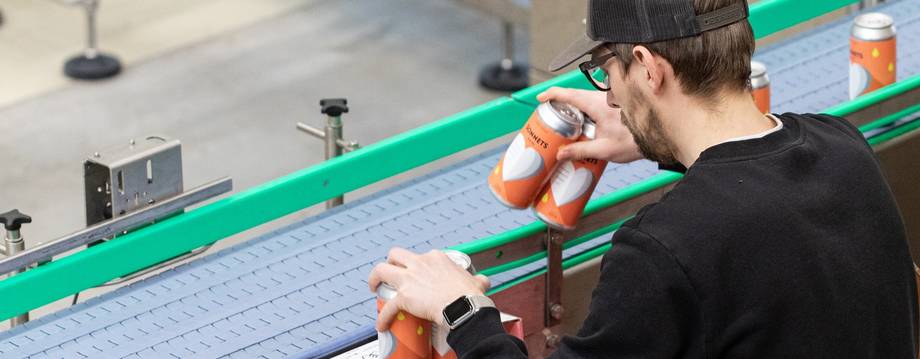
With the Siemens campus expanding nearby and the area's slow gentrification beginning to pick up speed, Fuerst Wiacek is well placed to benefit from increased footfall—though Georg is cautious about the pace of change. "We share the parking lot with neighbours, so we have to be respectful. But we do events, brewery tours, and for our anniversary we always have food trucks out. It’s becoming more of a thing."
Even as local interest steadily builds, the brewery is already a destination for international beer lovers, with groups from Scandinavia, the Netherlands, and the UK recently making pilgrimages to Spandau. For Georg, this direct connection to drinkers – local and more far-flung – is a luxury still new enough to feel remarkable. "When we were gypsy brewing, we never had the opportunity to be a host," he says. "Now people can see the brewery, drink the beer fresh, sit and talk. It’s a very different energy."
This openness extends to fellow brewers, with Fuerst Wiacek remaining one of the most collaborative outfits in European craft beer, with recent projects including releases with Track (UK), Soma (Spain), and Hotbox (UK). Such collabs, says Georg, are more about learning than marketing. "Every time we work with another brewery, we get new ideas. You talk about water chemistry, you try each other's yeast, you talk packaging and logistics. It's a way of staying on your toes."
Many of the brewery’s past collaborators were present for the brewery's latest anniversary party in May. "We all kind of grew up together as breweries," says Georg. "It’s great to get everyone together, pour beers in the car park, get a food truck over. It just works." The celebrations are more than just a party, though. They reflect something deeper about Fuerst Wiacek's philosophy, a desire to be part of a brewing tradition and community that transcends national borders. This outward-looking perspective has helped keep the brewery creatively fresh and culturally agile.
Even while the mood inside the brewery is optimistic though, the market outside is less upbeat. Georg is candid about the challenges of operating a modern craft brewery in Germany, even in a city as outward-facing as Berlin. "There’s still a lot of consolidation," he says. "Some breweries have gone bankrupt. It’s not an easy market." Distribution remains a constant challenge; the UK was a key market for Fuerst Wiacek pre-Brexit, and the fallout continues to bite. "Sometimes shipping to Singapore is easier than to the UK," he says. "We’ve found a way that kind of works now, but it’s still frustrating."
The impact of this shifting trade landscape has forced the team to think more strategically about where and how they grow. "We’re doing better now, this year especially," says Georg. "But it’s been hard. Brexit, then COVID, then inflation. One thing after another. We’ve had to be resilient."
Being based in Berlin and focused mostly on international craft-style brewing, Fuerst Wiacek’s calendar doesn’t exactly revolve around Oktoberfest. "In Germany, Oktoberfest is really just Munich," says Georg. "It’s not a national thing. We don't use the term here because it’s protected. Plus, in Berlin there’s already so much going on at that time of year that we don’t really need another excuse to drink."
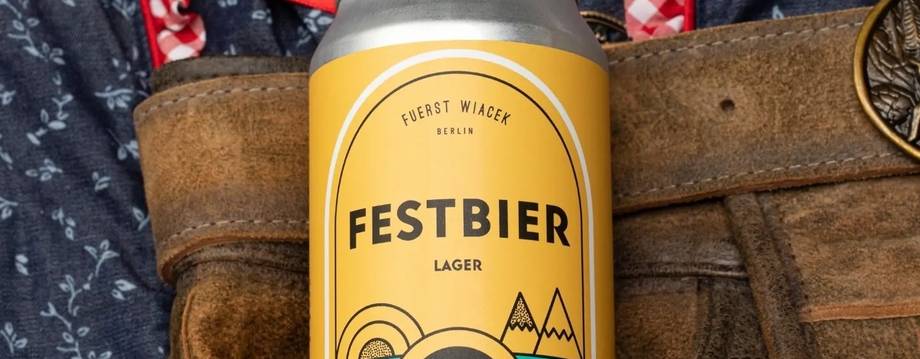
Accordingly, the brewery’s take on festbier is more an export product than a local fixture, which has nonetheless found fans in the UK, Scandinavia, and France. Most Berliners however firmly associate the brewery with its IPAs and darker experimental offerings. "We did a Brett IPA recently that had been ageing for three years," says Georg. "That was a fun one. Bottled it in small bottles—very iconic."
This kind of experimentation is clearly something that lights Georg’s passion and imagination, and there’s plenty more in the pipeline. For now though, he’s pragmatic about the challenges still facing German craft brewing, and how these will shape the brewery’s medium-term priorities.
“It would be great to really push things and cement Berlin as a true craft beer destination, just like it is for food and wine appreciation, and that’s what we want to be part of, long-term,” concludes Georg. “Right now though, it’s a very challenging environment and a lot of good breweries here have closed in the last couple of years. So for now we just need to navigate that, concentrate on doing what we do, as well as we can, and keeping that focus.”
Share this article
You’ve reached your limit of 5 free articles this month.
Unlock unlimited access and more

Join Beer52 and get your first month half price
-
Get your first box for £13.50 (RRP £27).
-
8 beers & 2 snacks delivered monthly.
-
Printed Ferment magazine included.
-
Unlimited access to all online content.