The Elements of Beer: Yeast
This tiny microbe is the backbone of beer, and does a hell of a lot more than make alcohol and CO2. So, join us as we pay homage to the hardest working element of beer.
Robyn Gilmour
Saturday 13 December 2025
This article is from
The Elements of Beer
issue 125
Share this article
You may have heard brewing referred to as the art of making wort. Others would argue it’s the art of fermentation management. Whether you’re designing a grain bill or monitoring temperature and oxygen levels, there’s no getting around the fact that a huge part of brewing is about getting the best out of your yeast. This tiny microbe is truly the backbone of beer.
Outside of producing CO2 and alcohol — the gas that carbonates our beer, and a solvent into which delicate, hydrophobic hop compounds can dissolve — yeast can make its own contributions to aroma and mouthfeel. Depending on the type of yeast, its esters and phenols can add aromas of clove, peppercorn, citrus, stonefruit (saison yeast), pear, plum (Abbey yeast) dried fruit (British Ale yeast), banana (Weizen yeast) and a whole array of tropical fruit (in the case of more modern ale yeasts).
Yeast strains also differ by how much (and what kind of) sugar they can consume; high attenuating yeasts will consume a wide range of sugars — resulting in more alcohol and a thinner body — while low attenuating yeasts require a more specific fare — and produce less alcohol but a fuller body.
The terms low, medium and high are also used to refer to how quickly and easily a yeast strain flocculates. High flocculating yeast coagulates with other particles early in the brew as it tends to attract and stick to other particles. Generally, high flocculating yeast will not have consumed all available sugars by the time it falls out of suspension. Most of the time, a brewer will need to gather that yeast and re-pitch it into the brew until the desired amount of body, and alcohol has been achieved.
Low flocculating yeasts tend not to coagulate with other particulates and so remain in suspension long after fermentation has finished. However, the haze that low flocculating yeast produces is considered “unstable” as it separates in the poured pint. Wheat beers are an example of this in action; if you take a while to drink one, you’ll notice one half of your pint becomes clearer than the other.
Medium flocculating yeast is hailed as the best with which to brew hazy styles. Unlike high flocculating styles — which trap a lot of other particulates in the process of clumping and in doing so, pull a lot of proteins (from grains) and phenols (from hops) out of suspension — medium flocculating yeasts don’t attach themselves to so many other particles. As a result, these yeasts allow more protein and phenols to remain in suspension. Working in tandem, suspended proteins, phenols and yeast create the stable haze that breweries around the world have gone crazy for over the last number of years. As such, medium flocculating yeasts are sometimes referred to as ‘haze positive’.
Norway’s Amundsen Bryggeri is revered for its hazy beers, and the brewery’s use of yeast plays a huge part in that. “To make a Hazy IPA the yeast is of course very important, but the whole beer is designed to help with mouthfeel and the interactions between the yeast and the other raw materials,” says head brewer John Hudson. “Using wheat and oats helps boost mouthfeel and give a light pillowy texture, and the use of dextrin malt helps keep some residual sugar in the beer to the same effect. Also, not using a large amount of bittering hops adds to the whole taste experience.”
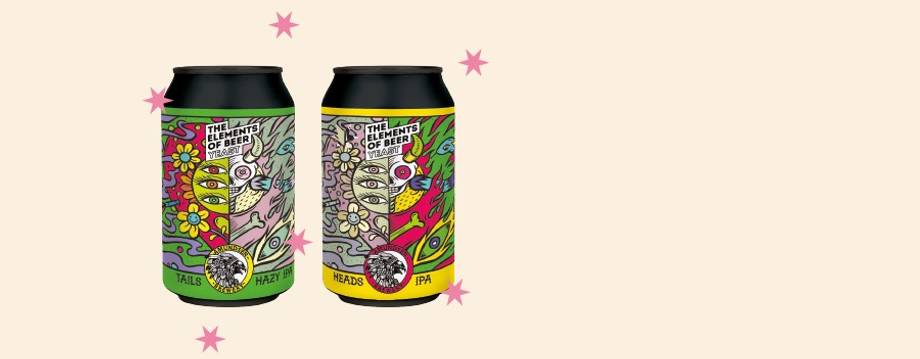
The Verdant yeast used in Amundsen’s hazy IPA, Tails (the counterpart to American style IPA, Heads), offers medium to high attenuation and moderate flocculation, while contributing its own apricot and stone fruit esters. In combination, these characteristics make it perfectly suited for use in hazy IPAs and NEIPAs.
Of Amundsen’s Heads and Tails, John says “the idea was to make two similar beers with the yeast being the big different factor between the two. Using a New England style yeast for the hazy and a California style ale yeast for IPA will not only give the beers a very different look visually but also very different flavour and aroma profiles, while still being quite similar beers in the brewhouse. Hopefully this pair showcases what different yeasts can do for a beer.”
I try to press John on the subject of haze, asking how Amundsen handles yeast within the brewery to ensure the best possible results. Perhaps he’d have to kill me to tell me, so instead he gives a diplomatic response.
“Producing Hazy IPAs is a constantly evolving process,” he says. “We have made many great ones over the years but never stop looking to improve, whether that be by using new hops or yeast, or by changing parameters in the brewhouse. How and when these beers are dry hopped has a lot to do with the end product. We have a lot of friends in the industry and have done many collabs together with these breweries, so for now, we’re still learning and teaching.”
More of an open book, when it comes to process, is Stu McKinlay, founder of the New Zealand-hailing brewery, Yeastie Boys. “In our early years, back in New Zealand, around 2008-2011, we played around with this concept of making beers with the same ingredients and different yeasts, or hops, or we barrel aged one and left one in stainless,” says Stu. “It's really the kind of idea at the heart of what it was for me to be a homebrewer. Learning about the classics and then playing off that knowledge. I've always been a big fan of Belgian styles with an American twist, or vice versa, so this seemed like a perfect time to have another play in that space.”
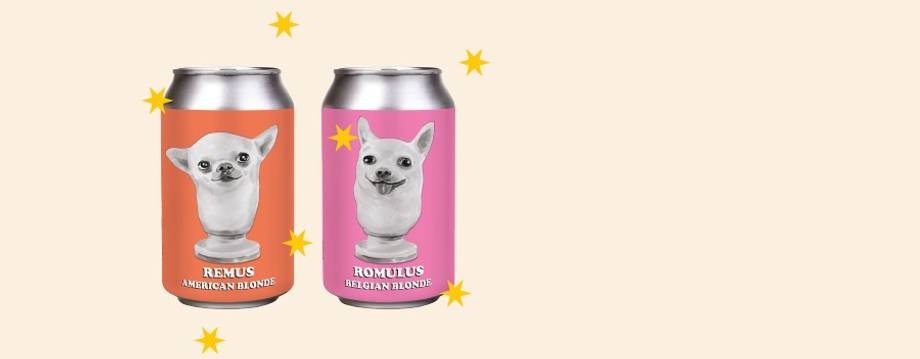
In the case of Romulus (Belgian Blonde Ale) and Remus (American Blonde Ale) yeast is truly the only thing that’s changing. Yet in spite of these beers having exactly the same malt and hop bills, the effect of WLP550 (Belgian ale yeast) in Romulus and US05 (American ale yeast) in Remus makes them markedly different. WLP550 produces more expressive, fruity esters, and contributes to a fuller rounder mouthfeel, while US05 is famously neutral, contributing little of its own character to the beer, resulting in a clean, crisp beer in which hops and/or malt can shine.
“Romulus and Remus are twins, who initially may seem exactly the same to the uninitiated, but it won't take the drinker long to spot that they're very different characters indeed,” says Stu. “Both of them are lower in alcohol than the classic blonde ales they're inspired by but pack plenty of flavour for mid-strength beers.”
Aware that changing just one ingredient in a beer doesn’t always make for an easy swap, I ask Stu if there’s anything about Columbus and Amarillo that makes them versatile enough to work across both yeasts. Interestingly, his answer is less technical, and speaks more to a pursuit of flavour and what that means to us, than an adherence to style.
“Columbus and Amarillo are two of my favourite American hops,” he says. “Both have been forgotten somewhat, as people chase the huge tropical aromas of more recent varieties, but these were staples in many of my favourite beers about 10-15 years ago. Columbus is quite punchy with a lovely gentle citrus note, tending towards zesty, with Amarillo bringing a richer oily orange or grapefruit character into play. In the American version, these should give us a classic sessionable blonde ale that transports you to an American brewpub setting. The Belgian one, however, will have a slightly lifted citrus aroma from the esters created in the warmer fermentation and then will have a lovely spicy flavour that will give off some mulled beer vibes.”
Did you know?
‘Mouthfeel’ refers to the texture of a beer, or how we experience the sensation of drinking a beer. We often think about mouthfeel in conjunction with a beer’s ‘body’, a term we use to describe how viscous a beer is. Yeast allows the brewer to control levels of residual sugar. More residual sugar contributes to a fuller body, and less residual sugar results in a clean, crisp mouthfeel. To make a beer feel thicker on the palate, brewers can also add dextrins (complex starch molecules that can’t be broken down during fermentation), or lactose (another, but very different kind of unfermentable sugar).
Share this article
You’ve reached your limit of 5 free articles this month.
Unlock unlimited access and more

Join Beer52 and get your first month half price
-
Get your first box for £13.50 (RRP £27).
-
8 beers & 2 snacks delivered monthly.
-
Printed Ferment magazine included.
-
Unlimited access to all online content.