Taking the reins
What’s 12 miles east of Oxford, about 15 minutes from Bicester, and just outside of Brill? Buckinghamshire’s best kept secret.
Robyn Gilmour
Photos:
Chris Coulson
Friday 10 January 2025
This article is from
Home Counties
issue 126
Share this article
By managing director Joe Brouder’s description, Vale Brewery’s home is nothing short of idyllic. You needn’t take his word for it; Brill is the village on which J.R.R Tolkien based his description of Bree, home to the Prancing Pony pub, where Frodo first meets Aragorn in The Lord of the Rings. “We are talking idyllic-rolling-hills-of-Hobbiton here, it is absolutely wonderful, with a lovely local community, lots of runners, cyclists, walkers, and we've got a thriving taproom community,” he says.
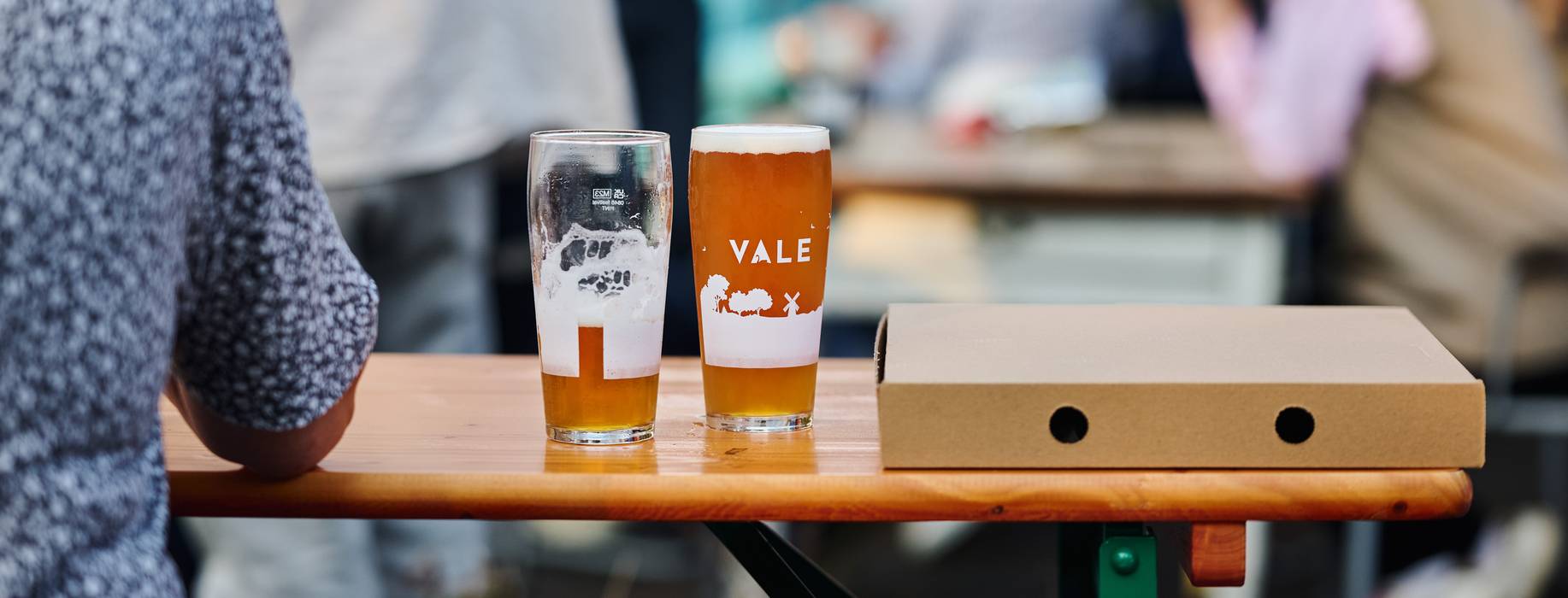
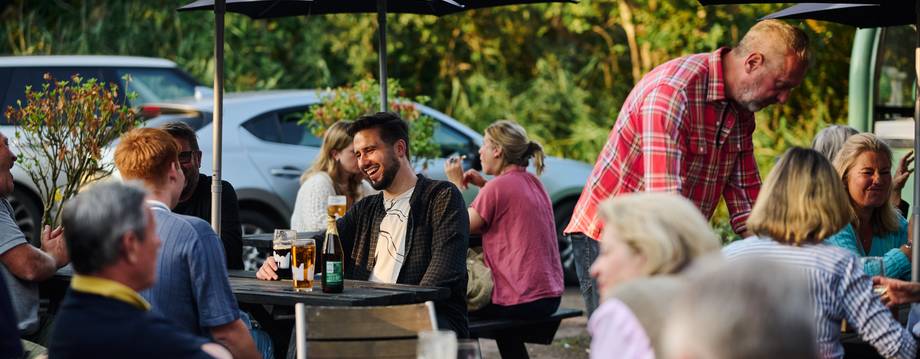
For many businesses, the brewery’s location would be a fly in the ointment. “We are 12 miles east of Oxford, about 15 minutes from Bicester, which is our closest town, and then we’re just outside Brill, so we are truly off the beaten track,” says Joe, but somehow, that’s not a problem for Vale Brewery. On weekends, its taproom hosts a pop-up pizza shop and artisan toastie maker: “you come in and think, ‘where have all these people come from?’ The whole place is packed. You've got couples who’ve walked down with the dog, groups of mates playing cards, families with kiddies enjoying soft drinks, crisps and ball games. It’s a real community vibe.”
Joe doesn’t take this community for granted, and is grateful both for what he and his brother Jimmy inherited from the original owners of Vale — who set up the brewery in 1995 — and the community they’ve managed to build since buying the business in 2021. Before taking the reins at Vale, Joe and Jimmy worked in various parts of the beer industry — managing pubs, then stepping into sales and sales and operations roles at Britvic, Carlsberg, Timothy Taylor's, Heineken and Star Pubs — and eventually used that experience to start their own consultancy business.
“We left and we set up a little agency, working with lots of different breweries to help with strategy, recruitment and training" says Joe. “We worked with Five Points, Salopian, Lucky Saint, amongst many others, so a real variety, but we wanted to do it ourselves, and so we looked for a brewery where we could buy an existing setup and improve upon it. I used to serve Vale Brewery beers at a pub I ran after dropping out of uni, so when we found out the owners were keen to sell, we already knew it was great beer. There was just more we could do with the brand and marketing.”
Joe says that at one point, he and Jimmy had the agency, brewery, and two Vale pubs on their hands, and concedes that managing all at once was untenable. Now, they stick to making and selling great beer, with their weekend taproom being the only direct point of sale. “It was harder than we thought it was going to be, it took longer than we thought it was going to, and it cost more money than I thought it would,” laughs Joe. “But we inherited our head brewer, Dave, who's been with the business for 27 years, is an amazing character and an amazing brewer. We brought in a new lead brewer to work alongside him, and help with recipe development and new formats. In that sense, it’s been really exciting to take over a brewery that’s already well known and loved.”
Vale Brewery has always been a cask-led brewery, and there was no risk of that changing when he and Jimmy bought the business. Joe doesn’t see cask as suffering in the way mainstream media says it is; “every time you close a national brewer brand, it takes hundreds of thousands of hectolitres out the market, but that volume hasn't gone anywhere. It's picked up by the Salopians of the world, or your Vale Breweries of the world, Thornbridge, Five Points, great breweries that are flying the flag for cask.”
That said, Joe also recognises that within the world of Vale Brewery, there’s room to expand the formats it works across. As such, a major goal for 2026 is to increase filling capacity, which will mean the procurement of more fermentation vessels in January. Like every brewer I’ve spoken to over the last five years, Joe’s discussion of plans comes with an ‘all going well’ caveat. “It’s quite choppy out there,” he acknowledges, “but I’m a glass-half-full kind of guy”.
“I try to think that for our customers coming into the taproom, it's really important that we give them an amazing customer service experience,” Joe says. “I think, in the times that we're in, looking out for your fellow community members and creating a nice, warm, welcoming environment that people want to come back to is important.”
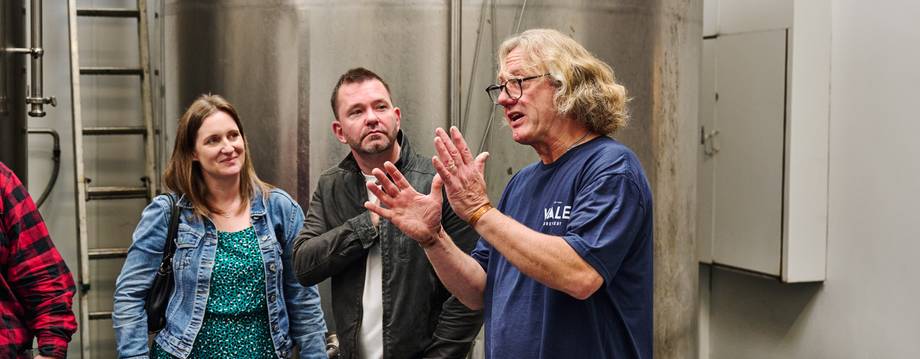
And it seems that by running the business this way, Joe has attracted like-minded people. “We've got two retired gents, Tim and Graham, behind the bar in our taproom, and they're there because they want to be there. They’re both people who are really engrained in the local setup, and when they’re pulling your pint, it really adds to that feeling that you’re part of the community.”
Knowing that Joe spent some time at Timothy Taylor’s — the gold standard when it comes to making and serving cask — it’s unsurprising that he’s passionate about service, and understands that folk behind the bar need to be supported if they’re to excel in their role.
“Sometimes I go into a pub, or a restaurant and think ‘has this £7 pint met the service delivery that it warrants?’,” Joe says. “I'll absolutely pay £7 for a pint if I need to, but I really want the person behind the bar to look like they want to be there, serve it in the right glass, and look after me like a patron of that business. Sadly, there are various reasons why that often isn’t the case, across various parts of the sector, but I see that as a real opportunity for us at Vale.”
Not only that, Joe sees interactions at the bar as one of several ways in which the brewery can gather feedback from its customers. Another key feedback group is Vale’s 300 beer club members, which — in addition to membership benefits — the brewery keeps up to date with behind-the-scenes emails, updates, and sneak previews of upcoming brew plans. “But we also ask for their feedback directly,” says Joe. “‘Would you like more of this? Less of that?’ Because you sort of think, ‘well, 300 customers are in our backyard, they have bought into what we're doing and are telling us what they feel.’”
It might have taken more time, money and effort than Joe and Jimmy thought it would, but I daresay that Vale has reached a new and exciting point in its life by keeping close to the local community, championing remarkable service, and continuing to knock out really, really good beer.
Share this article
You’ve reached your limit of 5 free articles this month.
Unlock unlimited access and more

Join Beer52 and get your first month half price
-
Get your first box for £13.50 (RRP £27).
-
8 beers & 2 snacks delivered monthly.
-
Printed Ferment magazine included.
-
Unlimited access to all online content.