Dazed and infused
We return to Estonia, to find our old friends at Põhjala riding high.
Robyn Gilmour
Photos:
Põhjala Brewery
Saturday 07 February 2026

This article is from
Faroe Beer Adventure
issue 127
Share this article
The last time Ferment touched base with Põhjala, the Tallinn-based brewery was still located in its first production facility — a site much smaller, and less opulent than its current space, which reflects Põhjala’s frankly astronomical success over the last decade. The now 12-year-old enterprise found its current home in 2018, at which point the ex-submarine factory, built in 1913, was derelict.
“When we identified that we were outgrowing our first facility we were still quite a small brewery,” says head brewer Martin Vahtra. “We didn't have the budget to look for a grandiose building like this, so we thought we’d move to a unit on the outside of the capital. It was a happy coincidence and a lot of luck that a friend of a friend could help us secure this place. At first we thought it was way too big for us; we even called the landlord and asked if we could split the building up and just take part of it, but as soon as we got the first tanks in we thought, ‘actually we’ll take it all’. In a way, the space allowed us to dream big, and now this place feels small.”
Martin says the expansion allowed another side of Põhjala to be born. It wasn’t just the case that the brewery could suddenly host visitors in its on-site taproom for pints and Texas BBQ, overlooking the production floor; it had the space to develop a whole other side to its identity.
“It’s quite interesting. Once we moved into this space we almost created this whole other face of Põhjala,” says Martin. “Before the move, we were only known for barrel-aged beers, baltic porters, basically big luscious heavy hitters in that sense. Even though we’re still known for those beers on the export market today, when we moved to this site, we found local people didn’t quite understand those styles. The Estonian market is incredibly small, and people were used to lower ABV, easy going beers, so once we moved here and had more space we could make lagers, session IPAs, pale ale, things like that. So now, our darker barrel-aged stout remains a big part of our export offering but locally our biggest selling beer is actually our lager.”

PHOTO: Martin Vahtra, head brewer
Funnily enough, even though lighter styles make up the majority of what’s consumed by locals, the 24 taps in Põhjala’s taproom are still equally split between light and dark beer. This is to account for the vast number of beer tourists from all over the world who have identified Põhjala as an essential European beer destination, and rightly so. As brilliant as the brewery’s beer is, and as unique an experience it is to drink beer locally, the charm and historical significance of Põhjala’s current home makes it a cultural package that’s well worth travelling for.
Because the building in which the brewery is based was under municipal architectural protection when the team secured the site, extreme care had to be taken to restore the building. “We couldn't even choose the colour of our window sills or anything like that,” says Martin. “Everything had to basically be as close as possible to the original image which, I mean, definitely creates a very nice atmosphere in the neighbourhood, but as for production space, we had a lot of interesting challenges to figure out.”
For one, the area was earmarked for residential development, so the brewery had to be careful how much its output impacted on the surrounding environment. For example, spent grains can’t be left sitting around for long, and efforts have to be made to mitigate the smell of mashing in and adding hops — an aroma loved by most, but not all. As Martin tells it, the brewery was the first business to move into the area, which is now in the throes of gentrification. “Now it's one of the areas of Tallinn that’s being most actively rebuilt,” he says. “There’s a lot of historic buildings here, and old factories, most structures are over 100 years old.”
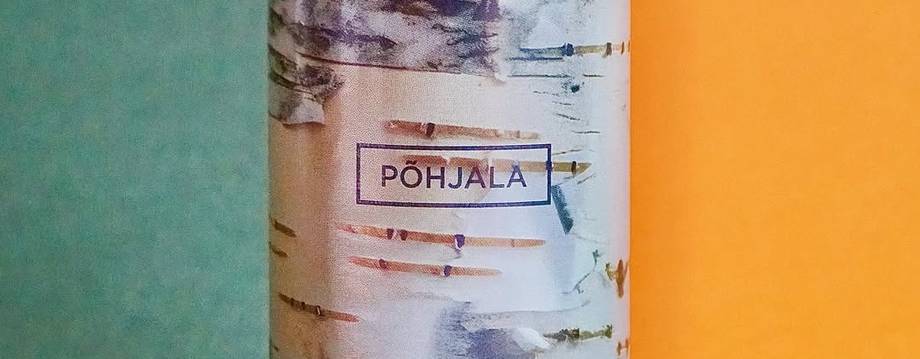
This bustling historic backdrop is the perfect place to get a feel for local flavours. “Our most brewed beer is Kask, which in translation means Birch,” says Martin. “It’s basically a German-style lager, but we infuse all the brewing water with birch whisps, which have historically been used in Baltic saunas. You kind of tap yourself with the branches, and it brings a perceived sweetness, and a bright aroma to the sauna. It’s a nostalgic scent to many people, but it’s quite funny, when most people taste the beer they recognise the flavour but can’t quite put their finger on what it is. It usually makes for a nice eureka moment.”
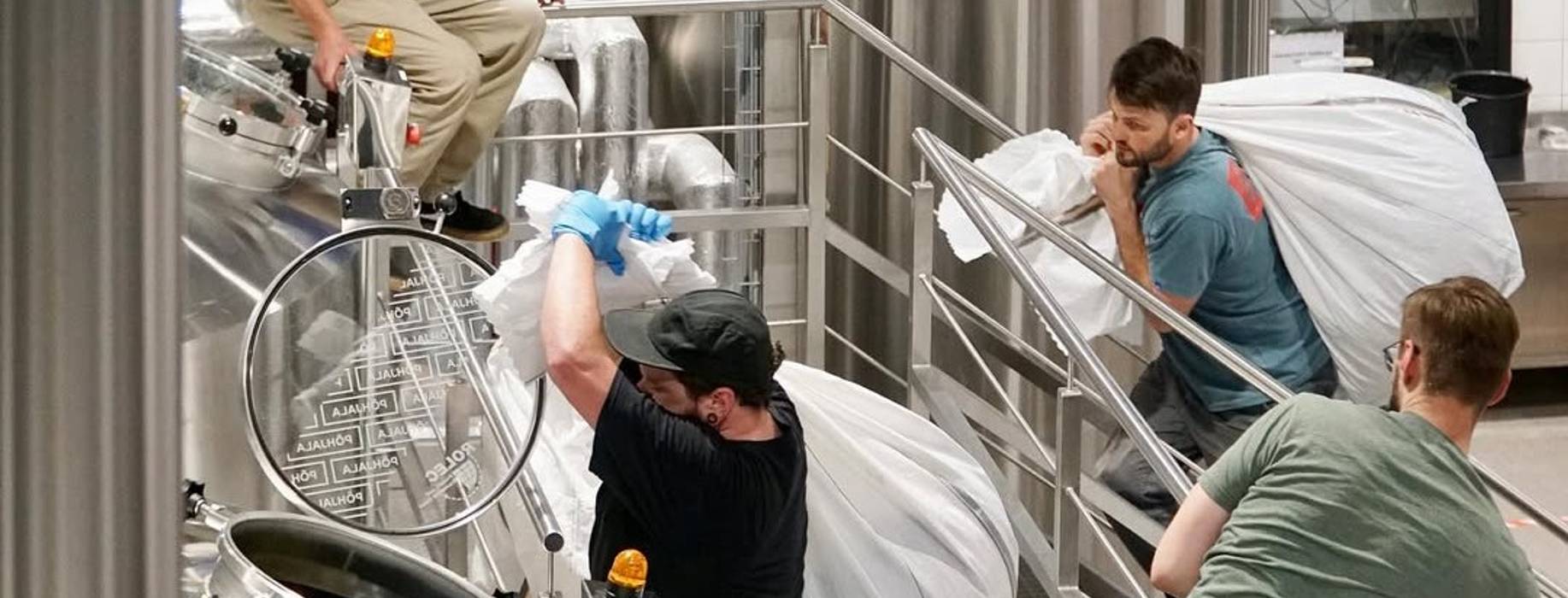
Again, it’s only possible to brew this beer because of the space Põhjala enjoys at its new brewery, which can accommodate speciality equipment. “We now have a separate tank just for infusing,” says Martin. “We add about 150 birch wisps to the brewing water and make this kind of birch tea. Then, even through mashing, lautering, boiling, fermentation, all that aroma actually still carries through in a really strong way, and when you drink it, you get this aroma of springtime forest that really stands out on its own.”
While this infusion tank is primarily used for the production of Kask, the team uses it for all kinds of infusions. “Sometimes, like when we press our own juice from berries and things like that, we might use the berry husks, for example, to make an infusion. We also use that tank for all of our kettle sours but that’s more of a logistical thing in the sense that it keeps the brew house free so we can brew other things while one beer is souring.”
When I ask Martin about Põhjala’s use of other local flavours and ingredients, he’s keen to point out that while the brewery is quite experimental, and likes to produce beers inspired by local cuisine and local nature, the base beer should always be the first thing to shine through. “We want to make beer with interesting flavours, rather than putting that flavour front and centre. This is one thing that we always keep in mind. So for example, several years ago now, we made a salted baltic porter with porcini mushrooms. It had an amazing umami, earthy quality, but it was a fantastically drinkable beer, where you got the baltic porter first, and the umami hit on the finish and just invited you in for another sip.”
While Estonia is now internationally viewed as a craft beer destination, not least because of Põhjala, it’s been a journey to win locals over to the cause of craft beer. “People are very slowly but steadily warming up to the idea of craft beer and the different styles that come with it,” says Martin. “The thing is that Estonia has a very rich brewing history and culture — it’s just the case that the only beer you could buy for decades was industrial lager. When we came out with the Baltic porter, people were confused, even about the strength of the beer, which prior to 2013 never tended to go beyond 6%. But people were curious, and keen to get to the bottom of what this whole craft beer thing was all about. Beer education has been a big part of getting people on board, and now people are drinking sours, naming styles, and are familiar with different hop varieties. We’re seeing the excitement that comes with that knowledge really starting to shine through now.”
Share this article
You’ve reached your limit of 5 free articles this month.
Unlock unlimited access and more

Join Beer52 and get your first month half price
-
Get your first box for £13.50 (RRP £27).
-
8 beers & 2 snacks delivered monthly.
-
Printed Ferment magazine included.
-
Unlimited access to all online content.