Welcome to the machine
Beijing is a city unlike any other, and Peiping Machine is its craft beer cool kid.
Robyn Gilmour
Photos:
Peiping Machine
Saturday 07 February 2026
This article is from
Faroe Beer Adventure
issue 127
Share this article
As the biggest city in the world after Tokyo, there’s no reality in which one can call Beijing a ‘hidden gem’ — it’s a metropolis, a crucial centre of the world’s economy, and has a longer history than most of us can comprehend. However, talking to Peiping Machine Brewery’s head of marketing Tian Yufan, a born-and-bred Beijinger, reveals layers of the city that can’t be inferred from a map, or guide or translation.
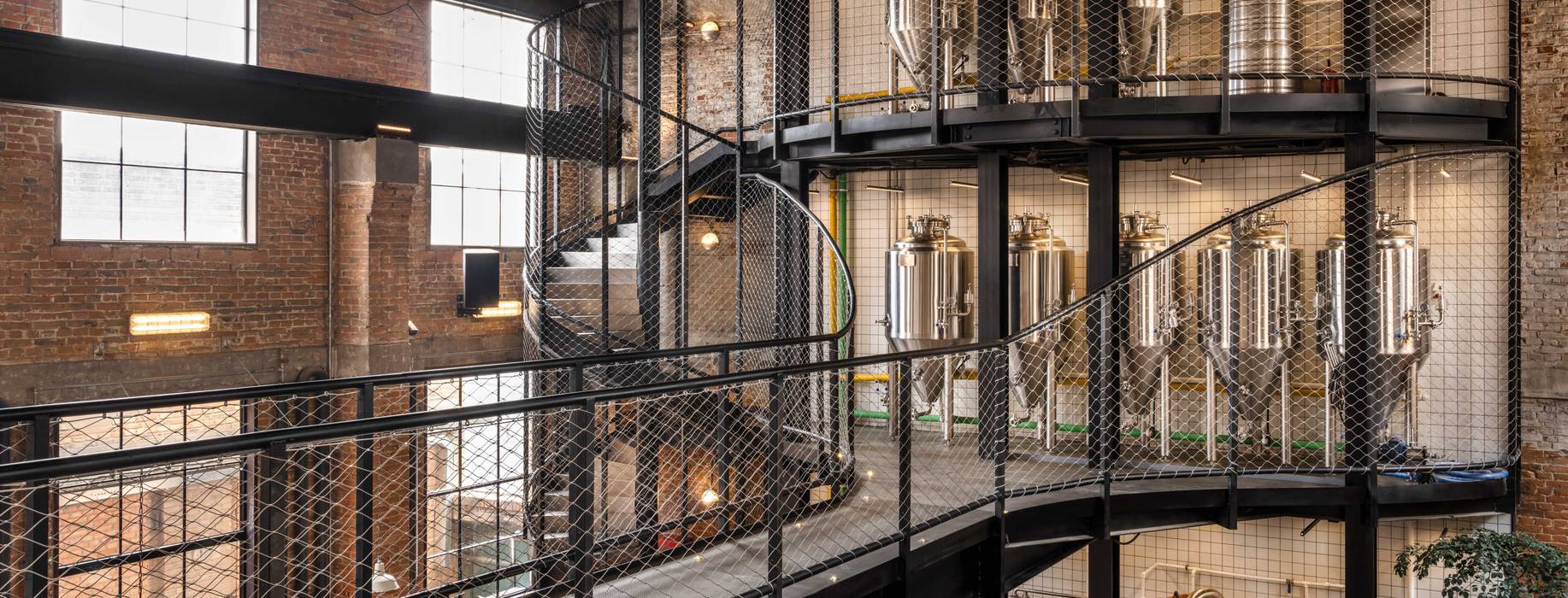
Peiping Machine opened its first taproom in 2016, in the Hutong area of Beijing. A hutong is a narrow lane lined mostly with traditional homes and shops, designed and popularised during the Yuan Dynasty (13th-14th century). More specifically, Peiping Machine is located in Fangjia Hutong, a street now celebrated for blending traditional architecture with modern boutiques, but which also enjoys industrial pockets. One such industrial park — Park 46 — is home to what was Beijing’s biggest tool factory, prior to the foundation of the People’s Republic of China, and is Peiping Machine’s home today.
“That’s why we’re called Peiping Machine,” says Tian. “The hutong was the most internationalised place in Beijing at that time. There were lots of restaurants, bars, and a lot of foreigners from all over the world were passing through the area every day. Park 46, where our taphouse is located, was famous for architecture, design and graphic studios, and the first Chinese pirate radio station. It’s a very cool and interesting place, and so our taphouse customers were designers and rockstars and early influencers, all of whom helped out to promote our brand name. In those following years we opened eight more taphouses, and every one is based in very unique locations.”
Tian isn’t exaggerating. Peiping Machine has a brewpub less than a kilometre from the Forbidden City, making it the most central brewery in China. Two more taprooms in north Beijing are based in the manufacturing factory that made China’s first satellite, and the Bird Nest, the purpose-built stadium that hosted the 2008 Olympic Games. In southern Beijing, Peiping Machine has a taproom in what used to be an amusement park that every kid in Beijing visited in the '90s. Peiping Machine has also recently opened its first taproom outside of Beijing, in the Sichuan province. Business is booming.
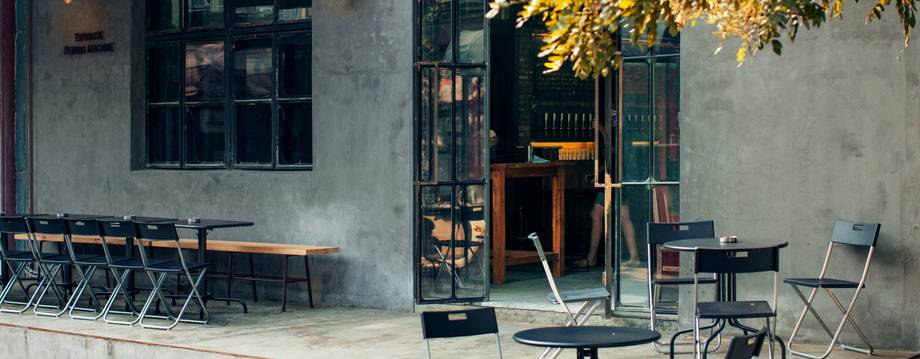
PHOTO: Fangjia Hutong taproom
“Craft beer trends in China actually come from America,” says Tian. “The dynamic IPA and the various New World hops were very impactful here, because before those we only drank industrial lager, tonnes of German-style beer, and a little bit of imported beer from Belgium. From that time, we all know that craft beer in the US was actually a localised version of international beers, made by European immigrants. So when the beer came from America to China, we wanted to bring some local characteristic beer in China. So, we use a lot of local ingredients, spices, maybe integrating the beer with some local culture.”
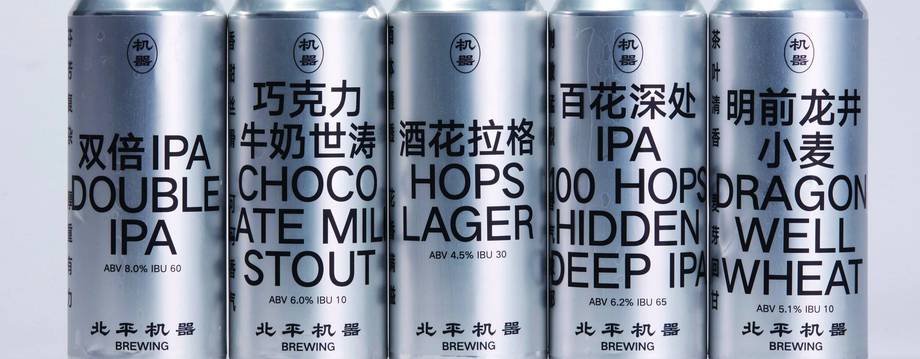
For example, one of Peiping Machine’s best loved beers, Dragon Well Spring Tea Wheat contains Longjing tea, a very fine and expensive tea, broadly considered to be a local delicacy. Its inclusion brings a uniquely Chinese character to the beer, which today is Peiping Machine’s best seller and is broadly imitated by other breweries. Tian is sure to point out that Peiping Machine’s is the original. Another beer, 100 Hops Hidden Deep is named after the Hutong 100 Flowers Hidden Deep, on which Baihu Recording Studio is located, a centre of music in Beijing. Just as important to Peiping Machine is the food that’s enjoyed with the beer. “We mentioned that the beer must be localised, but of course, it's the same as the food,” says Tian. “We all know that a lot of tap houses all over the world, even in China, pair beer with pizza, burgers, fried chicken, but we’re always thinking about proper food for us to pair the beer with. Have you ever heard about a traditional Chinese snack food called Jianbing?”
Even if you don’t recognise the word, it’s likely you’ve encountered this delicious, savoury crepe-like pancake, filled with, well, whatever you like really. “We roast the famous Peking duck, which is a popular filling,” says Tian with a smile. “We even hold a festival for jianbing, including styles from all over China, as well as Western styles, like tortilla, French crepes, and Mediterranean style. This is the fifth year we’ve run the festival, and most recently 20,000 visitors came to our event. We had DJs, podcasters, media people and some cultural organisations, like Vice.” Blimey.
Supporting the festival and Peiping Machine’s many taprooms is a brewery, opened in 2019. In order to obtain a license, it had to open outside of Beijing, and found its first home in the Shandong province. Theoretically, Peiping Machine’s brewery has an approximate capacity of 57,000hl a year, though it was still growing into that volume when, thanks to the booming Chinese economy, the government offered the brewery the opportunity to move into an enormous facility in Beijing last year.
This new facility has a capacity of 227,000hl a year, so promises the opportunity of growth for Peiping Machine. As it stands 40% of the brewery’s output goes directly into its taprooms, with the rest going into clubs, bars and restaurants. Tian says that with this newfound capacity, the team would like to try supplying supermarkets and convenience stores, and maybe even doing some contract brewing.
While the new brewery offers Peiping Machine great opportunity, Tian is aware that selling more beer will be a huge challenge for the team. “Beijing is a very big city,” he says. “About 35 million people live here. For context, Tokyo, the biggest city in Asia, is 38 million people. Still, craft beer in China is kind of like a new lifestyle. The younger generation don't like drinking, because they associate it with baijiu culture.” Baijiu is a Chinese distilled spirit — similar to Japan’s shochu, and stronger than Korea’s soju — that is drunk on special occasions but more commonly during business meetings, when it's seen as polite and trustworthy to partake in multiple toasts, the frequency of which is set by the highest ranking individual present. Generally, it's frowned upon to leave before your boss, resulting in long nights of drinking.
“The younger generation don't like the baijiu culture because it’s quite serious, and so they go to the nightclub. Craft beer tends to be enjoyed between the restaurant and the night club, where people can try many flavours, party with their friends, or just talk to each other for the whole night. In Beijing there are about five to six brands like Peiping Machine and each have five or six tap houses that are about 100 to 200 square metres each. They have very big tap houses because a lot of people like craft beer in Beijing, and there's also hundreds of small brewpubs and tap houses around the city as well. We have a lot of craft beer enthusiasts who, in particular, like double IPAs, triple IPA, DDH, sour beer.” Is it any surprise that Beijing has been the most recent location for Mikkeller to take its roving beer celebration concept?
While Beijing might be a bridge too far for UK residents without existing plans to be in that part of the world, Peiping Machine’s beer will soon be available closer to home, at Mikkeller’s Craft Beer Celebration Copenhagen, in 2026. If you’ve plans to visit, make sure you take in Peiping Machine’s stand to try an authentic taste of Beijing for yourself.
Share this article
You’ve reached your limit of 5 free articles this month.
Unlock unlimited access and more

Join Beer52 and get your first month half price
-
Get your first box for £13.50 (RRP £27).
-
8 beers & 2 snacks delivered monthly.
-
Printed Ferment magazine included.
-
Unlimited access to all online content.