More Pühaste, less speed
We return to Estonia, to catch up with the mad scientist with a level head.
Richard Croasdale
Photos:
Pühaste Brewery
Saturday 07 February 2026

This article is from
Faroe Beer Adventure
issue 127
Share this article
It has been nearly a decade since we hailed Eero Mander as the "mad inventor" of the Estonian craft beer community, way back in Ferment issue 15. Even before we first met him though, from the early 2010s, Eero was a brewer defined by a relentless, restless creativity; a prolific home brewer who delighted and occasionally baffled friends and then peers with untried ingredients and wild experimentation. When Pühaste finally opened its physical doors in Tartu in September 2016, it was the culmination of years of nomadic brewing and dreaming, a transition from a one-man passion project to a bricks-and-mortar reality.
Eight years later, the scene has changed. The craft beer boom, at home in Estonia and globally, has settled into a more pragmatic reality shaped by changing drinker expectations, increased competition, and the privations of Covid. Yet, reconnecting with Mander today, the spirit of Pühaste clearly hasn’t just survived, it has matured. The mad inventor is still there, just with a few more grey hairs, and perhaps a little more appreciation of market forces.
But let’s step back and look at what brought us here. The brewery takes its name from the small village of Pühaste – meaning "holy" in Estonian – where Mander cut his teeth in the early 2010s, brewing on a tiny kit, obsessively documenting ideas in a notebook he carried everywhere.
"I usually have one ingredient I want to work with, then build a recipe around this special ingredient," Eero told Ferment back in 2017. It was a time of "no limits," where inspiration could come from nature, food, or sipping a beer showcasing an unfamiliar hop.
Eero set out on the nomadic brewing route in 2014, partnering with established Estonian names like Põhjala, Lehe (now sadly closed) and Tanker, to produce his recipes on their kit. It was a necessary step to raise funds and profile, but the goal was always autonomy, a goal that was finally realised in 2016 when Pühaste settled in the university town of Tartu.
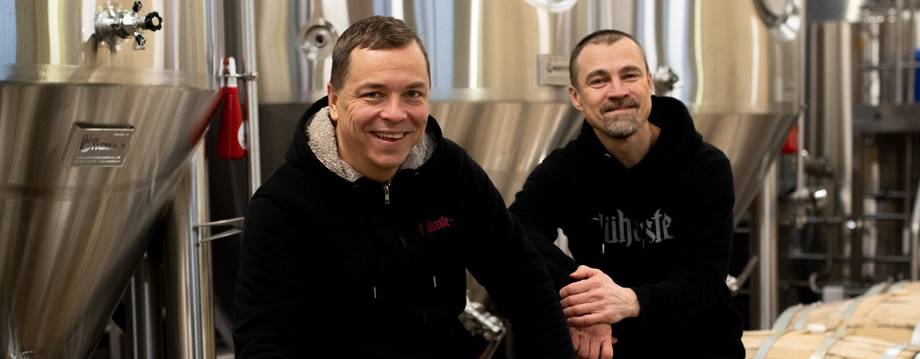
PHOTO: Üllar and Eero, the co-founders
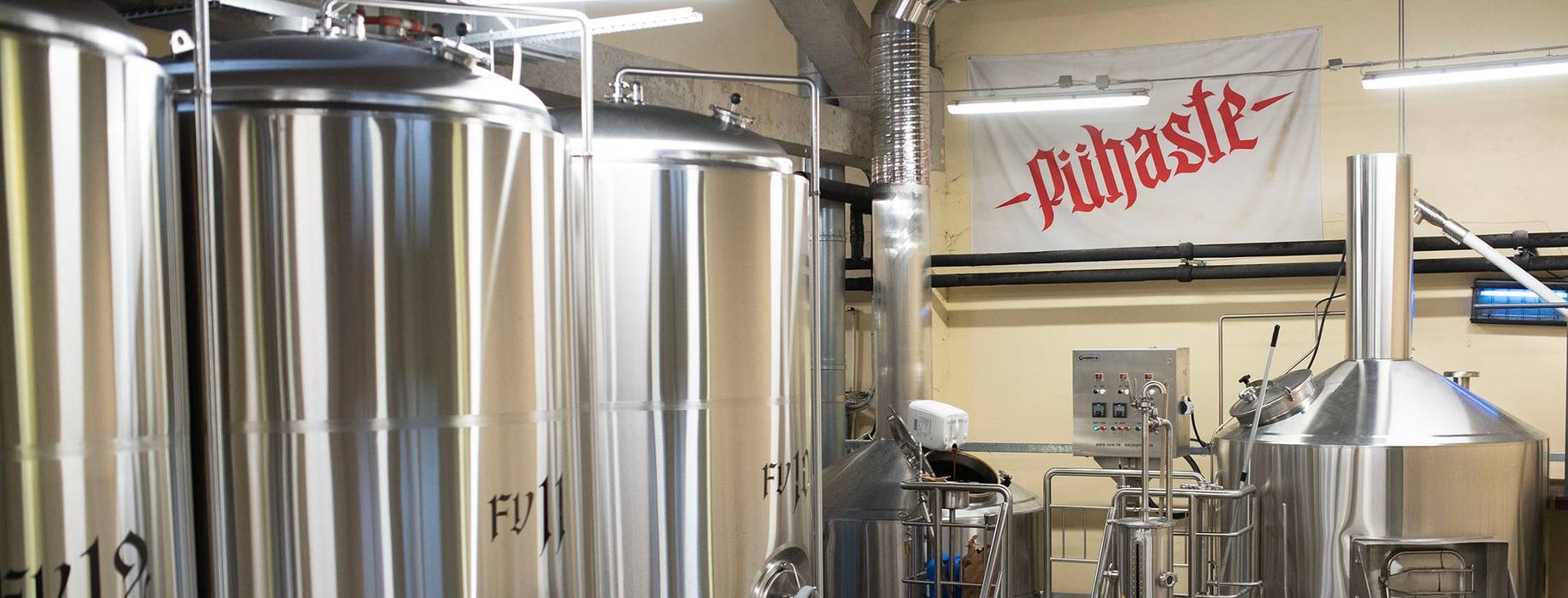
Skip ahead to today, and Pühaste has filled out its footprint in Tartu, its site now packed tight with kit and “toys”. "You won't recognize the rooms," Eero admits. "We are now pretty much filled with equipment. We cannot fit in anything else."
The team has settled at around ten people, a number Eero feels is optimal for its current output, as well as adding taprooms in Tartu and the capital Tallin (in what used to be the BrewDog bar, pleasingly). Yet perhaps the most telling evolution is in the beer itself, with the brewery gradually moving beyond the wild experimentation and heavy, dark ales with which it made its name, to a more modern portfolio showcasing technical precision and drinkability.
"We started brewing more lagers a few years ago, this has definitely grown for us," Mander says. Pühaste now maintains "two core range ones and then seasonals throughout the year… rotating through five different types of lagers, sometimes even six." While the brewery's reputation might be built on the obscure, it’s the IPAs and lagers that now keep the lights on.
This isn’t by any means a sell-out story though; those classically Baltic, heavy craft beers are still very much part of the roster, albeit organised into a stricter seasonal rhythm, in which Eero uses the quieter months to lay down stock for the future. "During the slower months... we brew a lot of the barrel-aged stuff. That’s still really important to who we are, and a lot of people get really excited about those releases" he explains, referring to the strong stouts and porters destined for ageing.
This is a calculated ebb and flow. As the work of the deep winter concludes, the focus immediately pivots to freshness, with February marking the switch to pale ales and lagers. It’s a disciplined approach that ensures the brewery isn't just reacting to trends, but planning its output months or years, in advance. Unbridled exploration then, but in service of a plan.
And such a plan is necessary these days. Eero explains that the Estonian craft beer boom we enjoyed witnessing in 2017 is over, replaced by a fight for market share in an environment where drinkers are more price conscious, and brewers are constrained by the same ingredient and overhead pressures that are being felt the world over. This tightening has seen the closure of several Estonian breweries that had come to feel like part of the furniture, including Sori and Lehe, both of which featured prominently in our 2017 roundup.
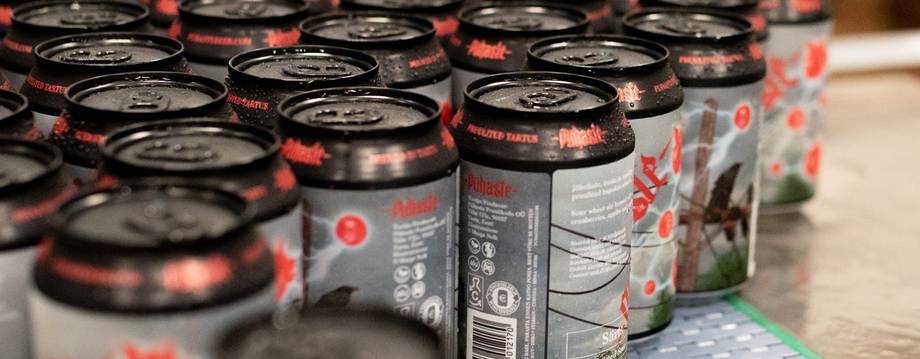
Eero puts Pühaste’s longevity partly down to its conservative approach to growth. Still counting only ten employees on the brewery staff (so, not including the taprooms) it is a compact operation, which has strictly responded to organic demand, rather than betting on expansion.
Despite the focus on stability, Eero hasn’t lost the outward-looking perspective that defined his early career, and the brewery is clearly part of the wider global craft community, with export still a significant chunk of its business. That international mindset recently took the team to Beijing for the Mikkeller Beer Celebration. It was an eye-opening experience for Eero, challenging preconceptions about the Asian beer scene. "China is a funny country... very controversial. But the craft beer scene there is unbelievably good," he says.
He describes a local scene in China that is producing world-class beer, moving beyond imitation of western styles and into genuine innovation, particularly in the use of local fruit and yeast strains. It’s these kinds of interactions that he continues to value most about the industry.
"The collaborative spirit in craft brewing is something unique," he says. "People are willing to share their most secret ideas with you… in fact not just willing, there’s a real passion to share and move things forward together.” For a brewer who started out scribbling ideas in a notebook, this open-source philosophy remains the engine of creativity.
Looking to the future, Eero’s ambitions are refreshingly grounded. When asked about the next five years, there is no talk of global domination or doubling capacity; he’d like to get closer to using the brewery’s available capacity if the market picks up, but there are other more important bottom lines to be measured. "I think just to keep myself, my business partner, and the crew here happy… that's the most important thing," he says. "It's not just all about growth, growth, growth for its own sake.”
Share this article
You’ve reached your limit of 5 free articles this month.
Unlock unlimited access and more

Join Beer52 and get your first month half price
-
Get your first box for £13.50 (RRP £27).
-
8 beers & 2 snacks delivered monthly.
-
Printed Ferment magazine included.
-
Unlimited access to all online content.