Kapittel notion
Joey Leskin meets the almost-anonymous brewery behind one of Belgian’s most popular modern abbey ale brands.
Joey Leskin
Photos:
Leroy Breweries
Saturday 07 March 2026
This article is from
Flanders
issue 128
Share this article
Frequent visitors to Belgium may have noticed that the ecosystem of beer choice there carries a particular quirk: that the recognition of beer brands – a particular range of beers from a given brewery – is often more notable than that of the brewery itself. Most pubs will only list the name of a beer and its brand; the brewery name is in the fine print at best, if not completely ignored – an almost blasphemous notion to our brewery-obsessed minds in the UK.
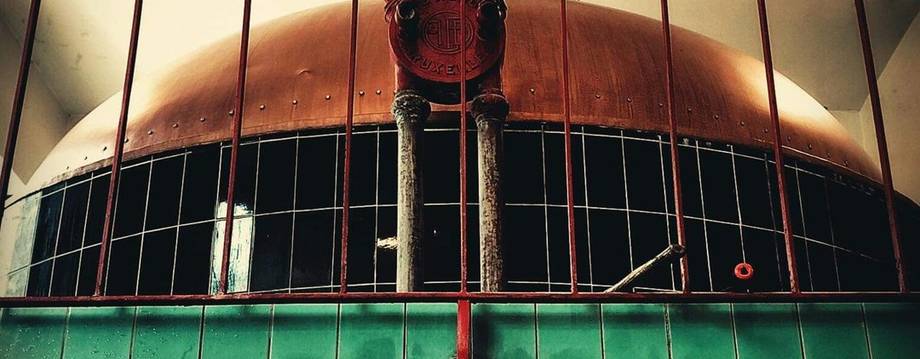
One producer that flies under this name-radar is Leroy Breweries, which nevertheless has a flagship range that is basically a household name in Flanders: Kapittel Watou. Based in the village of Watou right on the French border, Leroy Breweries is the product of a union between two centuries-old establishments, Brewery Het Sas and Brewery van Eecke. Kapittel Watou is how the brewery is often referred to as a whole, despite it only accounting for a portion of beer brewed there.
Within Leroy Breweries, there are four distinct imprints, each serving a specific purpose: Hommelbier, with ingredients native to the nearby city of Poperinge, famous for growing the majority of Belgium’s hops; Boezinge Classics, containing traditional styles like pilsner and stout; Watou Classics, mostly varieties with fruit or adjuncts; and finally Kapittel Watou.
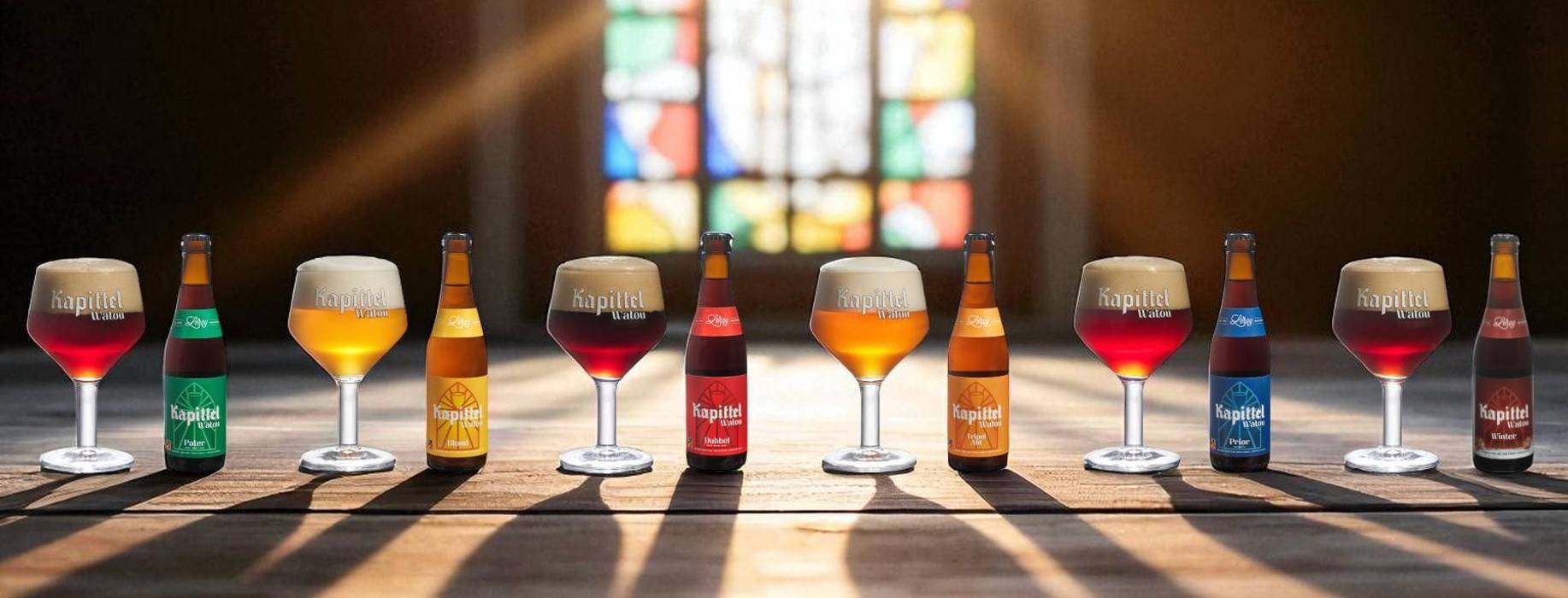
The range has a theme and goes all-in. Bruno Leroy, part of the brewery’s family ownership, is proud of the consistency. “Kapittel refers to the hierarchy within a Monastery, and our names and styles reflect this monastic structure. The Pater, which refers to a monk, is of a lower ABV. Then we have the Prior, the level above a monk. And finally our Tripel Abt, representing the Abbot, the highest position.” This naming convention reinforces the Abbey beer concept throughout the entire range and gives it a well-defined identity.
Why Kapittel Watou embodies this distinctly Belgian approach to beer branding is clear to Bruno. “Primarily, it’s about branding efficiency and marketing practicality, though it can also feel like a romantic notion. Last year, for our most recent release – a bock named Kapittel Herfstbock – we used all our existing Kapittel Watou materials, glasses, posters, beer mats and more. We don't need to create anything new, ensuring we can be sustainable”, he explains matter-of-factly.
“We also prefer to promote ourselves like this because historically, there's often no clear link between a brewery name and a beer name; drinkers know the beer, they trust it, and if another one comes from the same lineage, they’re satisfied. If people see a menu and a name they don't recognise, there's less chance they'll order it, and now we’re down this route, it’s hard to go back.”
Another reason for brewery anonymity is that certain names can have a negative association with consumers. “Many Belgians don't realise that Maes and Cristal not only come from the same brewery, but it’s now owned by Heineken,” chuckles Bruno. “If they knew, they probably wouldn't drink either of them because we don't like Heineken that much – Dutch rivalry and all.”
There is also a trend of older Belgian breweries keeping new, more experimental or modern products separate from their established identity, to maintain their traditional story and play both sides of today’s beer scene.
Kapittel Watou beers are kept traditional and resist following trends, because Leroy Breweries can do that with its other lines. “Some brewers tend to go sweeter or hoppier to match changing tastes or hype shifts, but we don't do that”, says Bruno. “We’re confident in the quality of our beers, and want to keep them consistent. If you keep chasing trends, you'll have a new beer every five years, and that's not sustainable. We want the beer we're making now to be the same one we made 15, 20, 30 years ago, and into the future too.”
It's perfect for sitting with friends, enjoying the flavours, and having a good conversation. Those are always special moments
One interesting peculiarity is the absence of an accurate historical record of the year that Kapittel Watou beers were first brewed. Unlike many long-standing Belgian ales, this means there is no year stated on the bottle. “From our best guess, our classic Abbey styles have been around for about half a century, certainly since at least the 1970s. The blond was added in the ‘90s, along with the dubbel. The winter ale was released eight years ago, and the Herfstbock is our newest addition,” says Bruno.
The ability to adapt to the modern drinker is still necessary, however, and this was achieved through a rebranding at the start of 2025 that Bruno pioneered. “We are showcasing our tradition with clean and classy labels with some colour, but not too much. We don't want screaming labels with a million colours because that wouldn't fit our brewery, or help people understand the connection between the beer and the brand.”
The reception to the rebranding was mixed at first, with long-standing fans asking where the monks on the previous labels had gone. “We retired them,” laughs Bruno. “We had to, because the old label was too beige and people literally didn't notice it among the hundreds of other bottles.” The new branding includes the window of an abbey, ensuring the style profile is depicted clearly through images. “Most customers have been complimentary about the new design, and we've actually seen sales rise.”
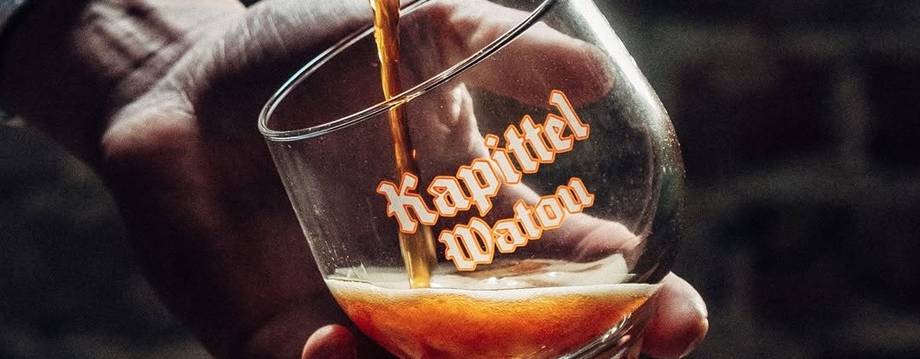
The rebrand was not only about the label, however, as Kapittel Watou received its own glassware glow-up. As discerning drinkers of Belgian ales will attest, beers must come in their own specific glass, designed to enhance the nuances of aroma and flavour. This is also where brands dominate; it usually isn’t the brewery, or even a specific beer, that a glass is designed for, but the range. “Our new glass is, in one word, large”, Bruno grins. “It stands out – when you order the beer, you get this big, fun goblet in front of you, and it feels like you’re drinking something significant. People really love it.”
Designing new glassware is no small task and can take years of iteration and testing. Bruno had a specific look in mind based on existing, chalice-style beer glasses from official Trappist breweries that he had always loved, but wanted it to be slightly taller. He contacted several manufacturers, but no prototype quite realised his vision. Serendipity can reward patience, however, and after months of searching, he found a designer who happened already to be developing a virtually identical glass to the one he was dreaming of. On top of that, because it was still in development, he could request modifications and obtain exclusive rights to the shape before it was offered to others. His one key amendment? Having higher sides, allowing for a smaller opening and therefore greater aroma concentration.
Bruno proclaims that a glass like this is the best way to enjoy Kapittel Watou beers, especially his favourite, the Tripel Abt. “It's a lovely beer – not one you're going to drink five of in an evening, but that's not necessary. It's perfect for sitting with friends, enjoying the flavours, and having a good conversation. Those are always special moments.” Sounds perfect. Just make sure you have the correct glass.
Share this article
You’ve reached your limit of 5 free articles this month.
Unlock unlimited access and more

Join Beer52 and get your first month half price
-
Get your first box for £13.50 (RRP £27).
-
8 beers & 2 snacks delivered monthly.
-
Printed Ferment magazine included.
-
Unlimited access to all online content.