Not the elephant in the room
It may be best known for Delirium Tremens, but Huyghe’s Averbode range showcases classic Flanders abbey brewing, writes David Jesudason.
David Jesudason
Photos:
Het Moment Averbode
Saturday 07 March 2026
This article is from
Flanders
issue 128
Share this article
"We were craft brewers before craft became craft,” says Joris Dheedene, head brewer at Huyghe Brewery. Joris has earned the right to make such bold claims after 20 years at the brewery that is famed for its blonde ale, Delirium Tremens.
Brewing what is perhaps the world's most iconic strong ale, Joris and the East Flanders-based brewery will seemingly forever be connected to blackout-induced hallucinations of pink elephants, despite brewing a range of beers (and brands) which deserve equal (if not more) renown for providing very different drinking experiences.
Maybe Tremens is inescapable, to the point he’s regularly sent photos from friends and family whenever they see a poster or neon sign with a pink elephant when they’re on holiday in places as far from Belgium as Brazil. But paradoxically, it’s Delirium Tremens that sets the standard that all the other beers must meet.
“If you dare put a pink elephant on a bottle then you have to be convinced about the beer’s quality and the values you are standing for as a brewery,” Joris tells me.
But despite innovation and new beers being brewed, such as IPA Paranoia, and AF versions of its core ranges, some practices are so sacrosanct they cannot be lost or even tinkered with.
“When it comes to the yeast [in Tremens],” says Joris, “that’s something you can’t touch - it’s holy for most Belgian brewers. Other parts of the brewing recipe can and sometimes must be changed according to the harvests of the raw materials every year.
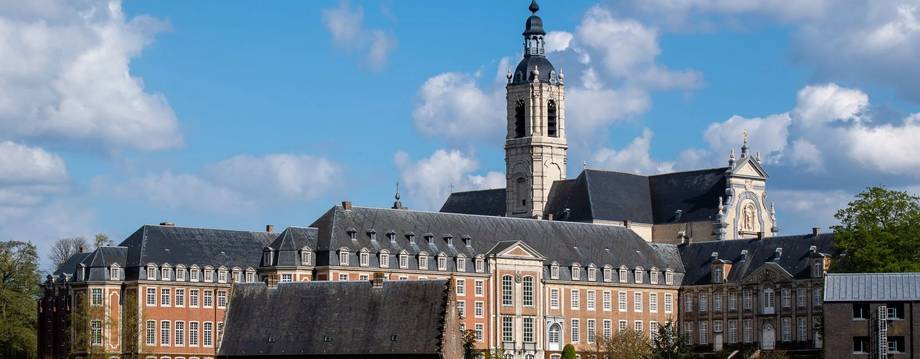
PHOTO: Averbode Abbey © Location Scout
“In general, you can vary the hops and raw materials for more sweetness, bitterness, body and drinkability, but the real soul of the beer comes from the yeast.”
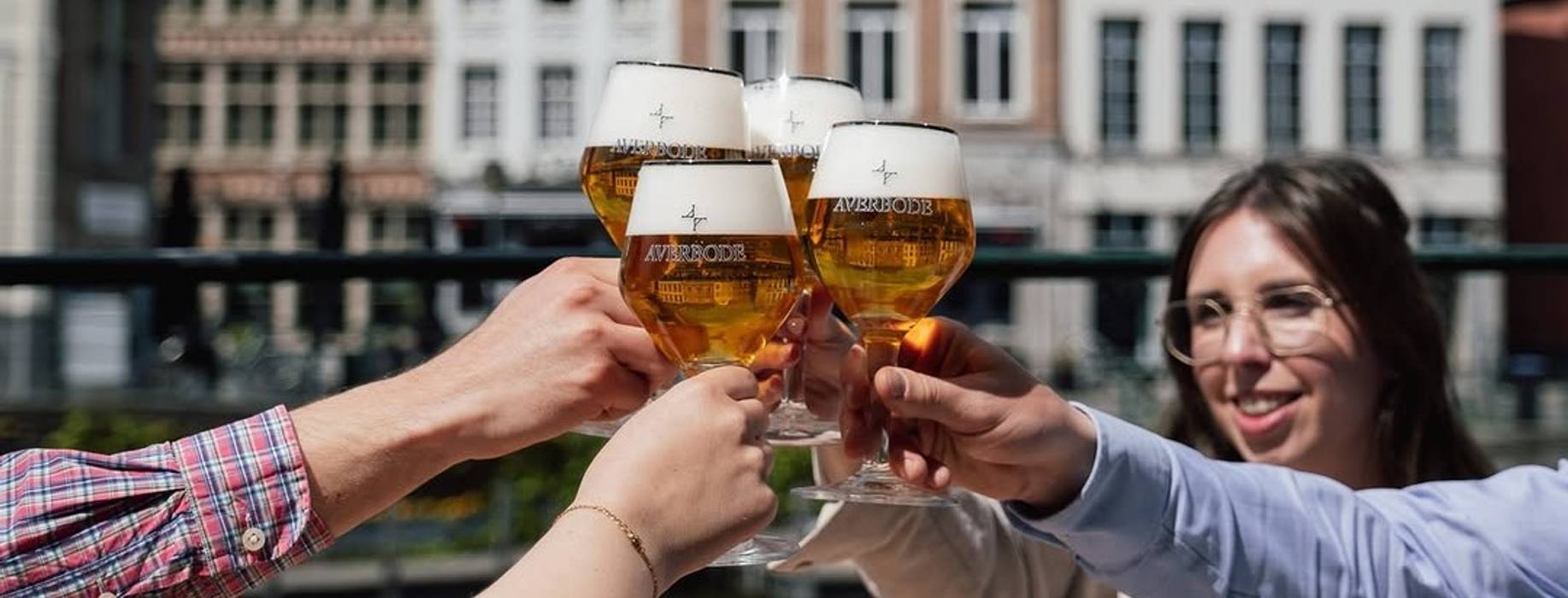
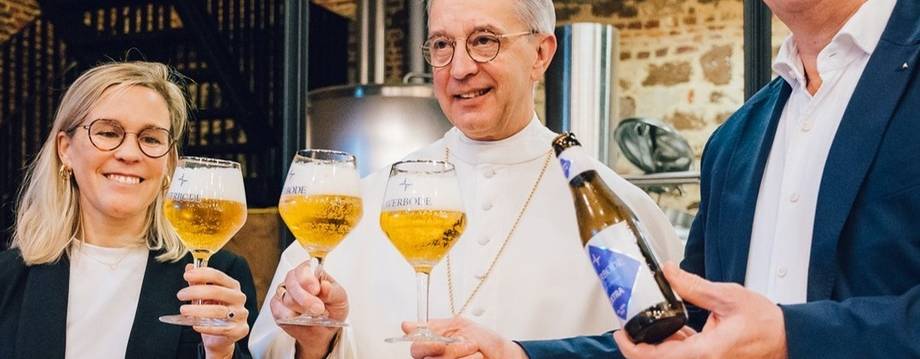
The quality of the beers here is due to Joris and his production team’s skill. Their expertise is particularly exemplified in the Averbode mini-range; the golden Averbode and its lower-ABV sibling Averbode Extra. They’re blonde like Tremens, but unlike the irreverent beer that was first brewed for the Italian market in the late 1980s, Averbode has historical abbey ties.
Joris was present during the development of the original Averbode beer in 2014 and it took almost two years of trialling to perfect, experimenting with a range of hops and grains; the idea was to brew a beer that is unique and, therefore, incomparable.
In beer writing terms I’d say they’ve succeeded, as it’s difficult to say which beers Averbode is like. You’re more a Belgian beer expert than me if you can find an Abbey beer that is more balanced, with a sweet malt start which is complemented by an ample bitter finish.
It’s grassy and fresh hopped, with Joris claiming it was the first Abbey beer to be brewed using the dry-hop process - which means adding hops after fermentation to increase aroma and bitterness. But it won’t be alien to the British palate as these hops are the Challenger variety found in Herefordshire, Worcestershire, and Kent.
This partnership, however, wasn’t a cynical commercial decision but one based on shared values
“I think we succeeded in introducing a beer that is different to other Abbey beers,” concludes Joris. The beer certainly pairs well with grilled prawns, food with Indian spices and, of course, Belgian-style frites.
The Averbode abbey itself dates back to 1134 and was sustained in different ways throughout the centuries; Joris tells me that when he was a child Averbode was famous for printing children’s magazines.
Fast-forward to 2013 and the monks chose Huyghe to brew an Abbey beer under licence alongside a range of foodstuffs they had started to introduce, such as bread, cheese, honey and mustard. This partnership, however, wasn’t a cynical commercial decision but one based on shared values.
“The monks are Norbertines, which means that they don’t only live a contemplative life but are practically involved and active in surrounding parishes,” Joris says. “They wanted to help their community and we were chosen because, yes, we produce quality beers but also because we’re family-owned and we have sustainable [practices].”
These sustainability measures are significant and ever improving. Presently, Huyghe produces 40% of its own electricity through solar panels at the brewery, with the additional 60% needed taken from wind farms in the North Sea. They have also lowered their steam use and are looking at how feasible it is for a brewery of its size to switch to water circuits and heat pumps.
In terms of inclusive practices they hold a renowned annual brew day timed for International Women’s Day, where Joris met his wife, Caroline, during the inaugural event in 2013. This is where the funky pale ale Deliria, a female Tremens offshoot, is brewed. It started with inviting women from the local area but now keen brewers fly in from around the world underscoring how women can enjoy all types of beer (in Belgium, fruit beer is strongly marketed at women).
The monks would also have been impressed with the water quality at the brewery, which taps into underwater rivers which run from Germany through to the North Sea; Huyghe has four or five wells dotted around the brewery. “It would be foolish to put this water into a cleaning solution,” Joris says. “We just take out the calcium and the iron but we don’t have to treat this water.”
They also radically decreased the amount of water needed to brew beer; 18 years ago, it took eight litres of water per litre of beer, but in 2024 that figure dropped to 2.58 litres. An average modern brewery, according to Joris, will use 4-5 litres of water. “We’re pretty proud of that,” he says.
The lower-ABV Extra was then introduced a few years later – Joris dubs the original 7.5% Averbode as ‘the classic’ – which took a few brews to get right. The reason why it’s lower ABV and called ‘Extra’ is that it was traditionally drunk by the monks in the daytime, gifting them enough sobriety to do their day-time tasks (I suspect I would have been out-drunk by a 11th-century monk if I ever could time travel).
The other meaning of ‘Extra’ is ‘extra ingredients’, which Joris says is realised by a greater variety of grains used in the brewing process, even though overall there’s a lower quantity grains compared to the classic.
Perhaps the greatest official endorsement of Extra came in last year’s Brussels Beer Challenge, where it won Gold in the best Belgian beer category. It caught Joris off-guard, because he’s found mid-range ABVs aren’t as popular with beer tasters in an age of extremes, with drinkers either plumping for moderation or a high-alcohol punch.
“It was a surprise, but it shows that you don’t have to have a best-selling beer to win prizes,” Joris says. “We’re very close to where the awards are announced, so it’s nice to win in your own backyard!”
Share this article
You’ve reached your limit of 5 free articles this month.
Unlock unlimited access and more

Join Beer52 and get your first month half price
-
Get your first box for £13.50 (RRP £27).
-
8 beers & 2 snacks delivered monthly.
-
Printed Ferment magazine included.
-
Unlimited access to all online content.