Pier pressure
An unexpected tandem adventure takes David Jesudason to the doors of a Flemish brewing icon: Corsendonk.
David Jesudason
Photos:
Corsendonk
Saturday 07 March 2026
This article is from
Flanders
issue 128
Share this article
“Are you sure you’re ready for a tandem? It’s the biggest test of your relationship!”
My partner, Clare, and I had travelled to Brugge, in West Flanders, a few years ago and after falling hard for the medieval city, dubbed the Venice of the North because of its quaint waterways, we needed a few hours away from the crowds, many of whom were British tourists.
Our idea was to take a rural cycle route north to the coast to visit the resort of Blankenberge after seeing an oil painting of its 50-metre pier in a bar. We found a hire shop and then, well, discovered a tandem would be cheaper than two race bikes. When we were about to set off, a British woman gave us this unsolicited advice that tandems can lead to arguments. Would the promised pier view be worth our relationship?
I was the front rider and we used Sellotape to stick a map to my back, so that Clare could navigate. What could go wrong? After about 20 minutes we hadn’t left Brugge, the biggest problem being how to both be prepared for sudden breaking. The somewhat cumbersome answer was to shout ‘brakes’ to inform the other one that we would soon be stopping. We both were starting to think that the British woman was Nostradamus-like in her prediction.
However, when we had finally left the crowds and started to trundle through cobbled towns such as Zuienkerke, and eerily silent windmills on a still day, we realised this was a tranquil way of experiencing rural life in Flanders. And when we arrived in Blankenberge we needed a beer and, preferably, one we could enjoy with seaviews.
It would have taken a lot to steer us away from the sea but when I saw a bar – Markt 15 on Grote Markt, serving Corsendonk Blond bottles – we had to stop, because this was the perfect beer to celebrate how our relationship had beaten the predictions over a 20km bike ride.
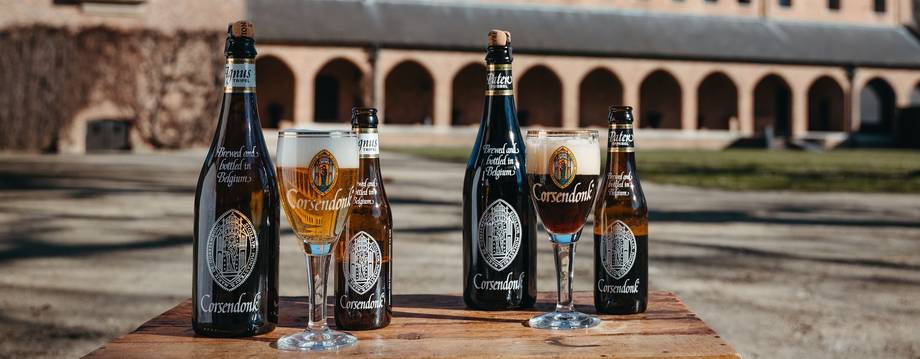
Clare was sceptical that such a strong beer (in British terms) was a good idea after a sweaty cycle, but she became a huge convert to this historic range after one sip of this fruity, bitter but well balanced Blond.
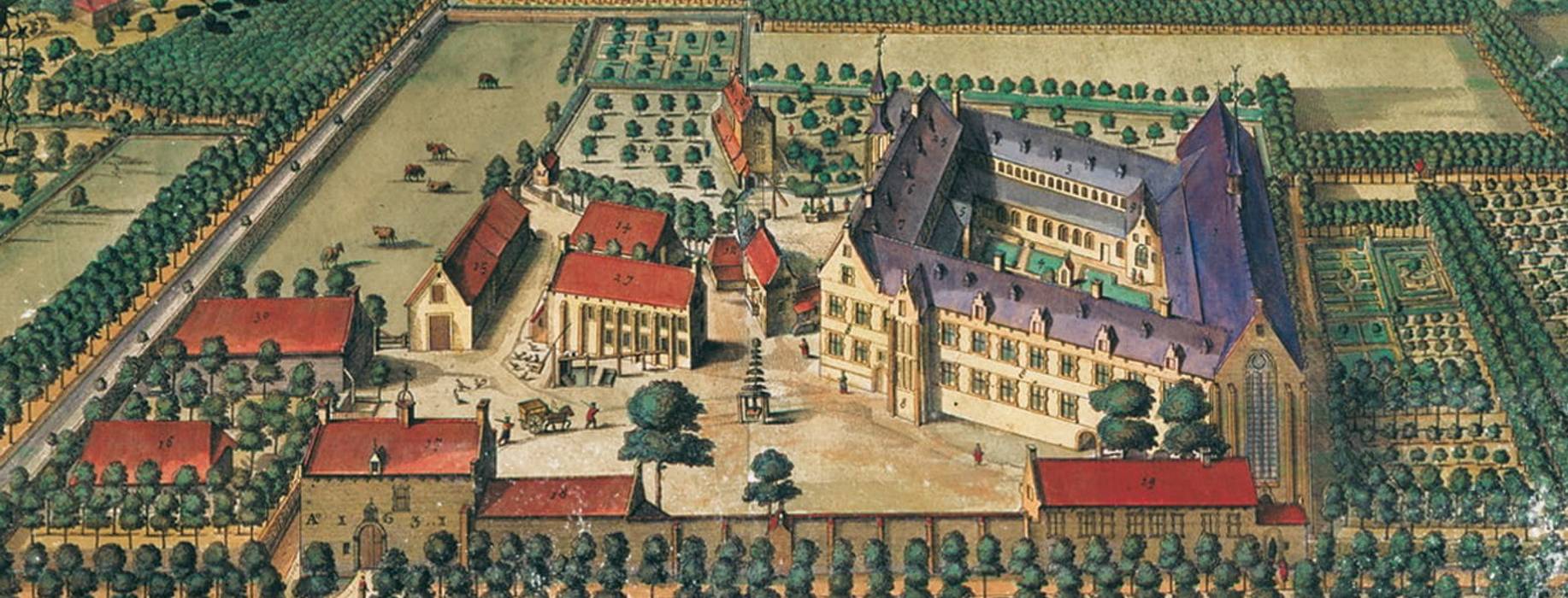
In 2026, these cycles linger as memories, as our life has changed with young kiddies in tow, but my curiosity about the beer has grown throughout the years. The brewery has deep historic roots, founded in 1389 and then closed in 1784, before being re-opened in its current guise in 1982. Part of its modern appeal is its history as an Abbey beer, which manifests in its presentation and appealing taste. The logo of the beer is taken from the actual handwriting of a prior and is the seal of the abbey as well as the brewery.
Stefan Keersmaekers, Corsendonk CEO, is keen to explain the painstaking detail that goes into the way the beer is served and how the smaller details such as glassware is so vitally important – perhaps one of the main reasons I halted the tandem to have that post-cycle Blond.
“We only use natural ingredients in our beer,” he tells me. “So we don’t put additives in the beer; not for the taste, not for the foam. For our lager [Excelsior] we don’t use additives [to change] the colour of the beer – we don’t use rice to make the beer clear, for example. We also get hops from the Czech Republic when they are more expensive, as the taste they give is exceptional.”
This isn’t rhetoric, as the brewery adheres to Reinheitsgebot; the Bavarian practice that stipulates that only a few staple ingredients can be used in the beer, such as water, hops, barley and yeast. Stefan says this is to respect the historic practices that took place in the brewery.
That doesn’t mean it's a backwater outfit, though, as the laboratory is perhaps the most important part of the operation, and foremost in the minds of Stefan’s team of brewers. So much so that four people are employed in the lab, controlling every ingredient used in the brew. These aren’t just beer tasters.
“The lab decides whether the beers can leave the brewery,” Stefan says. “Quality comes first and the rest follows. But it’s not a scientific process - it’s a natural process.”
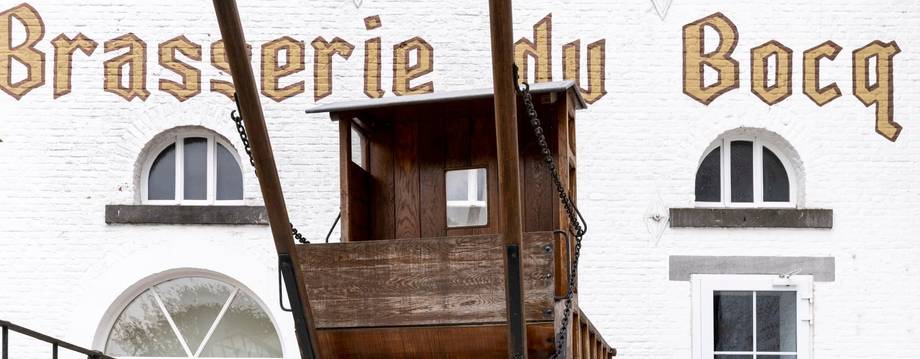
Here, Stefan is alluding to how the beers are re-fermented in their bottles, only to be released at precisely the right time. The length of their storage at the brewery depends on the weather, with the brewmaster working with the lab to ensure they are ready at the correct time.
The Abbey beers are its core range, but the wheat beer they brew here, the Blanche, is also a classic, offering a great palate cleanser when it comes to foods with powerful flavours, such as Indian dishes. It’s small in volume compared to the Blond I adore, but Blanche’s orange and coriander flavours mark it out as special.
In many ways these are cult beers, with a strong, loyal following and Rousse (Rouge) is ubiquitous in specialist bars in France and Italy, because of its sweetness. Stefan jokingly calls it a beer marketed at the “Coca-Cola” generation.
The Corsendonk Christmas Ale is a seasonal must-drink in the US, with its high ABV, steady foam and overall spiciness a hit when the weather gets bleaker. It's shipped from Belgium in August to arrive in September, so it can be logistically shipped for the festive period.
This military process has earned Corsendonk awards including the ‘Best of Flight’ award in 2004, for imported Christmas ales into the US. “We are not aggressively looking for awards,” says Stefan, “because that’s something you receive for the work you do all day long and for the knowledge [we’ve gained] in the brewery.”
To be proud of awards won overseas – quite literally considering the beer is shipped – shows how proud Belgian brewers are of their produce and how beer sits alongside chocolate as a way of spreading their culture to other countries. “We are proud because you can’t imagine the efforts we take as small brewers to be able to get people to drink our beers abroad,” Stefan concludes.
Looking back to that tandem trip, it really was the beer that stood out. Yes, it was a hot day, so you would say the best beer was the one that refreshed you but it really was a glimpse into the best of Belgian culture.
And when we wheeled that cumbersome bike to the coast and took a glimpse of that pier, we realised that the trip had been based on a folly; it had been bombed in the war and the wooden structure was replaced by concrete brutalism. Unlike the pier though, the beer we discovered had taken the best of the past and fused it with the best of the modern. So, despite the dire warnings, my relationships with both Corsendonk and with Clare have endured to this day.
Share this article
You’ve reached your limit of 5 free articles this month.
Unlock unlimited access and more

Join Beer52 and get your first month half price
-
Get your first box for £13.50 (RRP £27).
-
8 beers & 2 snacks delivered monthly.
-
Printed Ferment magazine included.
-
Unlimited access to all online content.