Full of beans
When local, independent businesses collaborate, the result is often greater than the sum of its parts. Nowhere is that more true than in Northern Ireland.
Robyn Gilmour
Photos:
Out of Office Brewing
Saturday 04 April 2026
This article is from
Northern Ireland
issue 129
Share this article
We bang on about collaboration so much in the beer industry, that it’s easy to forget how unusual it is throughout the rest of the commercial world. In between working at Bullhouse Brew Co — where he was the only other person to work with founder, William Mayne, back in the early days — and starting work as head brewer at Out of Office microbrewery, Mick McDowell did a spell in the distilling world. “It's quite the opposite of how we work in beer,” says Mick. “With whiskey, the distillery next door is your competition, in beer, other breweries are your neighbours. That’s what got me back into brewing; you don’t learn anything if you don’t collaborate with people. You get stuck in your ways, and then how are you supposed to innovate or progress?”
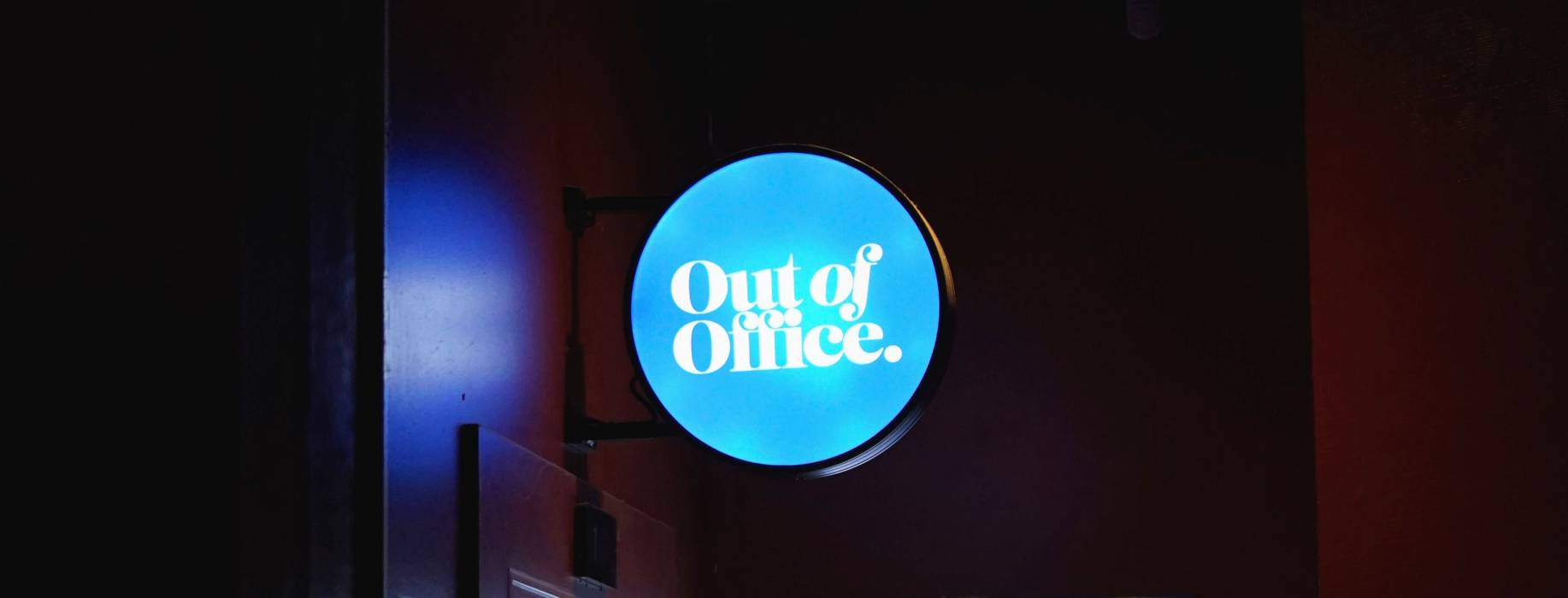
Out of Office is in an exceedingly rare position within Northern Ireland’s beer scene, being a second-floor microbrewery that’s owned by the same company as a string of independent bars, restaurants and hotels around Northern Ireland. Among these are The Dirty Onion, The National, Bullitt, Jenny Watts in Bangor, Little Wing Pizzeria, but perhaps best known and universally loved within the world of independent beer is Ulster Sports Club, the bar above which the brewery is based.
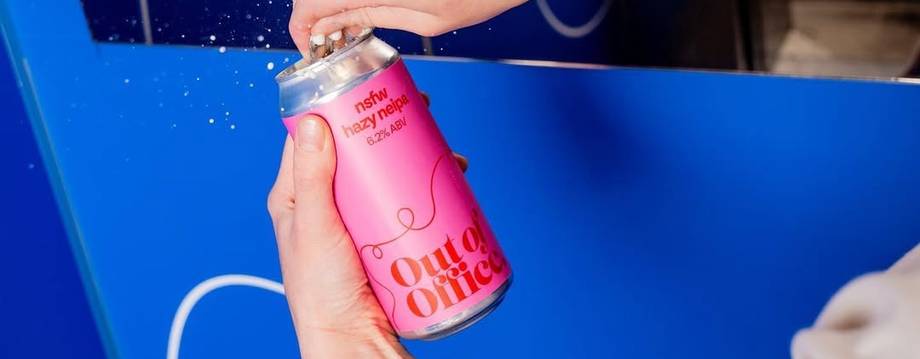
Since opening its doors in 2022, the microbrewery has only had capacity to serve its own internal network of venues. “If I said ‘we can’t make enough beer to supply more venues’ to other brewers in Northern Ireland, they’d punch me in the face,” Mick jokes, acknowledging how fortunate he is to be in a position where the beer Out of Office makes has an automatic outlet. It’s not something he takes lightly, and as such does his best to pay that privilege forward, and do what he can to support other local, independent businesses. Most recently, that has looked like a collaboration with Bailies Coffee on a coffee pale ale.
Bailies’ sales account manager Hanna Gulyás has a unique admiration and appreciation for the kind of locality that Out of Office champions. In the world of coffee ‘local’ is a tricky concept to get arms around, and one that Bailies has been wrestling with over a decade. In this part of the world, there is no such thing as local coffee — as much as coffee might be branded as Italian or French, that label speaks to a style of roasting, and says nothing of where the coffee was grown, who farmed it, or how it was processed. “When people buy coffee, they don't actually know where the coffee is coming from or how it's sourced,” says Hanna. “Our most unique feature is that we're direct trade, meaning we don’t work with importers or distributors, but buy directly from farmers.
“This ensures that the farmers get a fair price, that we work with them long term, that we’re not losing our transparency or sustainability to an importer or exporter, because we have that direct relationship back and forth with farmers. So consistency of quality is one gain for us, as we’re getting the same coffee from the same cooperative or same farm each year, but it also strengthens the producer’s ability to innovate, to keep their company running, to get new equipment, to better their practices, and to start selling more and more of their coffee and as a premium product, as opposed to a commodity product.”
Bailies has come a long way from the boot of founder Russell Bailies’ car, back in 1993. What started as a one-man enterprise has steadily grown into a 35-strong team that is now in its eleventh year of working in a direct trade capacity. With some of Bailies’ supplier partnerships now entering their tenth year, the company has never been better qualified to attest to the benefits of direct trade for both farmer and roaster.
Working directly with cooperatives and smallhold farmers across Colombia, Brazil, Guatemala, Honduras, El Salvador, , Kenya and Ethiopia, is exactly as complicated and labour intensive as it sounds. For example, the coffee used in Bailies’ collaboration with Out of Office is sourced from Hunkute, Ethiopia, and really challenged both the feasibility of of direct trade, and Bailies’ commitment to transparency. “Sourcing coffee from Africa is different to sourcing coffee from South America, for example,” Hanna begins. “Historically, governments in Kenya and Ethiopia have been heavy handed when it comes to regulating coffee export and trade. The coffees we source from there are direct trade in the sense that we’re not buying from a distributor or a middleman, but full traceability and financial transparency have been a challenge. One of our shipments of Hunkute is pooled together from hundreds of smallholder farmers, whose coffee was delivered to one of two collection points. All of them are members of the cooperative, but many of them are so small that you might have several farmers sharing just one acre of land. With all of its challenges, we are happy to say that coffees from Hunkute are fully traceable and direct trade since 2021.”
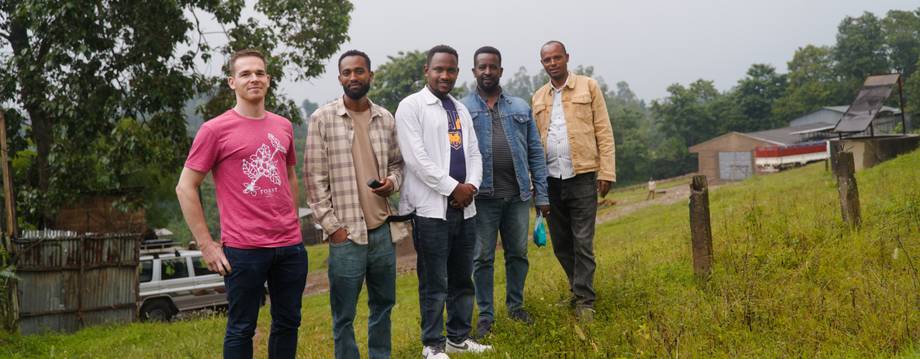
PHOTO: Bailies Coffee
Hanna reports that Bailies is continuing to explore and negotiate paths to direct trade with farmers in these countries. Most recently, the company’s head of procurement and green coffee sourcer, Jan Komarek, as developed a geo-location app that helps farmers and regional managers to track specific plots of land and its owner, to further digitize and enhance traceability throughout the coffee's journey. This app has been released as free and open source to support EU Deforestation Regulation and is being recommended by International Trade Centre and European Forest Institute. “Yeah, we have a super human on our team,” Hanna adds.
She and Mick begin to compare notes on what terms like ‘sustainable’ and ‘local’ can and do mean in their respective industries. I get the feeling that I’m watching collaboration in action. “If you ever wanted to use the taproom, you’d be more than welcome to,” says Mick to Hanna, keen to share the benefits of having access to space in Belfast’s Cathedral Quarter. On the last Thursday of every month, the brewery offers its 100-seater taproom to local independent businesses interested in collaborating on a beer pairing.
Whether that be with a local cheesemonger, a pop-up restaurant, or a coffee company — Mick says the goal is for both businesses to gain some exposure, and crucially, to keep their margin.
“A big part of sustainability is providing products to your local area, and you guys are a really good example of that,” Hanna notes. “Yeah, I think it's always better to have money to stay in the country and leave it,” Mick replies. “This is the thing about bars stocking big beer companies; you buy a pint and a lot of that money is just leaving the country. Keeping it local creates a sort of more secure economy and creates more jobs and better businesses.” If you don’t catch Bailies Coffee at the Out of Office taproom at some stage in the future, you can connect with the brand in person at Dublin Coffee Festival in mid April, or London Coffee Festival in May.
Get 10% off your first order of Bailies Coffee by using code FERMENT10 at checkout: www.bailiescoffee.com
Share this article
You’ve reached your limit of 5 free articles this month.
Unlock unlimited access and more

Join Beer52 and get your first month half price
-
Get your first box for £13.50 (RRP £27).
-
8 beers & 2 snacks delivered monthly.
-
Printed Ferment magazine included.
-
Unlimited access to all online content.