Ain't no mountain high enough
Perched on the edge of a designated Area of Outstanding Natural Beauty, Mourne Mountains Brewery has been a champion of its local community and geographical heritage for over a decade.
Robyn Gilmour
Photos:
Mourne Mountains Brewery
Saturday 04 April 2026
This article is from
Northern Ireland
issue 129
Share this article
Everything and nothing has changed since Mourne Mountains Brewery set up shop in Warrenpoint, County Down, in 2016 — bottles have become cans, but the nearby Mourne Mountains haven’t gone anywhere. Access to soft, mountain spring water remains the brewery’s USP, and connection to the outdoor community continues to be a key focus for the three-person team. Conversely, how and where the brewery can connect with this community hasn’t changed enough; Northern Ireland’s restrictive licensing legislation continues to disrupt attempts made by producers to engage directly with their customers, though that has not prevented Mourne Mountains Brewery from continuing to evolve, even if not at its preferred pace.
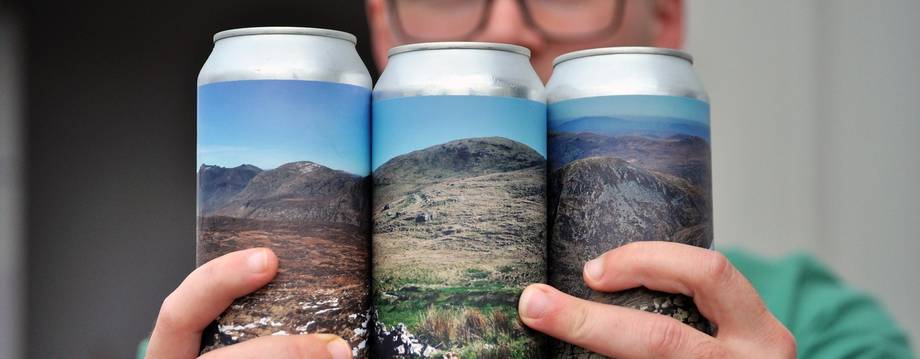
“We look across Carlingford lough and are right at the foothills of the Mourne Mountains, so we get our brewing water from Fofanny Dam, which is just up the road,” says head brewer Gareth McGivern. “We've got a big appreciation for our geographical heritage; we’re in an area of outstanding natural beauty, we get our water from there, and a lot of our beers are named after different rock climbing routes in the area. A buddy of mine is a rock climbing instructor — I actually first met him when he took me for a few lessons, now we're best mates — and he gave me this book called Rock Climbs in The Mourne Mountains, and it contains hundreds of different climbing routes. They all had great names, so it felt fitting to name our beers after them.”
Rock climbing is just the tip of the iceberg. Mourne Mountains Brewery is a regular sponsor of 26 Extreme, a local organisation that runs off-road marathon events in the Mournes. The brewery always makes sure that runners crossing the finish line have a cold beer waiting for them, partially because the outdoor community is one Gareth feels personally close to, but also because he has noticed an interesting divide among the brewery’s drinkers. “We find that your typical craft beer head likes to buy a beer, take photos of it, chat about it online, rate it on Untappd, all of which is great; they’re our outspoken customers,” says Gareth. “On the other hand, are people who drink lager and who we never hear from. That’s kind of bizarre given that our best-selling beer is a pilsner.
“We're still very much a lager drinking country here, and we sort of embrace that,” he continues. “Mourne Mist Pilsner is obviously our best selling beer, but it doesn’t really define us as a brewery. We’re just fortunate that the soft water profile here really lends itself so well to producing great pilsner; with other styles, we tweak the water profile as needed, but for the pilsner, we can just really let that fresh, spring mountain water shine.”
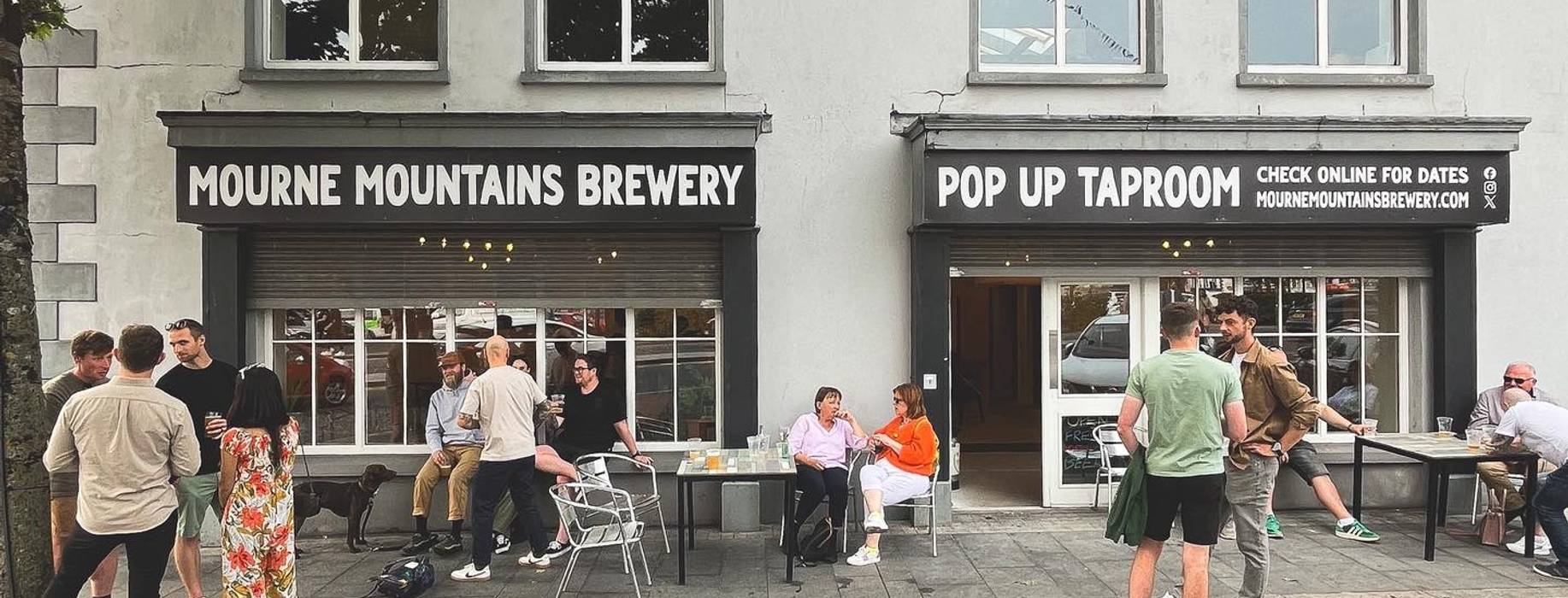
Keen to engage with drinkers of the brewery’s best selling beer, Gareth feels it's important to be present and visible wherever possible — if he can hand said lager drinkers a beer as they cross the finish line of a gruelling, 42km race, even better. The licensing situation in Northern Ireland, namely that which prevents breweries selling beer directly to consumers, is such that opportunities to engage with drinkers are rare, and therefore important. On the UK mainland, interactions between brewer and drinker can take place in a pub or taproom, but without acess to these spaces in Northern Ireland, breweries have to show up at pop-ups, stock at events, manning stands, even giving away free samples — none of which are particularly consistent or sustainable.
Mourne Mountains Brewery is in somewhat of a unique position given that owner, Connaire McGreevy, also owns a pub in Warrenpoint. While distinct businesses, the connection has given the brewery an on-trade venue in which it can maintain permanent lines, and it can host pop-up events in the pub when an occasional license is successfully secured. An occasional license allows producers to host up to 13 in-person events per year — each of which have to be approved by the courts in advance — but doesn’t allow for online sales, and doesn’t permit tastings to be a part of routine brewery tours.
The producer's license is an improvement on this (find out more about the producer's license on page 10), but doesn’t go far enough to make opening a taproom worthwhile. With access to the pub providing the brewery with some access to market — albeit limited — Mourne Mountains Brewery is looking beyond the producer's license, and plans to take aim at a full alcohol license in the years to come. As it stands, only two independent breweries in Northern Ireland — Bullhouse Brew Co and Boundary Brewing — have full alcohol licenses.
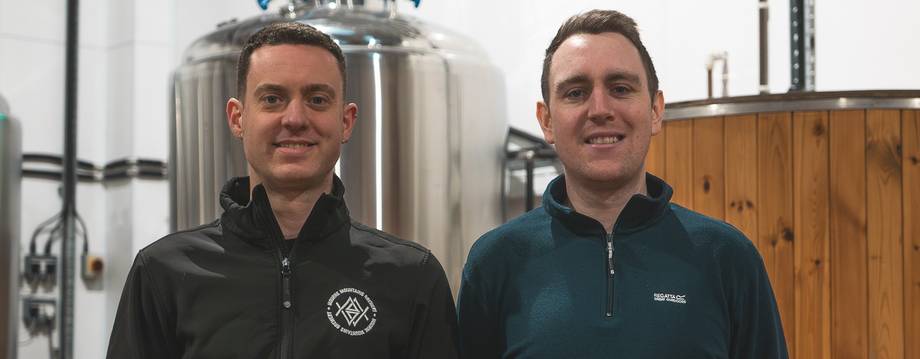
“Our main focus is on the hyper local market, which is why we’re focusing a lot on opening a taproom,” Gareth begins. “We’re trying to get local beer into the hands of local people, and drive at the importance of a town's local brewery. Friends sitting down and meeting over a pint is more important to us than conquering the world. So yeah, we have abandoned the idea of getting a producer's licence here, and we are now focused on getting a full alcohol licence for the brewery. I think if we waited 5, 10, 15 years for the producer's licence to give us a little bit more freedom, you'll see a lot of breweries dropping off. Given where the market is right now, I don't think breweries will survive unless they've got a taproom, or have somewhere they can get their beers pouring, shift some volume. You can't have a taproom unless you've got a licence, and I worry that the licence isn't going to happen.”
This might sound like a pessimistic viewpoint, but Gareth is astute in putting into perspective how precarious it is to be a producer that’s prohibited from engaging directly with the end consumer. “I think COVID was probably the biggest driver of licensing change in this country,” he says. “It became a time when breweries had nowhere to sell their beer. Obviously, with the Surrender Principle, everyone's licence is worth quite a substantial amount of money. If we give everyone licences, then existing licences lose their value, which is why we’ve got the likes of Hospitality Ulster over here trying to lobby for pubs to maintain their licence. Something needs to change if we’re to have a fair licensing structure here in Northern Ireland, but I think people are more aware of that now than they ever have been before.”
It’s also important to note that in the background of this gridlock between existing legislation and a building campaign for change, drinkers are flocking to the events that their local breweries are hosting — be it through an occasional license, a producer's license, or a full license. “You know, I always thought that our local market would be the most difficult to crack,” says Gareth. “Belfast is a city, but here we’re a collection of villages and I used to not be sure if people would get excited about craft or independent beer. But all five of the events we ran last year sold out, and to see people from such a wide demographic coming to the five events we ran last year — from all sorts of ethnic backgrounds, of all ages, we even had little elderly couples coming in — it was just really heartwarming. And, it’s encouraging to know that if we did open a taproom, it would work”.
If you’re keen to experience the incredible energy of these pop-up taprooms, or will find yourself in Northern Ireland this summer for a 26 Extreme event, make sure to keep an eye on the brewery’s social media accounts, and taste the Mourne Mountains for yourself.
Share this article
You’ve reached your limit of 5 free articles this month.
Unlock unlimited access and more

Join Beer52 and get your first month half price
-
Get your first box for £13.50 (RRP £27).
-
8 beers & 2 snacks delivered monthly.
-
Printed Ferment magazine included.
-
Unlimited access to all online content.