Changing with the times
Travel through beer history with Siren’s Time Hops from classic hops to bold experiments
Robyn Gilmour
Photos:
Siren Craft Brew
Saturday 02 May 2026
This article is from
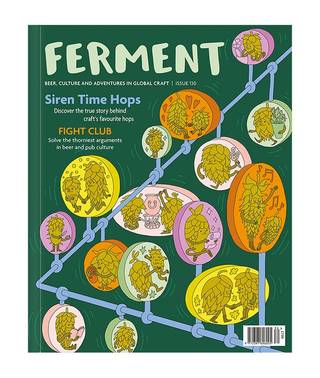
Siren Time Hops
issue 130
Share this article
"I think the idea that grew into Time Hops actually came from Steve [Hoile, barrel store manager],” says Andy Nowlan, head of marketing at Siren Craft Brew. “He was thinking about what beer tasted like at different points in history, and how that was connected to the ingredients that brewers had available to them.” The concept evolved, as concepts do; sourcing the unmodified malts used in the nineteenth century felt like a bit of a stretch, but with almost all hop varieties popular today having a traceable, time-stamped lineage, these tiny flowers felt like the perfect vehicle for time travel.
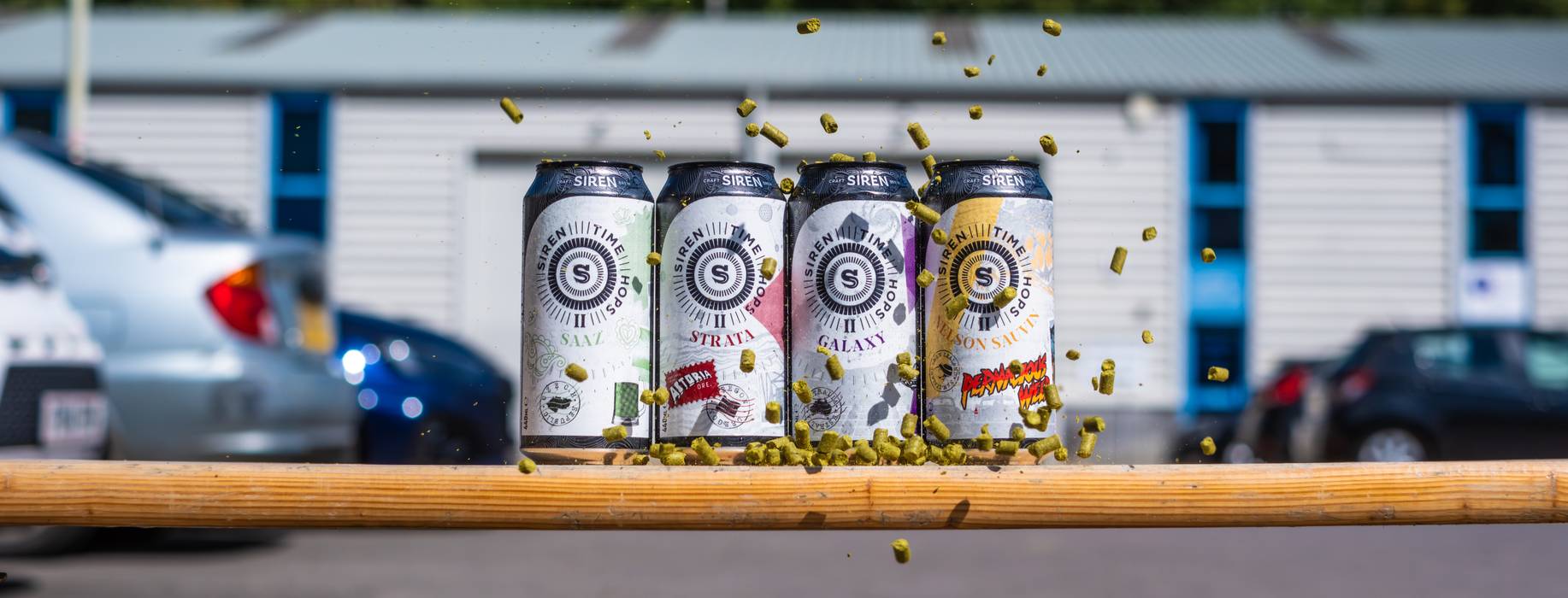
Siren’s first Time Hops series (released in 2022) superimposed now-iconic beers on that timeline, looking at the impact that Sierra Nevada’s Pale Ale had on Cascade, Bear Republic’s Racer 5 on Centennial, Russian River’s Pliny the Elder on Simcoe and The Alchemist's Focal Banger on Citra and Mosaic. Time Hops II (2025) stretched that timeline across the globe to locate some of the beer industry’s most beloved hops, namely Strata, Nelson Sauvin, Galaxy and Saaz, within the hop growing traditions of their respective countries in the US, New Zealand, Australia and Czech Republic. (read more about Time Hops x Jester hops)
Both iterations were supported by a storytelling campaign, first with Johnny Garret of The Craft Beer Channel, and then with our good friends at Pellicle magazine. Now, in an era that will likely be defined by AI, it’s more important than ever that we ask ourselves ‘why go to the trouble of storytelling?’ For Siren, curating the drinker experience and bringing fans along for the ride has allowed the brewery to experiment and be imaginative in a way that few can.
“I think it's crazy that the brewing industry has set itself up to think that agricultural products are going to be the same every single year,” begins head brewer Sean Knight. “Wine celebrates vintage because that’s what makes it exciting. We’re also in the small batch business and every batch will have slight differences within the range of what makes a beer recognisable. Obviously, we work really hard to keep beers consistent but variance is inherent in the materials we’re working with. We [Siren] have always been very open about the fact that we’re still learning — just because we get to do hop selection doesn’t mean that we’re good at it — but I think our drinkers know that we’re really good at asking questions, and networking, and that we’re really thirsty for knowledge that can help us do things better.”
We work really hard to keep beers consistent but variance is inherent in the materials we're working with
That drinker trust is the foundation on which Siren Craft Brew is built. Parting with hard-earned cash for a beer doesn’t feel flippant when you know how and why it was brewed. Understanding what decisions a brew team made when designing a recipe doesn’t just expand the drinker’s knowledge of beer and brewing, it serves a tool that connects drinker to brewer. That bond becomes particularly important when a brewery needs to change, and it’s vital that its audience closes ranks and changes with it. Sean’s point is that, in this industry, change is constantly happening all around us in ways we can’t control — crops fail, CO2 runs out, energy costs soar, tastes change — so we’re best to embrace it and hold onto each other in the process.
In this sense, it’s useful to consider Time Hops within the context of some of Siren’s other series, namely Suspended, Refractions, and most recently, Pilot. In Andy’s telling, Suspended started in 2017 and came about as a way for the brewery to experiment with ingredients as consumer tastes were increasingly turning away from bitter, West Coast styles and towards sweeter, juicier, more hazy beers. The idea was that Suspended beers would always have the same 4% ABV and one spotlighted ingredient in the core recipe would change every time the beer was brewed.
“It was about experimenting with hazy styles to increase the skill levels in the brewery, test different methods, try different hops,” says Andy. “It started with Suspended in Oats, then came Suspended in Wheat. We’ve done a lot of Suspendeds over the years, but before the pandemic, the pub sector really ran with it because it offered their drinkers something new every week but the venue could charge the same price for it every time, and they didn’t need to change anything on the till. It ended up winning us permanent lines, even though what we were sending to pubs was something different every week.”
To this Sean adds that at Suspended’s peak the brewery almost couldn’t keep up with the demand for it. “At one point we had to restrict Suspended because we didn’t have enough tanks,” he says. “Then when we got our quad tanks [a tank with four times the capacity of Siren's average, single tank] we were discussing whether we could get a new batch of Suspended through the quads every two weeks. It was absolutely flying.”
Suspended owed its popularity to regular drinkers who were interested in trying to pick out the difference between this week’s Suspended and last week’s Suspended — the series invited engagement in a way that drinkers welcomed, and the brewery capitalised both on drinker feedback and the opportunity to keep innovating.
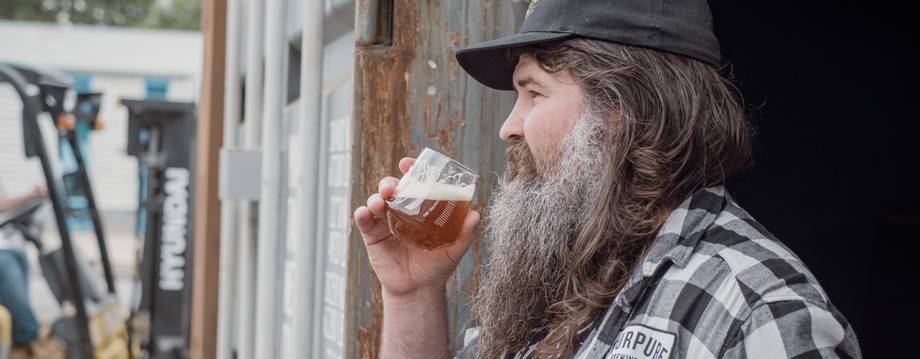
PHOTO: Sean Knight, head brewer
“It's often underappreciated how much people like to give feedback,” says Andy. “We've got an incredible database of customers, a lot of whom love it when they get a chance to tell us where we're going wrong, what we should be doing better, what they want. If you’re a brewery and you’re not using that, why not? It's telling you something. You can agree with it or disagree with it but it's telling you something. We're so lucky that we're in an industry and are part of a community that will openly give you that kind of feedback.”
Interestingly, out of Suspended came Refractions, a series geared towards more targeted development but which keeps exploration a key part of its messaging to drinkers. “Refractions started with a really good Suspended beer that we wanted to experiment with more, particularly when it came to the hops we wanted to use,” says Sean. “Suspended is a great thing because we can play around with it but it has also become its own brand. When we needed to start experimenting with more than one ingredient at a time, we needed a different vehicle to do so.”
Similar to Suspended, Refractions explicitly advertised itself as a project aimed at experimentation. “We knew we had a gap in our core range between Yu Lu, which is a 3.6% session pale ale, and Soundwave, which was 5.6% IPA,” says Andy. “We wanted to use what we’d learned from Suspended to fill that space, but we wanted to get it right, so we made it part of the story. Looking back now is weird because we actually nailed Refractions the first time around. We made four different iterations, but none were as good as the first, and that beer became Lumina.”
Today, The Pilot is the 2026 version of what Refractions was back in 2020. The long term view of this project is to develop a new flagship product but in the immediate, the goal is “to figure out how we can get a better mouth feel in a beer at 5% but also a really juicy hop expression,” as Sean puts it. “We’re playing around with some advanced hop products, some new dry hopping techniques, tweaking the water profile, and are even looking at different yeasts,” he continues. The most recently brewed version of The Pilot beer, and the one which is going into Beer52’s subscription box, is just the second iteration of this beer but will be the first time the beer is brewed as a full scale recipe.
We can look at these breweries that have gone before us and have practice forging that level of interest
The Pilot might feel quite far removed from Time Hops — after all, one looks forward while the other looks back — but to founder Darron Anley these series are two sides of the same coin. “When I think back on the first Time Hops series we were all very excited about drawing connections between the hops and beers that were brewed at a specific point in time, but I remember us struggling to make that sound that relevant to other people,” he begins.
“Something that I still find interesting about those early stories of the beginning of the craft beer revolution is how similar so many of them are. They’re all about the hops that no one wanted. No one was really interested in Cascade for a long time. So when Sierra Nevada put out a beer that no one knew they wanted, they knew they’d have to make a case for it. I think that's indicative of how the craft beer industry started. For us, Time Hops felt like a really interesting opportunity to help our customers understand that nowadays new hops come out every year but it wasn’t always like that, but again, why should people care about that? To answer that, we can maybe look back at these breweries that have gone before us and have practice forging that level of interest.”
In my mind, the answer to Darron’s question penetrates deeper than the breweries. “I think the farmers and agriculture side really appreciated the work we did,” says Darron, later in our conversation. “I went out to Yakima (read more about Time Hops x Yakima) for selection after the first Time Hops series and people were talking about the documentary. I’ve been out there again since and learned that some of the families behind the farms got together and all watched it. It’s kind of amazing that people know about the work we’ve done.”
Perhaps the reason we should go to the trouble of telling stories is that they’ll find their way to the people who care more about them.
Share this article
You’ve reached your limit of 5 free articles this month.
Unlock unlimited access and more

Join Beer52 and get your first month half price
-
Get your first box for £13.50 (RRP £27).
-
8 beers & 2 snacks delivered monthly.
-
Printed Ferment magazine included.
-
Unlimited access to all online content.