Cerveza Loba: Run with the wolves
Take a stroll through downtown Guadalajara and you might just stumble upon the city’s favourite neighbourhood brewery.
Robyn Gilmour
Photos:
Cerveza Loba
Saturday 30 May 2026
This article is from
Mexico
issue 131
Share this article
I’ve heard Guadalajara described as ‘paradise’ on more than one occasion. Known for its architecture, art galleries, food, mariachi, and tequila, Mexico’s second city values culture, tradition, and the slow, calm pace of life that’s prized by its 5.5 million residents. By some estimates, Guadalajara is also the birthplace of craft beer in Mexico, owing to the fact that the country’s first independent brewery, Minerva, opened there in 1998. Today, craft breweries in Mexico City will sell more beer by volume, but in terms of concentration, craft is more commonplace in Guadalajara.
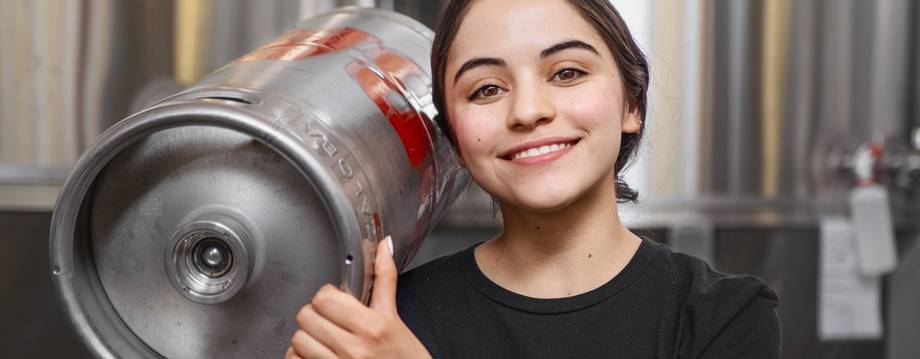
I thank Ricardo Heredia for agreeing to speak with me so early in the day — at 3pm in the UK, it’s 8am in Mexico — “don’t worry about it, I’ve been up for four hours already,” he replies with a laugh. Ricardo, Cerveza Loba’s financial director, splits his time between Morelia, where his family lives, and Guadalajara, where Loba is based. His days start early when making the commute, and on this occasion, he’s heading into the brewery to help prepare for an upcoming event, Tanque A Copa — meaning ‘from tank to cup’ — which will see the brewery fill with fans of the freshest possible beer, ready to fill their glasses straight from the tanks.
Ricardo has been working in the drinks industry for 12 years, just two years less than Loba has been a feature of Guadalajara’s craft beer scene. The brewery was founded by 11 friends in 2014, after years of dreaming; “the original team was made up of two brothers and their good friend, Alejandro Mariannes, who today is still our general manager,” Ricardo begins. “He initially wanted to launch a Mezcal brand, and asked one of his best friends if he wanted to get involved. The friend was like ‘yeah of course, this sounds amazing, but how would you feel about also incorporating beer into the offering?’ Alejo was like ‘why didn’t I think of that?’ because at that time he was already a home brewer. Eventually mezcal got left behind, the team got bigger, and they focused on small batch brewing.”
Much like Interstellar, in Toluca, Cerveza Loba started life in a residential house, with the team brewing there for four years before seeking a commercial space. “Something that was important to the wider group of founders — who were friends, family, college friends of Alejo — was that the brewery was based somewhere urban,” says Ricardo. “Mexico is a big country, and usually breweries are set up on the industrial outskirts of cities, but Alejo and his friends really wanted visiting the brewery to be a nice experience. They wanted people to be able to walk to the brewery, and discover it when walking through the neighbourhood. So they found this old theatre in downtown Guadalajara, bought the building, got some new equipment, new tanks, and that's where we are now.”
If the photos didn’t give it away, Loba’s home is incredibly beautiful, with the creativity that courses through the bones of the building powering operations at the brewery today. “We do a lot of our communication through the music and art scene here,” says Ricardo, by which he means that by simply hosting musicians, and providing artists a space to exhibit their work, creative types tend to find their way to Loba. As another example, he says Guadalajara hosts the largest literary festival in Latin America — it’s a huge deal for the city, and attracts visitors from all over the world — so Loba offers itself as a venue to host talks and seminars.
Though Ricardo has only been a part of Loba’s team since the beginning of 2026, it’s obvious he’s proud of the brewery. It’s nice to think that a brand older than his now-substantial career in the beer industry, is still going strong. I ask him how he’s seen Mexico’s beer scene change in that time.
“Well, there was a boom that started with Minerva in 1998, I would say,” he begins. “That began a series of 10 year cycles that ended with the pandemic. Then, from 2022 onwards there seems to be a new generation of breweries coming through. Loba is definitely well known here and is one of the most cherished projects here in the city, but there are many other interesting breweries here too. Cervecería Porfirio, Cervecería Fortuna, and Cielito Lindo, are a couple of big names, some of which have much bigger facilities than us, but you get the picture. Guadalajara is a very diverse city when it comes to beer.”
Ricardo reckons that craft beer did so well in Guadalajara because of the city’s rich food culture, and tourism that the nearby city of Tequila attracts. “People come to the region to try the tequila and see how it’s made, and those people who are interested in good quality food and drinks then come to Guadalajara,” he says. “In terms of Mexico more broadly? Well, that’s a lot more difficult. It's such a big country that it's geographically challenging for small projects to actually put their brands into the mind of consumers. We’re also a monopoly — or duopoly — made up of two big brands that have a lot of money to spend. That makes it very, very hard for small projects to actually penetrate.”
To emphasize his point, Ricardo uses the example of Monterrey — a city that has recently overtaken Guadalajara in size, and will soon boast a larger population. “Monterrey is very, very big, it's very industrial, and its a very high income city,” he begins. “However, it is also home to Cervecería Cuauhtémoc Moctezuma, which is now owned by Heineken and is one of the two biggest industrial breweries in Mexico. The craft beer projects that are from Monterrey definitely have not developed because the people from Monterrey still see this big brewery as the brewer of the city. It's very difficult for the small projects to actually get a hold of the audience, and that’s not the case in Guadalajara. It’s interesting to think about.”
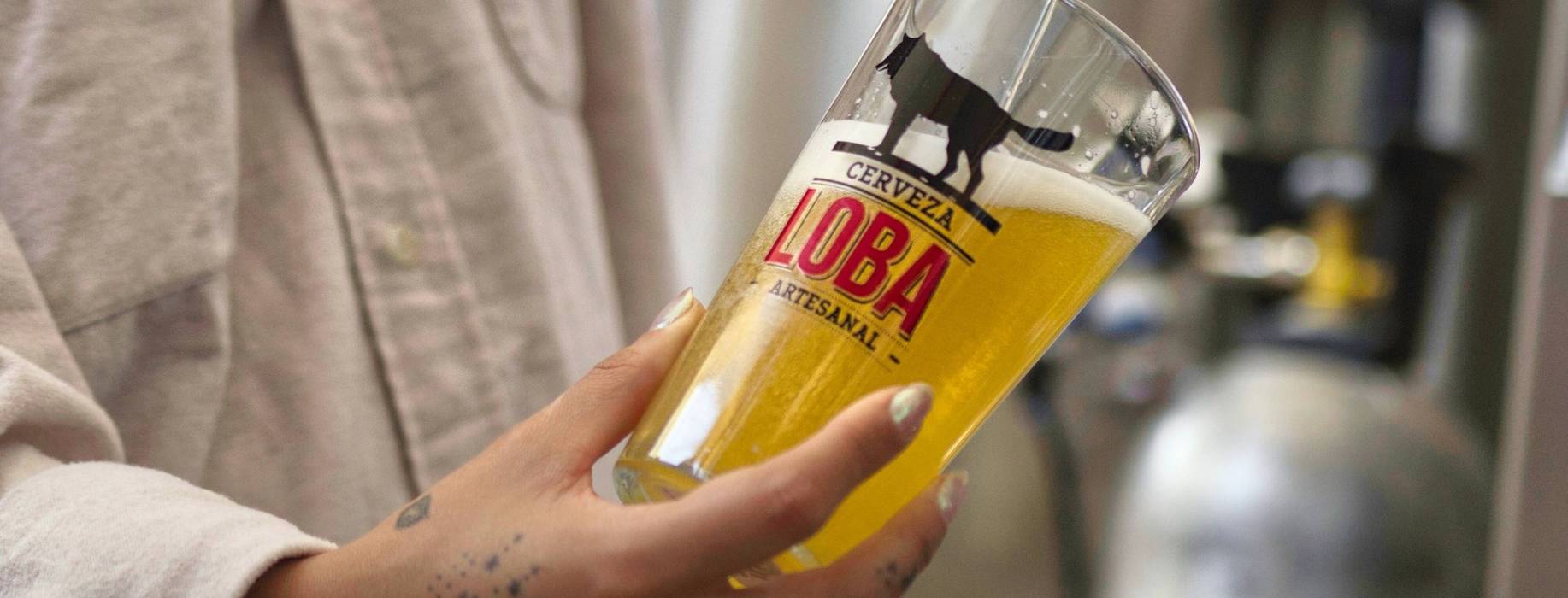
Ricardo would be the first to say that if people want to only drink lagers, he supports them — “here in Mexico and in America, it’s lager land” he says. Loba has two lagers in its range — a Neo-Mexican lager and a Pre-prohibition lager — to appeal to these drinkers, but the rest of its portfolio is designed to be diverse and always easy drinking. Key players in the range include a session IPA, an IPA made with Mexican malts, a porter, and Ricardo’s favourite; a gose. Given the abundance of incredible fruit available all over Mexico, and the country’s love of a salt-rimmed glass; it makes sense that Loba’s range would include a gose.
“It’s surprisingly not a super popular style here,” says Ricardo. “Paraíso, is normally brewed with guayaba [guava] but at certain times of year, also includes tuna [the fruit of the prickly pear cactus]. When tuna is used, the name of the beer changes to Sueno Rosa, meaning pink dream, to mirror the beer’s vibrant colour. It’s really something special.”
Explore Guadalajara city guide according to Cerveza Loba commercial director, Ricardo Heredia.
Share this article
You’ve reached your limit of 5 free articles this month.
Unlock unlimited access and more

Join Beer52 and get your first month half price
-
Get your first box for £13.50 (RRP £27).
-
8 beers & 2 snacks delivered monthly.
-
Printed Ferment magazine included.
-
Unlimited access to all online content.