Cervecera Hércules: Part of the fábrica
What started as two brothers’ passion project has grown into a neighbourhood hangout celebrating local history.
Robyn Gilmour
Photos:
Cervecera Hércules
Saturday 30 May 2026

This article is from
Mexico
issue 131
Share this article
I get the impression, speaking to Alejandro Dominguez and Josh Brengle — export and fermentation lab manager, and head brewer respectively — that anyone who works at Cervecera Hércules has a unique perspective on time and history. When they speak about the brewery, and indeed about Hércules, a centuries-old suburb in the city of Santiago de Querétaro, each wears a subtle smile, like they’re in on a secret.
“It’s quite difficult to describe,” says Josh. “Over time I’ve learned to explain less, because whatever I say doesn’t do this place justice. It’s easier to let people get here and experience it for themselves. It often happens that friends, brewers, musicians arrive here and no matter how much you’ve explained to them, they’re like ‘why didn’t you tell me?!’” To this, Alejandro adds “you need to visit to really feel what's happening there; the place has its own magic.”
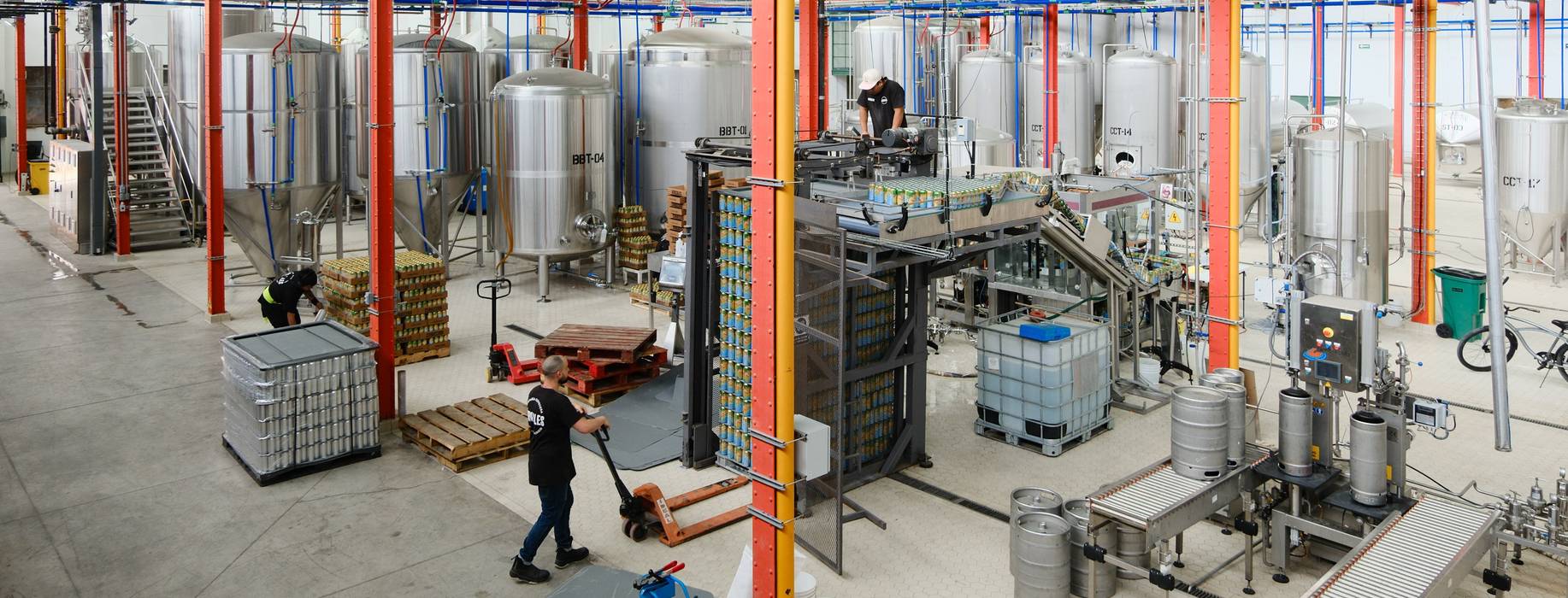
The building that Cervecera Hércules has called home since 2011 — a stunning expanse of baroque pillars and arches, now crouched over tanks, barrels and a foeder — dates back to the 16th century, when Spanish colonisers built it as a mill for corn and wheat. Modern day Santiago de Querétaro, retains much of the architecture and infrastructure built during that time, though buildings like that which the brewery now calls home, have lived many lives in the centuries since. Cervecera Hércules’ home was a convent after it was a mill, then in 1846 became a textile factory that played a pivotal role in Mexico’s industrial revolution.
“The textile factory was founded by a guy called Cayetano Rubio,” Alejandro begins. “He was a Spanish guy who brought machinery and equipment from England. He actually imported it to a place called Tampico, where there is a port, and he built a road from there to Hércules, bringing with him all the equipment, all the people that installed it, and trained others how to use it. He set up the machinery in this factory, making it one of the first textile factories in the country, and in Latin America. The industrial revolution in Mexico started in this place.”
This factory would be the first place in the city to have electricity and telephone lines. Alejandro points out that there’s even a clause in the Mexican Constitution pertaining to workers' rights which was added because of the movement that began in Hércules, and the neighbouring suburb of Carretas. “This is a really huge place, not only in terms of physical space, but the history and the importance of everything that has happened there,” he says, referring to the building itself.
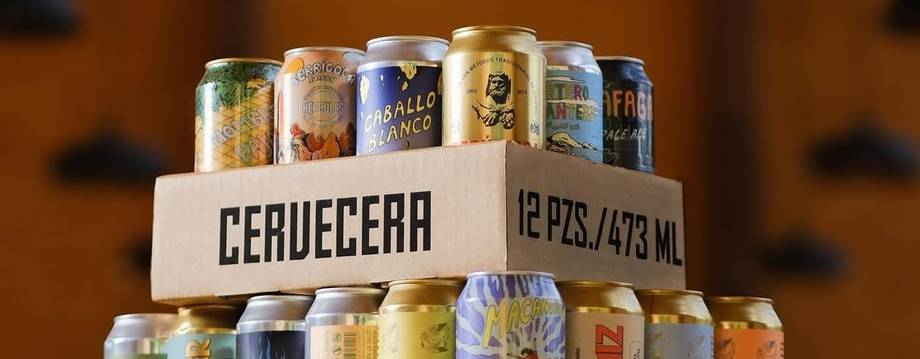
During Mexico’s industrial revolution, the neighbourhood of Hércules functioned as its own town, being mostly inhabited by the factory’s workers, which numbered more than 3,000 at one point. “They used to call Hércules the Hermana Republic — the Sister Republic of Hércules,” says Alejandro. “That’s why we called our Czech pils Republica, it felt like a nice crossover between the Hermana Republic and the Czech Republic.” Another tribute to the neighbourhood’s industrial past is the brewery’s English Pale Ale, named Spinning Jenny after the loom that unlocked the possibility of large-scale textile production across the world.
It’s perhaps unsurprising, given Cervecera Hércules’ reverence for the historic site it calls home, that unlike many breweries founded in 2011, inspiration for Hércules comes more from Europe than across the US-Mexican border. After all, Hércules has been a destination for European migrant workers for centuries, all of whom brought with them a thirst for the taste of home, and Hércules and Carretas are still largely populated by families with connections to the old factory. Across the brewery's range you’ll find a full selection of Czech, German and Austrian lagers, bock biers, English ales, Belgian saisons, Baltic and imperial porters, a whole wild fermentation program, as well as a smattering of modern IPAs, pale ales and hazy beers.
Alejandro says that this initial interest in beer from faraway places came from the brewery’s founders, twin brothers Luis and Carlos Gonzalez, who love to travel, and it was only once they found a home for the brewery in this historic factory that their interest in European styles took on new meaning. What started as a personal passion project has evolved into a social hub, that’s telling the history of its local neighbourhood through beer.
“The mothership here is this giant beer garden that we opened in 2018, and can seat up to 1200 people,” says Josh. “It's very family friendly, it’s very diverse, it doesn't discriminate based on age or anything like that. You don't even have to drink to be here; some people just come to have food with their family and enjoy the ambiance. I think that puts us in a bit of a bubble, because it means, unlike some places in bigger cities, we’re not solely reliant on beer geeks. We have other venues in Mexico City that will appeal more to those clients, but the majority of our business is done right here in our beer garden.”

He also notes that “we’re talking about a country with over 60% poverty, and it's cool to think that people who might not get a chance to travel to Bavaria and see a wooden serving barrel get tapped, or try a cask beer, can come here and access culture from other parts of the world that they might not have the chance to otherwise.” Complimenting Cervecera Hércules' focus on European styles, is its celebration of Mexican flavours and ingredients.
“We’re not too far from Mexico City which, you know, is a very influential Food City,” Josh continues. “We have access to a lot of different raw materials locally. We’re in wine country though vineyards around here are pretty new — 60 years old tops, I’d imagine. We like to work closely with them when we can, whether that looks like using pomace, wine, or must. We've probably messed around with wine more than anything else, but we’ve used local fruit additions in our wild beer programme. For instance, we used capulins, which are like a small Mexican mountain cherry, to make what we’ve been calling our own Mexican kriek. We try to source our corn and rice from here; I mean, there’s probably 10,000 corn varieties in Mexico, so we source any corn we use from Querétaro and the surrounding states. We can’t always get our rice from here but when we can, we buy it from the state of Morelos, which is just a couple states over. They're kind of known for the rice there.”
These two-pronged approaches; attracting tourists and catering to locals, making European styles and using endemic ingredients, is paying dividends for Cervecera Hércules. In 2023 it was able to open a 40 room hotel next to the brewery, which has only deepened the allure of Cervecera Hércules.
“People sometimes come to Querétaro and stay at the hotel for a week, and they don't leave the property,” Alejandro laughs. “We have the brewery, the gigantic beer garden. We have a saloon that’s kind of like a concert and dance hall where we do events there almost daily; we have karaoke Mondays, cinema Tuesdays, Cuban music Wednesdays, concerts on Thursdays, Fridays we do salsa and cumbia lessons and then open dance.”
“It’s like a Bermuda Triangle kind of thing,” Josh adds. “I mean, it even happens to people coming to work or collab with us. They all say ‘hey, I’m going to hit the road tonight’ but then we have lunch, enjoy a couple of beers, and then they wake up in the hotel the next morning wondering how that happened.” I guess that’s the magic of Hércules.
Explore Santiago de Querétaro city guide according to Cervecería Hércules export and fermentation lab manager, Alejandro Dominguez.
Share this article
You’ve reached your limit of 5 free articles this month.
Unlock unlimited access and more

Join Beer52 and get your first month half price
-
Get your first box for £13.50 (RRP £27).
-
8 beers & 2 snacks delivered monthly.
-
Printed Ferment magazine included.
-
Unlimited access to all online content.