Beak Brewery: This land was made for me and you
That people still travel and gather in the name of good beer, is reason enough for Beak Brewery to be optimistic about the future.
Robyn Gilmour
Photos:
Lily Waite-Marsden
Saturday 27 June 2026
This article is from
British Summer Time
issue 132
Share this article
Despite the distance, there’s a striking similarity between Ilkley and Lewes, the town where Beak founder Daniel Tapper grew up, and that which the brewery now calls home. Both are small, beautiful towns inhabited by fiercely creative people, and so invariably enjoy a thriving independent scene. “I think the UK does small, vibrant towns really well,” Danny begins. “Here, you have the influence of Brighton, which is 10 minutes away, and London, which is like an hour direct on the train. So in many ways, Lewes is very provincial and has all these really cool, charming folk rituals and a really good sense of community, but is also quite cosmopolitan in its own way.”
In other words, there was no better place to take out a ten year lease on an industrial unit, and accept delivery of a quarter of a million pound brewkit, just two weeks before COVID forced every pub in the UK to close for the first time in human history. But that’s getting ahead of ourselves; to fast forward to 2020 would be to cut short Danny’s journey from the north of England, to its southern coast.
In his own words, Danny “lacked the imagination” to study sociology further afield than nearby Leeds University, but spent some of the best years of his life there, only moving to London when he bagged a job with The Guardian in his early twenties. There, he worked on the newspaper’s multimedia desk, covering music, film, and culture, before moving into food and drink. “During that period, I obviously got really into eating and drinking, but compounding that, I was living in Bermondsey when The Kernel was setting up. I remember Evin [O'Riordain, founder of The Kernel] was just this one-man band, making and selling The Kernel’s beer. I remember trying it and thinking, ‘wow, I have no idea what this tastes like’.”
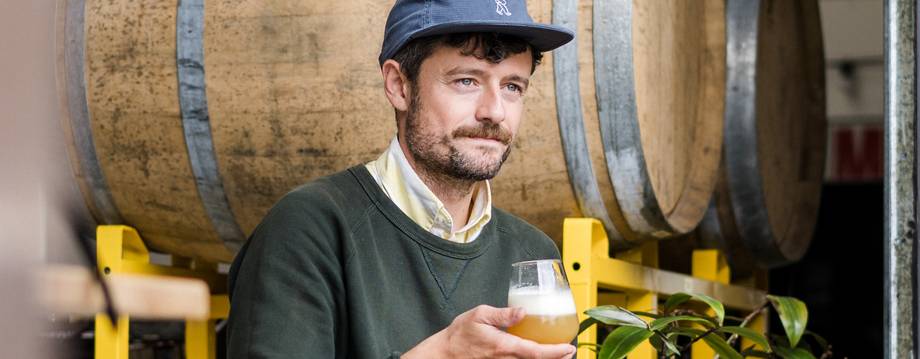
PHOTO: Daniel Tapper, Beak founder
As Danny recalls, these were the days when sourdough and third-wave coffee were coming up in the world — it was an era of taking simple food and turning it into something spectacular. Glorifying and glamourising the ‘labour of love’ approach to everyday eating made London in 2009 the perfect place to experiment with homebrewing. “I was buying all my hops from The Kernel, and Evin was super helpful in terms of home brew advice, telling me how many grams per litre to use, all that good stuff,” says Danny. “So I just home brewed for ages, and used a lot of geeky online forums to teach myself how to brew.”
In the meantime, Danny completed his MA in journalism at City St George's, University of London, and began freelancing in the world of food and drink magazines. Whether or not one loves their job, I maintain the belief that anyone who works on a laptop dreams of making or doing something physical or tangible in the world, and Danny only supports my theory. Given the climate of London in the 2010s, Danny was drawn to the idea of opening his own coffee roastery, distillery or brewery. In the end, fond memories of growing up in and around pubs in Ilkley swayed him towards the world of beer.
“Obviously, I didn't have the money to open a brewery, so I started brewing nomadically at places like Northern Monk and North Brewing, and then also at various different outfits down south,” says Danny. “It never really made any money. It was just like a way of building the brand slowly and then eventually, I got to the age of 35 and — even though that’s still quite young — just felt like it was now or never, and I needed to do it.”
And so, joined by Beak’s first head brewer, Robin Head-Fourman, Beak brewery was commissioned in March of 2020, just in time for Boris Johnson to mandate the closure of every pub in the UK. “What were the chances?” says Danny, shaking his head. “Not even the Second World War closed down the pubs. Yeah, that was scary.” While a slow start to life wasn’t in Danny’s plan for Beak, it didn’t get in the way of the brewery earning a reputation as one of the country’s most cutting-edge producers of New England IPA.
With Robin having joined Beak from Burning Sky, a legend-league UK brewery, he and Danny were ready to hit the ground running in terms of quality, even if they had unexpected challenges around distribution to navigate. Robin and Danny were aligned in their admiration for hazy styles, and both had clear memories of the moment that the haze craze took hold. “It’s almost a cliche now to say that you love hazy, hoppy beer, but people forget how much of a revolution that was in the beer world,” says Danny.
“I'd say it was on a par with when Evin at Kernel was creating those first really hop-forward, bottle-conditioned ales. I remember when Cloudwater were releasing their first double IPAs in that New England style — I think they were probably the only brewery in the country doing those beers at that time — and Verdant quite quickly after putting their stamp on the style. It just felt like another big leap forward in beer, when people literally couldn't believe what they were tasting.”
Of course, enjoying these beers is one thing, making them is another, and making them well is a whole other conversation. In Danny’s telling, Beak spent close to two years perfecting its signature when it came to the hoppy hazy style. He agonised over how to prevent haze dropping out of suspension if the beer was sat on a shelf for a while. How could they make it brighter, more yellow in colour, and really pop on the nose?
“We’ve just made so many tiny, incremental tweaks over the years,” Danny begins. “The recipe is just 1% of the final product, and so much of our beer is a result of tiny changes and improvements. We have a very simple Malrex kit, made in the UK, in Derbyshire, with almost no automation. But one of the things we made sure we had was an oversized mash tun so we could do big beers, and lots of double IPAs. The other thing we installed really early on was a whirlpool, as we add 99% of our hops post boil. We've also got a reverse osmosis filter for water treatment, as we’ve got quite hard water down here.”
Beak’s obsession with fine-tuning has attracted like-minded brewers and suppliers from across the globe. That and the fact that “Mark is the only brewer in the country without a budget,” Danny laughs, referring to Mark Cotterell (ex Cloudwater) who inherited the role of head brewer from Robin in 2024. He’s joking, but also not joking.
“Listen, we’ve never been a volume-led brewery, our focus has always been on the end product,” says Danny. “We’re very lucky that, once we’ve added our margin, people support us by buying the beer. I think that's proof that people are willing to pay for a really special sensory experience.” That, by the way, is not an overstatement. As a brewery producing just 5,000 hectolitres a year, it’s unusual that Beak is invited out to Washington State for the selection of Citra, Mosaic and Idaho 7 hops. US-based hop supplier, Yakima Chief, usually reserves that offering for breweries buying hops in enormous quantities. That an invitation is annually extended to the team at Beak speaks to how well they showcase the hops chosen.
“We have a really close relationship with Yakima Chief. They support our annual festival, and have supported us as a brewery since day one,” says Danny. “I think they know that it's not all about making money. It's about showcasing hops in the best possible way. That's why I'm in this industry. I think people will always love beer, but when you can make something really special, it's just magic.”
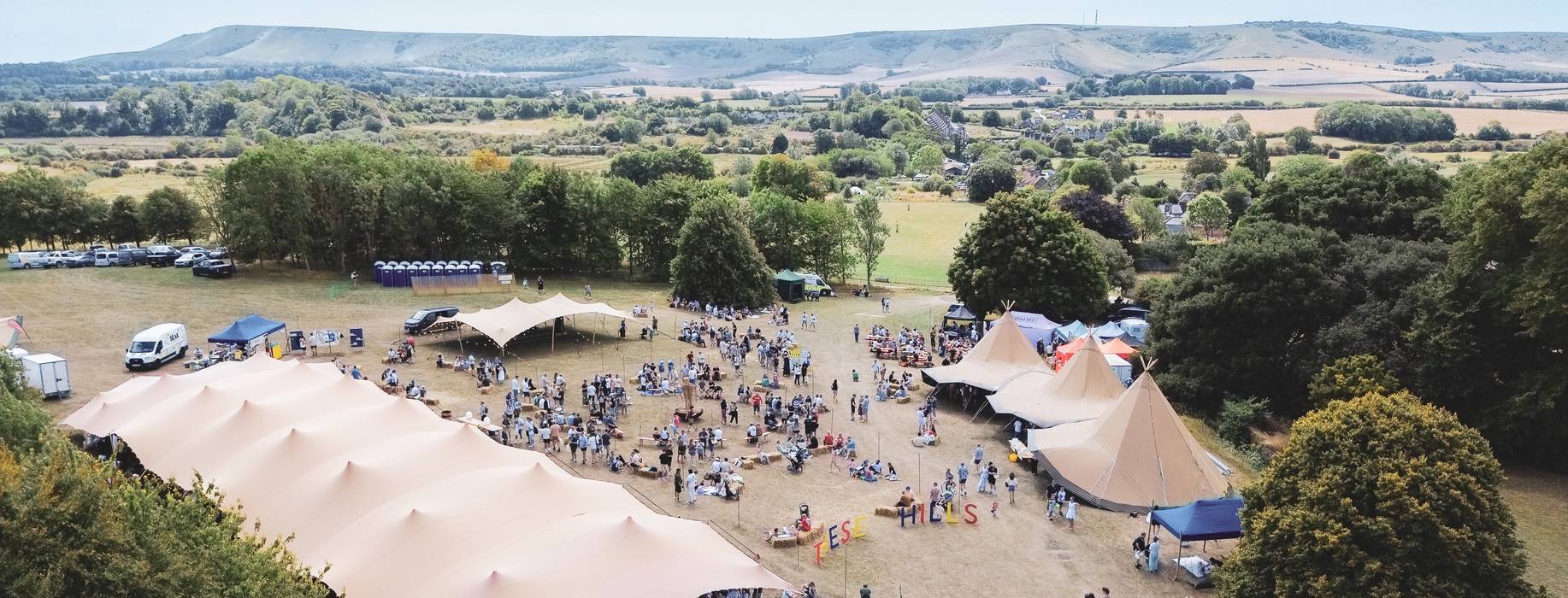
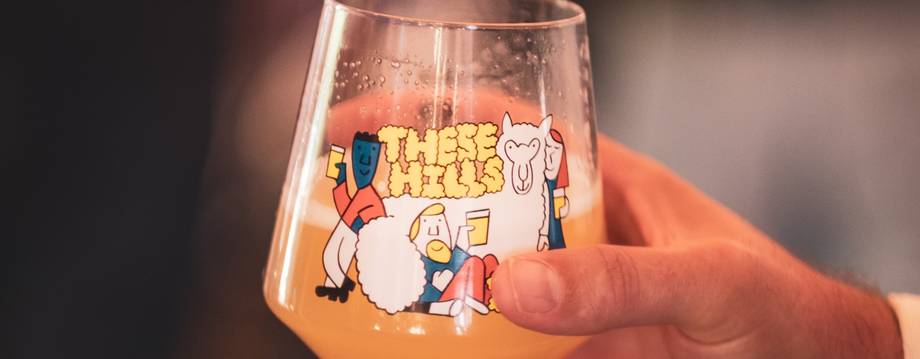
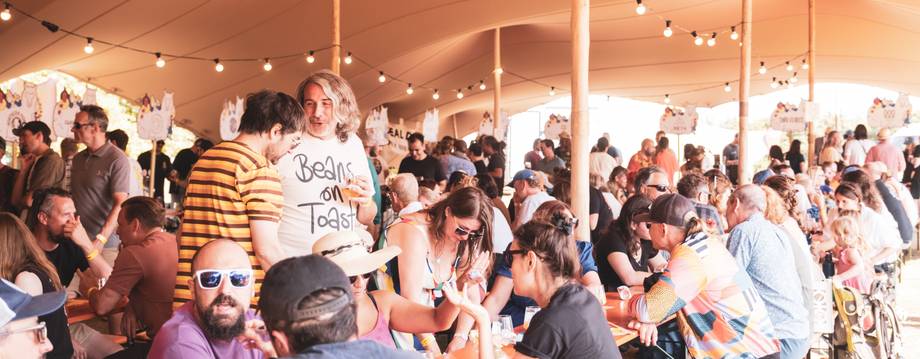
The annual festival of which Danny speaks, These Hills, is about to celebrate its fifth year running. “We decided to organise a beer festival when we were just two years old, which felt like a bit of risk, but it’s something the team wanted to do. We thought, ‘let's do it outside, so it's safe. We live in a beautiful part of the country, we should show that off’. So many beer festivals are inside, in halls, they’re quite stuffy, so we wanted to open it up, and make it more of a summer fête vibe. We decided to call it These Hills because we're surrounded by the South Downs national park here, and the hills really envelop the whole town on all sides.
“That first year we didn't really know what we were doing. We just winged it, invited people and amazingly, loads of our heroes in the brewing world said ‘yes’. Suddenly, we have this incredible opportunity to curate a dream bar with our dream brewers, and it just felt like such an incredible honour to have people from Finback, Deya and Track come to our little town. You know, seeing brewers who had travelled from New York drinking cask beer in our local pubs was just so dreamy.”
Dreamy indeed. Today, These Hills takes place on the Glynde estate, next door to the incredible Glyndebourne opera house, which is just an hour’s walk from the brewery through the national park. The brewery puts up huge marquees and invites 3,500 people to join them for an evening of great beer, wine, food, and company in this tiny, but unbelievably picturesque corner of East Sussex. For Danny, These Hills is living proof that “there’s still a lot of people out there who care deeply about beer. It’s a difficult time at the moment because of the cost of living crisis, but somehow that doesn’t feel like it’s going to change the long term trajectory of good beer. Now that we've tasted how good it can be, I don't think there's any going back. I think that's reason to be optimistic.”
Share this article
You’ve reached your limit of 5 free articles this month.
Unlock unlimited access and more

Join Beer52 and get your first month half price
-
Get your first box for £13.50 (RRP £27).
-
8 beers & 2 snacks delivered monthly.
-
Printed Ferment magazine included.
-
Unlimited access to all online content.