Somer Valley Brewing: Somer-time, and the living is easy
Meet the Somerset-based brewery taking provenance to a whole new level.
Robyn Gilmour
Photos:
Somer Valley Brewing
Saturday 27 June 2026
This article is from
British Summer Time
issue 132
Share this article
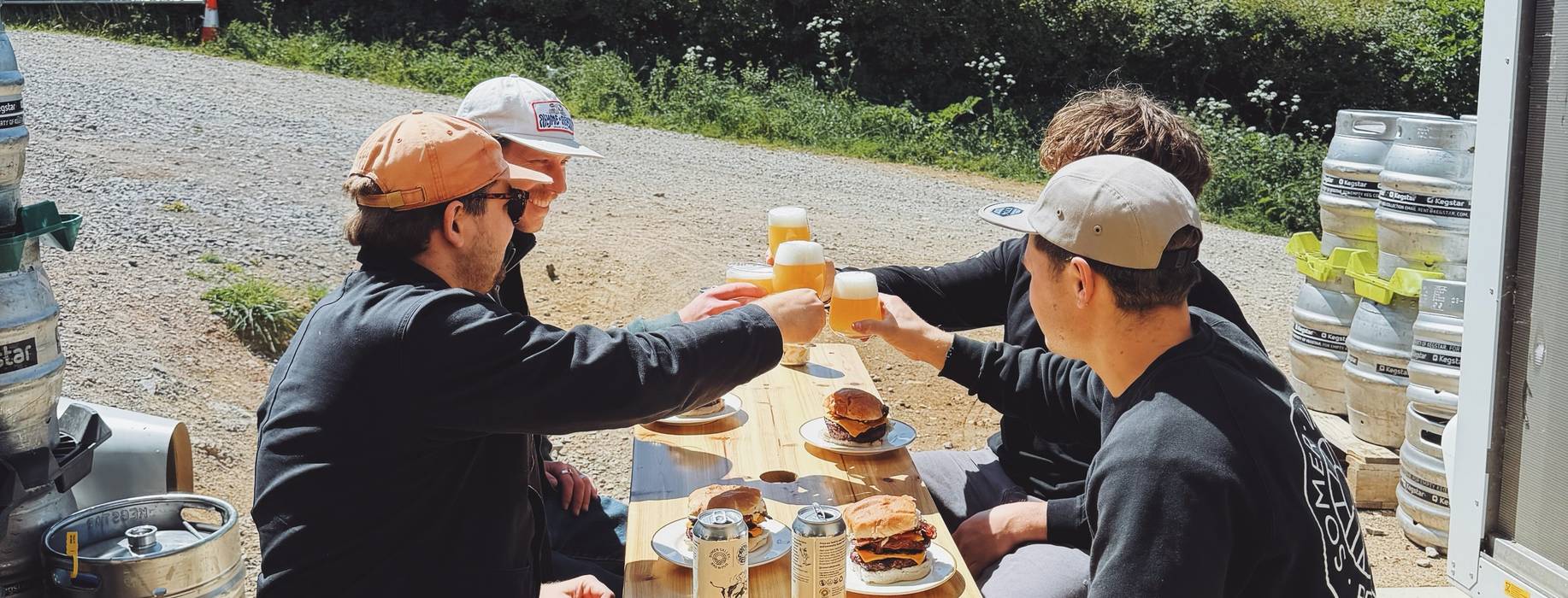
There are several points in time that one might consider the start of Somer Valley Brewing’s story. The now Bath-based operation began contract brewing in Bristol, in 2023, securing its own brick-and-mortar home in 2025. This would be a typical brewery origin story, if not for the fact that before Somer Valley Brewery had its own premises, it was brewing with its own supply of malted barley. Brewery owner, Chris Watt, quit his career in the pharmaceutical industry to buy a farm in the Somer Valley, just outside of Bath, in 2018. Chris's dad was a cattle farmer, so acquiring a herd of his own felt like following in his father's footsteps. It wasn't long, however, until Chris began to forge his own path, adding barley to Knoll farm’s portfolio. With pressure on agricultural industries increasingly requiring that farms diversify, a brewery and on-site butcher shop seemed like a natural next-step.
In 2021 Chris planted the first field of Craft, a two-row winter barley, since which time operations have expanded to the extent that the farm is expecting to harvest between 90 and 130 tonnes of barley at the end of this summer. “We also have a bore hole under the brewery, so our USP is that — between the barley and the water we use — 98% of the weight of your pint comes from our land,” says head brewer Chester Ellis. “Provenance is a really key part of our business.” With this in mind, the Somer Valley team are also exceptionally proud to work with Warminster Maltings — the last maltings in the UK to exclusively floor malt — on the production of Somer Valley’s malt.
“We normally get our barley kilned at Warminster to 2.1 EBC [European Brewery Convention, the unit for measuring roast level] so it's really light and bright,” Chester continues. “That allows us to play around with single malt beers — we’ve got a couple of those, which are made with 100% our barley — but also gives us a really nice, extra pale base for layering in other adjuncts into our sort of hazier beers, and then in our stouts and porters and all that stuff too. It’s usually 80% of our base malt but it features in every single one of our beers in some way.” That includes the dark lager that New Bristol Brewery and Somer Valley Brewery recently collaborated on, in celebration of their longstanding friendship.
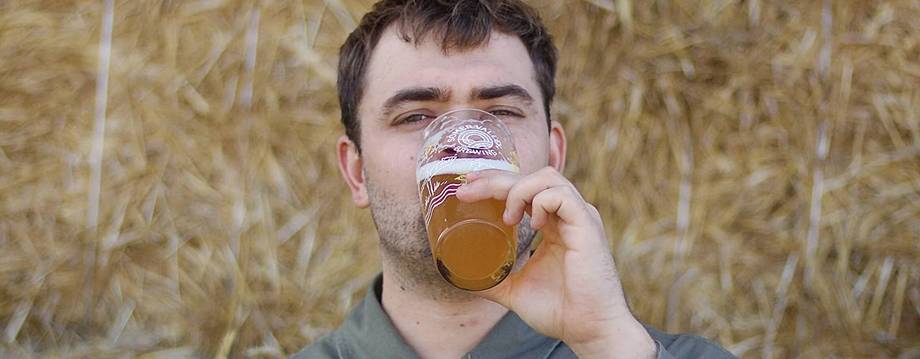
PHOTO: Chester, head brewer
Chester says that for every ten tonnes of barley sent to Warminster, they received about eight tonnes back. Though working with a bigger maltings might result in a higher yield, for Somer Valley, it’s more important that both farmer and brewer have complete visibility over the malting process, and are guaranteed to receive malt made only from their own barley. Believe it or not, this isn’t a given when working with bigger maltings, which have larger tanks to fill, and more moving parts. Traditional, small-batch maltsters are a better fit for Somer Valley’s needs, and Chester can’t overstate the importance of that relationship, or speak more highly of Warminster.
Of course, there is also a price to pay for the provenance that comes both with growing one's own barley, and working with a traditional, small-batch maltster. It’s not only yields that aren’t guaranteed; extraction rates will vary season by season, requiring constant recalibration of methods and recipes. Variability is only becoming more common as our weather patterns prove increasingly unpredictable. “Some cycles we will get better extract so we can use less, and that increases our yield,” Chester begins. “Other times we have to use a little bit more barley, which increases our costs. But, you know, that’s all to say we just have to be a little bit more reactive, and pay attention to the small things. Every batch we get back from Warminster comes with a certificate of analysis, which really helps.”
With all the cost, care, and attention poured into this focus on provenance, it’s little surprise that Somer Valley Brewing is careful with where it chooses to sell its beer. “Our way of working does come with a little bit of extra cost, so we try to work with landlords and pubs and bars that appreciate what we're doing,” says Chester. The brewery sells across cask, keg, and can, but interestingly, serves most of its beer through tanks. Somer Valley’s taproom, The Welly, in Bath sells about 25% of the brewery’s output, serving it straight from a tank, while another key client, burger restaurant Beefy Boys, keeps serving tanks above the bar in its Oxford and Bath locations. “They use a bag-in-tank system, so less gas is used, and compressed air pushes the beer through the serving system. That means the bar saves money on gas and is more beneficial for the environment, which is obviously a big part of our story.”
Somer Valley has also recently formed a relationship with distributor Pivovar, which will allow the brewery access to drinkers in the north of England. While you’re unlikely to find its full and extensive range of styles outside of Bath, a bottle shop near you might soon be selling a true taste of Somerset.
Share this article
You’ve reached your limit of 5 free articles this month.
Unlock unlimited access and more

Join Beer52 and get your first month half price
-
Get your first box for £13.50 (RRP £27).
-
8 beers & 2 snacks delivered monthly.
-
Printed Ferment magazine included.
-
Unlimited access to all online content.