Beyond Belief Brewing: Trash to treasure
Meet the brewery turning food manufacturing waste into beer with purpose.
Robyn Gilmour
Photos:
Beyond Belief Brewing
Saturday 27 June 2026
This article is from
British Summer Time
issue 132
Share this article
Hertfordshire-based brewery, Beyond Belief, has an unlikely origin story — hence the name I guess. Co-founder, Freddie Ugo, was in the middle of his postgraduate degree in conservation science, when COVID changed everything for his family’s pasta factory. Lockdown initiated wide-spread panic-buying of non-perishable goods, meaning demand for pasta suddenly skyrocketed. The factory went into overdrive and, by extension of producing more pasta than ever before, found itself with more waste than it could process and dispose of. Crucially to Beyond Belief’s story, this waste didn’t come from pasta that was fit for human consumption, but largely consisted of off-cuts and trimmed ends from the manufacturing process.
“We were generating about 60 tonnes a month, which is about 60 pallets,” says Freddie. “We were sending it for processing as animal feed or anaerobic digestion, but in cases where our waste contractor couldn't pick it all up, it was going to landfill. Yes, it wasn’t pasta as you might know it, but it still had nutritional value, so to think of it just rotting on the floor didn’t sit right with us.” While trying to think of ways in which the waste could be usefully reinvented, Freddie and his brother Charlie — now CEO of Beyond Belief — tried fermenting it. What the brothers discovered would not only allow them to make beer with surplus pasta, but to collect and process all kinds of food manufacturing waste, so that it could be effectively used in the production of beer.
“We didn’t know much about beer at that time, but we bought some brewer's yeast, we got some off cuts of pasta, we boiled it, mashed it a bit, drained it, and then put it in an old ricotta cheese bucket with some yeast and left it alone for a couple of weeks,” says Freddie. “When we tested it, and found we had actually produced some alcohol using just fermented pasta, it totally blew our minds.” The brothers bought a homebrew kit and started experimenting with styles and methods, and in the process, “modified the way that we process the surplus pasta to achieve better sugar extraction. What we discovered was that we could apply that knowledge to loads of other forms of surplus as well.”
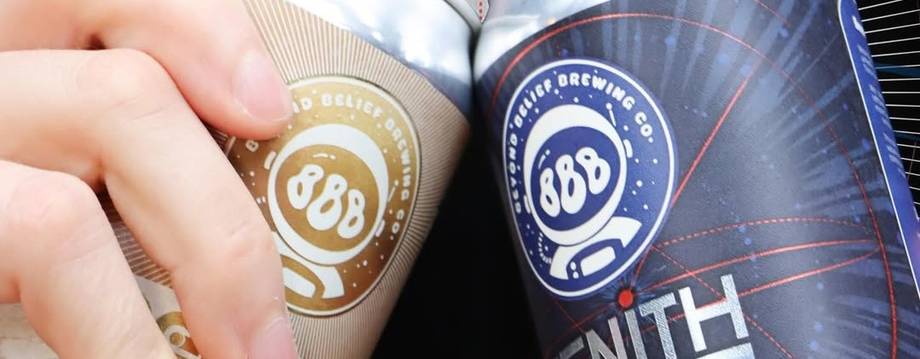
‘How do they do it?’ I hear you ask. I put the very same question to Freddie, only to be informed that such information is protected IP. “What I can say is that in food manufacturing — which is where we source a lot of our waste from, though we also source from farms, restaurants and hospitality as well — all food is processed, right?” says Freddie. “When you process food, the sugars in it start to break down. When you’re making malt, you put barley in water, and let it germinate to release amylase. Right? That works for barley, but a different process is needed if you want to extract sugar from pasta, or sponge or flapjacks. What we figured out is the best form of processing, to achieve the maximum amount of fermentable sugar from each form of surplus that we now use to produce Beyond Belief Beer.”
But to get onto other forms of surplus is getting ahead of ourselves somewhat. Once Freddie and Charlie had mastered alcohol extraction from pasta, they began contract brewing — which introduced a whole other level of complexity. Needless to say, brewing with pasta is a recipe for clogged pipes and a very unhappy brewhouse, so the pair went back to the drawing board, this time to experiment with how it could physically modify the pasta waste to be more brewery friendly. Once again, in the process, they made an incredible discovery.
“Barley is perfect for extracting sugar from, because it's not so small that it clumps together to form a flour when mashed, but it’s not so big that the sugar is inaccessible to your hot liquor” says Freddie. “Basically, it has a nice trade off between surface area and volume, so you can get a good run off. What we realised is that if we modify the shape of the surplus pasta by running it back through the extruder, we could get the most sugar out of it as possible. Once we’d figured out how to do that for pasta, we learned how to do something similar for other surplus materials that you can’t extrude, such as sponge, for example.”
Through this combination of mechanical and biotransformative processes, Charlie and Freddie managed to boost sugar extraction from the surplus pasta from 20% to 86%, making it as good a source of fermentable sugar as barley. The catch, of course, is that once fermented, a lot of this surplus doesn’t taste as good as barley-based wort, so a percentage of Beyond Belief’s beer usually includes a traditional malt. Freddie doesn’t beat around the bush when conceding that ground-breaking beer — no matter how socially and environmentally impactful — needs to taste good to be commercially viable.
Working this way means Beyond Belief doesn’t need a separate facility to process surplus in a way that makes it brewery friendly
Once Freddie and Charlie had the beer all figured out, all that was left was to secure their own brewery, a dream that came to fruition in late 2025. While a facility of its own gives Beyond Belief more opportunity to experiment, the brewery is just one arm of the overall business and the opportunity to grow looks largely at the potential to collect new forms of surplus from all kinds of food manufacturers. In fact, once Charlie and Freddie had fine-tuned their work with surplus pasta, they were awarded a government grant that would allow them to continue research and development, and adapt their in-house framework for reprocessing surplus waste, so they could work with a wider variety of food manufacturers.
“I think the government really saw the grant as an opportunity to help a new business grow, but also to help other UK businesses reduce their waste in line with Net Zero commitments and food waste reduction commitments,” says Freddie. Perhaps the most ingenious part of Beyond Belief’s framework for reprocessing surplus is the fact that it works with food manufacturers to utilise their own existing equipment, machinery and processes to re-purpose the surplus. Working this way means Beyond Belief doesn’t need a separate facility to process surplus in a way that makes it brewery friendly, and its suppliers can work with what they have to meaningfully dispose of unavoidable waste.
To take operations even further, Beyond Belief is now also looking at how it can expand its suppliers from food manufacturers to bars and restaurants, though this poses a new set of challenges. “When you work as a manufacturer of any kind of food, you need to make sure that your raw material supply is super consistent, and there’s no risks of cross contamination or physical or chemical hazards making their way into the supply,” says Freddie. “Their waste has to be well segregated, and perfectly mapped out in all their documentation so it's fully traceable. Because we know how to do that, we can start applying it to working with restaurants — where they might not necessarily have that level of technical kind of compliance — and help them get to the point where they can segregate their waste to the level that we need.”
With the sky seeming to be the limit of what’s possible for Beyond Belief, this brand new brewery is one to keep an eye on.
Share this article
You’ve reached your limit of 5 free articles this month.
Unlock unlimited access and more

Join Beer52 and get your first month half price
-
Get your first box for £13.50 (RRP £27).
-
8 beers & 2 snacks delivered monthly.
-
Printed Ferment magazine included.
-
Unlimited access to all online content.