Etnofood: Learn a little
We speak to Etnofood, a Oaxaca de Juárez-based social enterprise that’s inviting tourists to join them in celebrating the real Oaxaca.
Robyn Gilmour
Photos:
Etnofood
Saturday 30 May 2026
This article is from
Mexico
issue 131
Share this article
What US news fails to mention, when reporting on undocumented immigrants and border control, is that American citizens are themselves migrating in droves to Mexico and other Latin American countries. Sometimes, it’s to holiday, but increasingly it’s to take advantage of ‘digital nomad’ visas, which allow remote workers to live out a percentage of their year tax-free, in eligible countries. These visas have created problems for natives in cities across the world; wealthy migrant workers pay higher-than-market-rate for a six month lease on an apartment and over time the property market recalibrates, making high prices the norm, and cities unaffordable for people who are from there.
When I speak to Pablo Velazco, head of sales and operations at Etnofood in Oaxaca de Juárez, he says it’s been hard to see the city change to accommodate this new kind of tourism. “Oaxaca is the same city, but different at the same time,” he begins. “Even the way people behave is different. I remember growing up with my parents here in the city, and walking down the streets every single day of my life; they were nothing like this right now. There are a bunch of cafeterias everywhere, a bunch of new adaptations to please the tourists. It’s a big shock for me, because in my mind, people come to Oaxaca because they want to see the way we live, and if you are just selling them what they want to buy, then you are lying, it’s not Oaxaca anymore. It's like a mini California. These coffee shops and cafeterias are good, but it's not the real Oaxaca. That’s just capitalism.”
Pablo doesn’t say any of this with disdain, but an earnestness that invites conversation. He’s open and welcoming, something that struck me when I attended his cooking class at Etnofood, back in January of 2026. Etnofood uses gastronomic experiences as a way to support local community projects and enterprises, and was founded in 2018 by Juan Carlos Villegas Caves. Juan was previously involved in both the Slow Food and Go Vegan movements, both of which inspired him to research and explore ancestral recipes from Oaxaca.
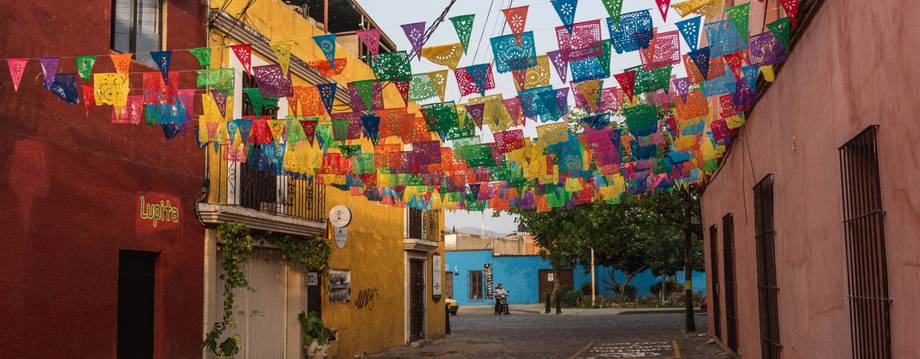
PHOTO: Anastasiia Malai
“He started to see some similarities between veganism and ancient Oaxacan cuisine,” says Pablo. “When the Spanish first arrived, we didn't eat a lot of meat but over time we adapted our cooking and our recipes to include more of it. If you look at a lot of old Oaxacan recipes they are not focused on the meat, the meat is only like the last step, and it’s not the main step. The main step always involves the seeds, the chillies, the chocolate — it's more like veganism. So Juan started to rescue recipes of Oaxaca from his Abuelita, from other relatives, and actually wrote a book about his findings. Over time, we started to want to do more with this project, and so he started this project.”
Today, Etnofood offers classes on how to prepare a traditional Oaxacan meal, how to make mole, and even how to make chocolate. Another essential arm of operations is its market tours, which takes class attendants to the local Mercado Benito Juárez to buy the ingredients needed to prepare a meal. When I attended Pablo’s class he would pause at different stalls and stands, chat to the ladies running them, and then introduce us to the ingredients he was buying. One of the ladies cut up an avocado for us to taste — a Mexican avocado, not the hass variety that we get here in the UK. Hass, Pablo tells us, was bred for export, that’s why its skin is so thick and hard. The original Mexican avocado has thin, shiny skin. They’re small, and look almost like a miniature aubergine. Pablo encouraged us to eat the whole slice, skin and all — avocados are a fruit after all. I still think about its flavour — delicate and creamy, with a distinct note of aniseed.
Mexico is a Vavilov centre, or centre of origin, meaning it’s one of eight regions in the world where horticulture is thought to have originated. Russian botanist Nikolai Vavilov identified these zones by travelling the world in search of regions with a vast genetic diversity of one species of plant, and in doing so concluded that said plant must have originated there. According to this theory, we’d know maize originated in Mexico because of the staggering number of corn varieties that grow there. There is nowhere better to observe this in-person, than Mexican markets, where you’ll find corn and beans of every possible shape and colour, dried in sacks, or peaking out of husks.
Pablo says that this is why market tours are such an important part of Etnofood’s program, but also because “Central de Abastos de Oaxaca [a huge indoor market] is the centre of all Oaxacan culture — we Oaxacaños always go there — but a few years ago, nobody wanted to go there. People thought it was dangerous, but inside there are wonderful people who work there from morning til night, every day of the year. Juan decided it was important to take people to this market, and it became a really important part of Etnofood’s social movement. The project was just to show others what Oaxacan cuisine and Oaxacan culture really is.”
When we give classes here, we always want to make people feel welcome, and happy to learn about us
Buying produce from these local merchants — who are often one-person businesses — is a keystone of Etnofood’s mission; introducing people to the real Oaxaca should be beneficial to Oaxacans. Pablo says that because these merchants know Etnofood’s mission is to support them, he sees support being extended in return. “Sometimes when I have a big group and a small budget, they will help me out,” says Pablo. “They’re not doing that to give me something for free, but because they see value in what we’re doing.”
In addition to showing support for its immediate community, Etnofood’s on-site cafe is stocked with coffee farmed by incarcerated people. “Here in Mexico, when people go to jail, they’re taught how to make furniture, or how to make paintings, how to handcraft,” Pablo begins. For context, broader Mexico has a rich culture of handcrafting, but Oaxaca in particular is considered the country's craft capital, with weaving, pottery and sculpture being abundant here.
“Here in Oaxaca, there’s a pilgrimage to a place called Juquila, which is a very religious city. People who are in jail in Juquila used to learn only how to make paintings of the Virgin or religious articles, but that resulted in the market becoming overpopulated with them. So the government decided it would be beneficial to teach them new things, and decided they could help these people by teaching them how to make coffee, how to grow coffee, and how to start a coffee plantation, because the area is really good for it. In order to support this project, we use their coffee in our work here at Etnofood. It’s good because if people don't buy this product, they might stop making it.”
With all this in mind, it’s easier to understand Oaxacans’ disappointment at how tourism is changing the city. At the time of this conversation with Pablo, there is widespread discussion in Oaxaca about why restaurant menus are now only being printed in English. Oaxaca is the most ethnically diverse state in Mexico, with 16 of the country’s 63 indigenous languages being spoken there alongside Spanish, the country’s de facto language (though many rural communities still exclusively speak their native language). For major cities to increasingly cater to English-speakers feels like just another way to alienate natives.
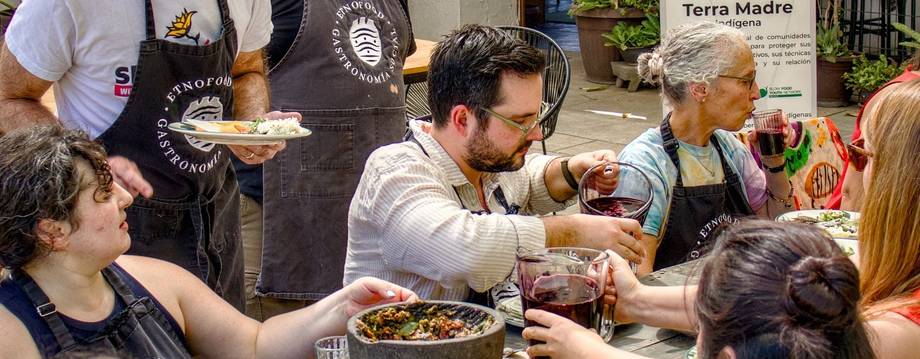
“It’s hard to talk about the issue of gentrification without sounding like we don’t like people from other countries coming here, because that’s not true. We really want to welcome them, and for them to become a part of us,” says Pablo. “Something that we always say is that ‘every person has a dream,’ you know, and we don’t want to break that dream, even if it’s very basic. People probably listened to a podcast or watched a TV series and saw something about Oaxaca, and they made illusions about what Oaxaca was. Mistreating people because of that is not the answer. When we give classes here, we always want to make people feel welcome, and happy to learn about us.”
Pablo also points out that people have travelled to Oaxaca from all over the world, throughout history, with each wave of migration bringing something with them that has enriched Oaxacan culture. “For example, Mexico has been very French culturalised, because, for some years, we had a president who was a big fan of France,” says Pablo. “So, when people in the markets were trying to sell to high society people they would call out ‘Merchende! Merchende!’ Over time that became ‘mercante’ in Spanish, which you will still hear called out in markets all over Mexico as ‘marchante’ or ‘marchantito’”.
Taking this view of culture and migration strikes me as exceedingly generous, considering how inherently diverse Mexico is without Francophile presidents. The word ‘diverse’, in Oaxaca is broad and deep, with the region having been populated by so many different, co-existing peoples, prior to the arrival of Spaniards. It’s for this reason, perhaps, that Mexico’s constitution declares the country a ‘pluricultural nation’. “If you could help us with one thing, it would be to tell people they are always welcome in Oaxaca,” Pablo tells me, in conclusion. “Whether they want to take a class with us or not, I think that they should visit Oaxaca, because Oaxaca is not only for us. It has never been only for the people who live here.”
Learn more here: https://www.etnofood.com/en
Share this article
You’ve reached your limit of 5 free articles this month.
Unlock unlimited access and more

Join Beer52 and get your first month half price
-
Get your first box for £13.50 (RRP £27).
-
8 beers & 2 snacks delivered monthly.
-
Printed Ferment magazine included.
-
Unlimited access to all online content.