A kernel of truth
Katie Mather explores the a-maiz-ing origins of Mexican lager.
Katie Mather
Saturday 30 May 2026
This article is from
Mexico
issue 131
Share this article
Drinking lager in Mexico is as natural as eating a taco in the street, so some might find it surprising that beer has a relatively short history there. In a country with its own deep cultural heritage and culinary traditions, fermented drinks made from fruit and agave were enjoyed for millennia prior to the arrival of colonial forces, which introduced wheat and barley to the region. Agave, being the basis for tequila, mezcal and pulque, is widely farmed, and drinks like tepache are made from pineapple rinds, raw cane sugar and spices, both of which show how varied and creative the pre-Hispanic palate was. Today, tepache is often combined with beer to create a delicious alternative to a radler or michelada, with the mixer in question almost always being a light-flavoured lager akin to that which you'd find in parts of Germany or Czechia. Not quite as bitter and biting as a pils, not as soft as a helles, and with a little more body than a kolsch, Mexican lager is a style of its own, thanks to European immigrants who adapted recipes to use local ingredients and better suit the Mexican climate. The history of Mexican beer is actually pretty fascinating, and rather than being a straightforward story like we have in, say, Argentina (where German immigrants brought their style directly from their homeland), Mexican beer has a few different points of origin, all of which are relevant and important.
Mexico as we know it today has changed dramatically over the past 500 years, from Mayan rule to Spanish colonisation, its war of independence, and several more against the USA for Mexican lands (now American Texas). During the latter, Mexican people — particularly children and indigenous peoples — were expelled and ethnically cleansed from states annexed by the US in the so-called Mexican Repatriation of the 1930s. The forced migration of these people resulted in the expansion of diverse and multi-ethnic cities like Mexico City and Tijuana. The land now known as Mexico has been inhabited for three millennia, and long before the Spanish conquistadores came in search of gold and glory, indigenous people here drank a maize-based alcoholic beverage called tesgüino. It's still made and enjoyed today, and also happens to be part of sacred rituals surrounding modern Semana Santa celebrations at Easter time. In an NPR programme from 2005, anthropologist Bill Merrill of the Smithsonian Institution says that the Tarahumara people who make and drink tesgüino believe it “chases large souls” from whoever drinks it. The large souls are adult souls with fears and hang-ups, and smaller souls that are left are like children, full of wide-eyed wonder and joy. In the article that accompanies the radio show, the traditional governor of the Norogachi district explains how important their sacred beer is. “God taught the Raramuri how to make corn beer… We make offerings of tesgüino to God himself, and He drinks it also. We use tesgüino for dancing, and we enjoy drinking it,” he says.
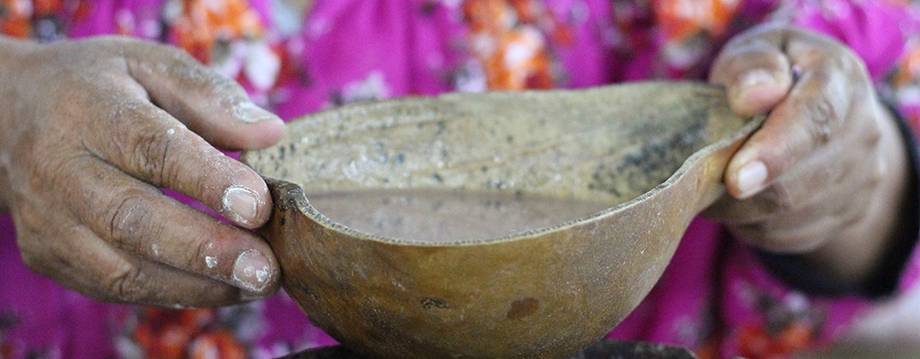
PHOTO: Animal Gourmet
“Beer drinkers in Mexico are accustomed to drinking light and refreshing beers since high temperatures are the norm across most of the country — they tend to look for options that are easy to drink," says Ben Matz, owner and brewer at Tijuana-based craft brewery, Wendlandt, when asked about the differences between Mexican lager and lagers made in the rest of the world. "It's therefore very common for Mexican lager to be brewed with corn or rice which contributes to its distinct character and drinkability.” Maize is a vital ingredient in Mexican cuisine, and so it tracks that one of the most important pre-Hispanic alcoholic beverages was made from pulverised corn. In Europe, our staple grains are wheat and barley. Maize is the breadmaker of Mexico. Alfonso de Herrero is known to be the first ever official European-style brewer in the Americas, beginning production around 1544 with traditional barley malt. It took decades for the style to take off in Mexico largely due to the fact that importing wheat and barley from Europe made brewing beer expensive, and indigenous people had their own, affordable alcohol to drink, and which carried their own meanings and culture.
A good 250 years or more later, demand for lager in Mexico was booming, in line with a number of Austrian, German and Swiss workers who migrated to Mexico after the Mexican War of Independence. The Second Mexican Empire, an ill-fated constitutional monarchy instated by Mexican monarchists and supported by the Second French Empire of Napoleon, was headed up by a Hapsburgian Austrian Archduke. This strange arrangement brought even more German immigrants to Mexico, and towards the end of the 1800s, German Mexicans were influencing the brewing traditions of the country. Vienna lagers and dunkels became popular and are still regarded as canon within the overarching Mexican lager style. This, twinned with the establishment of a countrywide railway — which enabled transportation and therefore wider accessibility of grain and ingredients from the USA — enabled Mexico's beer industry to really take off. By 2003, Mexico was the largest exporter of beer worldwide. Corn is still a major ingredient in Mexican lager to this day, stabilizing the haziness of a lager made with American six-row barley rather than European two-row malt.
Vienna lagers and dunkels became popular and are still regarded as canon within the overarching Mexican lager style
It’s easy to see a beer packaged up as a Mexican lager and assume it’s a marketing ploy, but there’s real history behind this style, even if it's largely produced by the big boys now. Perhaps you’d feel better about trying the style from an independent brewery instead? Fierce Brewery in Aberdeen have a Mexican lager in their core range, Cerveza, which seems an odd choice until you understand that Mexican lager is a style in its own right.
“For me, compared to the likes of a German pils which has a robust bitterness and more hop character, or a Czech lager which is more malt forward, a Mexican lager is essentially a very light, clean, and crisp lager built around drinkability and refreshment over flavour intensity,” says Dan Probyn, the head brewer at Fierce beer.
Cerveza is made with lime juice, an obvious link to the way we all recognise Mexican lagers here in the UK. It’s a bold take on every brewery’s need to create an easy-drinking lager-or-equivalent for the drinkers, myself included, who enjoy lighter styles over everything else. Heading over the ocean for a bright, citrus kick is unique for an independent brewery in Scotland — surely the easier option would be to emulate Tennent’s. However, the system works, and there have been a number of Cerveza spinoffs too, including a lime sour beer called Soorveza, and a 0.5% version of the original (which sits at a very barbecueable 4% ABV.)
“I wouldn't say I was surprised [at its popularity],” says Dan, “but we were obviously pleased at how widely it's appealed to drinkers. I think it's a super approachable beer that attracts both craft beer drinkers, and people who wouldn't typically pick up beer from a craft brewery.”
From corn to craft in just 500 or so years. The story of Mexican lager is a long and winding one, and full of violent conquests and the constant movement of people across borders formed and dissolved over centuries. Beer has changed the tastes of Mexican drinkers, and adapted to suit them respectively. You can choose to be totally enthralled by it, or simply enjoy the beer as it is today. With a wedge of lime, obviously.
Share this article
You’ve reached your limit of 5 free articles this month.
Unlock unlimited access and more

Join Beer52 and get your first month half price
-
Get your first box for £13.50 (RRP £27).
-
8 beers & 2 snacks delivered monthly.
-
Printed Ferment magazine included.
-
Unlimited access to all online content.