Devour the world: Mexican cuisine
Harmony is at the heart of Mexican cuisine and it starts with how food has traditionally been grown, discovers Melissa Cole.
Melissa Cole
Saturday 30 May 2026
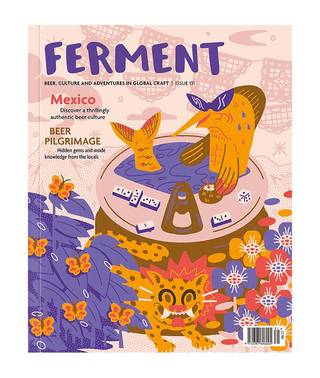
This article is from
Mexico
issue 131
Share this article
Companion planting is a phrase you hear thrown around a lot these days, whether it’s planting bush beans under your tomatoes next to some marigolds, or encouraging clover under your cabbages, but Mesoamericans have been doing it for at least 7,000 years.
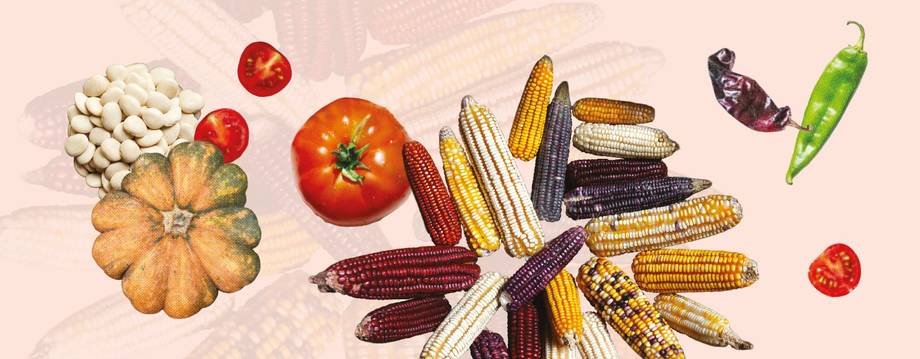
The milpa system that's now synonymous with 'the three sisters' — corn, beans, and squash — is an ancient form of polycropping, engineered by Mesoamericans, that uses the advantage of growing one plant to the benefit of another. In the instance of the three sisters, corn acts as a trellis for beans to grow up, the beans fix nitrogen in the soil for the corn and squash, and the squash's large leaves shade the soil to suppress weeds and retain moisture for all three plants. Growing corn, squash and beans together has shaped the cuisine in this part of the world in a profound way.
And it’s this symbiotic relationship in the ground, says Lily Ramirez-Foran, author of Tacos from Blasta Books, that translates directly to the plate. “Our traditional staple is beans, squashes and corn, complemented with tomatoes and chillies.”
For those only passingly familiar with Mexican cuisine this information might challenge assumptions that what Mexicans eat at home is different to what's served in restaurants.
Ramirez-Foran continues: “Before the Green Revolution of the '60s, every family would have had milpa, a very old system of agriculture; the whole of Mesoamerica would have had this way of growing food, everyone would eat a version of milpa soup. Everywhere there was Mayan influence.”
If you haven’t heard of the Green Revolution, it isn’t unique to Mexico, but it is where it started; led by American scientists, using hybridisation, fertiliser and irrigation, it was an honest and well-meaning attempt to help farmers get better yields and increase the nation’s food security. It was a huge success, and within 20 years Mexico’s corn production had increased three-fold and wheat production had increased by five times, but it came at a cost.
As this method spread globally it became enormous business and with that came politics. The supply of fertilisers, machinery and seed technology have been used as clubs to beat countries into policy submission. What's more, the nutritional value of the food grown has decreased dramatically, monocultures have contributed significantly to climate change and drastically reduced biodiversity, and fertilisers have caused multiple health and environmental issues.
But, as Lily says: “While the irony of it being called the Green Revolution is not lost on me, now there’s a huge push to go back to the traditional way of farming as it’s so much kinder to the land.”
And the land is huge, as Eduardo Gomez of Mexgrocer, the UK’s largest online wholesaler and supplier of Mexican goods, points out. “Most people don’t realise that Mexico is as big as the European Union and it has so many different types of cuisine in it," he says.
And he’s right. The fact that Tijuana to Cancún is about the same distance as Edinburgh to Athens is something that a lot of people don’t realise about the country. It also has huge geographical variations with a number of its cities being among the highest in the world, while others are a stone's throw from glorious coastlines. This affects the foods eaten immensely, from calorie-heavy dishes in the higher planes to fresh, cold ceviche on the coasts.
“But the thing they all have in common is you have to use authentic ingredients,” Eduardo continues.
“When I arrived here in 2003 to work for Corona, there was almost nothing authentic. I was selling to the very few real Mexican restaurants, but it was nearly all Tex-Mex, which people thought was authentic,” he says with a slightly traumatised laugh.
However, his frustration with only being able to get a few real ingredients eased when he met Katya Torres de la Rocha. It was 2011; Eduardo was running the UK's first tequila and mezcal festival and Katya, in an attempt to escape the hectic work of restaurants, had recently started Mexgrocer. She was looking for someone who could manage the wholesale side of the business, and while Eduardo was unable to step into that role until 2014, he's been there ever since. “I always say we still have three types of Mexican food here in the UK though," Eduardo says. "There’s Tex-Mex which you find in every single supermarket, Brit-Mex which is like Wahaca, and then you have Mex-Mex products. The day we get Mex-Mex products into a supermarket is when so many more people will be able to cook Mexican properly, we hope one day that will happen.”
It's not a recipe so much as a technique; the word means 'to char' things, so you char the vegetables and chillies you use. I make it like my dad used to and it's really good, everyone should try it
So, if most of us are doing it wrong, how can we make it right? I ask Eduardo what his best tip is and he said this: “Mostly Mexican food is simple — many people think it’s too complex. A good salsa requires simple ingredients and if you use a molcajete, the Mexican pestle and mortar made out of basalt, instead of blending them you will get the right consistency of salsa.”
Eduardo's Top 10 must-have ingredients (all available at mexgrocer.co.uk)
- Corn soft tortillas
- Green tomatillos
- Chipotle chillies in adobo
- Tajin
- Pasilla chilli
- Árbol chilli
- Achiote
- Epazote
- Black beans
- Cactus
Another survivor of the terrible Tex-Mex scene of the early 2000s is Karla Zazueta, author of Norteña, who runs cooking classes and supper clubs in North London called Mexican Food Memories.
“My now husband took me to what he thought was a Mexican restaurant called Chiquito and I was like ‘what the hell is this?’" says Karla. "But to be honest I also didn’t really know how to cook more than basic dishes at the time, and you couldn’t get the ingredients anyway.
“So when we got married and had children I learned how to cook authentically by speaking to my dad on the phone. If I wanted Mexican ingredients I had to bring them back from Mexico. I’d have whole suitcases full,” she says laughing at the thought.
She also recalls a very personal story that sums up the important idiosyncrasies of every food culture and the countless personal preferences that exist within that; it reminds me how important it is not making sweeping statements about whole cultures.
“All over Mexico we have wild chile pinnero or chiltepin, but in the north of Mexico we have a specific tiny pestle and mortar. My dad never thought anywhere made the food spicy enough, so he would carry these chillies in a handkerchief and my mum would carry the pestle and mortar in her bag, so he could season his food with these very hot chillies. His tolerance for heat is so high he actually caused himself an ulcer! He was just always thinking about food, and me and my siblings have become him, it’s almost all we talk about.”
However, it wasn’t just her dad that was into food, and if there’s one dish Karla would love people to make, it’s sope.
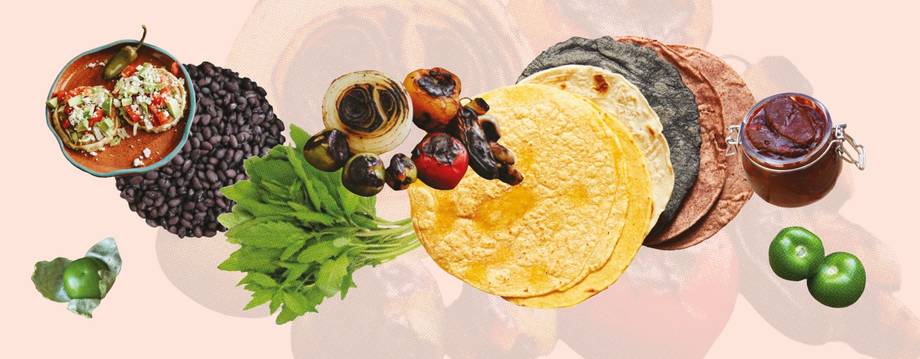
“It’s like a small thick tortilla that you deep fry. My mum, who is from Sinaloa, used to fry it and then pinch the edges so that you can top it with things before you eat it. How you eat it and what you call it depends on the region.
“Some places you stuff it, like in Guadalajara where they call it a gordita, but my mum’s are always topped with shredded beef, mashed potatoes and vegetables and you drizzle it with a broth that you make with bone marrow, corn meal and tomatoes, it’s very good, they just fly from the table.”
But if that sounds too complicated, she suggests you start with Salsa Tatemada — there's a great tutorial on how to prepare it on her Instagram. “It’s not a recipe so much as a technique; the word means 'to char' things, so you char the vegetables and chillies you use. I make it like my dad used to and it’s really good, everyone should try it.”
Tatemar, she says, comes from the Nahuatl word tlatemati, which means “to roast over fire”.
“Traditionally we do it on a comal, which is a flat griddle, but you can use an old frying pan or even better over the BBQ. You char and you toast the chillies for a bit and then blend or pound everything with salt and water.”
As a final word, she’d like people to know that burritos are, in fact, a traditional food but not in the way that the Californians have super-sized them (yes, Americans needing to make everything bigger, how shocking!)
“In the north we use flour tortillas as much as we do corn, and we are big on carne asada — the north is where the ranches are so we are the beefy side of Mexico," she says laughing.
“Burritos are actually from the north of Mexico too, but they are very different from what you are used to, our burritos are much smaller and are usually just one or two toppings like beans and steak or beans and shredded beef.”
You might note that beans have been a feature throughout this short stroll through Mexican cuisine so, if nothing else you can perhaps take this as your sign to start making them delicious with a few salsas and possibly a sope or six — we all need more fibre in our diets!
Share this article
You’ve reached your limit of 5 free articles this month.
Unlock unlimited access and more

Join Beer52 and get your first month half price
-
Get your first box for £13.50 (RRP £27).
-
8 beers & 2 snacks delivered monthly.
-
Printed Ferment magazine included.
-
Unlimited access to all online content.