In the field
Fred Garratt-Stanley explores the presence of cask ale across a changing UK music festival landscape.
Fred Garratt-Stanley
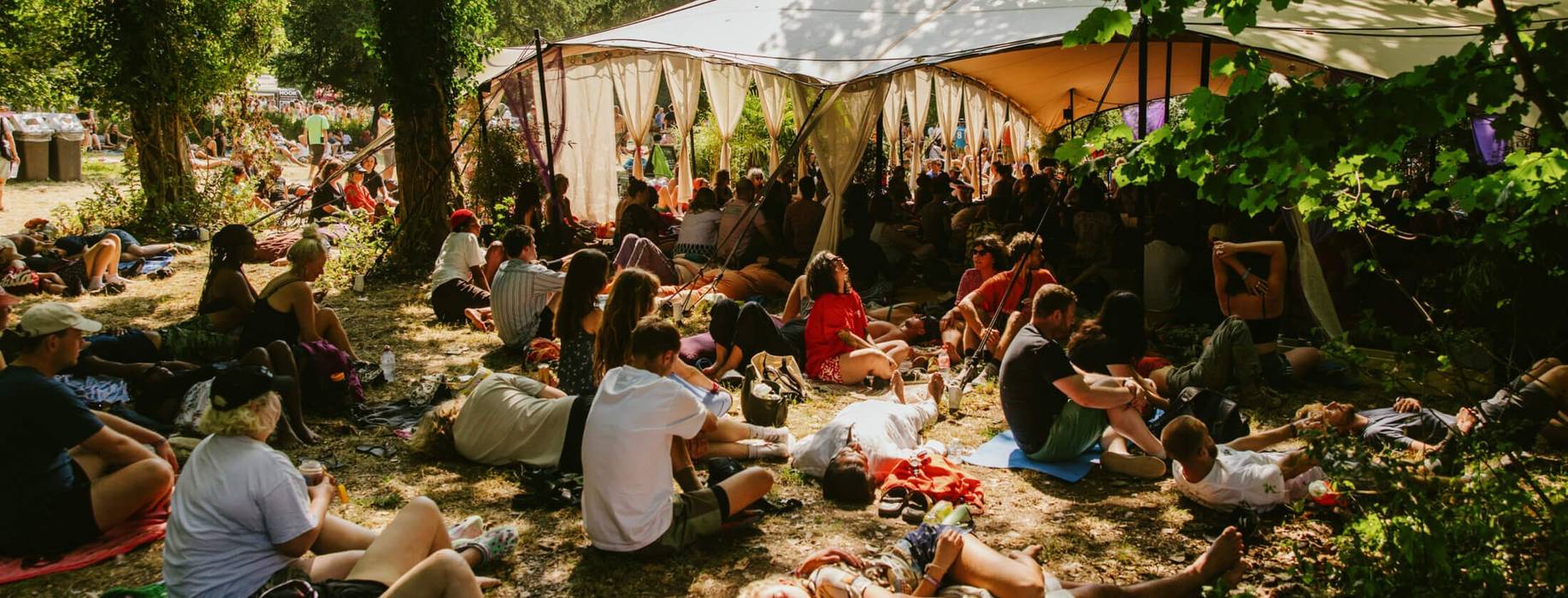
Header photo: We Out Here Festival
Saturday 27 June 2026
This article is from
British Summer Time
issue 132
Share this article
UK music festivals are changing. Despite ticket prices surging dramatically, attendance figures continue to rise annually. Crowds are diversifying, with Ticketmaster's 2025 report finding that when it comes to exposing kids to new cultures, 73% of parents now prefer festivals to traditional family holidays. In turn, options for glamping and enhanced comfort have widened, and food and drink selections have improved substantially, with tasty gyros vans and south Indian street food now the norm. For many, the messy, hedonistic foundations of festival culture remain integral to the appeal, but it's also possible to have a slightly boujier time if you so desire.
It follows that the quality and variety of beer should be improving, and why shouldn't this extend to cask ale? It's a heritage product unique to the British Isles, and SIBA research suggests the number of young people drinking it has increased significantly. It's true that ambient tinned lager is still the standard festival drink, and on-site bars are typically tied up by major companies like AB InBev, who supply Live Nation festivals with brands like Corona, Budweiser, and Stella Artois. But this summer, there are also plenty of spaces where, despite the potentially significant obstacles, you can purchase a pint of well-kept cask ale.
Camping out at We Out Here last August, my weekend was brightened by the discovery of a tent stocked with cask beers from local Dorset brewery Sixpenny: a best bitter, a golden ale, and an IPA, all tasting fresh, and served at correct cellar temperature. Here, the logistics are handled by a small outdoor bar company named Pop Up Bar (PUB), run by two long-time drinkers at Sixpenny's Cranborne Taproom, named Sam Allen and Scott Taylor. When they reached out to brewery owner Scott Wayland asking if they could buy his beer at trade price and sell it under the Sixpenny name at outdoor events, he knew he could trust them.
"Prior to Covid, we ran our own outdoor bars, but after losing staff and things, it became more difficult," owner Scott explains. "Our core business is our taproom, but using [PUB] helps give us a presence, some sales, and good advertising for our name. I've got to know them over the years, I've walked them through how to serve the beer right, and they camp on-site and are with it all the time, so they've learned how to look after it."
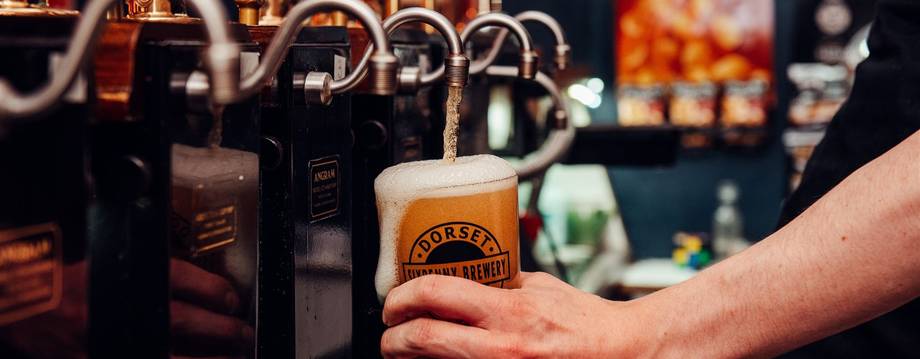
PHOTO © James Bridle
To ensure beers are served at the right temperature, the casks are covered in cooling jackets, with an outdoor water cooler that pumps and recirculates cool water around a saddle that sits over the casks. "Sometimes the ambient temperature's correct for cask ale and you can just get away with wet towels," Scott adds. "They have got some cooling equipment and a generator, but the beer sells so quickly that it doesn't really get much time to go off. They pick it up from here at the correct temperature, it takes a while to rise, and overnight it's cool enough, so it's only if there's a real heatwave that they're gonna struggle."
Heatwaves have, however, become an increased concern for festival hospitality businesses in recent years. As global temperatures rise, research suggests that festivals are spending more money than ever on guarding against extreme weather, from introducing wildfire response teams and satellite weather-monitoring technology to improving flood defences for dramatic swings in the other direction.
In this context, improving the variety of beer on offer isn't usually the number one priority for organisers. And for those that choose to serve cask ale, temperature isn't the only concern. Sixpenny's presence at We Out Here pales in comparison with the cask offering at Green Man Festival, across the Welsh border in the Brecon Beacons. Pouring 175,000 Welsh pints annually, and with a selection of 60 beers and 20 ciders (including a collaboration with Cardiff brewery Brains), Green Man boasts the largest selection of beers and ciders at any UK music festival, sold to punters at their hugely popular bar The Courtyard. But it's a complex and costly operation to manage effectively.
"A temporary, open-air real ale and cider bar is one of the most difficult environments in which to pour consistently good pints. Essentially, you’re building a pub cellar from scratch, outdoors, for just a few days while operating under constant, high demand," says organiser Fiona Stewart, owner and managing director of Green Man Festival. "Unlike a traditional pub cellar, conditions are unpredictable, with day and night temperature swings, direct sunlight affecting stillage and lines, and warm ground temperatures all impacting the product. While it’s fantastic that The Courtyard is so popular, keeping up with demand and restocking the bar to meet customer expectations goes far beyond what would be required at a standard beer festival."
In recent years, Green Man has moved to a 50/50 split between cask and keg, using a local logistics company to transfer ready-to-serve kegged beer in refrigerated trailers, which are repurposed as on-site cellars. Cask beer is also delivered chilled and stored in a separate refrigerated trailer, before being racked onto The Courtyard's custom-made scaffold stillage and fitted with cooling jackets. It's a big operation, and hearing about the difficulties of delivering cask ale in great nick, you can understand why many festivals don't bother.
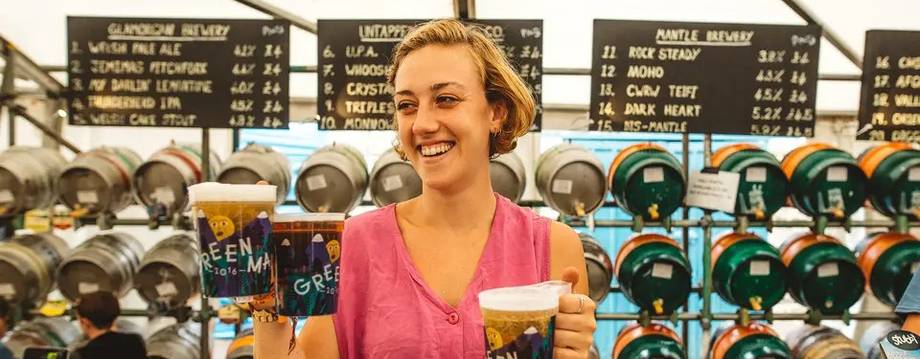
PHOTO: Green Man Festival
According to a recent Reddit post by one bartender at Glastonbury Festival's Cockmill tent (which stocks breweries like Otter and Butcombe), temperature is not the only reason that the quality of cask beer can drop as each day progresses. "We'll get the casks out early and let them settle for a good few hours before serving from them," writes user @AstroPete87. "However as the day wears on and the casks run out, we'll quickly find ourselves running out of space to get a proper rotation going, so you could easily be served a pint from a cask that not even 15 minutes prior was dropped 5 feet off a trailer, rolled 50 yards to the bar and unceremoniously slung up onto the rack by a pair of guys that are already hanging out of their arse."
At least Glastonbury has space for independent breweries; at many festivals, serving small batch cask is simply not an option. It isn't just the complexity of delivering the product, but the corporate landscape in which festival vendors operate. "Many festivals rely on income from exclusive pouring rights, often tied to large-scale sponsorship deals," says Fiona. "As a result, a significant number of UK festivals, particularly those owned by global entertainment companies or investment groups, operate within commercial models that prioritise consistency and scale. Small-batch, independent, or local producers may not fit as easily into those agreements. The Courtyard has attracted interest from other festivals, but the scale and complexity of what we do can be seen as risky to replicate."
Festivals that are keen to deliver quality cask ales offer small brewers a valuable opportunity to reach new audiences. While evidence shows these events are becoming more family-friendly and the average age of attendees is rising, the majority of punters are still in the under-40 bracket. Increasing the visibility of cask among this demographic could be hugely beneficial for brewers interested in securing the future of British cask beer. With pubs and small breweries under constant threat, nurturing this new generation of ale lovers is essential.
"There's certainly room for more festivals to explore ways of supporting smaller producers alongside their existing partnerships," says Fiona. "It would be great to see more festivals raise the quality and diversity of their drinks offering."
Share this article
You’ve reached your limit of 5 free articles this month.
Unlock unlimited access and more

Join Beer52 and get your first month half price
-
Get your first box for £13.50 (RRP £27).
-
8 beers & 2 snacks delivered monthly.
-
Printed Ferment magazine included.
-
Unlimited access to all online content.