Wales of a time
Let Michael Clarke take you on a tour through North Wales' best beer and breweries.
Michael Clarke
Header photo: Visit Wales
Saturday 27 June 2026
This article is from
British Summer Time
issue 132
Share this article
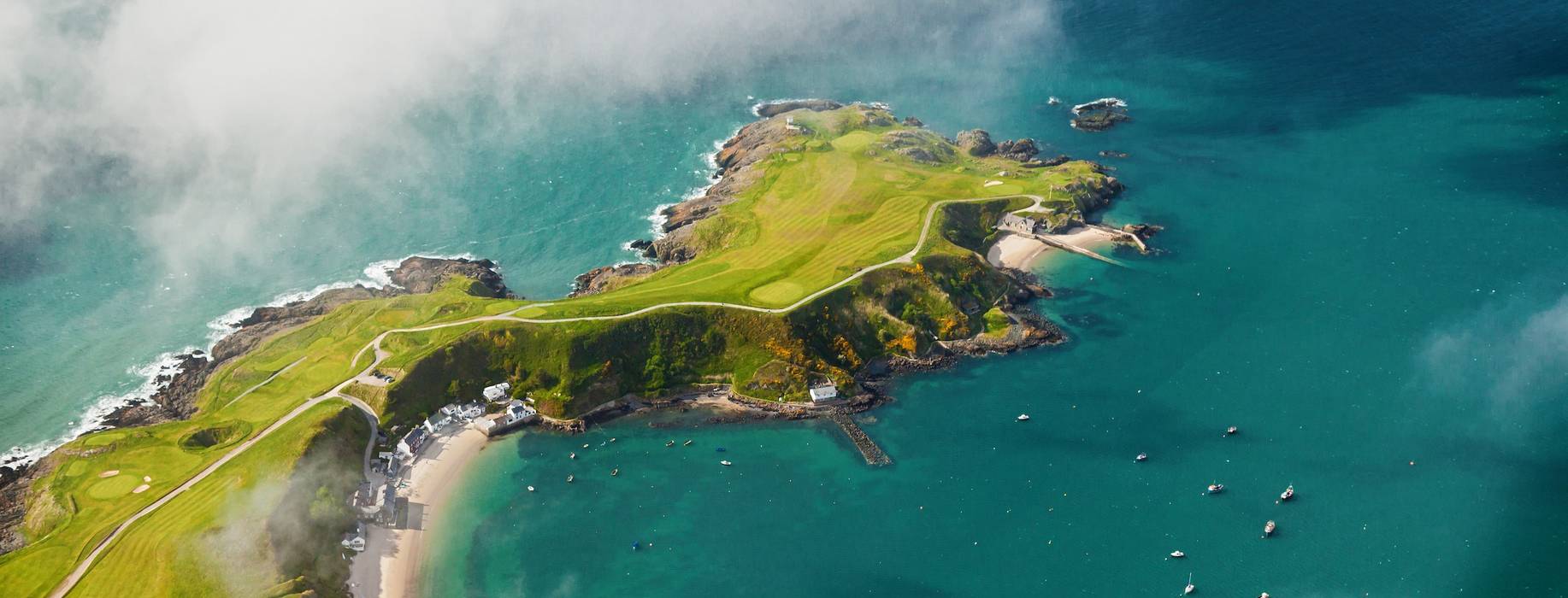
On a sunny Sunday afternoon, I mingle with the August bank holiday crowds on the beach outside the Tŷ Coch Inn, with a pint of Cwrw Llŷn Brewery's session bitter, Brenin Enlli, in hand. I find a spot on the pub's garden wall to perch and contemplate the North Wales landscape: the three mountain peaks of Yr Eifl in the distant haze and the sheltered waters of Porth Nefyn Bay in the foreground, a fleet of white boats bobbing on the blue water. Cwrw Llŷn, means Llŷn Beer, or beer from the Llŷn Peninsula, which feels a fitting name for the brewery that lies across the water from where I'm seated, in Morfa Nefyn. Its high, glass-fronted taproom catches and intensifies the coastal light.
Despite the crowds, the pub revels in its remote setting. The Tŷ Coch (which means red house) is on the leeward side of the National Trust-owned Porthdinllaen peninsula and is inaccessible to vehicles. Visitors must either walk a mile over the beach at low tide or take a sandy path through the nearby golf course. It hasn't put many off. With its laid-back surfer ambience, sticker-covered door and homely bar furnished with maritime bric-a-brac, it supports Welsh craft breweries and even lays on occasional live bands and DJs. Yet when the winter darkness arrives, the pub is as quiet as a Welsh church mouse, only opening from Thursday to Sunday evenings.
Remote as it feels, the Llŷn Peninsula is now less than two-and-a-half hours from Manchester and Liverpool following decades of improvements to the A55 North Wales Expressway, which partly explains why Stockport brewer Robinsons has over twenty pubs in Gwynedd. The Tŷ Coch illustrates the resulting challenges and opportunities for pubs and breweries in this part of Gwynedd: visitors generate a very seasonal demand but this has supported the growth of a surprising number of small, very locally focused breweries.
Yet the Llŷn Peninsula, with its heather-covered mountains projecting into the Irish Sea, remains staunchly Welsh-speaking, partly because it historically escaped the "iron ring" of coastal castles built by King Edward I in the 13th century to subjugate the Welsh.
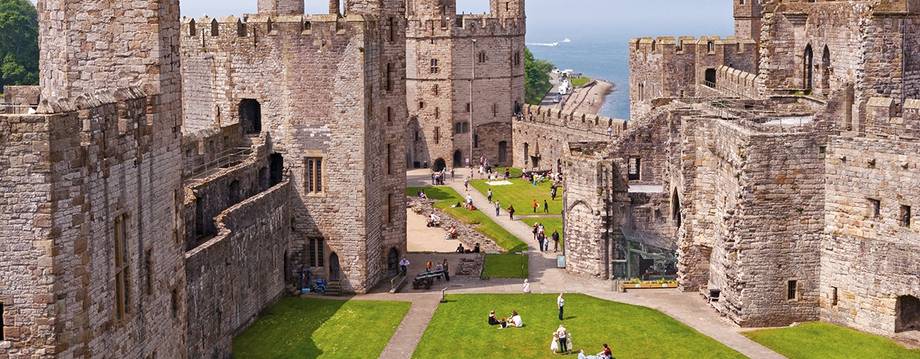
Caernarfon Castle © Wander Your Way
Caernarfon is dominated by the largest of Edward I's castles. In its shadow, within the town walls, is one of the oldest pubs in Wales, the Black Boy. Its name and signage has rightly come under scrutiny over the last number of decades, though that's a story for another day. The building itself is a labyrinth, with a 17th-century core that retains many original period details. Two snug bars with fireplaces remain, with little having changed during or since its last renovation in the 1950s. It serves four cask ales on handpump, including local beers, and it's a pub that continued to serve draught Bass long after it dropped into obscurity and before its recent revival.
I take a trip south from Caernarfon on the long-distance T2 TrawsCymru bus service, which runs through Dyffryn Nantlle, a valley renowned as the setting for some of the legends of the Mabinogi. These traditional Celtic tales date back to the 11th century and are sometimes linked to early Arthurian tradition.
I stop off at Bragdy Lleu's taproom in Penygroes and talk to brewer Gareth Harrison. He tells me that the brewery's range celebrates the mythology of the Mabinogi, matching beer styles to characters. Lleu, an amber session bitter, takes its name from Lleu Llaw Gyffes, one of the great heroes of the Mabinogi. It's complemented by Blodeuwedd, a 3.6% golden ale named after a beautiful maiden transformed into an owl.
The brewery was established in 2013 and initially staffed by volunteers who would brew on Friday nights. It's grown to the point where it was awarded local CAMRA brewery of the year in 2025.
Continuing south on the bus, with inspiring views of the Eryri/Snowdonia mountains to the left, I reach Porthmadog at the north of Cardigan Bay. Purple Moose's beers pay tribute to the locality: Glaslyn golden ale named after a local river, Madog session bitter after the town’s founder and the rich, malty Dark Side of the Moose, inspired by the mythical beast that roams the nearby mountains (if the marketing is to be believed). The brewery's high street taproom, the curiously named The Australia, is a destination in itself for the brewery's many fans.
I switch from bus to train, and in doing so follow a route that created the North Wales tourist resorts of the nineteenth century.
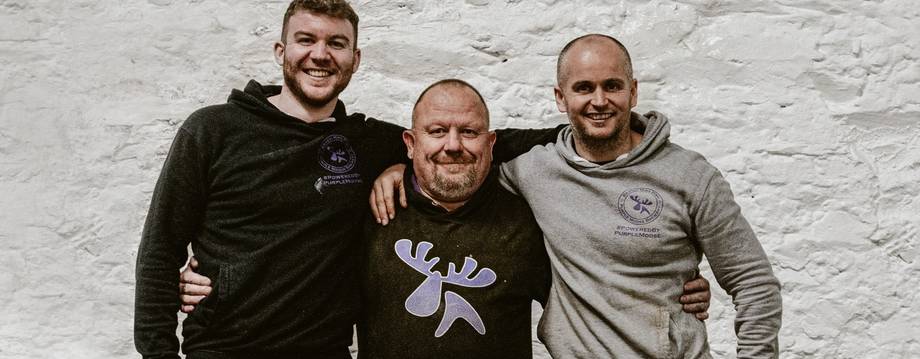
PHOTO: Purple Moose Brewery
Llandudno developed as a traditional Victorian seaside resort, complete with pier and promenade. The attractive town centre, a few streets back from the sea, has distinctive verandas projecting over its pavements. Together with medieval Conwy across the estuary, it's become a significant beer destination with several new breweries showcasing their beers in the many local pubs.
Changing trains at Llandudno Junction, I pop into Snowdonia Craft Brewery. The taproom has an unusual bar counter created entirely out of washing machines. While sampling their Summit IPA, I learn that the appliances are a reference to a laundry business that previously occupied the site.
I begin my visit to Llandudno at the Snowdon Hotel, on the lower slopes of the Great Orme — an imposing, undeveloped headland known for its views, tram to the summit, and wild goats. Resembling a traditional guest house from the outside, the Snowdon is a surprisingly open and airy pub serving Welsh cask ales. I enjoy a pint of Conwy Brewery's Clogwyn Gold. Started in 2003, Conwy Brewery was one of the region's pioneering new breweries. Its real ales are found widely across the area and are inspired by local heritage — Rampart, a brown ale, and Welsh Pride, a best bitter are just two such examples.
Walking downhill takes me to the bucolic Cottage Loaf, named for the building's past life as a bakery. A vintage baker's oven hatch remains a feature in what's now the main bar, while smaller bars in breakaway rooms have been made homely with a woodburner, rustic wooden furniture and cask ales from the likes of Purple Moose and Big Hand, from Wrexham. The flower-filled garden outside makes it feel like the sort of cosy rural bolthole that could be found in the mountains, or further west.
Like many seaside towns, Llandudno has seen a recent surge in micropubs and has even generated a small regional chain of its own, Tapps, which now has four branches. I visited the town centre location on a Tuesday, when customers are invited to graze on a free cheese and charcuterie board.
Across the bay from Llandudno is Conwy, the vista dominated by its imposing castle on the riverbank — the most striking castle of Edward I's iron ring, with the railway tunnelling beneath it and the old road passing through the town walls at its foot.
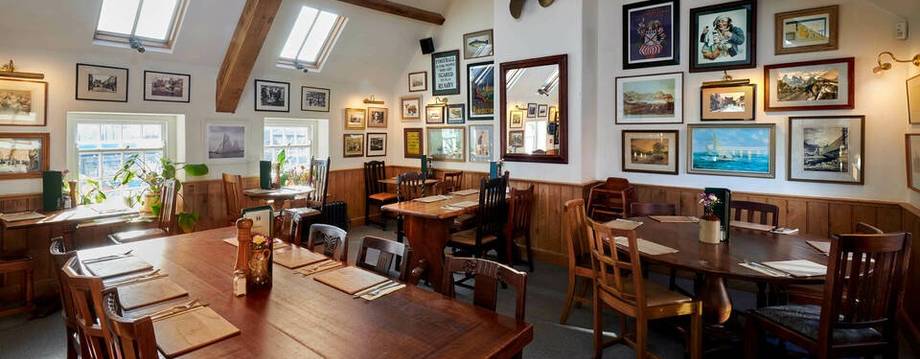
PHOTO: The Erskine Arms
Conwy's intact medieval walls encircle a town centre with a remarkable concentration of excellent beer venues. I start with a pint on the quayside overlooking Conwy Bay outside the Liverpool Arms, a low-beamed pub built into the town's medieval walls.
A short hike up the cobbled streets brings me to the unmissable Albion Ale House, run since 2012 by a consortium of North Wales breweries. It features six superbly kept cask ales and four real ciders, and retains a preserved 1920s interior, including wood panelling and vintage lightshades, that has earned it a place on CAMRA's national heritage inventory.
Conwy's branch of Tapps is around the corner, as is the Bank of Conwy, a craft beer bar occupying a former bank that retains its original floor tiling, polished wood counters and drawers. I stop for a nightcap of Dark Side of the Moose in the Erskine Arms by the station, an upmarket hotel with a welcoming basement bar, huge fireplace and four local real ales.
Colwyn Bay, a few miles east, is a Victorian resort like Llandudno, but bears the scars of the road improvements that have speeded travel further west. The A55 dual carriageway cuts right through the centre of town along the line of the old railway, which was moved sideways to accommodate it. Compared to Llandudno, there are fewer seaside attractions but, in common with other British coastal resorts, lower rents and a quieter pace have since attracted a wave of artists and independents, giving parts of Colwyn Bay an unexpected creative energy.
Despite the traffic noise, there's evidence of regeneration. Alongside well-regarded micropubs the Bay Hop and Black Cloak Taproom, there's Ink – perhaps the most characterful pub I encountered on the entire trip. Entering via an art installation, it's an idiosyncratic combination of art gallery, artists' shop, café and pub whose ambience changes through the day. Two keg beers from nearby Wild Horse brewery in Llandudno sit alongside a beer fridge. It's the only place I've visited where you can buy both beer and spray paint.
Only a few yards away from Ink, motorists shoot through an underpass at fifty miles per hour. While many tourists head towards the Tŷ Coch and the mythical landscape of the Mabinogi, the North Wales craft beer scene continues to evolve here in the twenty-first century.
Share this article
You’ve reached your limit of 5 free articles this month.
Unlock unlimited access and more

Join Beer52 and get your first month half price
-
Get your first box for £13.50 (RRP £27).
-
8 beers & 2 snacks delivered monthly.
-
Printed Ferment magazine included.
-
Unlimited access to all online content.