Wood if we could
Jacopo Mazzeo explores the longstanding relationship between beer and wooden barrels in British brewing.
Jacopo Mazzeo
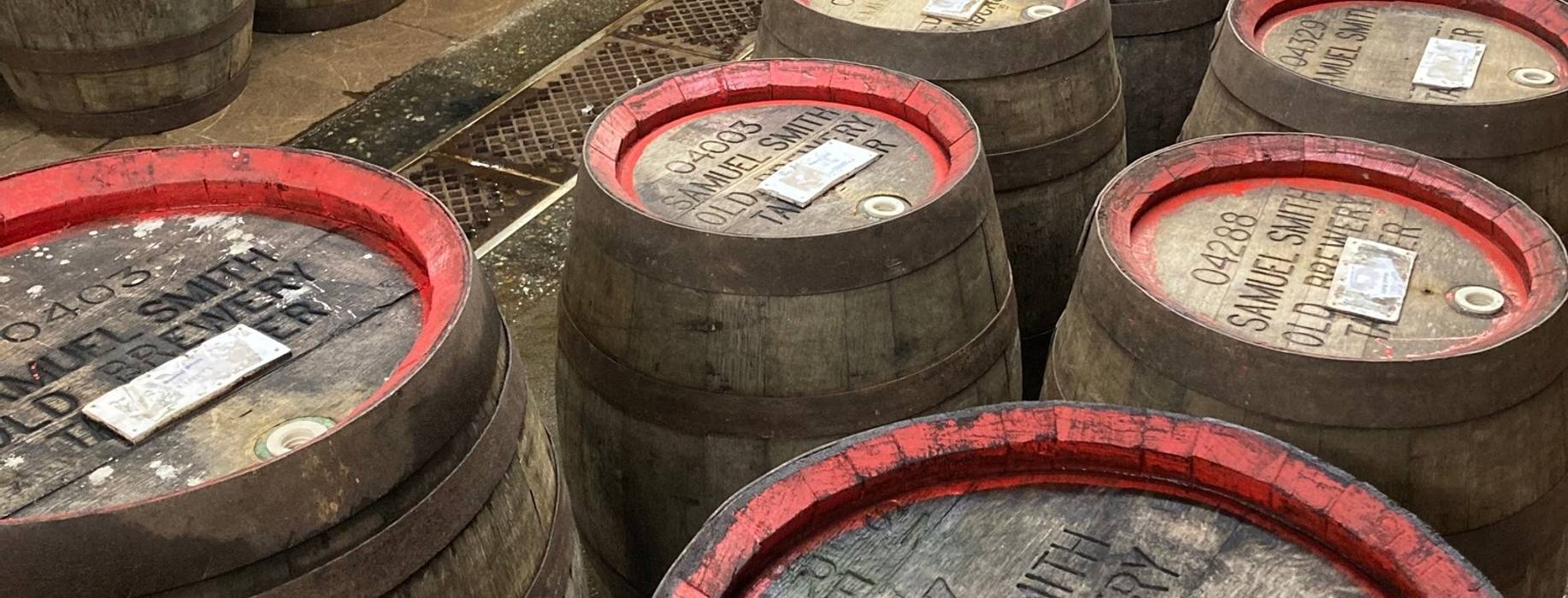
Header photo:
Samuel Smith's Brewery
Saturday 27 June 2026
This article is from
British Summer Time
issue 132
Share this article
In the early 90s, Goose Island brewmaster Greg Hall hatched an idea that would go on to become a hallmark of craft brewing worldwide: he would mature his now-legendary Bourbon County Brand Stout in bourbon barrels, where it could soak up extra flavour and character from the whiskey-infused wood. At the time, using wood to enhance a beer’s flavour and aroma was unusual, but the material's ties with the brewing world were far from new. In fact, long before stainless steel became standard, wood was a regular sight in breweries. Flavour was rarely the primary aim as wooden vessels served a largely functional role, used at virtually every stage of production as well as for storage and transport.
Then, in the decades following WWII, stainless steel, plastic, and other inert materials began replacing wood. They were easier to clean, lighter, and better suited to modern brewing technology. “Wooden casks were the main method of delivering beer in Britain up until the mid-'70s, when brewing companies increasingly moved to metal,” says Simon Theakston, Chairman of T&R Theakston Ltd. “Then, over time, the wooden cask population in the country began to decline. They went from being a fairly common sight to almost collectors’ items, ending up as flower butts, seats, tables… all sorts of things.”
More than a decade before the foundation of CAMRA in 1974, a wood-specific consumer movement, still active today, had already emerged. The Society for the Preservation of Beers from the Wood (SPBW) was created in Epsom, Surrey, on a December evening in 1963 with the explicit aim of championing beer served from wooden vessels. It was an early sign of the bleak future that awaited wooden casks. As macro breweries increasingly force-carbonated beers as a way to contend with quality issues, the porous and comparatively labile wooden barrel became an unsuitable vessel.
Still breathing
Despite the scale of the decline since the post-war period, fragments of Britain’s wood heritage have, quite remarkably, survived to the present day, supported by a handful of traditional regional breweries across the country. At Traquair House, in Scotland, ales are still fermented in original 18th-century unlined oak tuns. Meanwhile, Thornbridge in Derbyshire has been using a Burton Union kit — a piece of traditional brewing equipment that sees a series of interconnected wooden casks churn and agitate the beer to encourage fermentation — since Carlsberg Marston’s announced it would retire the system in 2024. At Bear Claw Brewery in Northumberland, all beers undergo both primary fermentation and three weeks of conditioning in ex-wine barrels. “Over the years, we have specialised in doing only this,” says owner and brewer Rikki Graham. “Of course, there are environmental aspects, but also historical and heritage aspects too. Fermentation in oak is a really big part of the cultural heritage of brewing. These historical links are really important to us and I am very interested in historical brewing myself.”
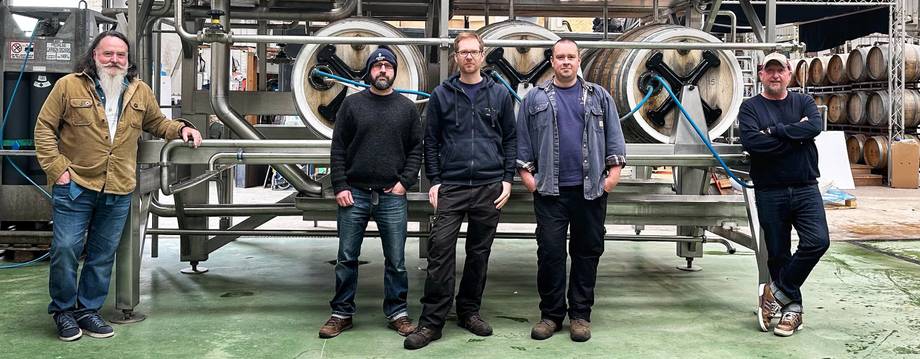
PHOTO: Thornbridge Brewery
The main challenge of employing wooden vessels during production, particularly at the fermentation stage, is maintaining precise temperature control, as wort’s behaviour in wooden vessels is inevitably less predictable than in jacketed, cylindroconical stainless-steel tanks. To manage this, Graham relies on good old maths. He measures the temperature of the wort as it enters the barrel, compares it with the ambient cellar temperature, and accounts for how much the wort will cool during the lag phase (when the yeast population is growing and multiplying, before fermentation begins). “Through experience and record keeping, we can get a good idea of what fermentation temperatures we’ll hit depending on yeast variety, pitching rate and wort original gravity,” he says.
Beer served from the wood
Beyond their occasional use as part of the production process, wooden vessels are now primarily employed to store, transport, and serve the finished liquid. Samuel Smith, for instance, prides itself on being the only brewer in the UK to serve all its naturally conditioned beers from wooden casks, and it continues to use some for maturation too. The brewery relies on an in-house cooperage to keep the barrels in top condition, some of which are still delivered to local pubs by horse-drawn cart five days a week. Theakston, in North Yorkshire, also continues to use wooden casks. These are almost exclusively reserved for its legendary Old Peculier. “Once it reaches the pub the beer is further matured and conditioned, then dispensed directly from the wooden cask, which is then returned to the brewery," says Simon Theakson. "People enjoy the idea of having beer served from the wood. All the romance, history, and heritage are tied to what is, in effect, a unique method of brewing and selling beer that’s still distinctly British.”
Most pubs currently serving ale from wooden casks are closely linked to the breweries that produce the beers. This simplifies logistics, as the supply of wooden casks is limited, and partner or brewery-owned pubs allow for long-term planning. Yet, logistics can also be efficiently managed if the casks are owned directly by the publicans themselves. This approach allows Nigel Midgley to maintain a lineup of nine ales drawn from wooden casks at his renowned free house The Junction Inn, in Castleford, West Yorkshire. “Handling wooden casks for a pub isn’t that much different from metal ones and doesn’t require specialist skills or knowledge,” he explains. “Any publican who already knows how to handle metal casks properly can do so with wooden ones.”
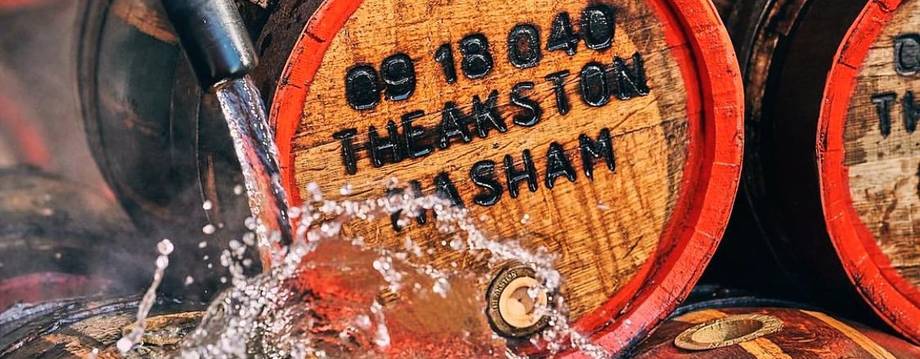
PHOTO: Theakston Brewery
For breweries, however, wooden casks pose a considerable challenge. Unlike metal containers, which can be easily sanitised thanks to their smooth, inert surfaces, cleaning wood is a far more complex and labour-intensive process. “We have a separate machine for cleaning our wooden casks, which is essentially a steam application,” explains Theakston. “We steam them for three or four minutes inside and out, and that’s enough to ensure they are completely sterile and ready for the next use.”
The cost of maintenance presents an additional, and perhaps even more pressing, challenge. On the upside, however, wooden casks’ repairability means they may outlast containers made from most other materials. “If a cask falls off a lorry, misses the dropping bag, hits the ground, and starts leaking, remedial work can fix it,” explains Theakston. “You can simply remove the damaged stave and replace it with another. These casks can last 60 or 70 years with regular repairs, and indeed, we still have quite a number of them.”
Brewing coopers
To maintain its pool of wooden casks, Theakston employs an in-house cooper: “We’ve always had a cooper. Next year we’ll be 200 years old, and in all that time, we’ve always had one,” says Simon. Such a commitment is even rarer in today’s brewing landscape than the use of wooden casks themselves. The coopering trade is increasingly struggling with a shortage of new talent, despite woodwork remaining in high demand from the spirits and wine industries. “We could always put more beer in wooden casks,” says Simon, arguing that demand would not be a problem. “The issue is that we have only one cooper, and he is already busy enough making and repairing our existing casks. To suddenly put all our beer into wooden containers would require a substantial team to produce new ones, as well as to repair and maintain them over time.”
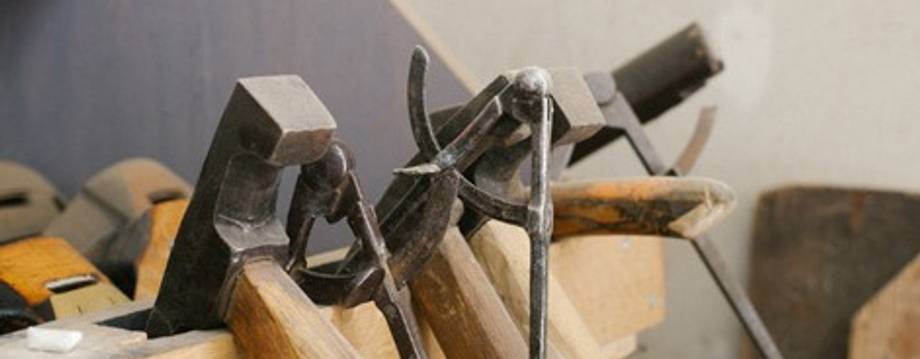
PHOTO © Joseph Fox
One of the last specialist beer-cask coopers in Britain, Alastair Simms has crafted a significant proportion of the beer casks that have entered the market over the past few decades, including those made specifically for Midgley’s Junction Inn and the SPBW. With both him and his colleagues approaching retirement, he is looking to recruit at least two apprentices in the coming months to ensure continuity of supply to the few remaining champions of beer in wood in Britain. He remains realistic about the difficulty of finding suitable candidates: “The entire coopering industry is finding it hard, because to be a cooper you’ve got to have a certain mentality,” says Alastair. “It is hard, physical work. It is not an easy job, and a lot of young people now don’t want to go into this sort of trade. There are only three of us working at the cooperage I’m at, and we are all retiring in four years’ time. So we’ve got to start bringing in apprentices soon and train them before we retire to make sure we don’t leave a gap in the market.”
There are, however, grounds for optimism. Training a cooper from scratch might well take years, but mastering the nuances required to produce vessels capable of withstanding the pressure generated by secondary fermentation in cask is not an insurmountable leap for those already working with other types of booze. “Coopering for beer is something you’ve got to learn specifically, but if you are a good whisky or wine cooper, within 12 months we could have you making beer casks,” says Simms with a note of confidence. “I actually managed to teach a Russian cooper over a Zoom call how to make beer casks for a brewery over there.” If coopers can be trained to make beer casks over a video call, perhaps the future of beer in wood isn’t as bleak as it seems. Champions of beer in wood may simply need to acquaint more wine and whisky-barrel makers with the unique joys and rewards of cask ale.
Share this article
You’ve reached your limit of 5 free articles this month.
Unlock unlimited access and more

Join Beer52 and get your first month half price
-
Get your first box for £13.50 (RRP £27).
-
8 beers & 2 snacks delivered monthly.
-
Printed Ferment magazine included.
-
Unlimited access to all online content.