Kirkstall Brewery: Looking forward
We talk to Leeds’ own Kirkstall Brewery, about its past, present and plans for the future.
Robyn Gilmour
Photos:
Kirkstall Brewery
Saturday 25 July 2026
This article is from
Yorkshire
issue 133
Share this article
Most, if not all of us, are familiar with the origin story of Kirkstall by now. Founder Steve Holt was the first person to import Sierra Nevada to the UK through his distribution business, Vertical Drinks, and later graduated to brewing his own beer. He was inspired both by the US craft beer revolution, and the historic culture of regional brewing in the UK, which culminated in Kirkstall Brewery producing traditional styles for modern tastes. Since its inception, the brewery has evolved to include an estate of old pubs, lovingly restored to their former glory by Steve and the team. However, two crucial dots that I failed to connect until my most recent conversation with marketing manager Chris Hall, is that Kirkstall was founded in 2011, the same year Carlsberg closed Leeds’ historic Tetley Brewery in preparation for demolition in 2012.
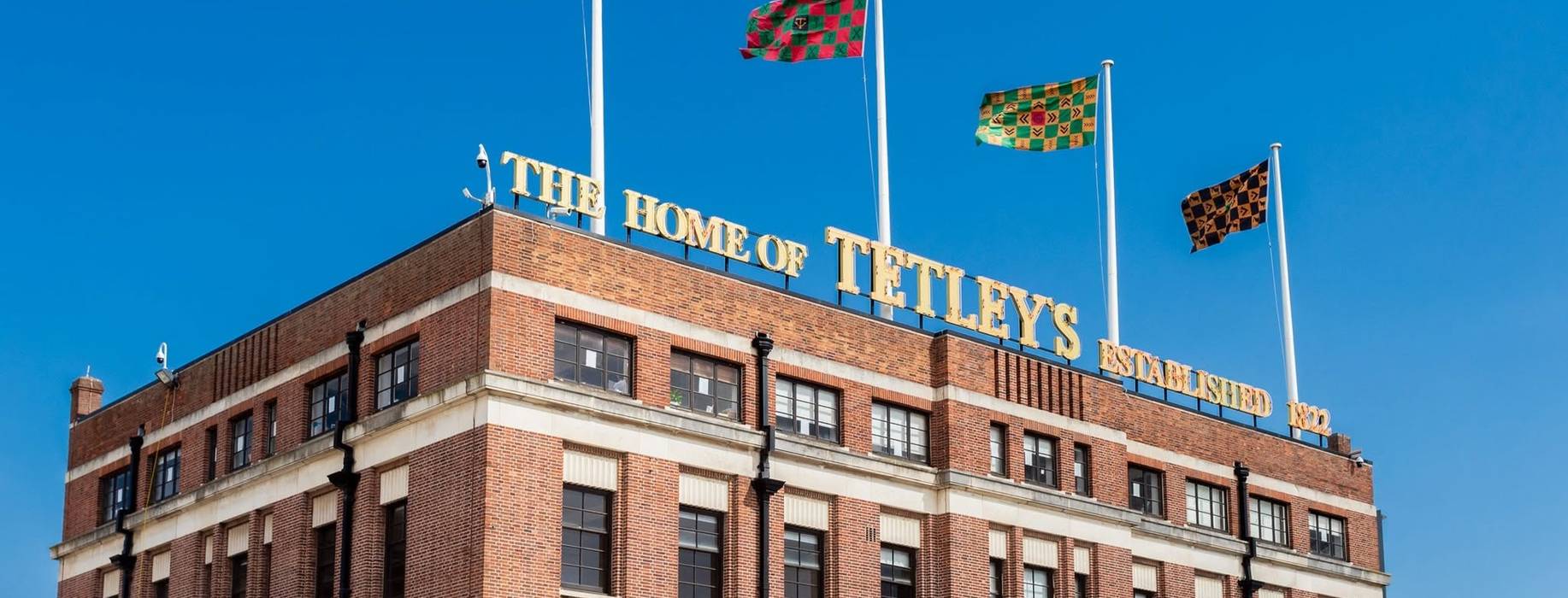
“You have to look at aerial photography to appreciate how big The Tetley was,” Chris begins. “That so little of that building is left now is actually a disgrace. We should have been able to preserve its legacy in the same way that breweries in Germany and Czechia have been. The lack of care when it comes to preserving the legacy of beer in this country is an outrage. How do you tell Burton apart from any other town in the country? It is the origin point of so much of our history, but you’d never guess that, walking through it.”
I ask Chris if Steve ever spoke about the closure of The Tetley motivating his interest in restoring old pubs. “Not specifically, but it probably did,” Chris replies. Even if there is no direct correlation between Kirkstall opening and The Tetley closing, considering these events alongside one another provides useful context when talking about the origins of what’s now Leeds’ biggest brewery. Kirkstall's steady acquisition of old pubs in the years since is well chronicled, but it’s not the only way in which Steve has been working to revive relics of beer gone by. “Have I never told you the story about Allsopps?” Chris asks, a sure sign that some Grade-A beer lore is pending.
Unmatched in his ability to procure and salvage authentic, antique pub paraphernalia — I’m talking everything from tables and chairs, to mirrors and handpulls — Steve happened upon an original Allsops recipe book, some years ago now. He immediately reached out to Jamie Allsopp, the great-great-great-great-great grandson of Samuel Allsopp, who he understood to be interested in reviving the historic family brewery, after it was dissolved by then-owners, Inde Coop, in the 1960s. To cut a long story short, Kirkstall offered to help Allsopp’s with the development of a recipe in said book — the historic and revered Double Diamond, if you don’t mind — solidifying a partnership between the two brands, which remains strong to this day and is even motivating a change in the direction of the brewery’s growth.
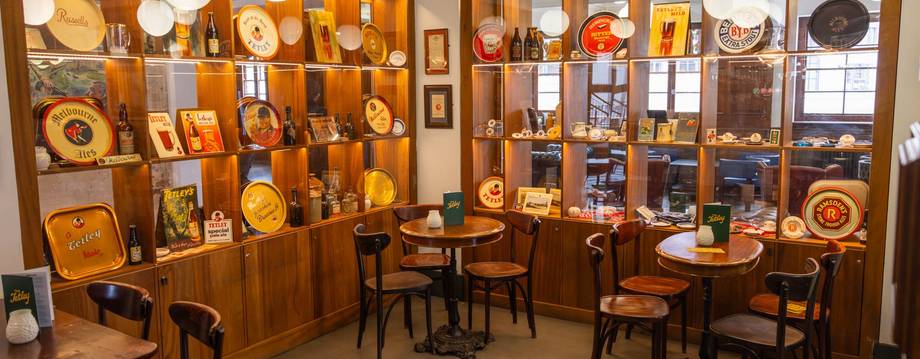
PHOTO: designmynight.com
“For the longest time, when people have asked us where we want to grow in the future, we’ve always said we wanted to be a reason that people come to Leeds for beer,” Chris begins. “That said, the work that we've done with Allsopp’s in particular, has meant that we've been able to secure a bit of an outpost in London. That has grown quite a lot, I would say, in the past year. We’ve been finding, to our delight — and maybe a little bit to our surprise — that there's a big appetite for things that Kirkstall is quite good at, in London, which is obviously a pretty crowded beer market.”
In particular, Chris says it’s Kirkstall’s cask beer that’s making headway in London, in response to which, I obviously had to ask if stockists were serving it through a sparkler. “Well, this is the thing!” he laughs. “We started to distribute Harvey’s beer up North not so long ago and people asked us the same question. Our line has always been that, if it’s up to us, we’d rather serve it without a sparkler, because we would expect the same courtesy to be extended to us if we were serving our beers down South. If the beer is from a particular place where it is served a certain way, that probably means that the brewer designed it with that in mind, and so it’s best to respect the wishes and the intentions of the person who made it.”
To conclude our conversion, I ask Chris what the future of Kirkstall might look like. “It’s been fascinating and encouraging for us to see the things that we’ve always cared about becoming important to other people,” he begins. “People have started to turn back and care more about cask, care more about history, and care more about reliable, consistent brands. All of that stuff has come at the right time for Kirkstall. For the longest time, this brewery has been a bit of a sleeping dragon — people have always enjoyed what we do, but they haven’t necessarily paid close attention to it. It’s probably only since the other side of COVID that people have really started to take a real interest in what we’re doing, and has been appreciated by the market at large.” I take all this to mean that, fifteen years in, Kirkstall is just getting started.
Share this article
You’ve reached your limit of 5 free articles this month.
Unlock unlimited access and more

Join Beer52 and get your first month half price
-
Get your first box for £13.50 (RRP £27).
-
8 beers & 2 snacks delivered monthly.
-
Printed Ferment magazine included.
-
Unlimited access to all online content.